Introduction
Cable assemblies are evolving rapidly as products become more compact, more powerful, and more connected. Today’s designs often operate at higher voltages while fitting into smaller packaging envelopes, forcing engineers to balance electrical performance with limited physical space. At the same time, many assemblies now include a greater number of conductors and increasingly combine mixed signal and power paths within a single harness.
Environmental demands are also rising. Cable systems may need to withstand vibration, temperature extremes, moisture, chemicals, or continuous motion depending on the application. Alongside these technical requirements, manufacturers face growing expectations for stronger quality documentation and traceability throughout production. These trends are visible across electric vehicles, aircraft electronics, robotics, medical devices, and defense platforms, where cable reliability is directly tied to system performance and safety.
The Hidden Cost of Manual Testing
Many manufacturers still rely on manual cable testing methods that were developed for simpler products and lower production volumes. While these approaches may appear workable on the surface, they often introduce hidden costs that become more severe as complexity increases.
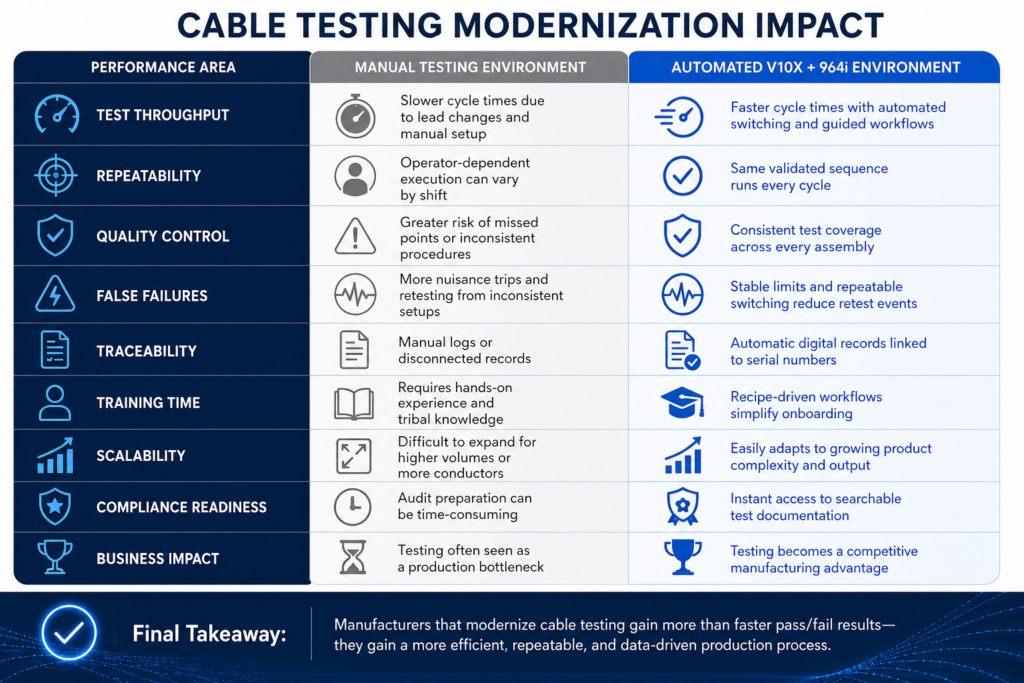
One of the most common issues is slower throughput. Operators must repeatedly reposition leads, reconnect fixtures, or move from point to point during the test process, adding labor time to every unit produced. Manual workflows also increase the risk of human error. Missed test points, incorrect setups, or inconsistent procedures can allow defects to escape or create unnecessary retesting.
Traceability is another challenge. In many manual environments, results are recorded separately from production data or not linked directly to a serial number, making audits and root-cause analysis more difficult. Scaling production becomes equally problematic. A process that works for twenty cable assemblies per day may quickly break down when demand rises to hundreds of units per shift.
What Intelligent Cable Testing Looks Like
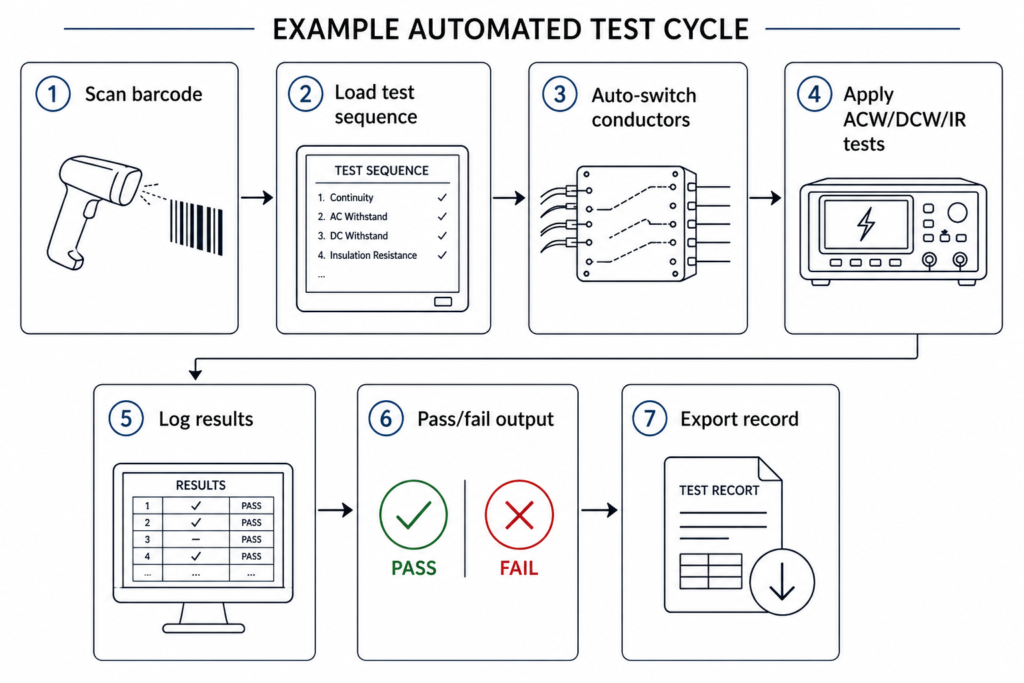
Modern cable testing platforms replace manual repetition with automated, repeatable workflows. Instead of requiring operators to physically move test leads  between conductors, automated switching systems route test points electronically and in sequence. This reduces setup time while ensuring every required connection is tested consistently.
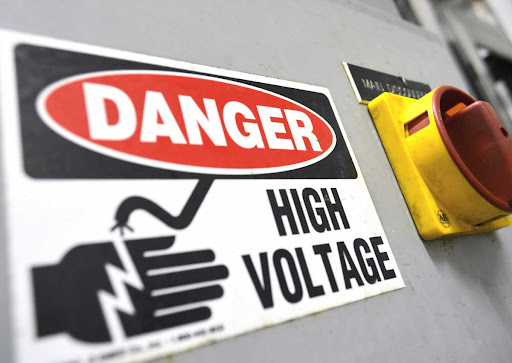
Advanced hipot capabilities add another layer of confidence by verifying dielectric withstand strength and leakage current performance with precise measurement control. Guided operator workflows further improve consistency by using barcode scans, recipe-based test selection, and clear user prompts that reduce training requirements and setup mistakes.
Digital reporting is equally important in modern production environments. Automated systems can generate instant PDF or CSV records tied to part numbers, serial numbers, or manufacturing data systems. Just as important, scalable architectures allow manufacturers to expand test capacity as products grow in complexity or production volumes increase.
Why the V10X & 964i Matters
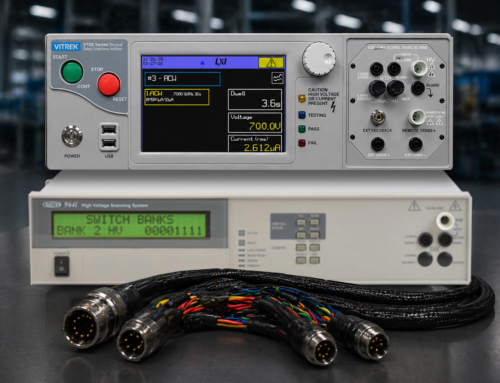
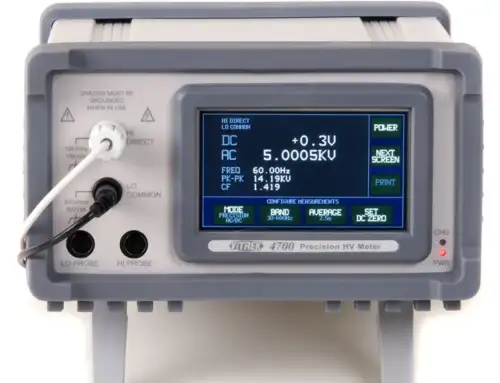
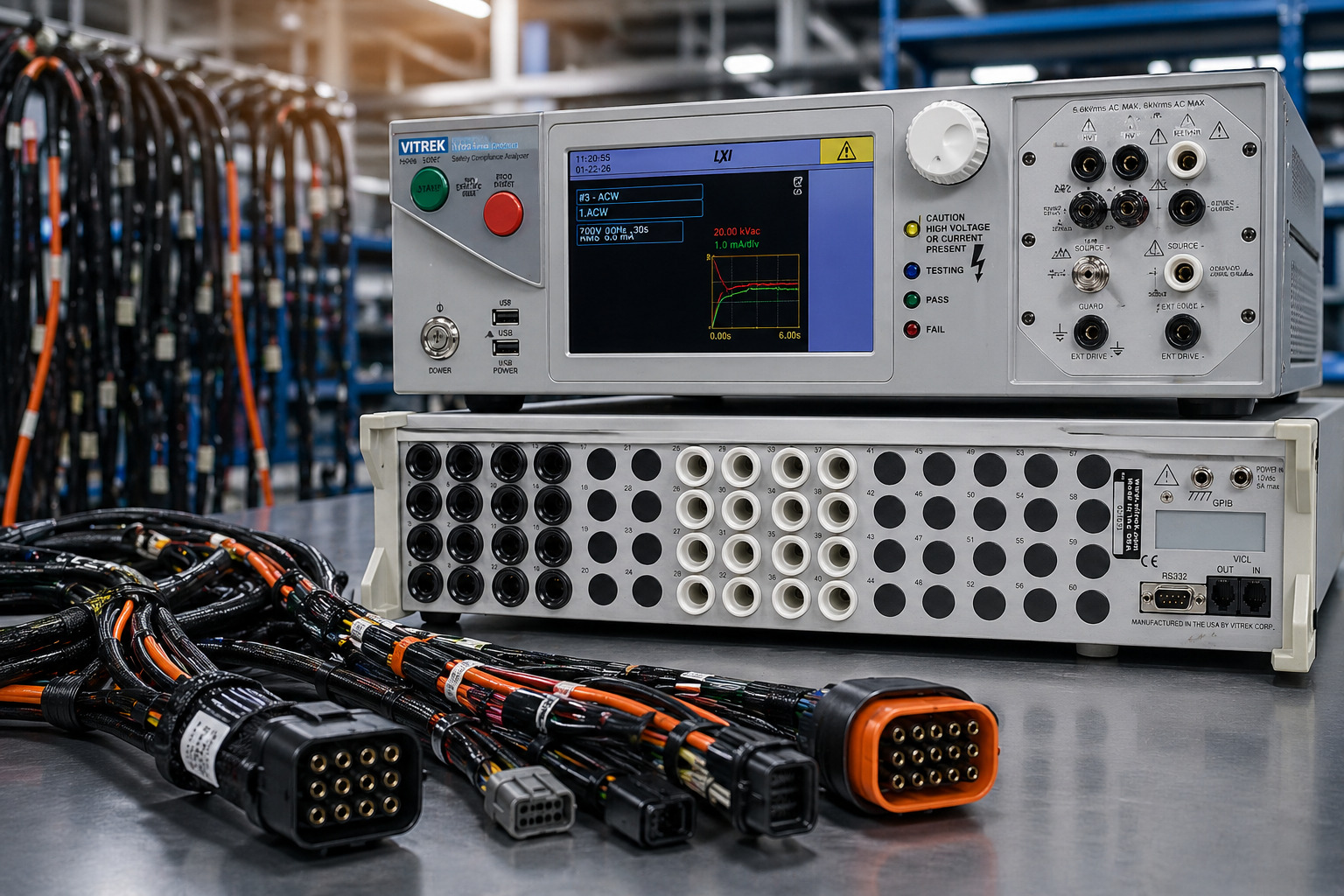
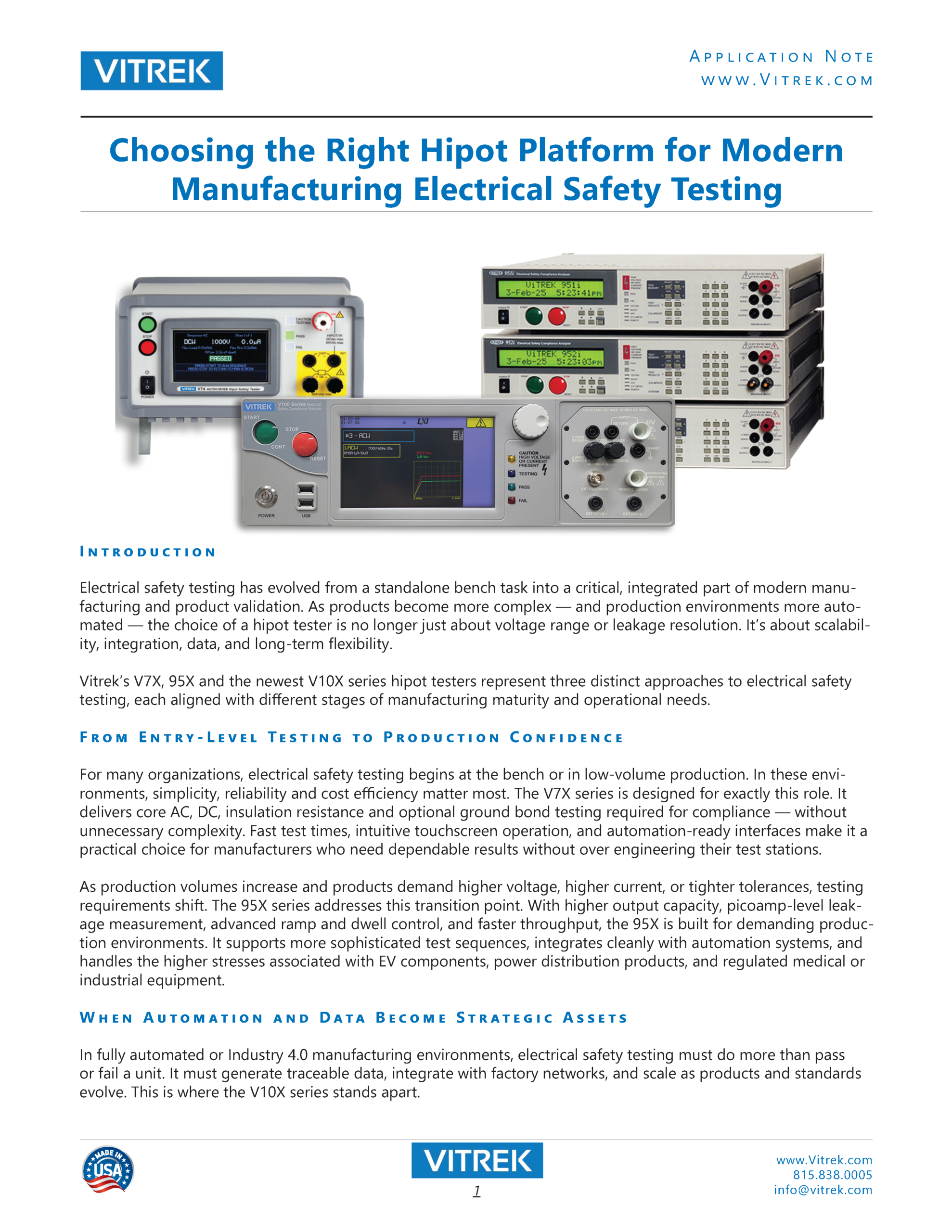
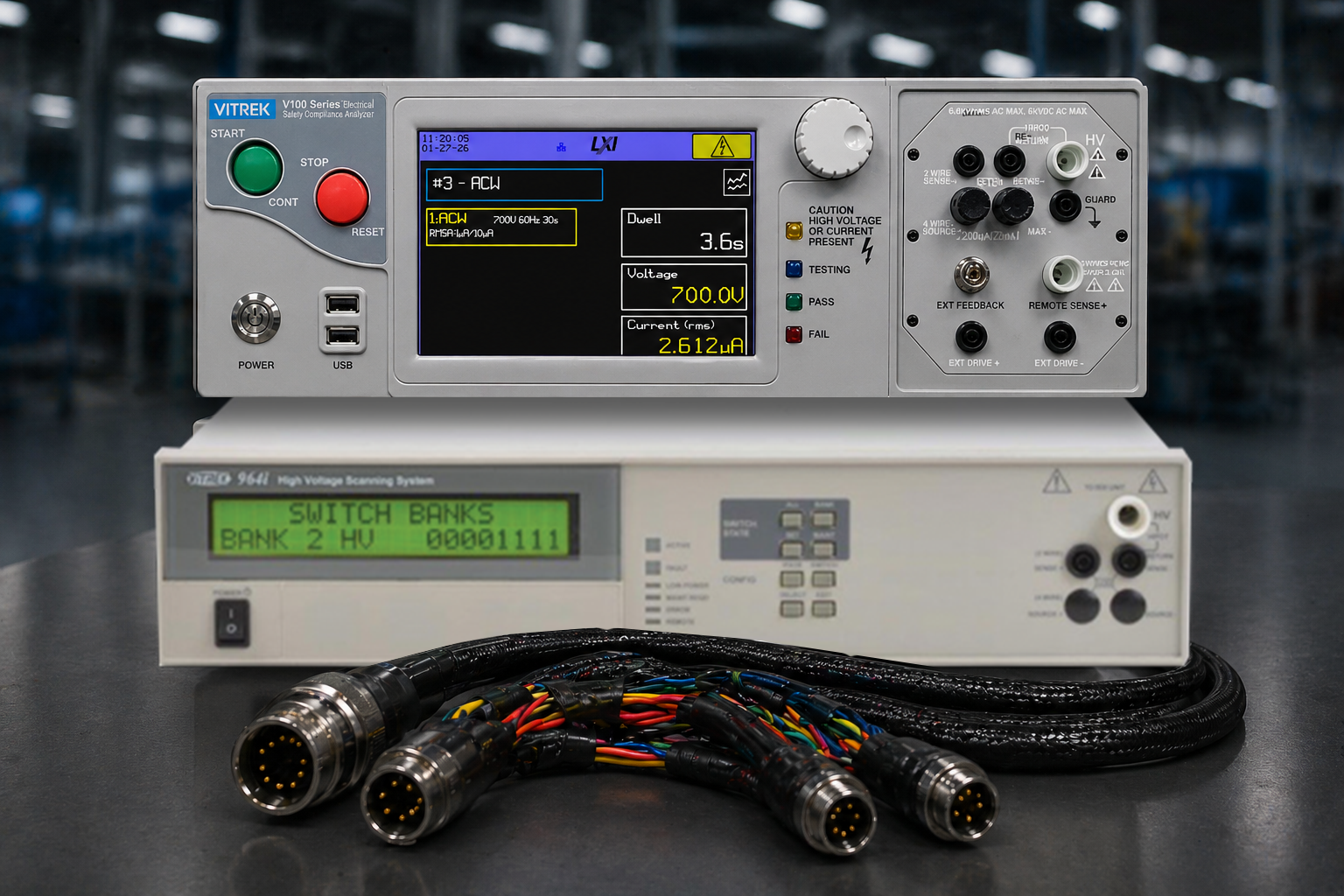
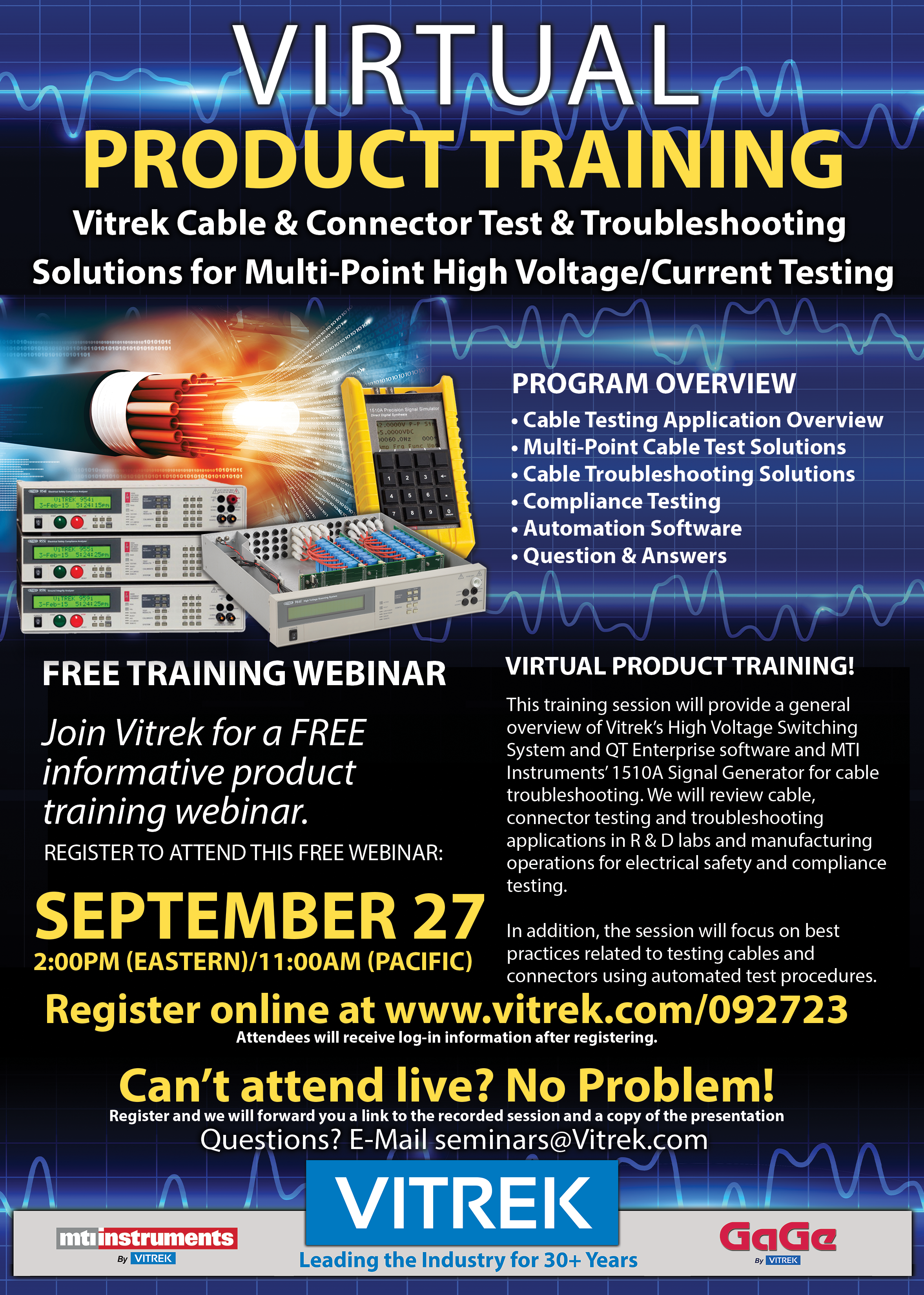
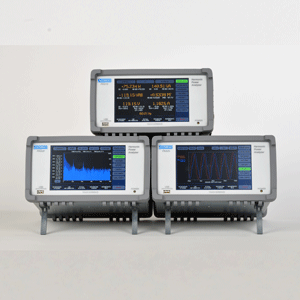
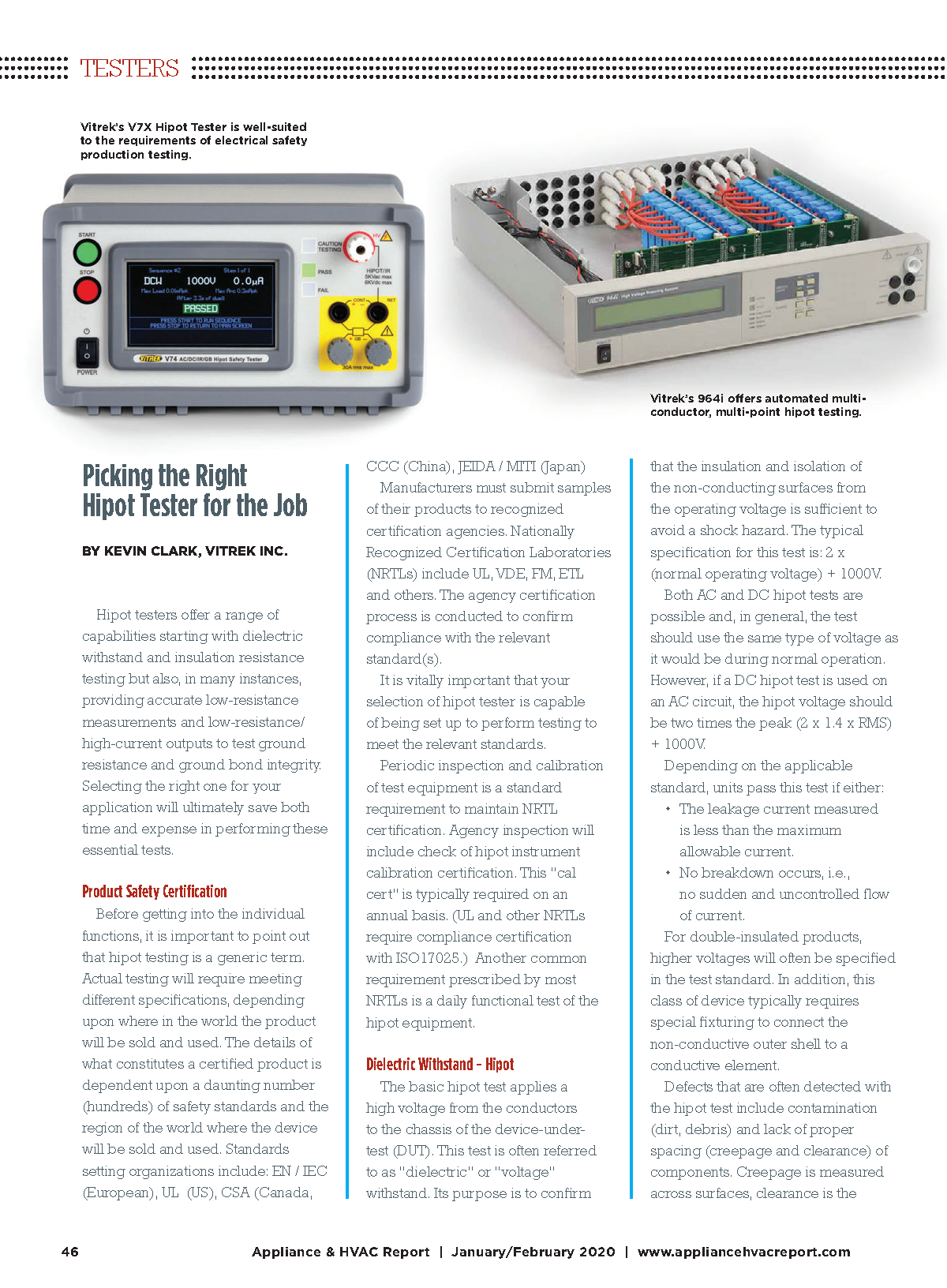
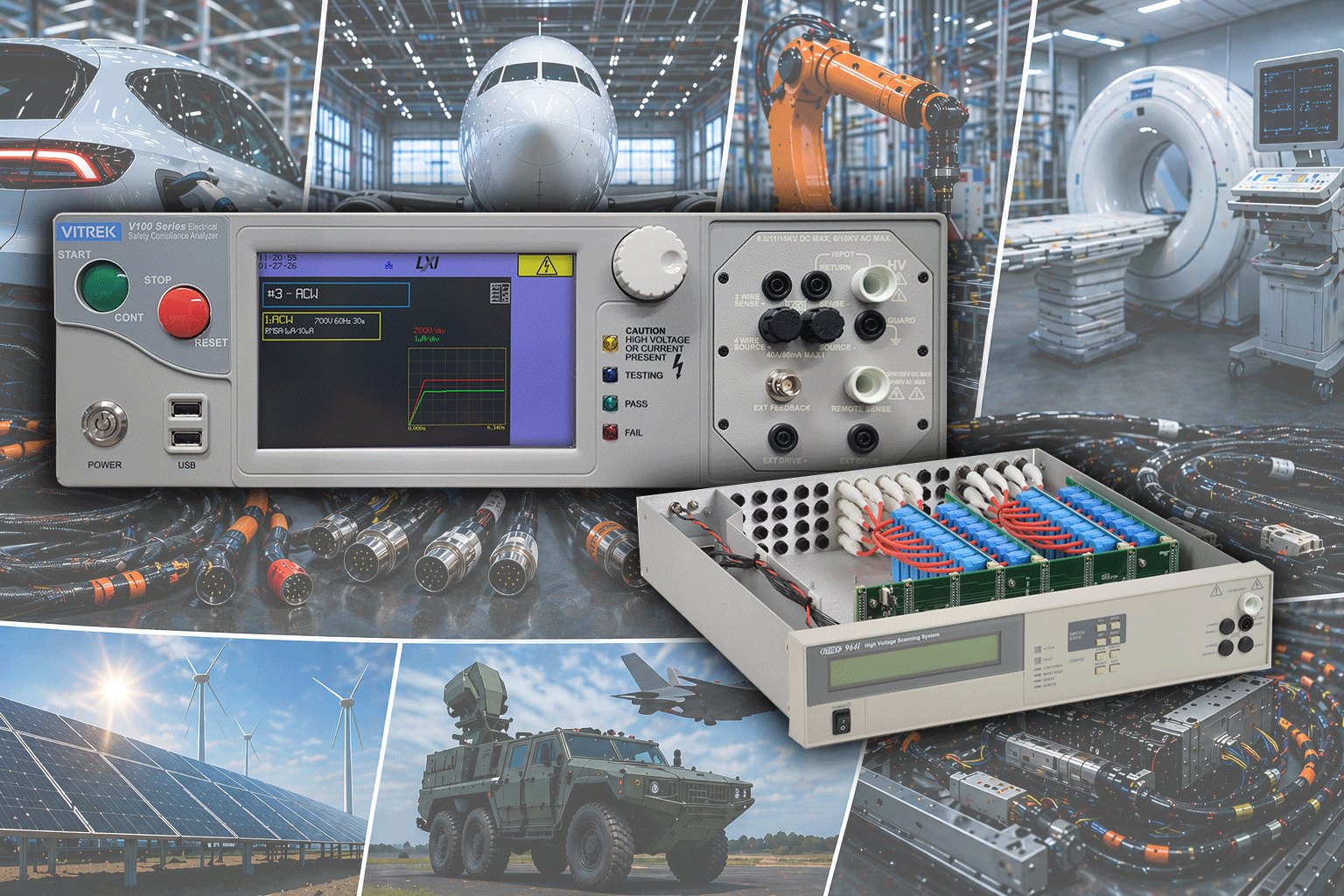
The combination of the Vitrek V10X and 964i addresses these modern requirements in a single cable testing platform. Together, the system delivers high-voltage performance, sensitive measurement capability, and fast multi-point switching designed for complex cable assemblies.
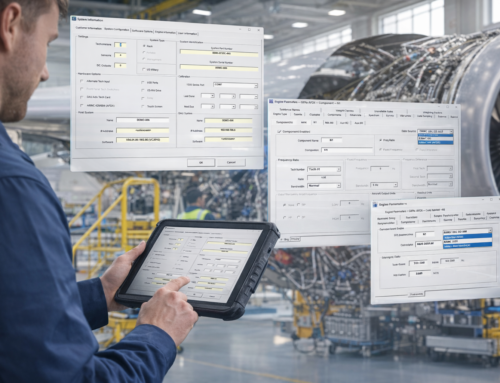
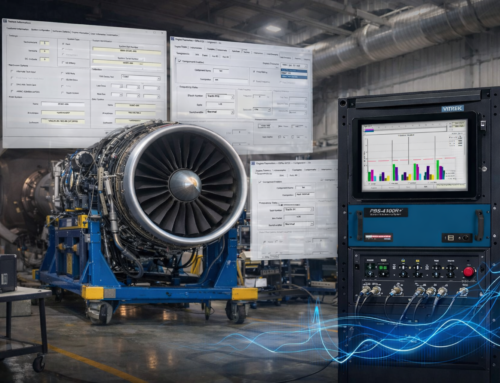
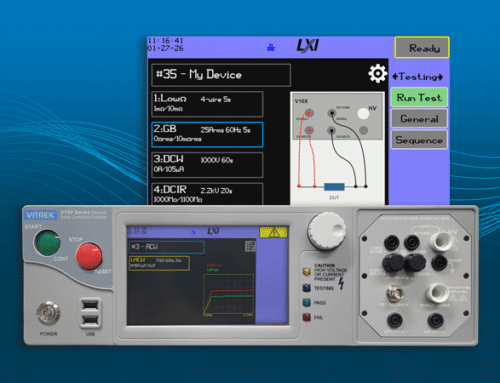
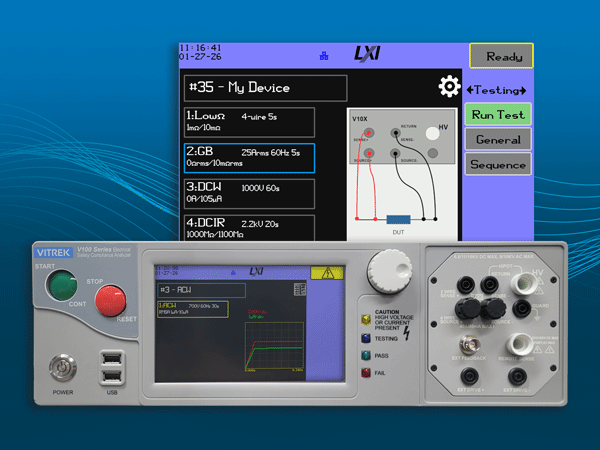
The V10X adds a modern touchscreen interface that simplifies setup and operation while supporting integrated reporting for traceability and compliance. The 964i extends test capability through automated switching, allowing multiple conductors and points to be validated without constant manual intervention. The result is a production ready solution that helps transform cable testing from a bottleneck into a measurable competitive advantage.
How Automation Improves Production Metrics
Repeatability also improves because the same validated sequence runs every time. Instead of relying on individual operator habits or memory, automated systems execute identical test routines with consistent timing, limits, and order of operations. This helps standardize results across shifts, operators, and production lines.
Another major advantage is the reduction of false failures. Stable programmed limits, controlled ramp times, and repeatable switching paths minimize nuisance trips and inconsistent readings that often occur in manual environments. This reduces unnecessary retesting, saves labor, and prevents delays caused by investigating non-existent defects.
Training becomes easier when systems are recipe-driven. Operators can scan a barcode or select a predefined test program rather than learning complex manual procedures for every product variant. This shortens onboarding time, reduces dependency on tribal knowledge, and allows teams to adapt more quickly to staffing changes.
Traceability is strengthened through automatically generated digital records linked to serial numbers, part numbers, or batch data. Test results can be stored, searched, and retrieved instantly for audits, customer documentation, or internal quality analysis. This creates greater visibility into production performance while simplifying compliance requirements.
Business Results Manufacturers can Expect
The benefits of intelligent cable testing extend well beyond the test bench. Improved throughput allows manufacturers to process more units with less manual handling and fewer delays between steps. Better quality comes from consistent execution across every assembly, reducing variability and helping prevent escaped defects.
Compliance also becomes easier when test records are generated automatically and stored in a format suitable for audits, customer requirements, or internal quality systems. Guided workflows reduce the training burden by minimizing dependence on tribal knowledge or highly experienced operators. Perhaps most importantly, automated platforms provide future readiness by supporting next-generation cable designs, higher volumes, and evolving customer expectations.
The Role of the V10X and 964i in Cable Test Applications
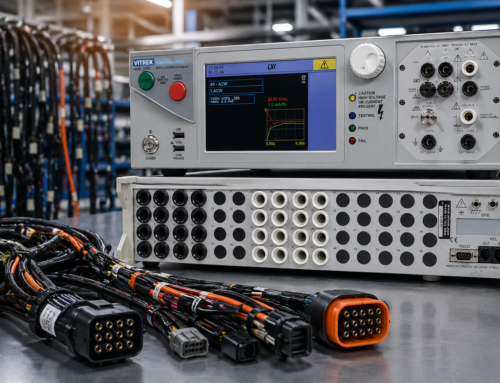
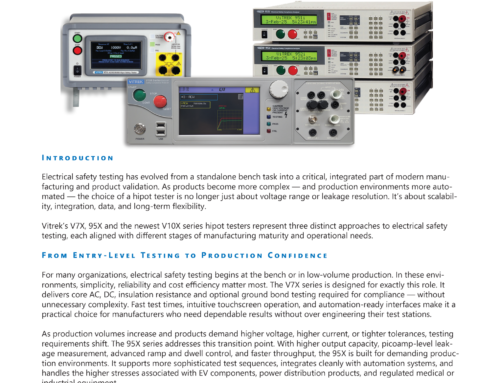
V10X Hipot Tester
The Vitrek V10X and 964i are designed to help manufacturers bring these automation benefits directly into cable and harness production. Together, they combine high-voltage test capability with intelligent switching, creating a flexible platform for validating complex assemblies faster and more consistently than manual methods.
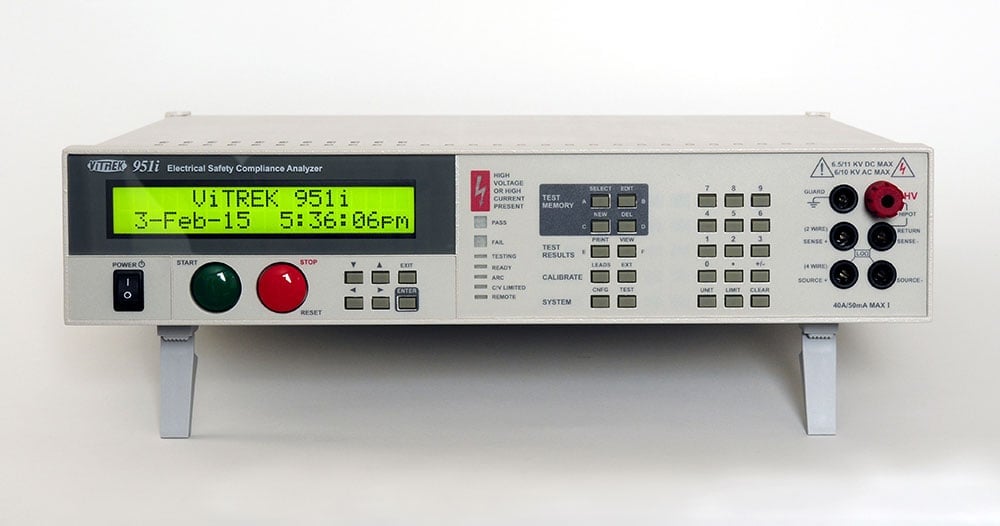
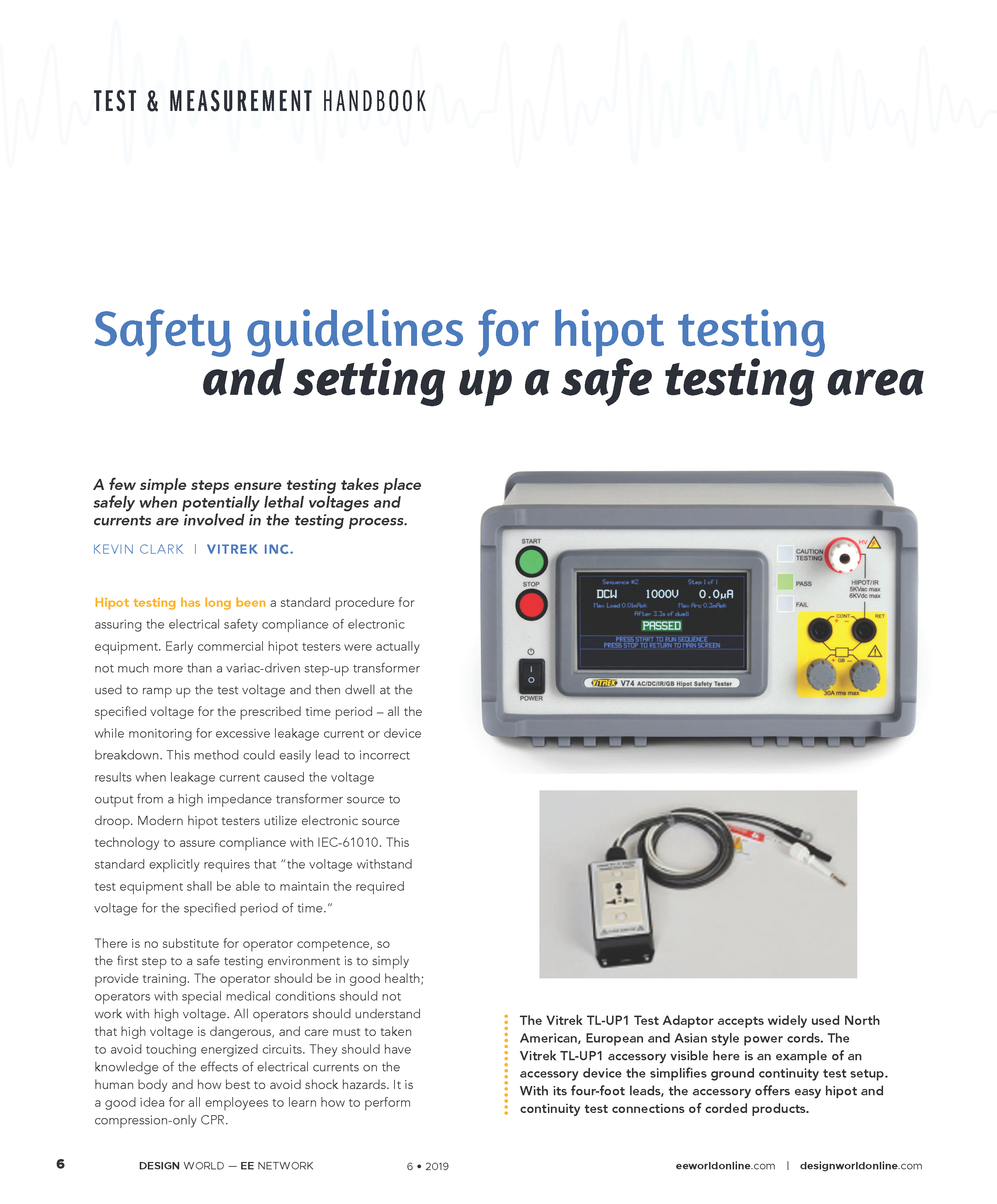
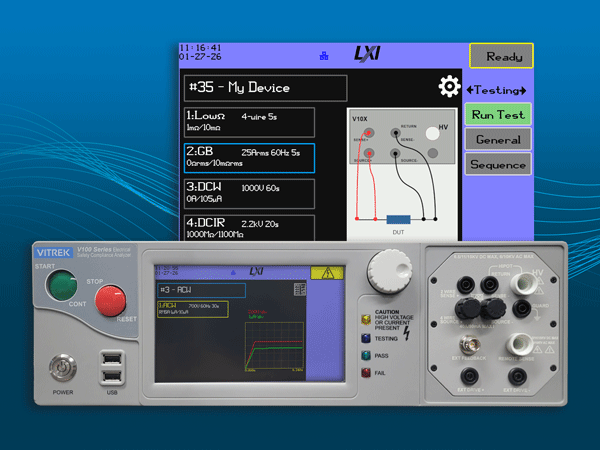
The V10X serves as the measurement engine of the system, providing advanced hipot and electrical safety testing with a modern touchscreen interface, programmable test sequences, and integrated reporting tools. Its high-voltage performance and sensitive measurement capability allow manufacturers to verify dielectric withstand, leakage current, and insulation integrity with confidence across a wide range of cable products.

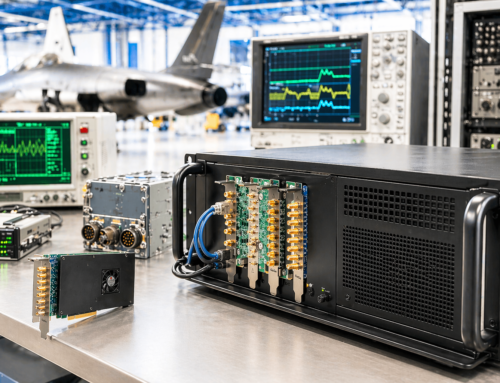
964i HV Switch
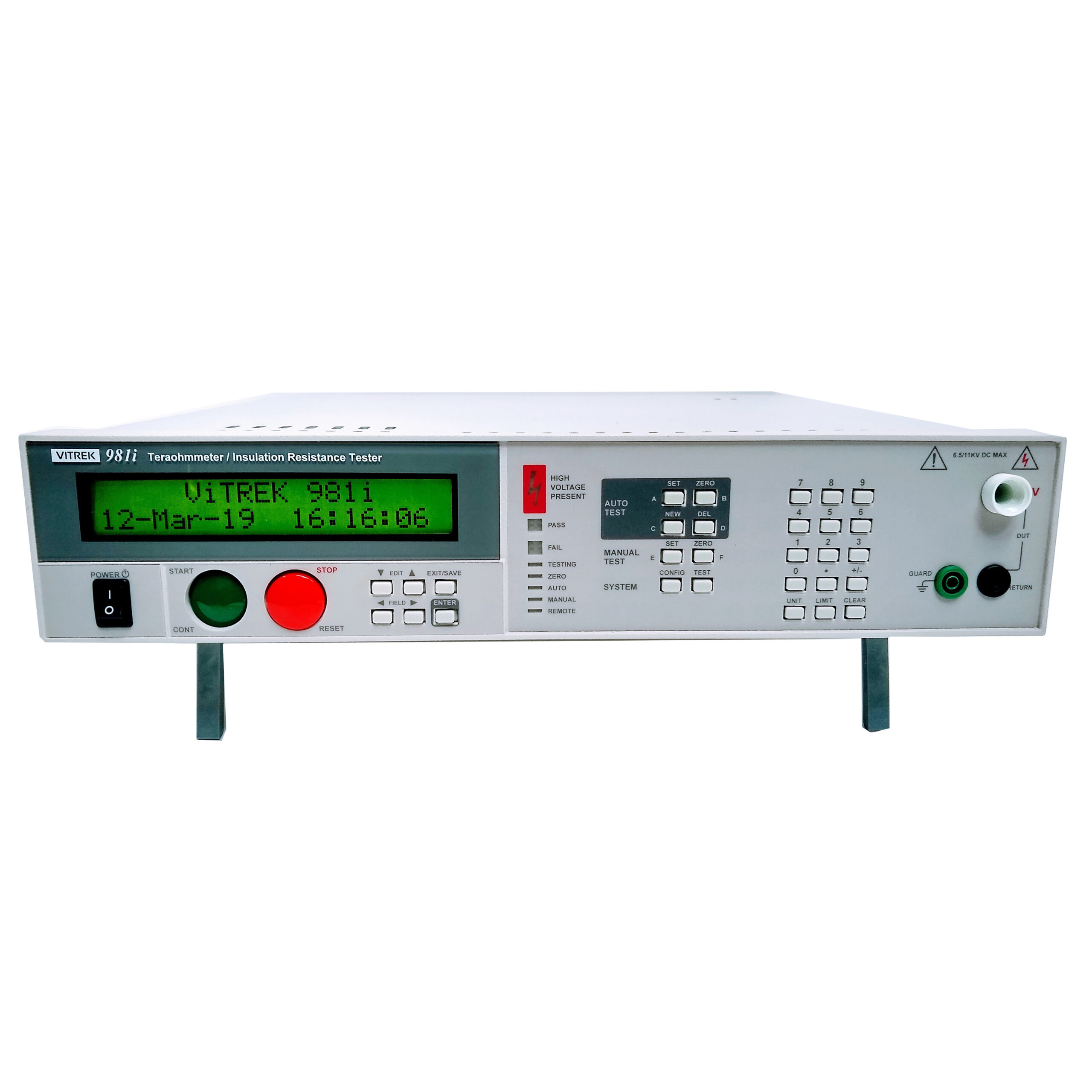
The 964i extends that capability by automating access to multiple conductors and test points. Instead of requiring operators to manually move leads from pin to pin, the 964i electronically routes connections through a controlled switching sequence. This reduces setup time, minimizes handling errors, and makes high-point-count cable assemblies practical to test in production environments.
Used together, the V10X and 964i create a scalable solution that supports faster throughput, repeatable execution, easier operator workflows, and complete digital traceability. Whether the application involves EV cables, aerospace harnesses, medical assemblies, or industrial wiring systems, the platform helps transform cable testing into a streamlined and data-driven manufacturing process.
Conclusion
Cable testing has become far more than a final inspection step at the end of production. As assemblies grow more complex and performance expectations continue to rise, manufacturers need testing processes that can keep pace with higher voltages, greater conductor counts, tighter quality requirements, and increasing production volumes. Relying on manual methods in this environment introduces unnecessary risk, slower throughput, and limited visibility into product quality.