

Selecting a Displacement Sensor / Measuring System
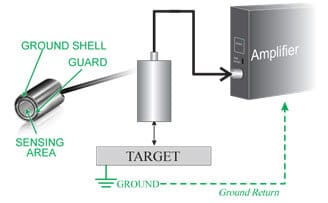
Capacitive displacement sensors Capacitive displacement sensors are non-contact devices that are used for measurements at a high-resolution. It can also be used to check the position of any conductive object as well as measure the width or density of non-conductive materials. Capacitive displacement sensors have a large variety of uses including precision thickness measurements, assembly line testing, assembly metrology, and semiconductor processing. Capacitive displacement sensors can be found in manufacturing facilities all around the globe. There’s more to selecting the proper type of displacement sensor and measurement system than meets the eye. To select the appropriate type of device [...]
International System of Units (SI)
International System of Units (SI)
Target Material and Characteristics
Target Material and Characteristics Transparent/Opaque Targets There are a number of measurement systems that are capable of measuring a target that is opaque. When it comes to transparent targets, the measurement system being used must match the material of the target being measured. For example, if you’re attempting to measure plastic you should use a contact-type measurement system such as a micrometer. When performing a soft target measurement, such as film, a non-contact measurement system (such as a laser displacement sensor) should be utilized. Hard/Soft Targets Objects made out of hard material (such as a block of wood), would [...]
Tolerance and Measurement Accuracy
Tolerance in Measurement: Understanding the Concept Tolerance refers to the total allowable error within a manufactured item or measurement process. It is typically represented by the symbol +/-, indicating the range of acceptable deviation from the desired measurement. During the manufacturing process, it is almost inevitable that products can experience some form of damage or alteration. Various factors such as changes in temperature, humidity, or improper feedback from process control devices can lead to warping or distortion. Regardless of the cause, tolerance in measurement plays a crucial role in defining the acceptable error range during production. This error range is [...]
Measurement Errors
Measurement Errors: Definition, Types, Examples, Causes, and Prevention In any measurement process- whether in a physics lab, manufacturing line, or metrology test setup—differences between measured values and actual values are inevitable. These discrepancies are known as measurement errors, and understanding them is essential to improving accuracy, precision, and the reliability of results. Understanding these errors is essential for reliable decision-making in engineering, science, and manufacturing. What Is a Measurement Error? A measurement error is the difference between a measured value and the true value of the quantity being measured. These errors can arise from instrument limitations, human mistakes, environmental [...]

What is Measurement?
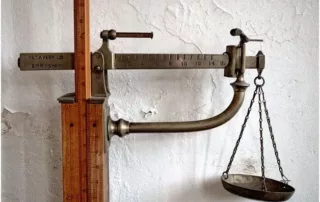
Measurement is about determining the quantifiable attributes of a target object. Examples of these attributes include: length weight distance thickness position capacity size The following sections explain more about what measurement is – and isn’t. Why is measurement misunderstood? Sometimes, people use the term “measure” instead of “calculate” or “quantify”. All these terms are related, but they’re not the same. For clarity’s sake, think of measurement as a single action that you perform with instrumentation. Collectively, “instrumentation” describes devices (i.e., instruments) that measure, indicate, and sometimes record values. Today, there are many different types of specialized measuring instruments. Bakers [...]
What is a displacement sensor?
What are Displacement Sensors (Displacement Gauges) and Dimension Measurement Systems? What is a displacement sensor? A displacement sensor (displacement gauge) is primarily used to measure the range of where an object has to travel and in relation to a reference position. Displacement sensors have multiple uses. Its primary use is for dimension measurement to figure out an object’s width, height, and thickness. Accuracy, application and usage environment is required when selecting the best equipment. What is a measurement sensor? A measurement sensor is a device that is used to measure an object to ascertain its dimensions such as by [...]
Contact Form Submitted – Thank You
Thank you for your interest in MTI Instruments! If you're asking about our products, a representative will be in touch with you within two business days. You may also view our full sales network here! You can also contact MTI directly at any time: Call Toll-Free: 1-800-342-2203 Email: MTIsales@vitrek.com
Request a Quote
Please complete the following form. If you are outside the geographies that MTI services directly, we will share your information with one of our trusted distributors in your area who will contact you on our behalf. MTI Instruments directly services certain US States, Puerto Rico, Africa, Australia, Mexico, New Zealand, South America, and Vietnam. Click here to view our full sales network.
Thank You
Thank You For your interest in MTI INSTRUMENTS We'll be in Touch Soon! Get in Touch with Us Questions about our products, technology or MTI in general? Contact us. MTI INSTRUMENTS Vitrek, LLC 900 N. State Street Lockport, IL 60441 Tel: (815) 838-0005 Fax: 518-218-2506 Email: MTISales@vitrek.com