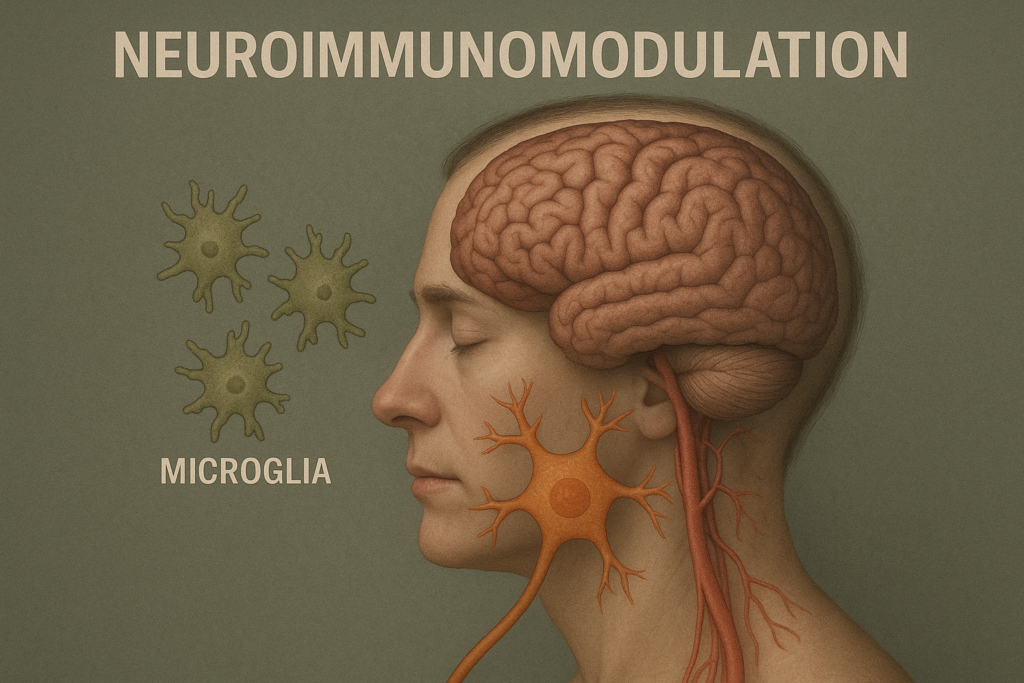
Breaking Barriers: How Focused Ultrasound Enhances Brain Immune Defense
Industry: The research falls within the biomedical industry, specifically focusing on neuroimmunomodulation for treating neurological diseases such as Alzheimer’s and depression.
Challenge: The main challenge is optimizing and understanding the mechanism of focused ultrasound (FUS) neuroimmunomodulation, particularly how it can be standardized and effectively used to treat neurological diseases by modulating brain macrophages.
Extraordinary Aspects of the Paper: The study is notable for directly comparing three FUS paradigms:
FUS-BBBO (with microbubbles to open the BBB)
FUS-N (without microbubbles)
FUS+MB (with microbubbles but without opening the BBB)
It found that FUS-BBBO is the most effective in modulating brain macrophages, promoting neuroprotective and disease-associated microglia, especially in the presence of Alzheimer’s pathology. The research uniquely combines flow cytometry, single-cell sequencing, and spatial transcriptomics to map the redistribution of brain macrophages in response to FUS-BBBO.
Equipment & Sensors Used:
GaGe Digitizer: Model likely CS14200, a 14-bit, 200 MS/s digitizer.
Transducers:
FUS Transducer: Single-element, spherical-segment (1.5 MHz center frequency, focal depth 60 mm, radius 30 mm; Imasonic, France).
Pulse-Echo Ultrasound Transducer: Center frequency 10 MHz, focal depth 60 mm, radius 11.2 mm; Olympus NDT, USA.
Amplifiers:
Power Amplifier: 50-dB power amplifier; E&I, Rochester, NY, USA.
Pulser-Receiver: Olympus, Waltham, MA, USA.
MRI System: 9.4T MRI system; Bruker Medical, Boston, MA, USA.
Microbubbles: Lab-made (8×10^8/mL, mean diameter 1.4 μm).
Software: FlowJo (FlowJo, LLC), Seurat package for R, CellRanger for data processing.