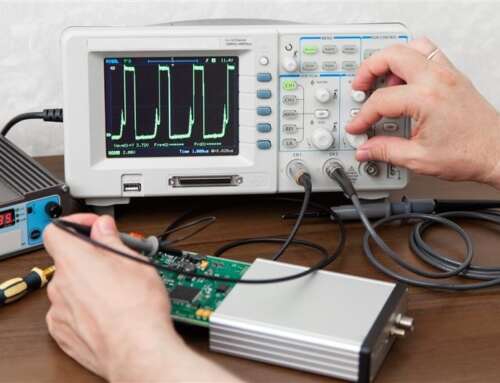
Ensuring the safety and reliability of electrical equipment begins with validating whether that insulation can withstand high voltage without failure. That’s where hipot testing plays a critical role.
Short for high potential testing, hipot testing is a standardized method used across industries to evaluate insulation strength, detect latent defects, and ensure compliance with safety regulations. Whether you’re an engineer, technician, or quality assurance professional, understanding the fundamentals of hipot testing is key to maintaining electrical safety.
What Is Hipot Testing?
Hipot testing is a form of dielectric withstand testing. It involves applying high voltage significantly greater than the device’s normal operating level between conductive parts and insulation barriers to confirm that no unwanted current will leak through under any borderline conditions.
The term “hipot” is derived from “high potential,” referring to the elevated voltage used during the test. This simulates worst-case electrical stress and reveals potential insulation weaknesses.
In simple terms
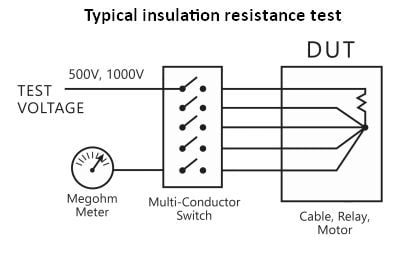
High voltage is applied between live conductors and ground (or between conductors themselves), and the resulting leakage current is measured. If the insulation holds, the product passes. If not, the item may pose a hazard or failure risk and must be repaired or rejected.
Why Is Hipot Testing Important?
Hipot testing is more than a routine procedure it’s a critical safeguard for electrical products. It detects issues before they reach the end user and ensures compliance with industry-specific standards.
Key benefits: Can text between asterisks be eliminated?
- User Safety: Prevents electric shock hazards by verifying insulation strength.
- Product Reliability: Detects internal defects like crushed wires, voids, or poor solder joints.
- Regulatory Compliance: Required by standards such as UL, IEC, CE, and ISO 17025.
- Quality Control: Enables 100% testing in production environments to catch insulation failures early.
In highly regulated industries such as medical devices (IEC 60601), automotive electronics, and consumer appliances, hipot testing is often a mandatory step in the certification process.
How Does a Hipot Test Work?
It functions by applying a high-voltage potential typically far above the device’s normal operating level between conductive components and insulation barriers. The goal is to verify that the insulation can withstand electrical stress without allowing unwanted current (known as leakage current) to flow through.
The Hipot Test Is Applied Between:
- Conductive elements such as wires, PCB traces, terminals, or metal enclosures
- Insulated or grounded parts, including plastic housings, isolation layers, or earth reference points.
This high voltage stresses the insulation ensuring that any breakdown or weak points are identified before the product reaches the end user.
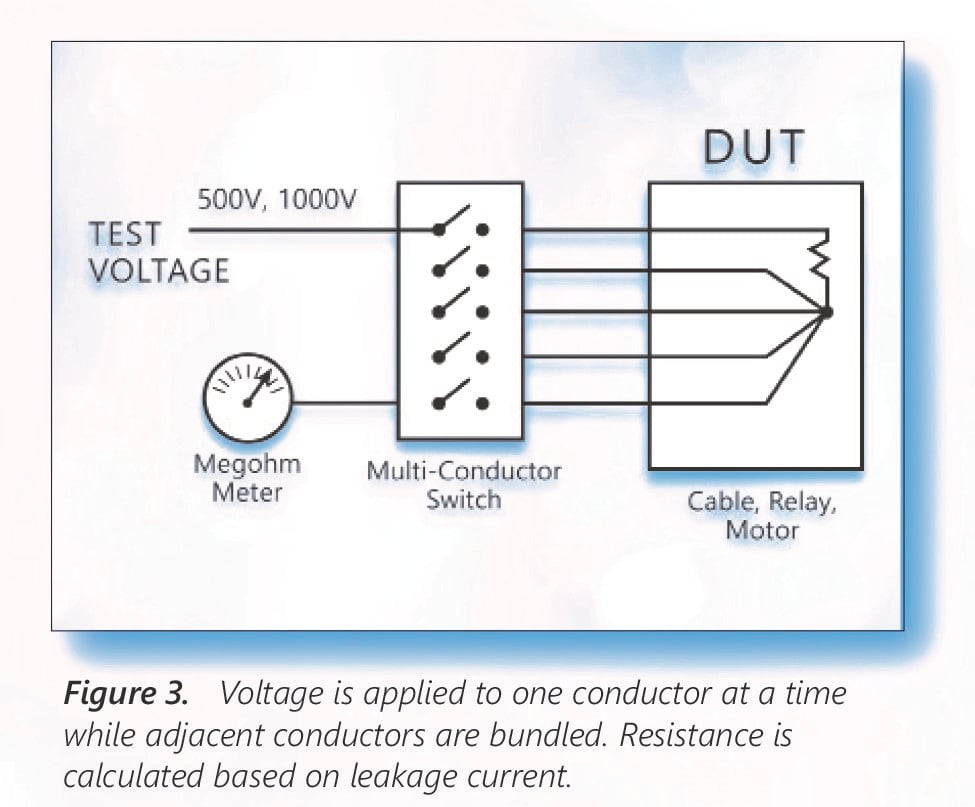
Key Parameters Monitored During a Hipot Test:
| Parameter | Description |
| Test Voltage | The applied voltage level typically ranging from 500 V to 5,000 V,or more depending on the product standard and insulation rating. |
| Leakage Current | The amount of current that flows through the insulation. Any measurable current indicatess an imperfection or breakdown in the insulation system. |
| Ramp Time | The time taken to gradually increase the voltage to the full test level. A slower ramp reduces stress on components and prevents sudden dielectric failure. |
| Dwell Time | The length of time the test voltage is held at target level. Duration defines the sustained stress conditions being imposed on the insulation. |
During the test, the hipot tester continuously monitors leakage current. If the measured amountexceeds the programmed pass/fail threshold, the insulation is deemed insufficient, and the test is marked as failed.
Advanced testers may also include:
- Arc detection to identify high-frequency discharge events
- Auto-discharge to safely release stored energy in high-capacitance devices
- Programmable test sequences for production or compliance workflows
Safety First: Hipot Testing Risks
Hipot testing involves voltage levels that often exceed5,000 volts. Even short exposures pose serious dangers. Proper safety procedures must be followed rigorously.
- Interlocked enclosures and warning indicators
Prevent unintended exposure by ensuring test areas are physically secured and clearly marked with visual alerts. - Maintain a safe distance from the DUT (Device Under Test)
During testing, the DUT may become energized. Arcing can occur when a person enters the test area. Never reach into or extend a conductive object into the test area once the voltage is active. - Never touch test leads or terminals immediately after a live test
Always verify that the test has completed and the system is fully discharged before handling any test equipment. - Manually or automatically discharge capacitive loads
High-capacitance devices, such as power supplies or cables, can store dangerous residual energy. Discharge procedures must be followed before reconnecting or moving the DUT.
Modern testers include safety features like auto-discharge, interlocks, and fast shutdowns.
Where Is Hipot Testing Used?
Hipot testing is widely applied across industries where electrical insulation integrity is critical to safety, reliability, and regulatory compliance. It is a standard requirement for both product certification and quality assurance during manufacturing.
- Medical Devices & Equipment: To confirms electrical isolation of potential patient-contact surfaces like per IEC 60601.
- Automotive Electronics & EV Components: To alidate the insulation of ECUs, sensors, charging systems, and high-voltage battery packs per ISO and OEM safety standards.
- Battery Systems & Energy Storage Units: To ensure high voltage signal isolation in cells, busbars, and enclosures, especially in EVs, UPS systems, and grid storage.
- Household Appliances: Ensures safety of consumer devices like microwaves, washing machines, and power tools under standards such as IEC 60335 or UL 982.
- Consumer Electronics: For products like laptops, chargers, mobile phones, and audio equipment to prevent electrical shock or fire risk.
- Solar Panels & Inverters: To evaluates insulation between PV conductors, frames, and ground critical in differing weather conditions.
- Industrial Automation & Control Systems: For motor drives, PLCs, contactors, and relay panels– to confirm safety in high-duty, electrically noisy environments.
Tools & Equipment: What Do You Need for Hipot Testing?
To perform a hipot test accurately and safely, it’s essential to use the right equipment. Whether you’re conducting compliance testing, production QA, or R&D validation, your test setup must be properly configured to meet voltage, current, and application-specific requirements.
Core Equipment for Hipot Testing:
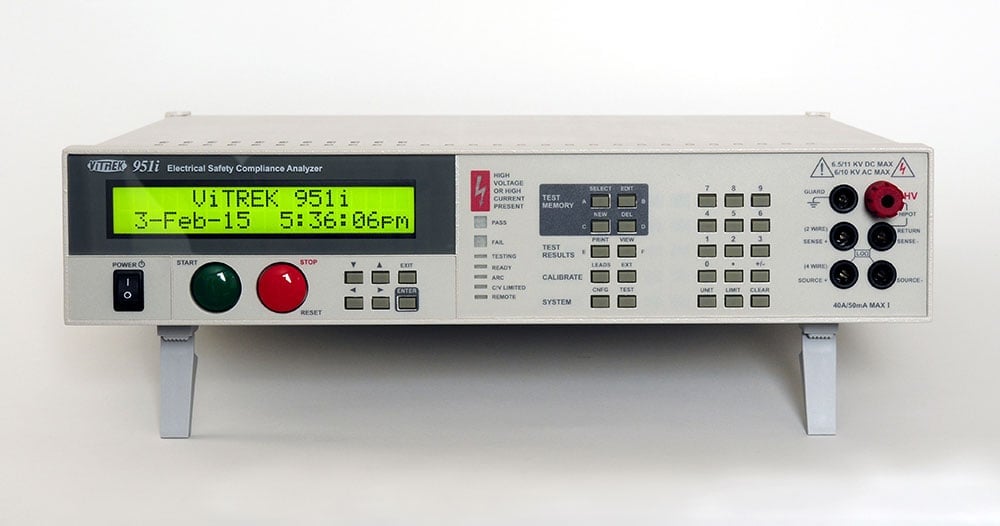
- Hipot Tester
The central test instrument that generates and applies high voltage (AC, DC, or both) and measures leakage current. - Recommended Models:
- Vitrek V7X Series – Ideal for compact production environments
- Vitrek 95X Series – Designed for advanced, high-voltage applications with picoamp-level resolution

- High-Voltage Test Leads
Rated for the output voltage of your tester (e.g., 5 kV, 15 kV, 30 kV), these insulated cables connect the DUT to the tester while ensuring operator safety and signal integrity.
Optional Accessories (Based on Application Needs):
- Ground Bond Test Adapter: Enables high-current testing (e.g., 25–40 A) of protective ground connections. Required when performing ground continuity or ground bond testing per standards like UL and IEC.
- PVD (Performance Verification Device) : A reference load used to verify tester accuracy Helps meet ISO 17025 and quality system requirements for calibration traceability.
- High-Voltage Switch Matrix: Automates and accelerates the hipot test across multiple test points, ideal for cable harnesses, multi-pin connectors, or multi-device setups.
- Built-in switching:Available in Vitrek V75/V76/V77 models
- External systems:Use Vitrek’s 964i HV Matrix for up to 128 or 256-point configurations
- PC Control Software: Vitrek QT Insite software enables automated testing, result logging, barcode integration, and test sequence programming, essential for production environments and audit compliance.
Ensuring Electrical Safety with Vitrek Hipot Testers
Reliable insulation verification starts with using the right test method, configuring test parameters accurately, and following strict safety practices. Vitrek’s Hipot Testers including the V7X and 95X Series offer the precision, automation, and compliance support needed for today’s demanding QA and compliance environments. They are widely recognized because of their established history and are widely used by market leaders in a variety of industries.
Whether you’re validating product safety, ensuring regulatory compliance, or preventing costly failures in the field, Vitrek’s advanced hipot systems deliver the accuracy needed to detect insulation weaknesses before they lead to safety incidents or product recalls.