MADE IN USA - BUILT FOR GLOBAL STANDARDS

Blog

Piezoelectric Signal Conditioning with MTI Charge Amplifiers: From Portable 55CA/41CA to Rack-Mount CA1800 Solutions

Piezoelectric sensors deliver critical data for turbine balancing, structural health monitoring, and vibration analysis, only when paired with proper signal conditioning. Extracting clean, phase-accurate signals in environments with electromagnetic interference, temperature shifts, and cable effects remains a persistent challenge. Signal conditioning bridges the gap between the sensor and the measurement system. MTI Instruments offers a comprehensive portfolio of charge amplifiers designed to address the challenges of piezoelectric signal conditioning challenges across diverse applications. From the portable 55CA and 41CA units engineered for field turbine balancing to the multi-channel CA1800 rack-mount system for laboratory testing, MTI's line-up provides scalable solutions for [...]

By |February 6th, 2026|Categories: Brand-MTI, MTI Blog|Comments Off on Piezoelectric Signal Conditioning with MTI Charge Amplifiers: From Portable 55CA/41CA to Rack-Mount CA1800 Solutions

Accelerometer Signal Conditioning: From Charge to Voltage Conversion Explained

A piezoelectric accelerometer generates a tiny electrical charge when it vibrates. That charge, measured in picocoulombs, contains valuable information about machinery health, structural integrity, or performance characteristics. But here’s the problem: you can’t measure it reliably without proper signal conditioning. One of the fundamental challenges lies in the nature of the signal itself: high-impedance charge outputs generated by piezoelectric sensors versus the low-impedance voltage signals required by data acquisition systems and analyzers. Without proper signal conditioning, even the most accurate accelerometer can produce distorted, noisy, or unstable results. This creates a challenge for engineers working with vibration measurement systems. In [...]

By |February 6th, 2026|Categories: Brand-MTI, MTI Blog|Comments Off on Accelerometer Signal Conditioning: From Charge to Voltage Conversion Explained

Engine Test Cell Setup: Best Practices for Vibration Analysis

Vibration analysis is crucial in engine testing.  It identifies issues, such as imbalance, misalignment, and wear. Whether testing jet engines, gas turbines for power generation, or APUs, a proper vibration analysis setup is vital for ensuring safety, performance, and reducing maintenance costs. Test cells simulate operational conditions.  Accurate vibration analysis detects faults like rotor imbalance and bearing issues before failures occur, ensuring safe operation and minimized downtime. However, environmental factors such as electromagnetic interference, temperature variations, and structural noise can compromise measurement quality. This guide outlines best practices for effective vibration analysis, including sensor placement, cable management, and EMI [...]

By |November 28th, 2025|Categories: Blog, MTI Blog|Comments Off on Engine Test Cell Setup: Best Practices for Vibration Analysis

Charge Mode vs. ICP Accelerometers: Selecting the Right Sensor and Signal Conditioning with MTI Charge Amplifiers

Turbines, engines, and rotating machinery require precise vibration measurements to prevent catastrophic failures and costly downtime. A single measurement error can mean the difference between scheduled maintenance and emergency repairs. Vitrek's MTI charge amplifiers deliver the signal conditioning that transforms raw sensor data into reliable measurements, even in the harshest industrial environments. Sensor selection, directly impacts  measurement quality, system complexity, and operation costs. This post explores the key differences between charge and ICP accelerometers, explains how signal conditioning affects measurement accuracy, and helps clarify which technology best suits your specific application requirements. Understanding Piezoelectric Accelerometer Output Modes Piezoelectric accelerometers [...]

By |November 27th, 2025|Categories: Blog, MTI Blog|Comments Off on Charge Mode vs. ICP Accelerometers: Selecting the Right Sensor and Signal Conditioning with MTI Charge Amplifiers

Load Cell Signal Conditioning with MTI Signal Generators: Precision Calibration and Measurement

Load cells are essential in modern engineering, providing accurate measurements of force, weight, and pressure across industries from manufacturing to aerospace. Engineers working with load cells face challenges like electromagnetic interference (EMI), temperature-induced drift, and bridge unbalance, which can affect measurement accuracy. Signal conditioning plays a crucial role in overcoming these obstacles by converting raw sensor outputs into clean, amplified signals for data acquisition systems. Load cells measure force, weight, and pressure by converting mechanical strain into electrical signals, typically in the millivolt range. Proper signal conditioning ensures linearity, repeatability, and precision across the measurement span. MTI Signal Generators [...]

By |November 26th, 2025|Categories: Blog, MTI Blog|Comments Off on Load Cell Signal Conditioning with MTI Signal Generators: Precision Calibration and Measurement

Multi-Channel Micron Displacement Measurement: AS-500 Modular Systems for Production Line Integration

Production engineers face a critical question every day: How precise does a measurement really needs to be? Precision in manufacturing helps create a balance. Some applications require nanometer or even picometer accuracy, but many production line tasks are perfectly served with micron-level resolution. A micron displacement sensor delivers reliable, repeatable data with accuracy down to the micrometer scale. For industries focused on throughput, uptime, and cost efficiency, this level of precision is often exactly what’s required. What is the difference between nanometer and picometer sensors and micron displacement sensors? This post discusses the differences between these systems, introduces you [...]

By |October 6th, 2025|Categories: Blog, MTI Blog|Comments Off on Multi-Channel Micron Displacement Measurement: AS-500 Modular Systems for Production Line Integration

Nanometer Displacement Sensors: Accumeasure D Series for High-Speed Industrial Metrology

Do you know how engineers spot defects that are far too small for the human eye, movements 80,000 times thinner than a sheet of paper? Detecting changes at this scale is only possible with nanometer displacement measurement, a technique that makes ultra-precise industrial monitoring both practical and reliable. It allows manufacturers to track these almost invisible shifts, such as detecting the tiniest vibration in a jet engine turbine blade before it affects performance or measuring the microscopic runout on a brake rotor to ensure smooth operation and safety. Even the thickness of a semiconductor wafer or a thin-film layer [...]

By |October 6th, 2025|Categories: Blog, MTI Blog|Comments Off on Nanometer Displacement Sensors: Accumeasure D Series for High-Speed Industrial Metrology

Picometer Displacement Measurement: How Accumeasure HD Achieves Nano-Scale Precision

Picometer displacement measurement enables detection of movements down to one-trillionth of a meter. This measurement capability is critical for industries like semiconductors and nanotechnology where nano-level precision is essential. Achieving this accuracy presents significant challenges due to electronic noise, thermal drift, and environmental vibrations that can distort signals, requiring advanced sensor technology for dependable results. Engineers often face difficulties with tools that struggle to maintain consistency under these demanding conditions. MTI Instruments Accumeasure HD addresses these challenges with innovative design, establishing a benchmark for precision measurement systems. This post explores the technology behind picometer precision, applications of picometer displacement [...]

By |September 23rd, 2025|Categories: Blog, MTI Blog|Comments Off on Picometer Displacement Measurement: How Accumeasure HD Achieves Nano-Scale Precision

Analog to Digital Converter vs. High Speed Digitizer: What’s the Difference and Why It Matters?

Modern electronic systems face critical challenges in capturing and processing analog signals with precision and speed required for advanced applications across aerospace, medical devices, RF communications, and scientific research. Converting analog signals to digital format requires specialized components that can handle signal integrity degradation, timing synchronization issues, and data acquisition bottlenecks that compromise measurement accuracy and system performance. Analog signal to digital converter solutions range from basic ADCs to sophisticated high-speed digitizers that provide complete signal acquisition systems. Understanding how to convert analog signal to digital effectively depends on your specific application requirements and performance needs. This post explores [...]

By |September 12th, 2025|Categories: Blog, Electrical Safety Testing Blog|Comments Off on Analog to Digital Converter vs. High Speed Digitizer: What’s the Difference and Why It Matters?

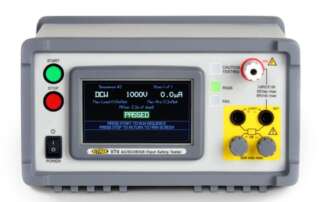
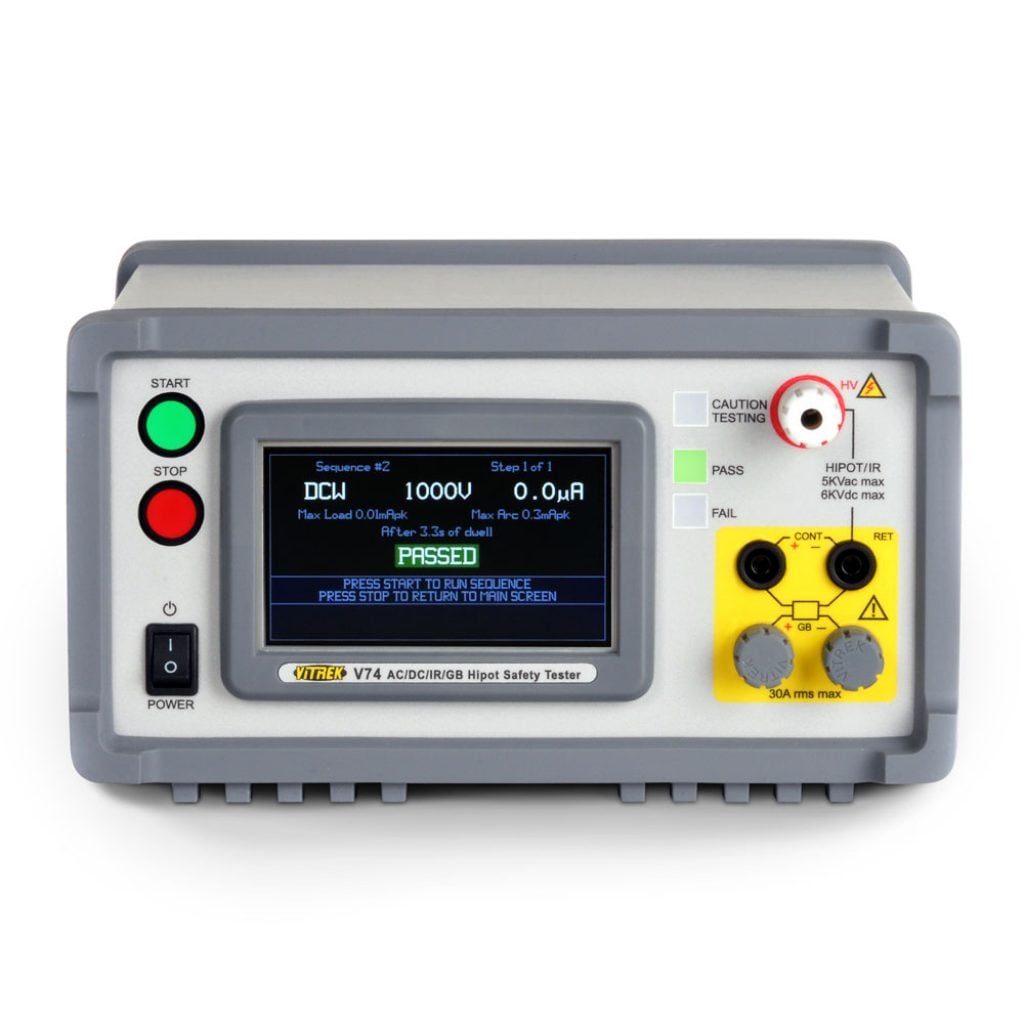
Dielectric Withstand Test: A Complete Guide to Insulation Safety and Compliance

With electrical devices, safety is non-negotiable. Any failure in insulation can lead to dangerous consequences like shocks, fires, or even complete product breakdowns. That's why the dielectric withstand test, also known as the Hipot Test, is essential for electrical safety testing. This comprehensive dielectric testing procedure applies high voltage to a device to verify that its insulation can withstand extreme electrical stress without failing, ensuring both consumer safety and product reliability. Here's an overview on how this crucial dielectric strength test works, why it's necessary for product safety, how to conduct dielectric withstand testing to meet regulatory standards, and [...]

By |September 12th, 2025|Categories: Blog, Electrical Safety Testing Blog|Comments Off on Dielectric Withstand Test: A Complete Guide to Insulation Safety and Compliance
Go to Top