

Windshield Manufacturing
Windshield Manufacturing Automotive Windshield Manufacturing Tolerances Description In order to maintain proper profile and thickness within a glass furnace the extrusion plate spacing must be maintained at a predetermined gap. Unfortunately, due to process changes and temperature swings this gap can fluctuate significantly in short periods of time. This variation causes the glass thickness to change (check out our glass thickness measurement devices to accurately measure thickness), producing uneven temperature gradients and creating potentially weak glass panels. To control this critical parameter the manufacturing process requires automated active feedback control [...]

Cargo Container Position
Transportation Cargo Container Position Distance Description

Road Surface Quality
Road Surface Quality Transportation Road Surface Quality Surface Description Introduction Various Departments of Transportation (DOTs), both nationally and internationally, are developing and incorporating automated road quality inspection equipment. “It is well known that the characteristics of the road surface, especially for the surface layer, are essential to satisfy some primary requests, such as user safety and noise pollution. Road performances are being evaluated and classified by the adoption of certain parameters that affect various characteristics of the road, one of which is the surface texture; it is strictly related also [...]

Instrument Positioning
Transportation Instrument Positioning Positioning Description

Railroad Track Quality
Transportation Railroad Track Quality Surface Description

Fork Lift To Pallet Position
Transportation Fork Lift To Pallet Position Distance Description

Sheet Metal Brake Bending
Industrial Sheet Metal Brake Bending Tolerances Description

DC Motor / Commutator Bar
DC Motor / Commutator Bar Industrial Dc Motor / Commutator Bar Depth Description Using a MTI Microtrak 4 laser triangulation sensor to measure a DC motor’s armature / commutator bar run out. We fitted a DC motor armature (rotor) in a lathe to spin it. The MTI laser head a DTS 50-20 has 50 mm standoff and a 20 mm measuring range. The laser was placed in a FS-5 magnetic  mount fixture and pointed at the commutator bars. The lathe was spun at 180 RPM and the commutator bar run out [...]
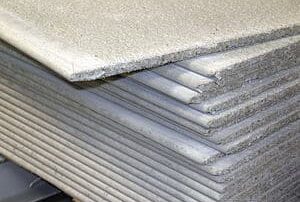
Cement Board Quality Control
Cement Board Quality Control Industrial Cement Board Quality Control Dimensions Description Introduction: Cement backer board is used as underlayment for tile floors, walls and counter tops. It is also used as exterior sheathing and in exterior stucco systems. Cement backer board has proven to be more durable than virtually any other underlayment if quality control and thickness is maintained. The Problem: A major cement board manufacturer was faced with the challenge to improve a board production line throughput and decrease the amount of waste in the process. Too thin of cement board [...]
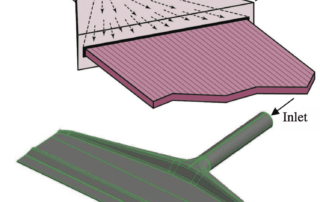


Extruder Die Flatness
Extruder Die Flatness Industrial Extruder Die Flatness Thickness Description Introduction: Extruder dies have a flatness specification that must be maintained or the parts being extruded will be out of tolerance and non-conformant, resulting in scrap and disruptions. Periodic inspection of the die for flatness, deformation, burrs, or other irregularities is required. Situation: A tool and die company approached MTI Instruments, requesting assistance with a new method for inspecting their 20 ft long die. Contact gauges on a gantry had been the previous method; Non-contact was now the preferred practice. Solution: [...]