
 Position, Displacement, and Vibration Measurement with Precision, High Resolution, and Flexibility Gallery
Position, Displacement, and Vibration Measurement with Precision, High Resolution, and Flexibility
Application Notes-MTI, Brand-MTI, Industry-Aerospace, Industry-Automotive, Industry-Compliance Testing, Industry-Consumer Products, Industry-Government/Military, Industry-Manufacturing, Industry: Transportation, News-MTI-PBS, Products-MTI-Engine Balancing, Z-REPUB, z1
Position, Displacement, and Vibration Measurement with Precision, High Resolution, and Flexibility
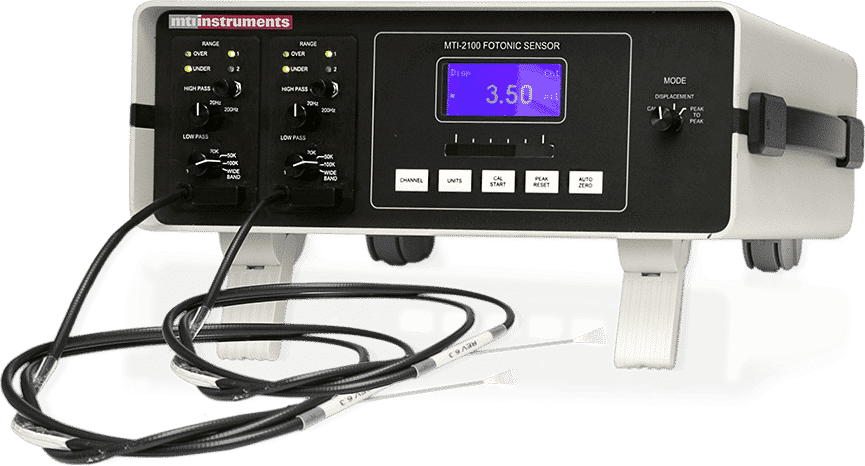
The MTI-2100 Fotonic™ sensor uses advanced fiber optics and electronics to precisely measure position, displacement, and vibration. This high-resolution, non-contact metrology system supports a wide range of interchangeable fiber-optic probes and works with almost any surface, including metallic, composite, plastic, glass, ceramic, or liquid. Made in the USA by MTI Instruments, the MTI-2100 Fotonic™ features a modular design and supports application-specific requirements in R&D, quality, and process control. With its dual channel capabilities, the MTI-2100 Fotonic™ sensor allows users to make simultaneous measurements, such as for structure dynamics and modal analysis. All probe modules have two distinct operating ranges [...]
 How the Aviation Industry Solves Vibration and Balancing Challenges Gallery
How the Aviation Industry Solves Vibration and Balancing Challenges
Application Notes-MTI, Brand-MTI, Industry-Aerospace, Industry-Automotive, Industry-Compliance Testing, Industry-Consumer Products, Industry-Government/Military, Industry-Manufacturing, Industry: Transportation, News-MTI-PBS, Products-MTI-Engine Balancing, Z-REPUB, z1
How the Aviation Industry Solves Vibration and Balancing Challenges
The aviation industry spends significant amounts of time and money on problems caused by engine vibration. Imbalance, the most common cause of engine vibration, happens because of bird strikes and other impacts, but also because of natural wear and corrosion that redistribute mass. In turn, out-of-balance parts can result in cabin noise, metal fatigue, and cracked turbine, fan, or compressor components. In the most extreme cases, catastrophic engine failure may result MTI Instruments, a worldwide supplier of precision measurement solutions, makes equipment for monitoring vibration levels and balancing rotors. For maintenance, repair and overhaul (MRO) crews who want to [...]
Measurements Using Capacitive Sensors
Precise Measurements Using Capacitive Sensors Capacitive sensors can be divided into two categories based upon their performance and intended use. High resolution sensors are typically used in displacement and position monitoring applications where high accuracy, stability and low temperature drift are required. Quite frequently these sensors are used in process monitoring and closed-loop feedback control systems. Proximity type capacitive sensors are much less expensive and are typically used to detect the presence of a part or used in counting applications. Applications Position Sensing General positioning is probably the most [...]
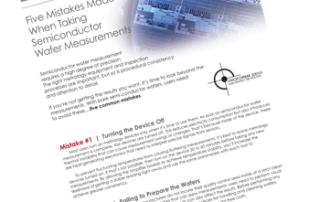
How to Reduce Inconsistent Wafer Measurements
How to Reduce Inconsistent Wafer Measurements Avoid 5 Common Mistakes That Destroy Wafer Measurement Accuracy You take pride in your work. You’re precise, accurate and depend on the right metrology equipment. Then why are your bare semi-conductor wafer measurements sometimes inconsistent? It may be something you’re doing (or not doing) — without realizing it. MTI Instruments discovered there are five common mistakes that engineers and users make with bare semi-conductor wafers. The “Five Mistakes Made When Taking Semiconductor Wafer Measurements” Tech-Brief details these all-too-typical errors that adversely impact measurements. [...]
 Five Common Mistakes with Semiconductor Wafer Measurement Gallery
Five Common Mistakes with Semiconductor Wafer Measurement
Application Notes-MTI, Brand-MTI, Industry-Compliance Testing, Industry-Consumer Products, Industry-Electronics, Industry-Manufacturing, Industry-Semiconductor, Industry-Semiconductor-MTI, Z-REPUB, z1
Five Common Mistakes with Semiconductor Wafer Measurement
Semiconductor wafer measurement requires a high degree of precision. The right metrology equipment and inspection processes are important, but so is procedural consistency and attention to detail. If you’re not getting the results you want, it’s time to look beyond the measurements. With bare semiconductor wafers, users need to avoid these five common mistakes. Mistake #1 | Turning the Device Off Most users turn on metrology devices only when it’s time to use them. As soon as semiconductor wafer measurement is complete, the devices are turned off. This reduces electricity consumption but also introduces thermal instability that can cause [...]
Capacitance Probes: Five Things You Need to Know
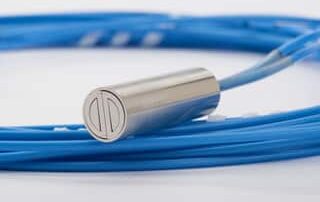
Capacitance probes are non-contact measurement devices with a capacitance sensor inside a protective shell or housing. They use cables and connectors to integrate with amplifiers and are an important part of capacitance measurement systems. By using capacitance, engineers can measure physical parameters such as vibration, pressure, liquid levels, metal contamination, and seismic activity – just to name a few. There’s a lot to know about capacitance probes, but five key facts to understand. Capacitance probes are highly accurate and very stable. They’re better than older devices and competing technologies. They require little calibration and support miniaturization and embedding. They [...]
Capacitance Sensors: Three Things You Need to Know
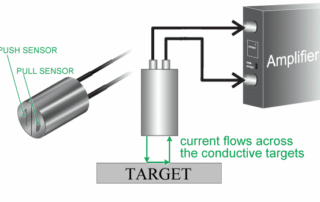
Capacitance sensors are precision measurement tools for process automation, quality control, and tool automation control. They’re used in a many different industries and are suitable for virtually any application where accuracy is paramount. There’s a lot to know about capacitive sensors (as they’re sometimes called), but engineers need to start with three key questions. What are the parameters to specify when selecting a capacitance sensor? What are factors to consider when embedding a capacitive sensor in an industrial application? What is the future of capacitance-based measurement products? MTI Instruments has been providing U.S.-made capacitance sensor systems for over 50 [...]
How to Implement a Complete Digital Closed Loop Control System
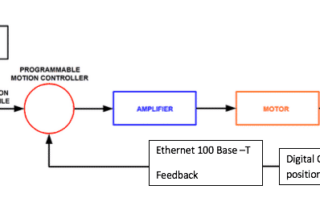
Co-authored by Don Welch, Director of Engineering and Business Development Cory Bufi, Software Engineer Isaac Abbott,Product Innovation Engineer – PBS Group Request Whitepaper Today’s electronic designs often call for reasonably fast and precise positioning of miniature components for process deposition elements such as ink jet nozzles, 3D printing elements etc. And as process control moves from mm positioning to micron to sub-micron positioning it becomes necessary to monitor and control positioning actuators such as piezo flexure stage and voice coil motors. Open loop control of the positioning stage may have been adequate in non-precision applications but piezo electric [...]
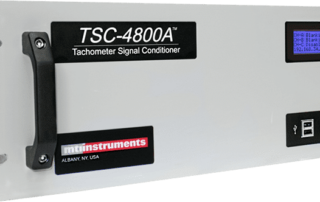
TSC-4800A: Tachometer Signal Conditioner System
TSC-4800A TSC-4800A Programmable Tachometer Signal Conditioner System The state-of-the-art speed resolver and signal conditioning unit built for advanced engine monitoring and testing systems. Deliver accurate, reliable speed conditioning across long-tooth, short-tooth, high-voltage tachometer, and modern offset tooth signals with rapid configuration and seamless digital integration. Request Quote Download Brochure POWERFUL. VERSATILE. FUTURE-PROOF Advanced Programmable Speed Signal Conditioning The TSC-4800A is a state-of-the-art tachometer signal conditioner from MTI Instruments engineered to optimize engine monitoring and testing operations across the aerospace and industrial sectors. Rapidly [...]




Fiber Optic Sensors Help Stop Subway Shutdown
Fiber optic sensors will help keep commuters moving between Manhattan and Brooklyn this year and beyond. Recently, New York Governor Andrew Cuomo announced that New York City’s Metropolitan Transit Authority (MTA) would not close the L train tunnel for a planned 15-month repair project. Instead, the MTA will use technology-driven solutions to keep the tunnel open and operational for weekday riders. In a joint statement, a panel that included engineering experts from Columbia and Cornell explained that "The L Train Tunnel project gives us the opportunity to integrate technologies and methods that have never been used before in a [...]