
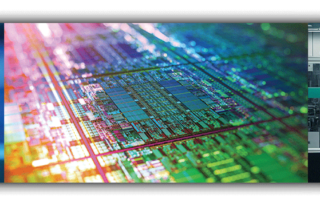
Semiconductor Industry Applications
Semiconductor Industry Applications Vitrek offers a variety of products supporting the semiconductor industry for quality control of the fabrication process as well as testing and verification of semiconductor devices' operational performance as well as supporting the performance of capital equipment use in the semiconductor manufacturing process. Some Vitrek product applications include: Semiconductor Wafer Metrology Monitoring wafers during preparation stages to check thickness for compliance with minimal bow, warp and total thickness variation (TTV). In-process monitoring of solar/photovoltaic wafer measuring for multi-channel thickness, TTV & bow measurement. Ultrasonic, non-destructive inspection of wafers for potential flaws [...]

CHIPS Act
CHIPS for AMERICA CHIPS: Investments in innovation, resilience, and a more competitive American future. Vitrek Supports US Semiconductor Manufacturers! Vitrek brands have supported semiconductor manufacturers like Intel, NVIDIA, Samsung, Qualcomm and others for over 20 years via our test and measurement solutions. What is the CHIPS Act? The CHIPS Act, or the Creating Helpful Incentives to Produce Semiconductors for America's Future Act, is a pivotal piece of legislation in the United States aimed at bolstering domestic semiconductor manufacturing. Introduced in 2021, it represents a bipartisan effort to address the growing global [...]
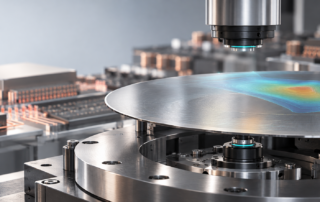
Application Note: Monitoring Wafer Thickness During Backside Processing for AI and Advanced Packaging
Introduction AI accelerators, high-performance computing systems, high bandwidth memory and chiplet-based devices increasingly rely on 2.5D and 3D advanced packaging processes that combine logic, memory, interposers and specialized dies within tightly controlled structures. Before stacking or bonding, wafers may undergo coarse grinding, fine grinding, polishing and other backside processes. These operations must remove substantial material while maintaining the thickness and geometry required by the package design. This application note explains how the MTI Instruments Proforma 300i and Proforma 300iSA can be used at defined process checkpoints to verify wafer thickness, evaluate uniformity and identify process changes before wafers proceed [...]
LED SUBSTRATE THICKNESS
Industry Semiconductor Applications Photolithography Using Capacitance Sensors Measurement Type Positioning Description Remember that old acronym, GIGO? Garbage in garbage out, it can apply to raw materials as well as programming. Sapphire wafers need to be of a certain quality to ensure maximum yield. Excessive TTV, Bow, and Warp lead to premature LED failure. LED manufacturers need to inspect incoming wafers. Wafer producers also need to check and control TTV, Bow and Warp. The market for sapphire wafers, driven by the growth in LED manufacturing, is booming. While the price [...]
WAFER QA/QC AFTER SLICING AND POLISHING
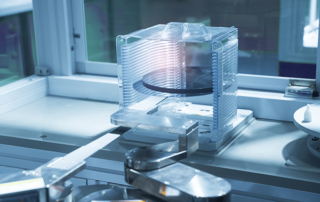
Industry Semiconductor Applications Wafer Qa/Qc After Slicing And Polishing Measurement Type Surface Description When wafers are sliced up with wire saws, they are measured to make sure they are within the specified thickness, with minimal bow, warp, and TTV. After initial measurement, they are sorted and sent for polishing. Since polishing removes material and smoothes out the rough surfaces they need to be measured again to ensure they meet thickness guidelines and quality standards. Solution: MTI Instruments manufactures multiple systems to perform thickness measurements. From semi automated Proforma 300SA to manual wafer [...]
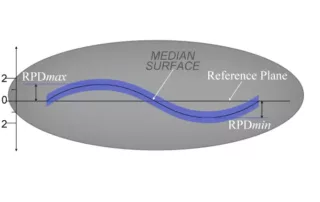
ABOUT WAFER BOW AND WARP MEASUREMENT SYSTEMS
Thickness Measurement for Metrology Systems ASTM F657: The distance through a wafer between corresponding points on the front and back surface. Thickness is expressed in microns or mils (thousandths of an inch). Total Thickness Variation (TTV) ASTM F657: The difference between the maximum and minimum values of thickness encountered during a scan pattern or series of point measurements. TTV is expressed in microns or mils (thousandths of an inch). ASTM F534 3.1.2: The deviation of the center point of the median surface of a free, unclamped wafer from the median [...]

LITHOGRAPHY OPTICS POSITION FOCUS
Industry Semiconductor Applications Photolithography Using Capacitance Sensors Measurement Type Positioning Description One specific area where capacitance systems excel is high resolution focusing of complex lens systems such as those found in atomic force microscopes, vision inspection machines and photolithography tools. In a multi-million dollar photolithography tool, high accuracy, nanometer resolution and maximum thermal stability are absolutely critical to maintain proper focus and obtain integrated circuit line widths as small as 45 nanometers. Additionally, most systems demand low power consumption and maximum heat dissipation to eliminate any adverse affects from [...]
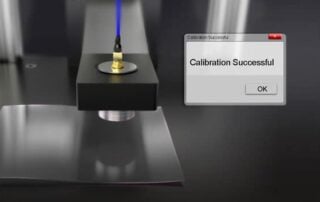
GAAS SUBSTRATE THICKNESS MEASUREMENT
Industry Semiconductor Applications Gaas Substrate Thickness Measurement Measurement Type Thickness Description Measuring Thickness of Wafers with Different Chemistries Introduction: Silicon wafers are ordinarily highly conductive and easy to measure with standard capacitive displacement sensors (See MTI’s Proforma 300i). Measuring the thickness of GaAs wafers that have high bulk resistivity (>10k Ohm/cm) is a little more difficult because the wafers act as non-conductive insulators in a capacitive sensor’s measuring field. Fortunately, MTI has a solution to this problem. Solution: It’s possible to measure the thickness and TTV of high resistivity semiconducting wafers (like GaAs) using non-contact capacitive [...]
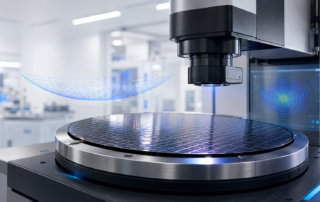
Application Note: Wafer & Thin-Film Stress Characterization Using the Proforma 300iSA
Introduction Thin films are essential to modern semiconductor devices, but every deposited, grown, bonded, or processed layer can introduce mechanical stress into the wafer. When that stress becomes excessive or inconsistent, the effects can extend well beyond the deposition step—contributing to wafer bow, cracking, delamination, overlay error, handling problems, yield loss, and downstream process instability. The MTI Instruments Proforma™ 300iSA semi-automated metrology system provides the full-wafer thickness and shape data needed to evaluate these risks. By measuring wafer geometry before and after a process step, engineers can quantify curvature change and use established film-stress relationships to calculate and trend [...]
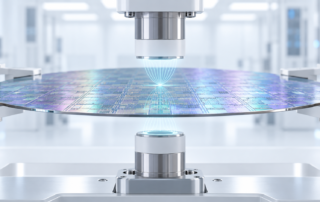


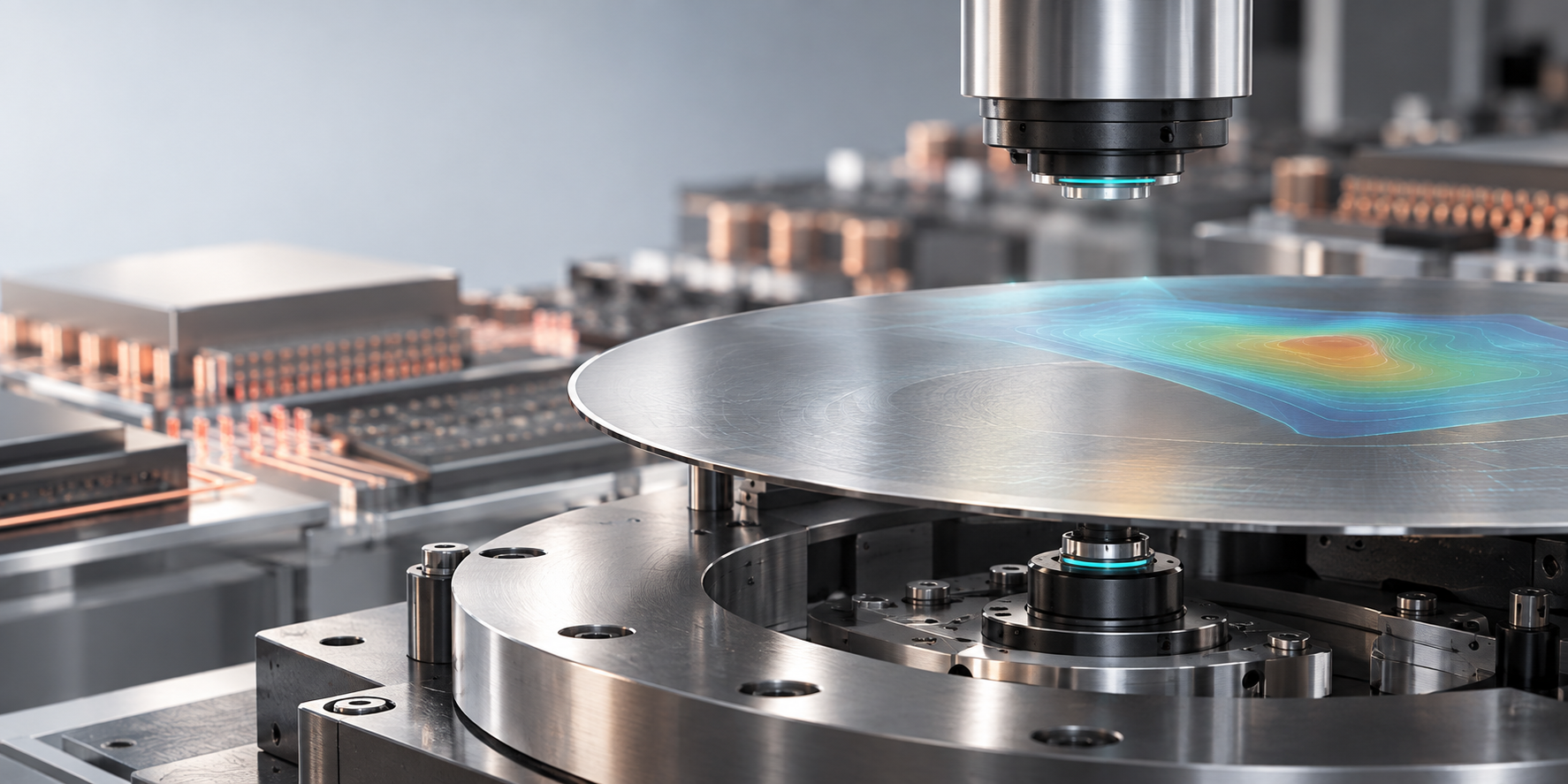


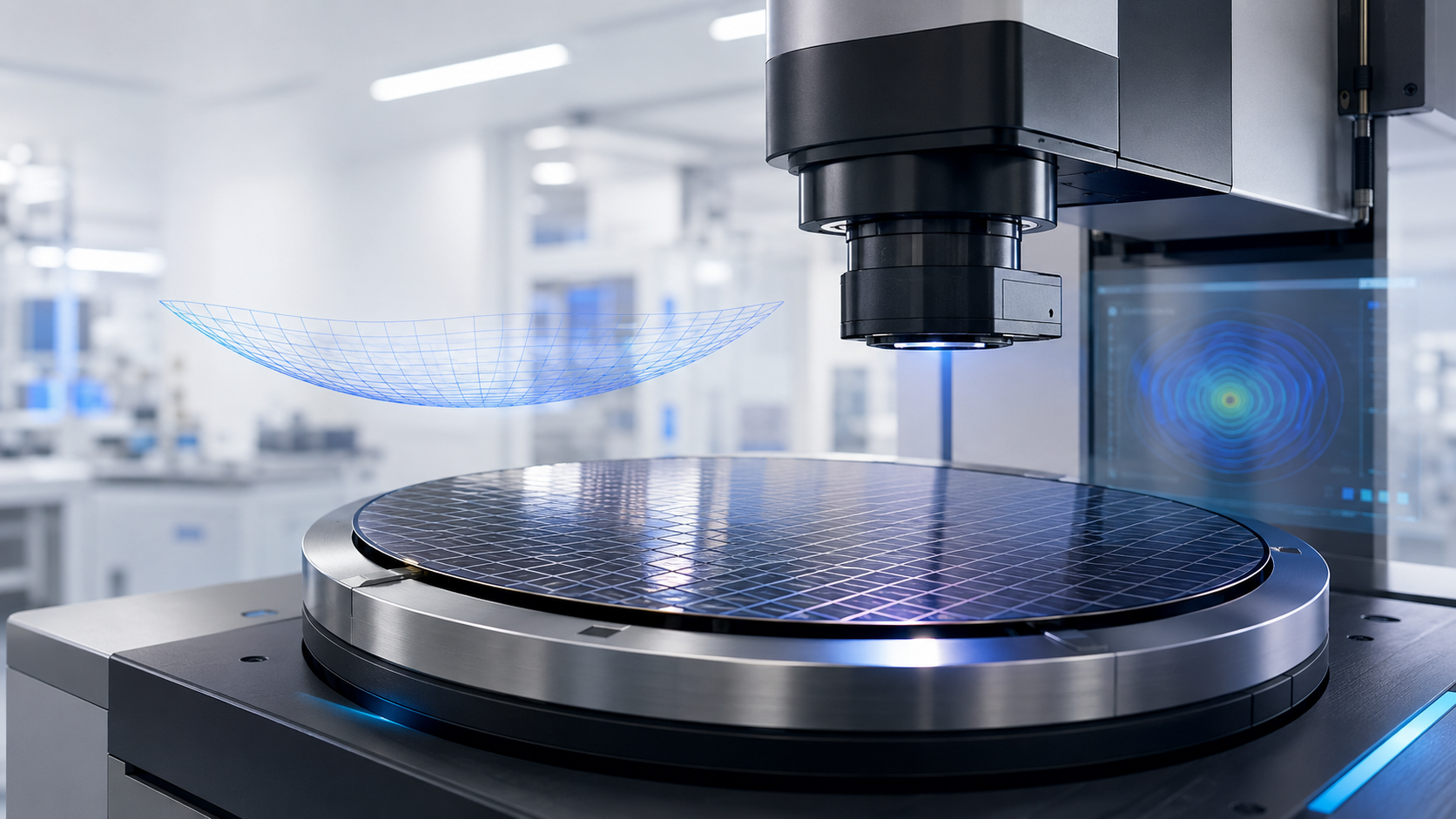
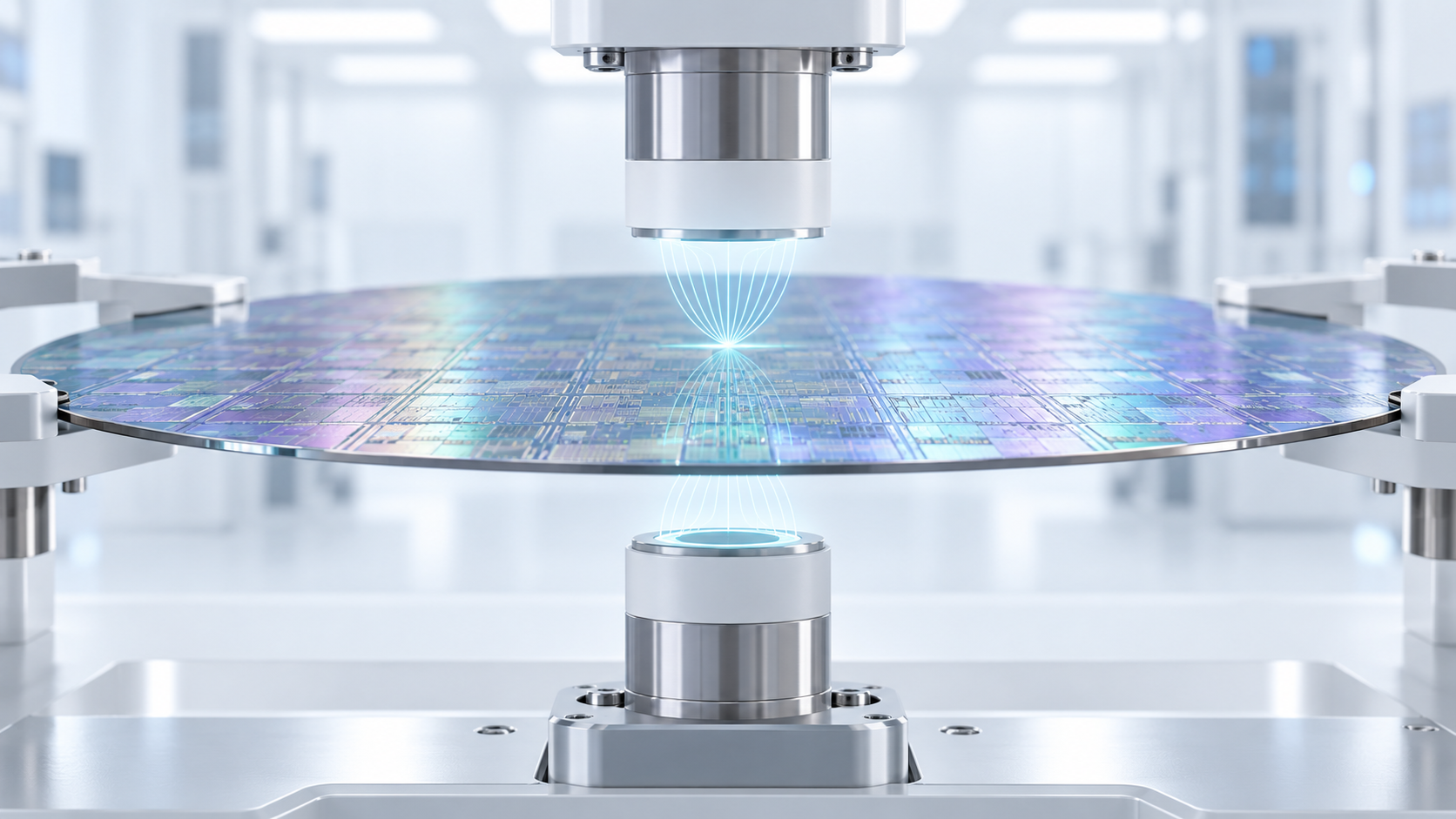
Whitepaper: Thickness Metrology for AI Accelerators, HBM and Chiplet-Based Advanced Packaging
Introduction Artificial intelligence and high-performance computing are reshaping semiconductor design and manufacturing. Instead of relying exclusively on increasingly large monolithic devices, manufacturers are integrating logic, memory and specialized functions through chiplets, 2.5D packaging, 3D stacking and high-bandwidth memory. These architectures improve computing density, bandwidth and energy efficiency, but they also place greater demands on wafer thinning and backside processing. Individual wafers and dies may need to be made significantly thinner before stacking, bonding or package assembly. As thickness decreases, however, wafers become more susceptible to breakage, warpage, handling damage and non-uniform material removal. Thickness metrology therefore becomes more than [...]