
Neutrinos Study
Neutrinos Study Customer Case Neutrinos are said to be the most elusive and exotic particles in the universe. They are tiny neutral elementary particles that interact with matter via the weak nuclear force. Scientists are still trying to measure the mass and to characterize their properties. A customer who is studying neutrinos will be using photo multiplier tubes (PMT) coupled to a scintillating material to detect them. The PMT will produce a small electrical pulse when a neutrino is detected. These PMTs are located 2 Kilometers deep, in a mine located in Ontario, Canada. The customer is looking for [...]
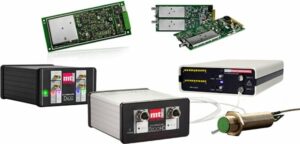 A Comprehensive Guide to Non-Contact Sensors and Their Applications Gallery
A Comprehensive Guide to Non-Contact Sensors and Their Applications
Application Notes-MTI, Articles-MTI, Brand-MTI, Industry-Sensors, News-MTI-Metrology, Products-MTI-Capacitance, Products-MTI-Laser/Fiber Optic, Products-MTI-Semiconductor/Metrology, Whitepapers-MTI, Z-REPUB, z1
A Comprehensive Guide to Non-Contact Sensors and Their Applications
Sensors, both contact and non-contact, are crucial devices that allow the monitoring, detection, and reaction to conditions in an environment or within a process or piece of equipment. While myriad types of sensors exist and are designed to monitor varying conditions, all of them can be characterized as being one of two types — contact sensors and non-contact sensors. We’ll focus on the latter, diving into different technologies, types, and applications of non-contact sensor technology; but first, let’s explore what differentiates contact and non-contact sensors. Contact vs. Non-Contact Sensors: What’s the Difference? Measuring, monitoring, or detecting a particular condition [...]
 Vitrek’s Automated Testing System Simplifies and Speeds Automotive Cable/Harness Testing Gallery
Vitrek’s Automated Testing System Simplifies and Speeds Automotive Cable/Harness Testing
Application Notes-Vitrek, Brand-Vitrek, Industry-Automotive, Industry-Consumer Products, Industry-Government/Military, Industry: Transportation, Whitepapers, z1
Vitrek’s Automated Testing System Simplifies and Speeds Automotive Cable/Harness Testing
Vitrek's Automated Testing System Simplifies and Speeds Automotive Cable/Harness Testing Testing system combines a hipot tester with Vitrek’s 964i switching system and QT Insite software; the automated approach enables manufacturers to configure tests easily and access historical data Introduction With 20 or more harnesses, many interfacing with digital control devices, today's vehicles have increasingly complex electronic systems. Precise and accurate continuity and cable testing must be performed on every connection during the assembly process to assure safety and reliability in the application. This article presents a highly functional, automated approach to automotive/cable harness testing. It describes the features [...]
Synchronizing Over A Wide Sampling Speed Range
Synchronizing Over A Wide Sampling Speed Range Customer Case The client has set up an experiment where he needs to generate a stimulus signal and apply it to a He-Ne Laser with some polarizing optics. The response signal is a measurement of the Faraday effect. The signal is noisy and requires averaging over a very long time. The stimulus and response must be synchronized over a wide frequency range. For synchronization, the application requires a wide band of sampling speed from, 1 KS/s to 50 MS/s. GaGe Case Solution While GaGe's CompuScope 14100 provides the required digitizer performance, it [...]
Time Resolved Spectroscopy of Protein Crystals
Time Resolved Spectroscopy of Protein Crystals Customer Case The customer is involved in Time Resolved Spectroscopy of protein crystals. This involves shooting a laser onto the protein crystals and measuring the pulses generated by the crystals (as they are projected out of the sample) and their decay over time. Due to the very noisy nature of the return signals, it is essential to average many pulses in order to recover the pulse shape and measure the decay. The decay takes place over many tens of milliseconds, so it is necessary to acquire very long records (in the order of [...]
Hyper Remote Laser Sensor
Hyper Remote Laser Sensor Customer Case The customer is at the prototype stage for building a hyper remote sensor which will fly over the ocean and be able to see 100 to 200 feet below the surface. The sensor is being designed in order to determine the composition of the ocean and the ocean floor. This remote sensor will be extremely useful in the detection of pollution and studying the way pollution is being distributed by ocean currents. It will also be useful to the military (navy) for creating mine-finding systems. A deep blue laser will be used to [...]
Laser Induced Fluorescence (LIF)
Laser Induced Fluorescence (LIF) Customer Case A customer has developed a breakthrough technique for the application of laser-induced fluorescence (LIF) detection to high performance liquid chromatography, capillary e lectrophoresis, sequencing and microbial analysis. The technique involves using fluorescence decay curves at multiple wavelengths simultaneously, leading to true 3-D fluorescence spectroscopy (i.e., fluorescence intensity as a function of wavelength and delay time relative to pulsed excitation). They have a requirement to increase the laser pulse repetition frequency (PRF) from 20-50 pulses per second to 500-1000 pulses per second. Basically, they want to collect and time resolve the fluorescence signal for [...]
Optical Spectroscopy
Optical Spectroscopy Customer Case A customer who is completing his doctorate in Chemistry at the California Institute of Technology has identified the need to measure fast optical signals using fast photo-detectors. The signal pulse width is as short as 2ns. Signals will be acquired at a 1KHz repetition rate, with a record length of 1,000 to 10,000 data points. GaGe Case Solution The CompuScope 82G, an 8-bit, 2GS/s A/D and Scope card for PCI Bus, is the best solution for this customer. With relatively small record sets, the customer is able to keep up with the 1KHz Pulse Repeat [...]
Kinetics of Protein Dynamics
Kinetics of Preotein Dynamics Customer Case The customer is measuring kinetics of protein dynamics with a time scale of between a few nanoseconds and about a hundred milliseconds. The customer's two response signals occur after a few-nanosecond-pulse excitation that repeats at a rate of 1-10Hz. This requires a bandwidth from DC to a few hundred MHz, sampling speed of about 1-2GS/s, and processing time for one acquisition that is less than 1-0.1secs. An analog signal of about 10-30mV comes from a Photo-Multiplier Tube (PMT) or a photo-diode with a trans-impedance pre-amplifier. The customer is currently using a couple of [...]
Radioactive Nuclear-Decay Detection
Radioactive Nuclear-Decay Detection Customer Case The customer has a requirement for PC-based waveform digitizer cards to digitize shaped pulses derived from nuclear-decay detectors. These pulses vary in their rate (frequency of occurrence) and amplitude. Their shape is approximately Gaussian with a full-width at half the maximum amplitude (FWHM) of 3-5 microseconds. The characterization of each pulse is critical for the accurate and precise determination of the activity of radioactive materials. These materials have very low count-rates (0.02 pulses per minute) to relatively high count-rates (>1000 pulses per minute). Important to the measurement process are the speed and reliability of [...]