
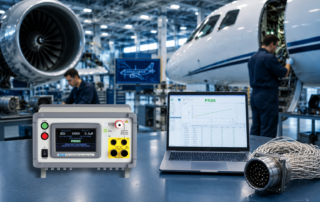
 Standardizing Electrical Safety Testing Across Global Aerospace Manufacturing Gallery
Standardizing Electrical Safety Testing Across Global Aerospace Manufacturing
Application Notes-Vitrek, Brand-Vitrek, Industry-Aerospace, Industry-Cable Test, Industry-Compliance Testing, Industry-Government/Military, Industry-Manufacturing
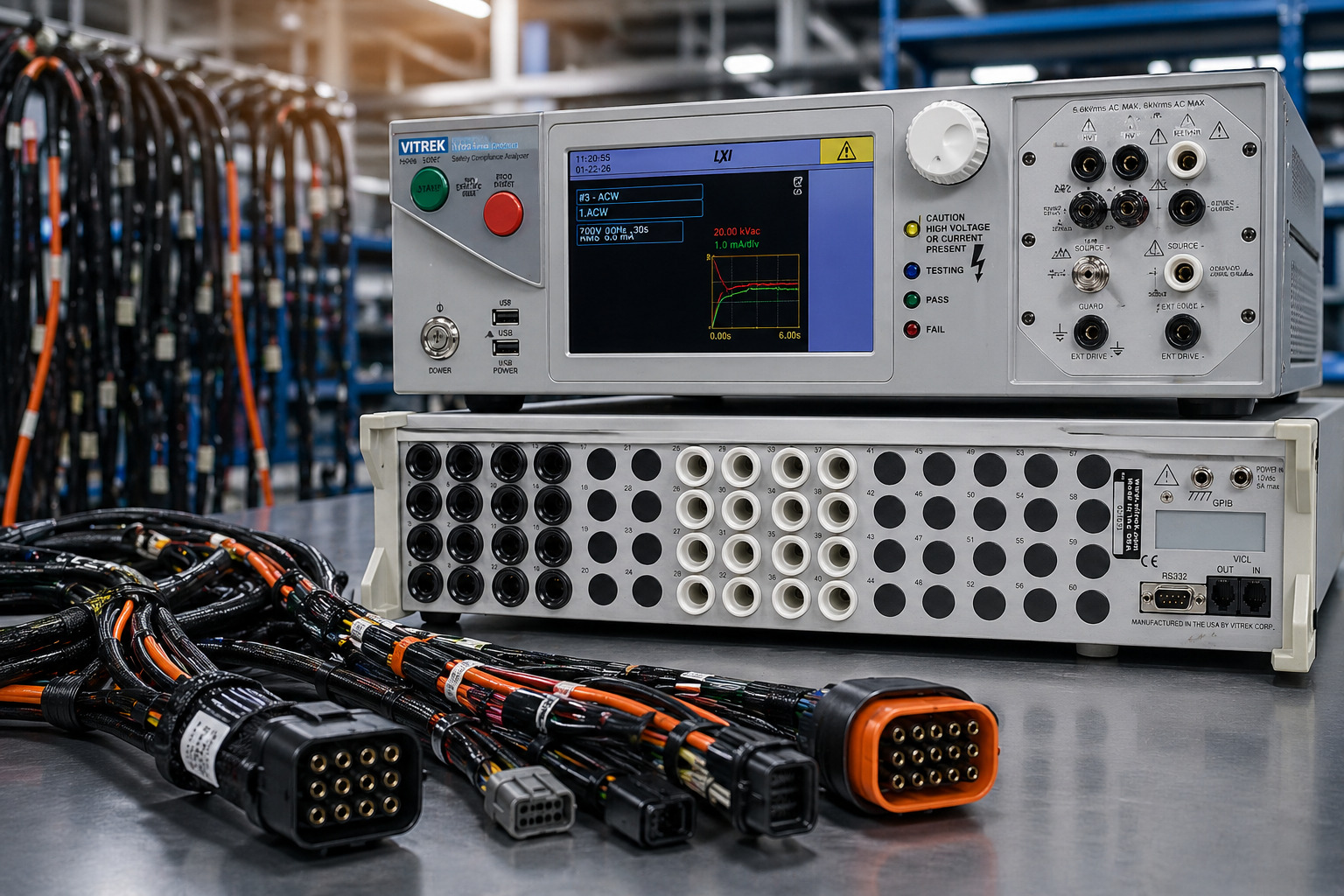
Standardizing Electrical Safety Testing Across Global Aerospace Manufacturing
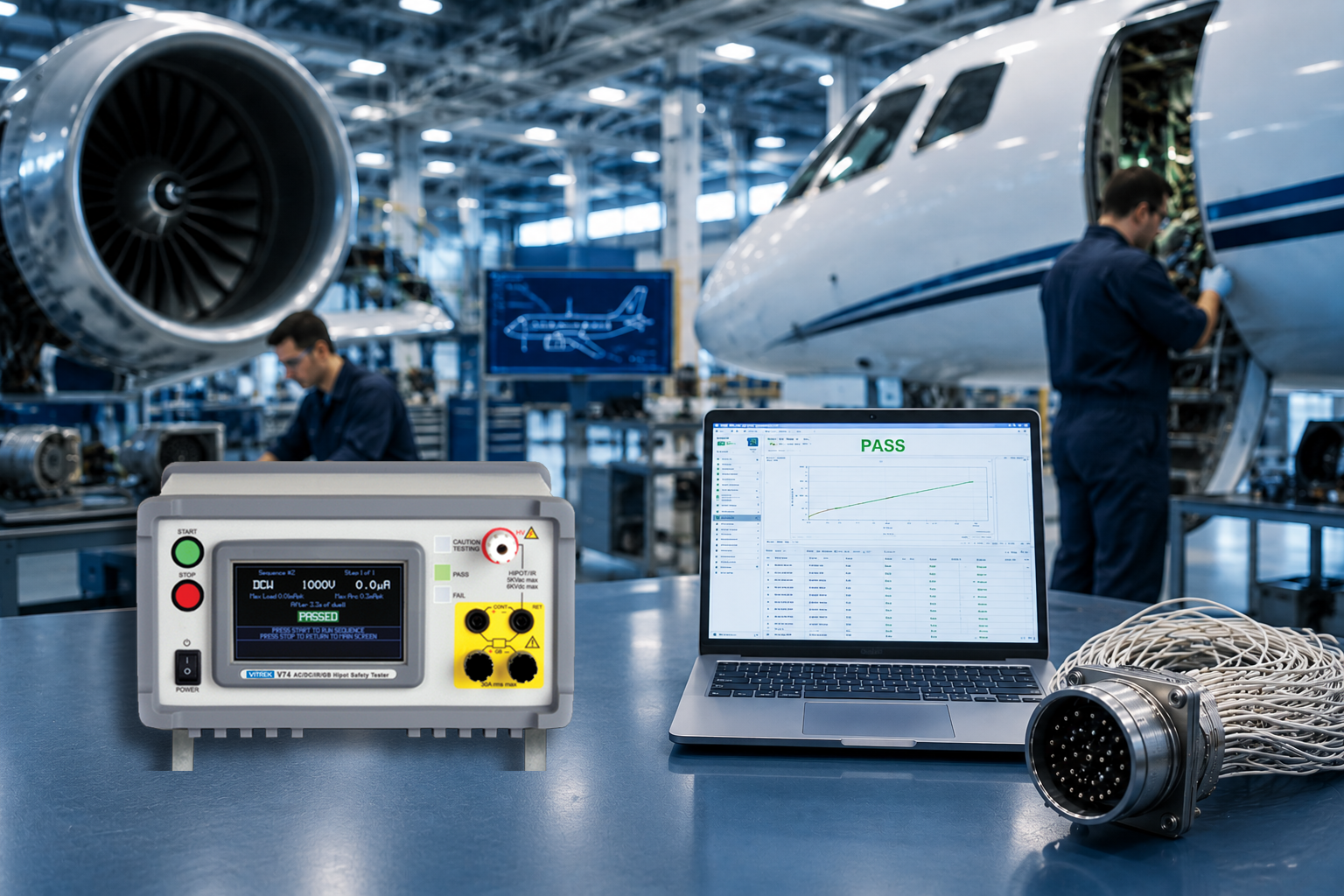
Introduction Modern aerospace manufacturing demands more than accurate electrical safety testing. As production programs expand across multiple facilities worldwide, manufacturers must ensure every product is tested using identical procedures while maintaining complete traceability and documentation. For one of the world’s leading business jet manufacturers, introducing a newly developed electronic device into global production required a standardized electrical safety testing solution.. The device required dielectric withstand (hipot) and insulation resistance (IR) testing before deployment at manufacturing sites around the world. Because production personnel had limited experience with high-voltage electrical safety testing, the company needed a solution that was easy to [...]
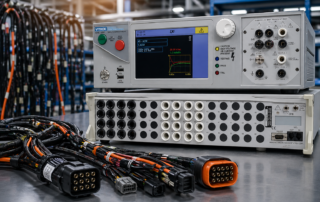 Automating Complex Cable Testing with the Vitrek V10X and 964i Gallery
Automating Complex Cable Testing with the Vitrek V10X and 964i
Application Notes-Vitrek, Brand-Vitrek, Industry-Aerospace, Industry-Automotive, Industry-Cable Test, Industry-Compliance Testing, Industry-Consumer Products, Industry-Electronics, Industry-Government/Military, Industry-Lighting, Industry-Manufacturing, Industry-Medical, Whitepapers-Vitrek
Automating Complex Cable Testing with the Vitrek V10X and 964i
Introduction Cable assemblies are no longer simple pass/fail products. Modern harnesses may contain dozens—or hundreds—of conductors, shielding paths, insulation systems, and termination points. Testing them manually is slow, labor intensive, and prone to inconsistency. The combination of the Vitrek V10X Hipot Tester and Vitrek 964i High Voltage Switching System creates a modern automated platform for validating cable safety and integrity with higher speed and repeatability. The Challenge Manufacturers of advanced cable assemblies are under constant pressure to improve quality while keeping production moving. Many products now use large pin-count connectors and complex multi-conductor designs that require access to numerous [...]

Brake Rotors
Industry Automotive Applications Brake Rotors Measurement Type Surface Description Under normal operating conditions brake rotors are subjected to extreme temperatures and forces, which can cause rotor distortion and potential failure. To make certain it can withstand these conditions; extensive laboratory testing is performed to optimize design for longevity, short stopping distance, and vibration free operation. Extensive on-vehicle testing is done under real life conditions to test prototype units and engineering designs. Test vehicles are driven for long periods of time while brake performance is monitored by a variety of sensors [...]

GLASS THICKNESS
Industry Consumer Electronics Applications Glass Thickness Measurement Type Thickness Description Did you know that glass thickness can be measured with a capacitance probe? You will need some equipment: Digital Accumeasure D200 ASP-2500-CTA Dielectric probe (The capacitance probe has a sensing area of 11.25 mm) Range extension = 3X, 10Hz filter Introduction: An industrial glass fabricator needed a way to determine the thickness of glass, before cutting it to shape and coating it. The glass sample was marked with indices to find the measuring points. The sample center point -5- thickness was checked [...]
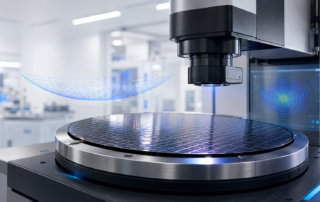
Application Note: Wafer & Thin-Film Stress Characterization Using the Proforma 300iSA
Introduction Thin films are essential to modern semiconductor devices, but every deposited, grown, bonded, or processed layer can introduce mechanical stress into the wafer. When that stress becomes excessive or inconsistent, the effects can extend well beyond the deposition step—contributing to wafer bow, cracking, delamination, overlay error, handling problems, yield loss, and downstream process instability. The MTI Instruments Proforma™ 300iSA semi-automated metrology system provides the full-wafer thickness and shape data needed to evaluate these risks. By measuring wafer geometry before and after a process step, engineers can quantify curvature change and use established film-stress relationships to calculate and trend [...]
HEIGHT GAP OF INKJET PRINTERS
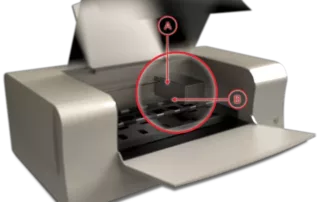
Industry Consumer Electronics Applications Height Gap Of Inkjet Printers Measurement Type Positioning Description Introduction: Inkjet printers require a certain distance between the inkjet print head and the paper. If the distance is set incorrectly, the printed images get blurry. Current state of the art printers have the print head nozzles built right into the bottom of the ink reservoir (B) as shown below. When the ink cartridge is installed in the printer, the inkjet nozzles (made out of silicon) essentially become a grounded target through the connections shown at [...]
Whitepaper: Thickness Metrology for AI Accelerators, HBM and Chiplet-Based Advanced Packaging
Introduction Artificial intelligence and high-performance computing are reshaping semiconductor design and manufacturing. Instead of relying exclusively on increasingly large monolithic devices, manufacturers are integrating logic, memory and specialized functions through chiplets, 2.5D packaging, 3D stacking and high-bandwidth memory. These architectures improve computing density, bandwidth and energy efficiency, but they also place greater demands on wafer thinning and backside processing. Individual wafers and dies may need to be made significantly thinner before stacking, bonding or package assembly. As thickness decreases, however, wafers become more susceptible to breakage, warpage, handling damage and non-uniform material removal. Thickness metrology therefore becomes more than [...]
NUCLEAR HEAT EXCHANGER VIBRATION
Power plants, particularly nuclear power plants, require heat exchangers to cool down the primary working fluid for the power plant. Excessive vibration can lead to cracking and premature failure of the heat exchanger. Problem: A major power plant company approached MTI looking for a sensor that could measure vibration of a heat exchanger assembly that was immersed under water. Additionally, the water could reach 250 F and up to 220 PSI; the probe had to be sealed with a gland at a bulkhead feed through area. Solution: MTI developed a special fiber optic probe based on the MTI-2125H probe configuration. The [...]
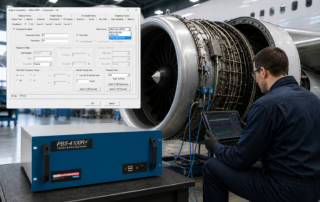
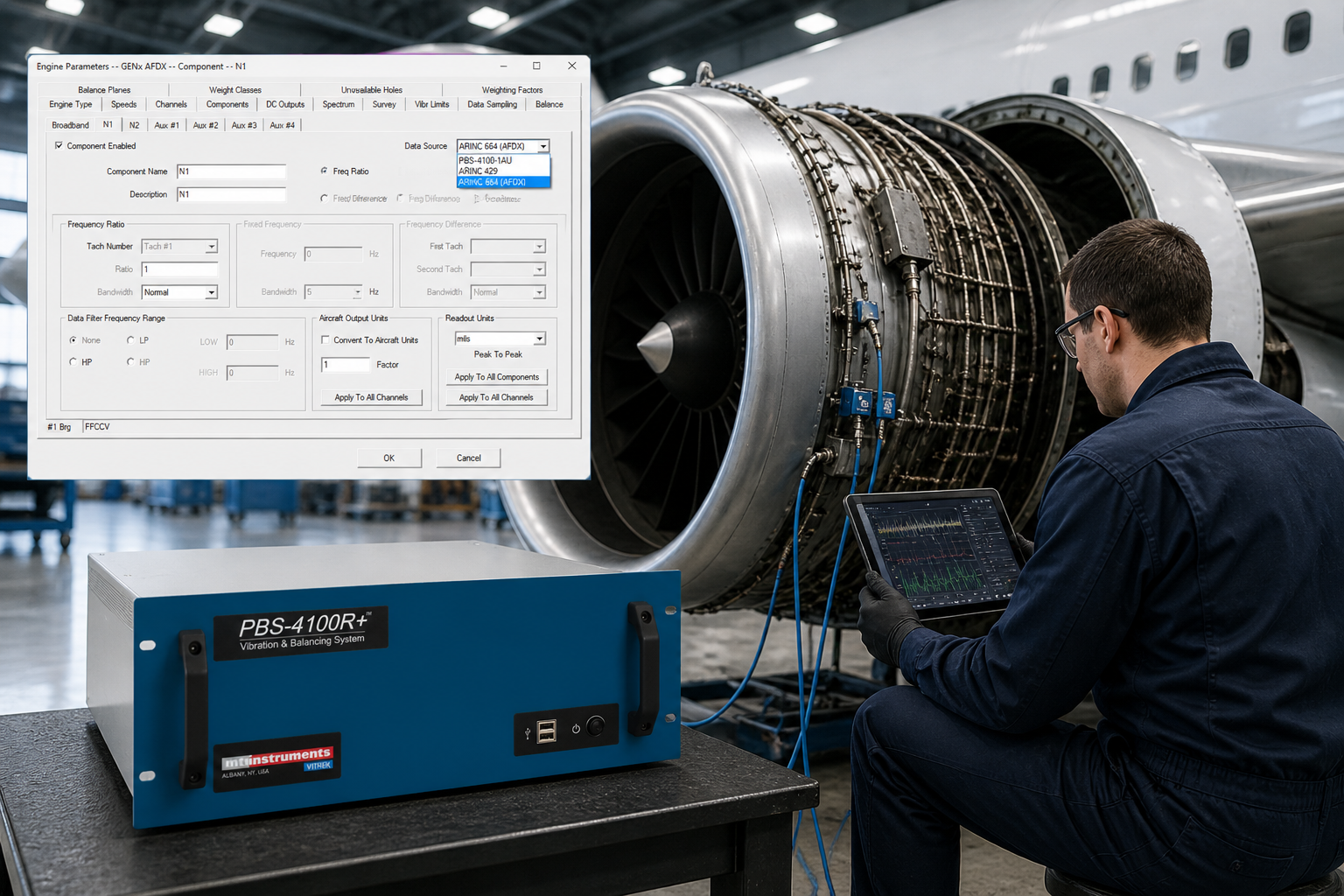
Engine Balancing in the Digital Age: Unlocking Faster, Smarter MRO with Integrated Aircraft Data
Introduction Modern aircraft engines generate vast amounts of operational data, yet much of this information has historically remained under utilized during maintenance procedures like vibration balancing. As fleets transition to digitally connected avionics architectures, MRO teams are rethinking how they access and apply engine data to improve efficiency and accuracy. By leveraging direct integration with onboard data networks, today’s vibration balancing systems can streamline setup, reduce dependency on external instrumentation, and deliver faster, more reliable results—ultimately helping operators minimize downtime and maintain peak engine performance. The Role of Engine Vibration Balancing MRO Jet engines operate under extreme mechanical stress, [...]
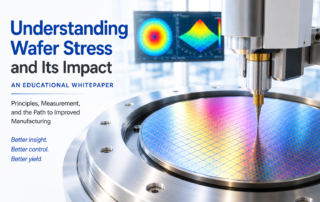


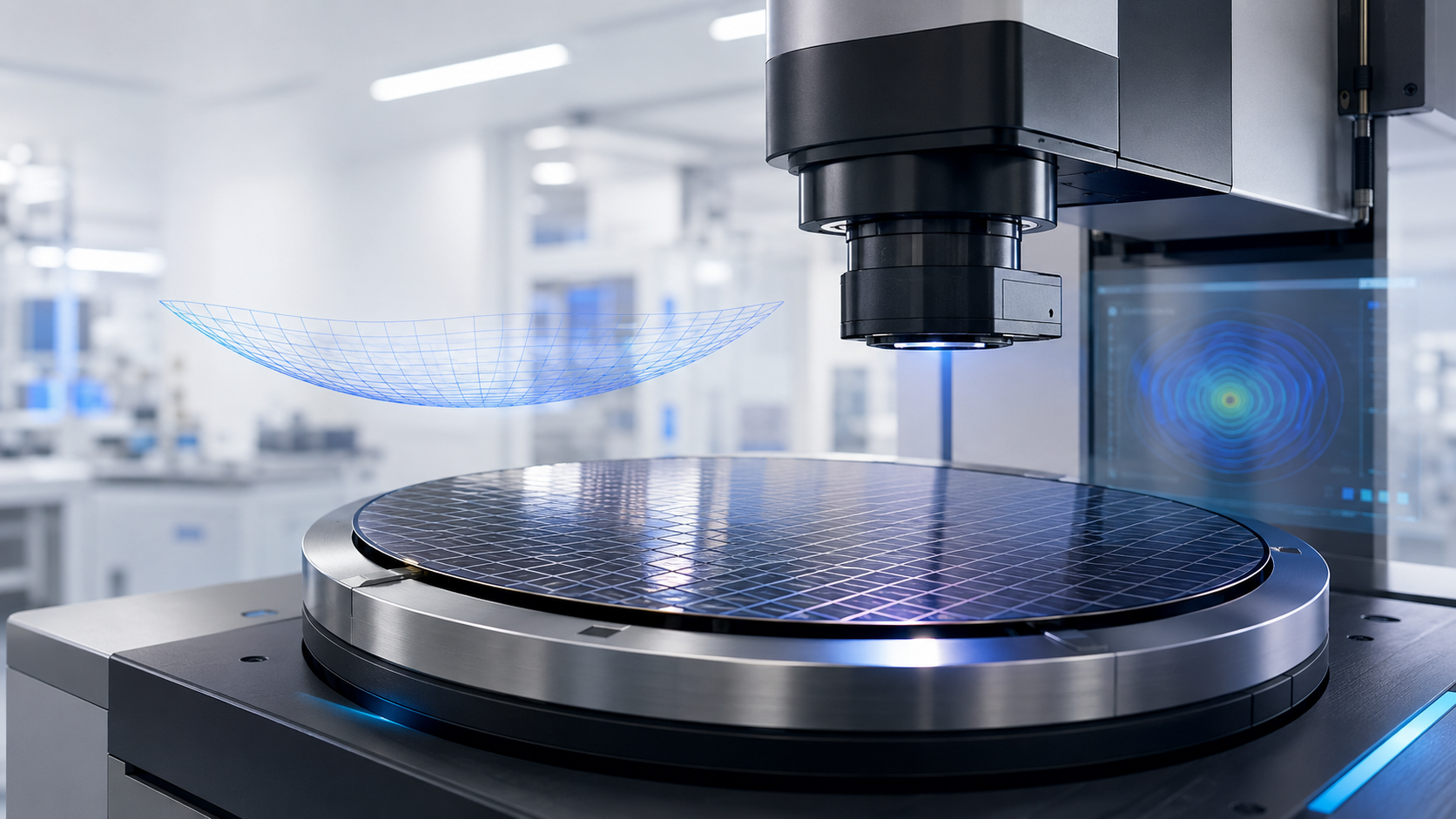

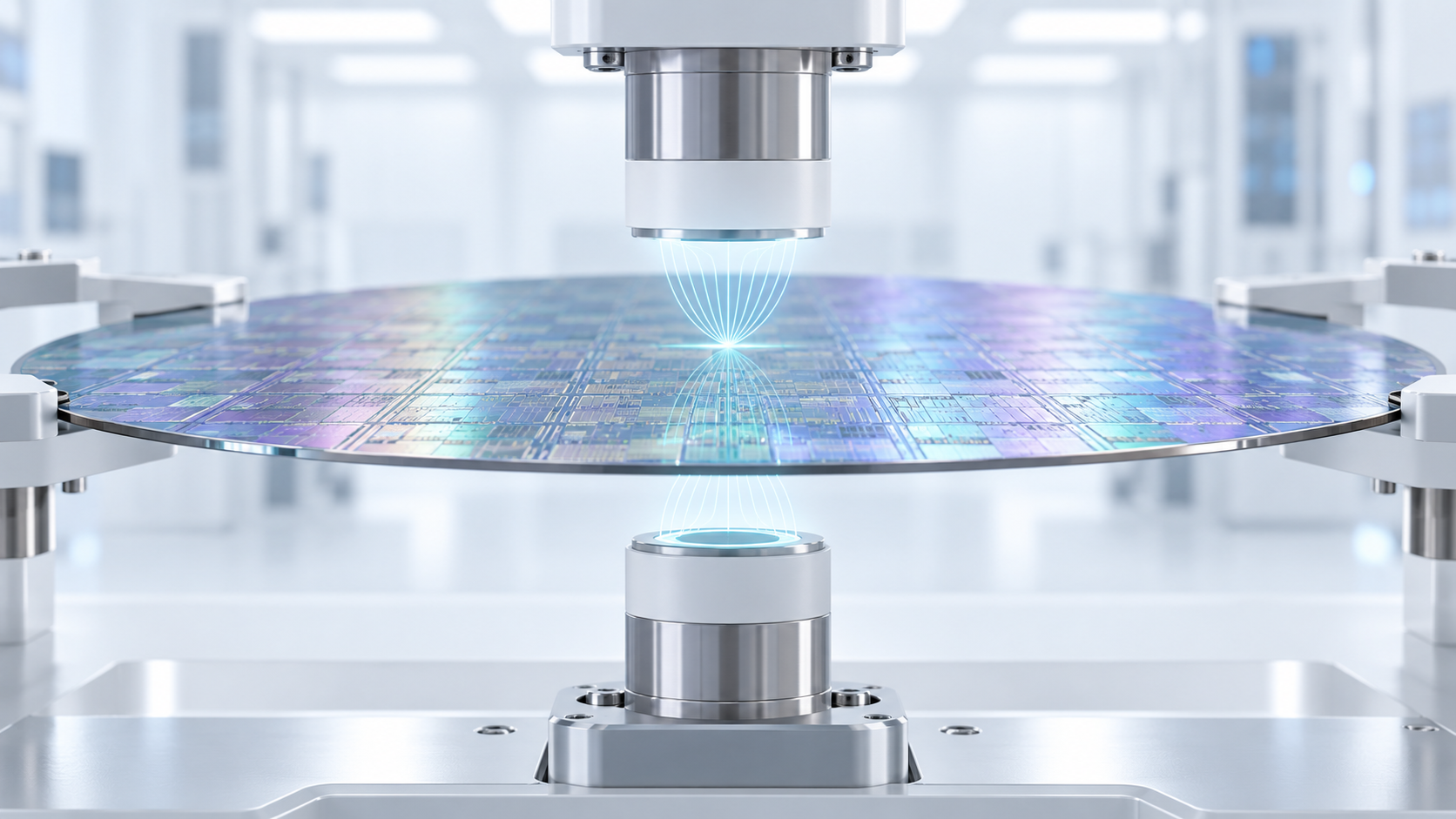
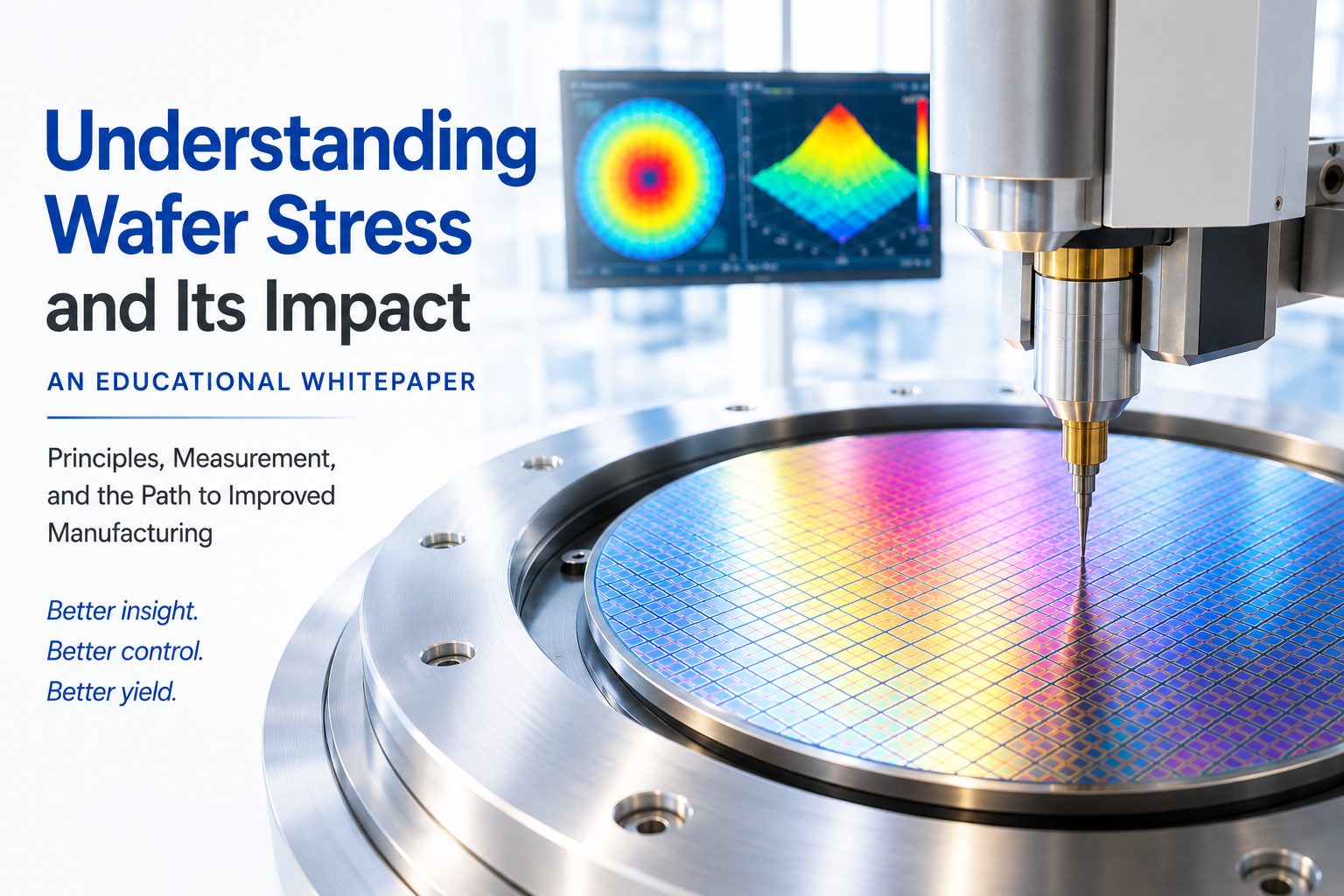
Understanding Semiconductor Wafer Stress: A Practical Guide to Thin-Film Stress, Wafer Curvature Measurement & Process Control
Introduction Every semiconductor device begins with a nearly perfect wafer. Yet throughout fabrication, that wafer is repeatedly transformed by dozens of manufacturing processes including thin-film deposition, oxidation, implantation, annealing, polishing, and packaging. While each process is designed to modify the electrical properties of the device, it also alters something far less visible—its mechanical condition. The addition of every thin film introduces internal mechanical forces that can subtly change the shape of the wafer. These changes, often measured in only a few micrometers across a 200 mm or 300 mm substrate, may appear insignificant. However, as semiconductor devices continue to [...]