
Capacitance Probes: Five Things You Need to Know
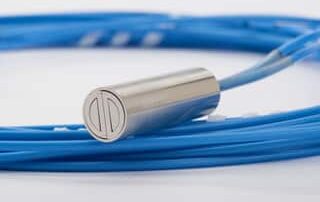
Capacitance probes are non-contact measurement devices with a capacitance sensor inside a protective shell or housing. They use cables and connectors to integrate with amplifiers and are an important part of capacitance measurement systems. By using capacitance, engineers can measure physical parameters such as vibration, pressure, liquid levels, metal contamination, and seismic activity – just to name a few. There’s a lot to know about capacitance probes, but five key facts to understand. Capacitance probes are highly accurate and very stable. They’re better than older devices and competing technologies. They require little calibration and support miniaturization and embedding. They [...]
Measurements Using Capacitive Sensors
Precise Measurements Using Capacitive Sensors Capacitive sensors can be divided into two categories based upon their performance and intended use. High resolution sensors are typically used in displacement and position monitoring applications where high accuracy, stability and low temperature drift are required. Quite frequently these sensors are used in process monitoring and closed-loop feedback control systems. Proximity type capacitive sensors are much less expensive and are typically used to detect the presence of a part or used in counting applications. Applications Position Sensing General positioning is probably the most [...]
 Press Release: Vitrek Announces Academic Discount Program to Support Technology Lab Upgrades in Educational Institutions Gallery
Press Release: Vitrek Announces Academic Discount Program to Support Technology Lab Upgrades in Educational Institutions
Brand-Vitrek, Industry-Education, New & Press Releases, News-Vitrek, Press Releases-Vitrek, Products-Vitrek, z1
Press Release: Vitrek Announces Academic Discount Program to Support Technology Lab Upgrades in Educational Institutions
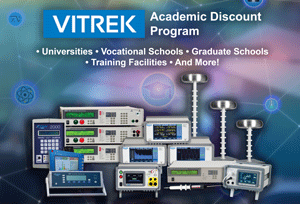
Vitrek Announces Academic Discount Program to Support Technology Lab Upgrades in Educational Institutions Special program offers a 15% academic discount to universities, vocational schools, graduate schools, technical colleges and training facilities on Vitrek & XiTRON products and accessories. […]
Capacitance Sensors: Three Things You Need to Know
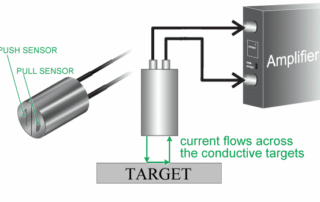
Capacitance sensors are precision measurement tools for process automation, quality control, and tool automation control. They’re used in a many different industries and are suitable for virtually any application where accuracy is paramount. There’s a lot to know about capacitive sensors (as they’re sometimes called), but engineers need to start with three key questions. What are the parameters to specify when selecting a capacitance sensor? What are factors to consider when embedding a capacitive sensor in an industrial application? What is the future of capacitance-based measurement products? MTI Instruments has been providing U.S.-made capacitance sensor systems for over 50 [...]
How to Implement a Complete Digital Closed Loop Control System
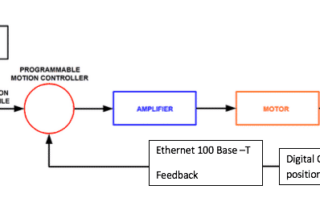
Co-authored by Don Welch, Director of Engineering and Business Development Cory Bufi, Software Engineer Isaac Abbott,Product Innovation Engineer – PBS Group Request Whitepaper Today’s electronic designs often call for reasonably fast and precise positioning of miniature components for process deposition elements such as ink jet nozzles, 3D printing elements etc. And as process control moves from mm positioning to micron to sub-micron positioning it becomes necessary to monitor and control positioning actuators such as piezo flexure stage and voice coil motors. Open loop control of the positioning stage may have been adequate in non-precision applications but piezo electric [...]

Vitrek featured in Evaluation Engineering’s Special Report
Click here to check out the latest article featuring Vitrek Products!
 Measuring Brake Rotor Thickness Variation with Capacitive Sensing Gallery
Measuring Brake Rotor Thickness Variation with Capacitive Sensing
Brand-MTI, Industry-Aerospace, Industry-Automotive, Industry-Consumer Products, Industry-Government/Military, Industry-Manufacturing, Industry: Transportation, Knowledge Center-MTI, Products-MTI-Capacitance, Whitepapers-MTI, Z-REPUB, z1
Measuring Brake Rotor Thickness Variation with Capacitive Sensing
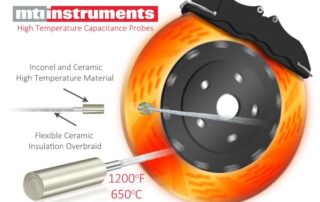
Brake rotor thickness variation, or disc thickness variation (DTV), causes uneven wear to brake rotors, disc-shaped automotive parts that are squeezed between brake pads to slow or stop a vehicle’s wheels. When a brake rotor has areas of different thickness, the amount of clamping force that’s applied across the rotor’s surface varies. These differences in clamping force lead to difference in torque, and the results may include brake shuddering, pulsating, or vibration. Even under normal driving conditions, brake rotors are subjected to extreme conditions that can cause performance-related issues. To ensure that brake rotors can perform [...]





White Paper: High Accuracy, High Voltage Measurement – April, 2019
Introduction One of the first principals learned as an engineering student is the “observer effect” which states that simply observing a situation or phenomenon necessarily changes that phenomenon. This is often the result of instruments that, by necessity, alter the state of what they measure in some manner. Accurate high-voltage measurement is a clear example of the validity of this theory. The accuracy of the resulting measurements is affected by three important elements: environmental factors, errors that are introduced by the measurement probe, and the intrinsic accuracy and performance of the measuring instrument. This article will address each of [...]
 New Product Release: Vitrek’s 98i Series Teraohmmeter Meets Demands for Higher Voltage IR Testing Gallery
New Product Release: Vitrek’s 98i Series Teraohmmeter Meets Demands for Higher Voltage IR Testing
Brand-Vitrek, Industry-Compliance Testing, Industry-Manufacturing, Industry-R&D, New & Press Releases, News-Vitrek, Press Releases-Vitrek, Products-Vitrek-98x, z1
New Product Release: Vitrek’s 98i Series Teraohmmeter Meets Demands for Higher Voltage IR Testing
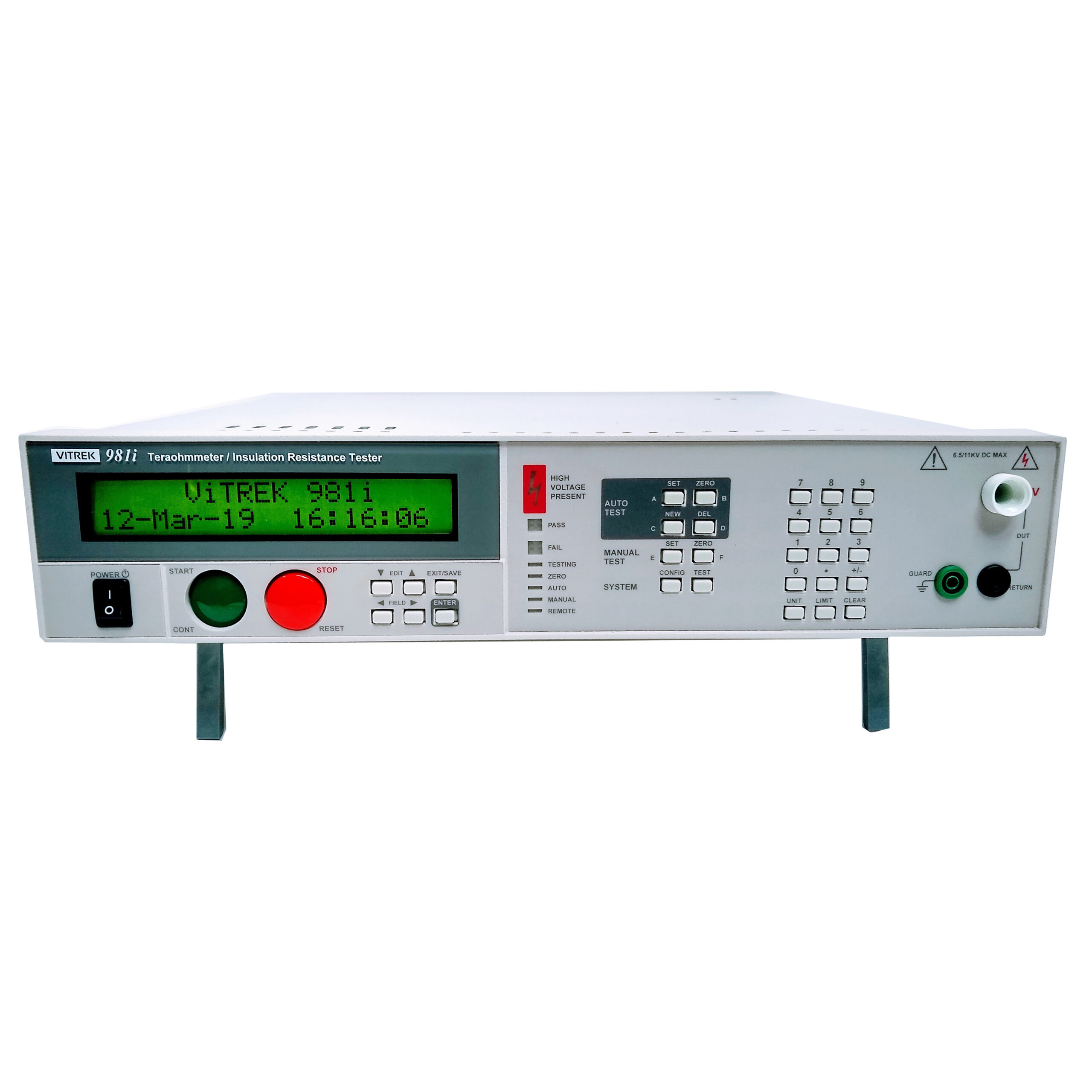
New Product Release: Vitrek’s 98xi Series Teraohmmeter Meets Demands for Higher Voltage IR Testing Meets requirements for emerging higher voltage electric vehicle battery system and solar array insulation resistance testing; offers unique combination of operational features; capacitive load capability facilitates solar system and cable harness testing […]
 Proforma 300i SA Video Shows Semiconductor Metrology Gallery
Proforma 300i SA Video Shows Semiconductor Metrology
Brand-MTI, Industry-Compliance Testing, Industry-Consumer Products, Industry-Electronics, Industry-Manufacturing, Industry-R&D, Industry-Semiconductor, Industry-Semiconductor-MTI, New & Press Releases, News-MTI-Metrology, News-Product Updates, Press Releases-Vitrek, Products-MTI-Semiconductor/Metrology, Videos-MTI, Videos-MTI-Manual Semiconductor Metrology System, Z-REPUB, z1

Proforma 300i SA Video Shows Semiconductor Metrology
MTI Instruments, a worldwide leader in precision measurement solutions, has released a YouTube video that shows how its Proforma™ 300i SA semi-automated measurement tool measures silicon carbide wafers for semiconductors. George Relan, MTI’s Global Director of Sales, demonstrates how the desktop metrology system provides non-contact full wafer scanning and 3D mapping of measurement features such as thickness and shape. MTI’s video also shows how the Proforma 300i SA interfaces with an external computer and provides powerful Windows-based software for analysis and reporting. By utilizing MTI push/pull technology, the Proforma 300i SA doesn’t require the semiconductor wafers to have a [...]