
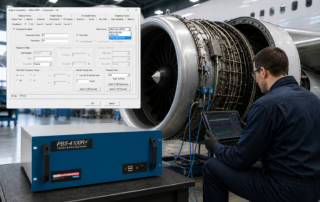
Engine Balancing in the Digital Age: Unlocking Faster, Smarter MRO with Integrated Aircraft Data
Introduction Modern aircraft engines generate vast amounts of operational data, yet much of this information has historically remained under utilized during maintenance procedures like vibration balancing. As fleets transition to digitally connected avionics architectures, MRO teams are rethinking how they access and apply engine data to improve efficiency and accuracy. By leveraging direct integration with onboard data networks, today’s vibration balancing systems can streamline setup, reduce dependency on external instrumentation, and deliver faster, more reliable results—ultimately helping operators minimize downtime and maintain peak engine performance. The Role of Engine Vibration Balancing MRO Jet engines operate under extreme mechanical stress, [...]

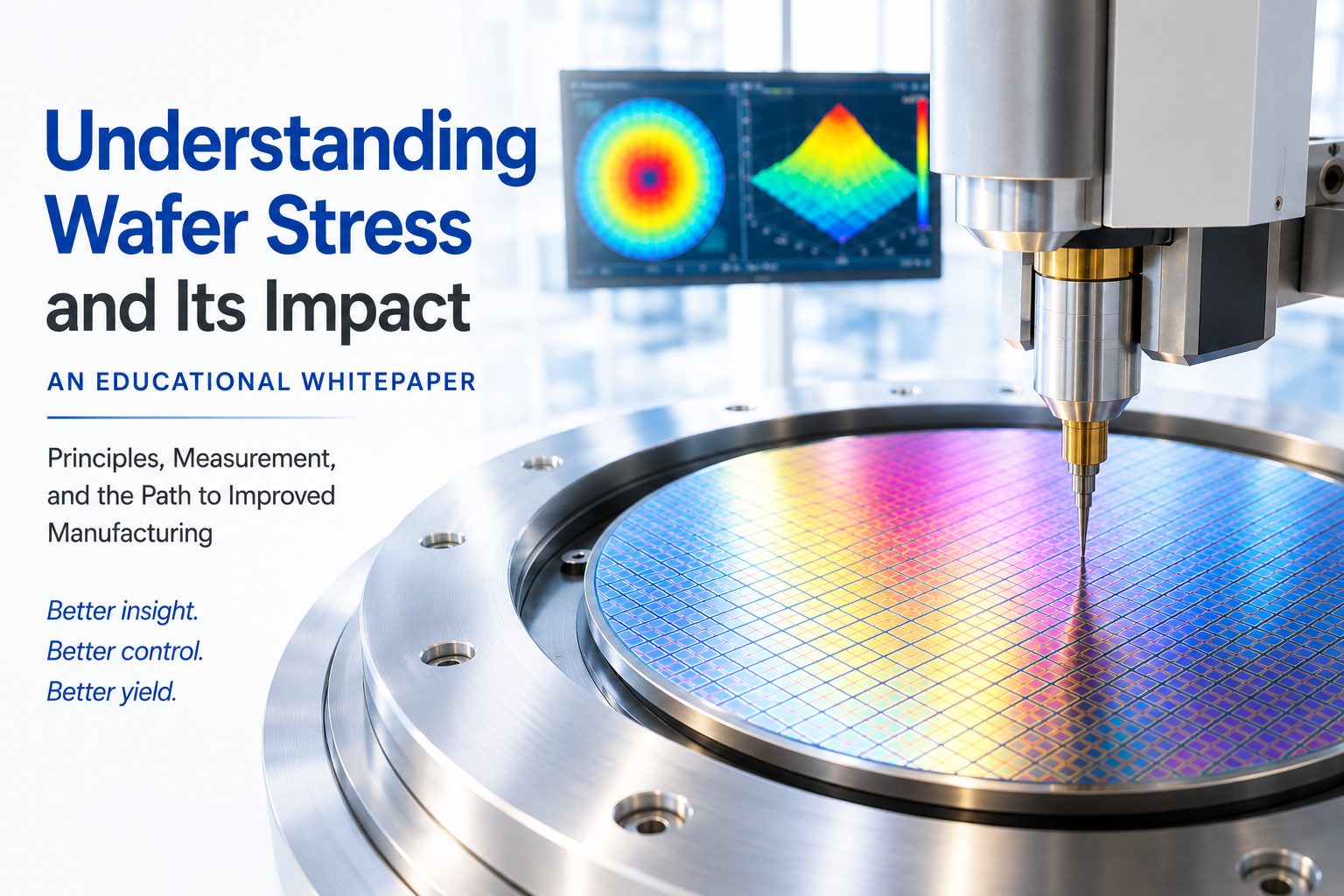
Understanding Semiconductor Wafer Stress: A Practical Guide to Thin-Film Stress, Wafer Curvature Measurement & Process Control
Introduction Every semiconductor device begins with a nearly perfect wafer. Yet throughout fabrication, that wafer is repeatedly transformed by dozens of manufacturing processes including thin-film deposition, oxidation, implantation, annealing, polishing, and packaging. While each process is designed to modify the electrical properties of the device, it also alters something far less visible—its mechanical condition. The addition of every thin film introduces internal mechanical forces that can subtly change the shape of the wafer. These changes, often measured in only a few micrometers across a 200 mm or 300 mm substrate, may appear insignificant. However, as semiconductor devices continue to [...]
 Case-In-Point: MTI Turbine Vibration Analyzer/Balancing System Technology Principles Gallery
Case-In-Point: MTI Turbine Vibration Analyzer/Balancing System Technology Principles
Application Notes-MTI, Articles-MTI, Industry-Aerospace, Industry-Compliance Testing, Industry-Government/Military, Industry: Transportation, Knowledge Center-MTI, News-Industry, News-MTI-PBS, Whitepapers-MTI
Case-In-Point: MTI Turbine Vibration Analyzer/Balancing System Technology Principles
What do you think when you’re flying home, cruising at 30,000 feet and the drinks have just been served? Our engineers think about the ripple in the glass. That ripple signals vibration and is an indication that the engine may be in need of a balance.

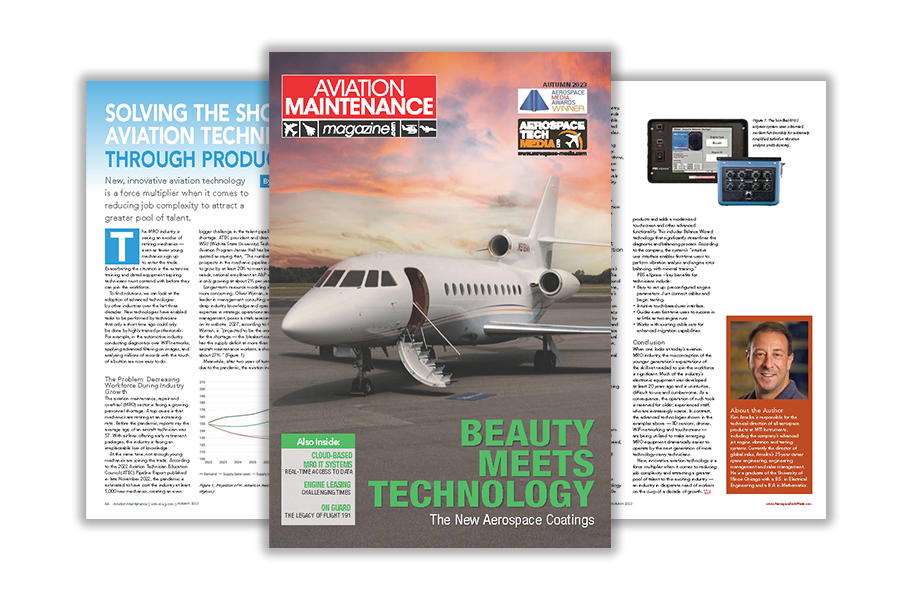
Article: Solving the Shortage of Aviation Technicians Through Product Design
he MRO industry is seeing an exodus of retiring mechanics — even as fewer young mechanics sign up to enter the trade. Exacerbating the situation is the extensive training and dated equipment aspiring technicians must contend with before they can join the workforce.
 A Comprehensive Guide to Non-Contact Sensors and Their Applications Gallery
A Comprehensive Guide to Non-Contact Sensors and Their Applications
Application Notes-MTI, Articles-MTI, Brand-MTI, Industry-Sensors, News-MTI-Metrology, Products-MTI-Capacitance, Products-MTI-Laser/Fiber Optic, Products-MTI-Semiconductor/Metrology, Whitepapers-MTI, Z-REPUB, z1
A Comprehensive Guide to Non-Contact Sensors and Their Applications
Sensors, both contact and non-contact, are crucial devices that allow the monitoring, detection, and reaction to conditions in an environment or within a process or piece of equipment. While myriad types of sensors exist and are designed to monitor varying conditions, all of them can be characterized as being one of two types — contact sensors and non-contact sensors. We’ll focus on the latter, diving into different technologies, types, and applications of non-contact sensor technology; but first, let’s explore what differentiates contact and non-contact sensors. Contact vs. Non-Contact Sensors: What’s the Difference? Measuring, monitoring, or detecting a particular condition [...]

Weathering the storm: Keys to resiliency in MRO
Weathering the storm: Keys to resiliency in MRO By Ken Ameika It’s no secret that COVID-19 has adversely affected the airline industry, and consequently the MRO and test cell markets. But the impacts are nuanced. Commercial aircraft utilization is way down; meanwhile, freight carrier business is expanding markedly. Operators are spending less; but they still have needs, which often require quick turnaround. It’s been hard for many. But there’s good news: COVID provided lessons that we can all use to make our businesses, or our careers, more resilient to the next major disruption. Diversify Your Business Commercial passenger traffic—or [...]
 How Aircraft Operators Reduce Downtime While “Sweating the Assets” Gallery
How Aircraft Operators Reduce Downtime While “Sweating the Assets”
Articles-MTI, Brand-MTI, Industry-Aerospace, Industry-Compliance Testing, Industry-Government/Military, Industry-Manufacturing, Industry: Transportation, News-MTI-PBS, Products-MTI-Engine Balancing, Z-REPUB, z1
How Aircraft Operators Reduce Downtime While “Sweating the Assets”
In a recent article called “UPS Gives Old Jets New Life,” Bloomberg reports how United Parcel Service (UPS) is replacing the cockpit computers on its Airbus SE freighters in order to reduce downtime, increase productivity, and avoid large capital expenses. Known as “sweating the assets,” this business strategy is also benefitting the two aviation maintenance repair and overhaul (MRO) organizations that are performing the computer upgrades. “Doing such work,” writes Bloomberg’s Thomas Black, “is a huge potential market.” As the article explains, UPS purchased flight computers for over 50 Airbus A300-600 jets some twenty years ago. However, the memory [...]

Industry 4.0 for Test and Measurement
Industry 4.0 promises greater integration, interoperability, and information exchange. This Fourth Wave of the Industrial Revolution isn’t about a single technology such as machine learning. It’s not just about artificial intelligence (AI) or Big Data either. Rather, Industry 4.0 is a family of connected technologies that will enable industry to collect, analyze, and act upon massive amounts of diverse and distributed data. Smart sensors for precise test and measurement are essential for these advanced systems. MTI Instruments, a global supplier of precision measurement solutions, is developing a new class of wireless and wired sensors to support digital connections for [...]
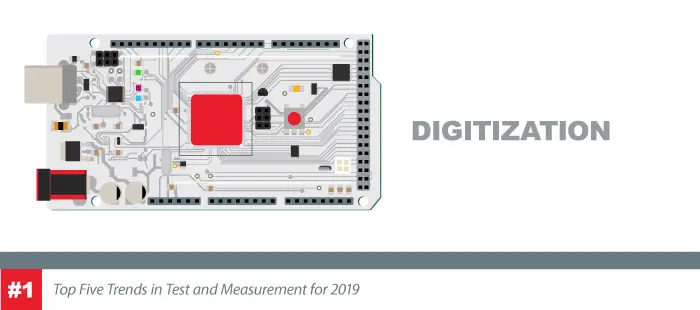
The Top Five Trends Impacting Test and Measurement for 2019
With 2019 upon us, we know everyone is thinking about what's next in the Test and Measurement industry. We also know that without test and measurement equipment, engineers can't accurately and consistently prove that their mechanical or electronic devices perform as required. When they don't work, engineers also need to determine why and how to fix them. All of this leads to innovative thinking on how to test and measure even better by taking advantage of rapidly growing trends such as digitization, software, additive manufacturing, the Internet of Things (IoT), and new sensing applications that are driving advances in T&M. [...]





Engine Vibration and Balancing Principles
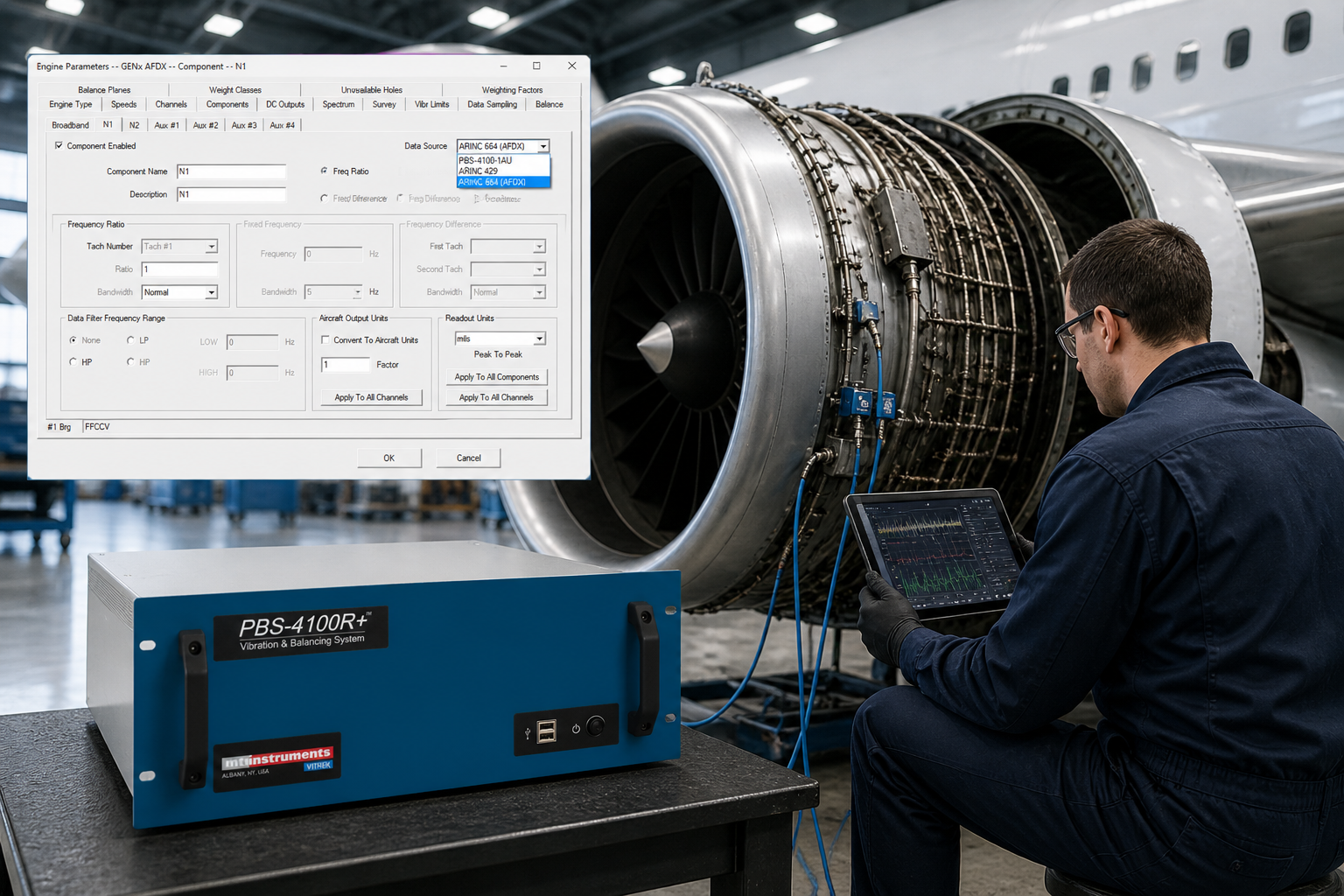
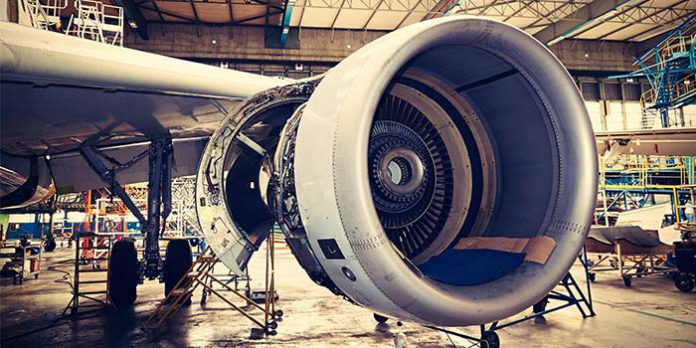
What do you think when you’re flying home, cruising at 30,000 feet and the drinks have just been served? Our engineers think about the ripple in the glass. That ripple signals vibration and is an indication that the engine may be in need of a balance. The MTII’s PBS-4100+ Series Turbine Vibration Analyzer/Balancing System was developed to ensure that Turbine engines run as efficiently as possible. Excessive vibration is detrimental for a host of reasons: energy intended for useful output is instead expended on the vibration vibration manifests as acoustic energy (noise), again wasting otherwise useful energy excessive [...]