

Brake Rotors
Industry Automotive Applications Brake Rotors Measurement Type Surface Description Under normal operating conditions brake rotors are subjected to extreme temperatures and forces, which can cause rotor distortion and potential failure. To make certain it can withstand these conditions; extensive laboratory testing is performed to optimize design for longevity, short stopping distance, and vibration free operation. Extensive on-vehicle testing is done under real life conditions to test prototype units and engineering designs. Test vehicles are driven for long periods of time while brake performance is monitored by a variety of sensors [...]

GLASS THICKNESS
Industry Consumer Electronics Applications Glass Thickness Measurement Type Thickness Description Did you know that glass thickness can be measured with a capacitance probe? You will need some equipment: Digital Accumeasure D200 ASP-2500-CTA Dielectric probe (The capacitance probe has a sensing area of 11.25 mm) Range extension = 3X, 10Hz filter Introduction: An industrial glass fabricator needed a way to determine the thickness of glass, before cutting it to shape and coating it. The glass sample was marked with indices to find the measuring points. The sample center point -5- thickness was checked [...]
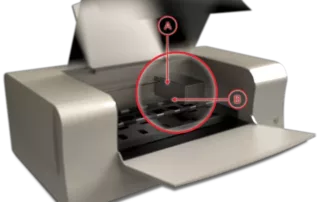
HEIGHT GAP OF INKJET PRINTERS
Industry Consumer Electronics Applications Height Gap Of Inkjet Printers Measurement Type Positioning Description Introduction: Inkjet printers require a certain distance between the inkjet print head and the paper. If the distance is set incorrectly, the printed images get blurry. Current state of the art printers have the print head nozzles built right into the bottom of the ink reservoir (B) as shown below. When the ink cartridge is installed in the printer, the inkjet nozzles (made out of silicon) essentially become a grounded target through the connections shown at [...]
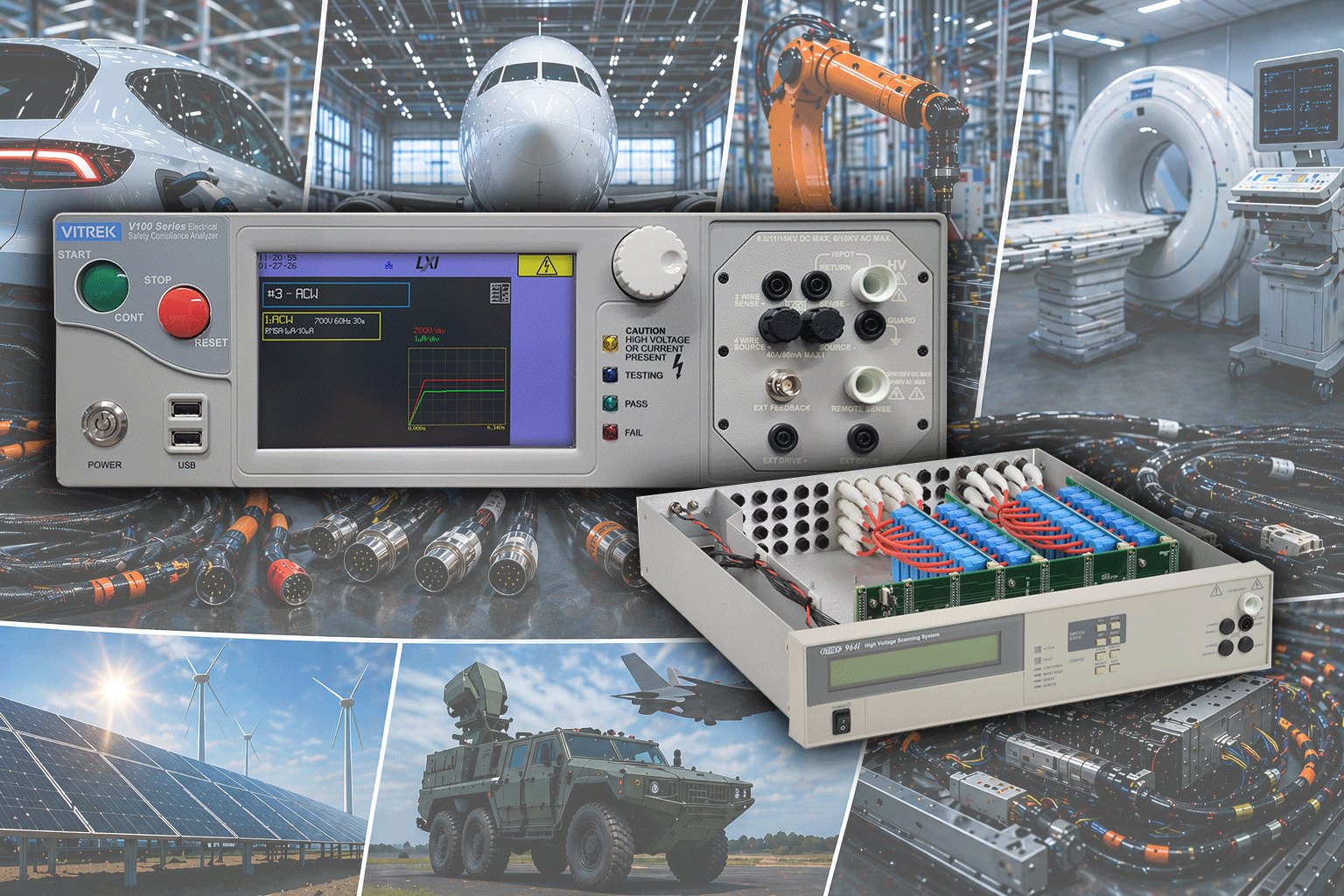
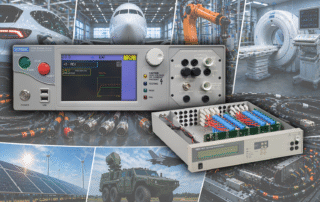 Whitepaper: The Future of Cable Testing: Why Intelligent Automation is Replacing Manual Validation Gallery
Whitepaper: The Future of Cable Testing: Why Intelligent Automation is Replacing Manual Validation
Brand-Vitrek, Industry-Aerospace, Industry-Automotive, Industry-Cable Test, Industry-Compliance Testing, Industry-Consumer Products, Industry-Electronics, Industry-Government/Military, Industry-Lighting, Industry-Manufacturing, Industry-Medical, New & Press Releases, Whitepapers-Vitrek
Whitepaper: The Future of Cable Testing: Why Intelligent Automation is Replacing Manual Validation
Introduction Cable assemblies are evolving rapidly as products become more compact, more powerful, and more connected. Today’s designs often operate at higher voltages while fitting into smaller packaging envelopes, forcing engineers to balance electrical performance with limited physical space. At the same time, many assemblies now include a greater number of conductors and increasingly combine mixed signal and power paths within a single harness. Environmental demands are also rising. Cable systems may need to withstand vibration, temperature extremes, moisture, chemicals, or continuous motion depending on the application. Alongside these technical requirements, manufacturers face growing expectations for stronger quality documentation [...]
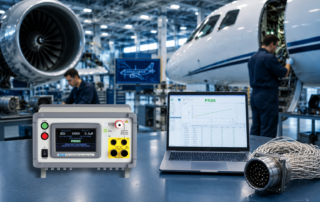 Standardizing Electrical Safety Testing Across Global Aerospace Manufacturing Gallery
Standardizing Electrical Safety Testing Across Global Aerospace Manufacturing
Application Notes-Vitrek, Brand-Vitrek, Industry-Aerospace, Industry-Cable Test, Industry-Compliance Testing, Industry-Government/Military, Industry-Manufacturing
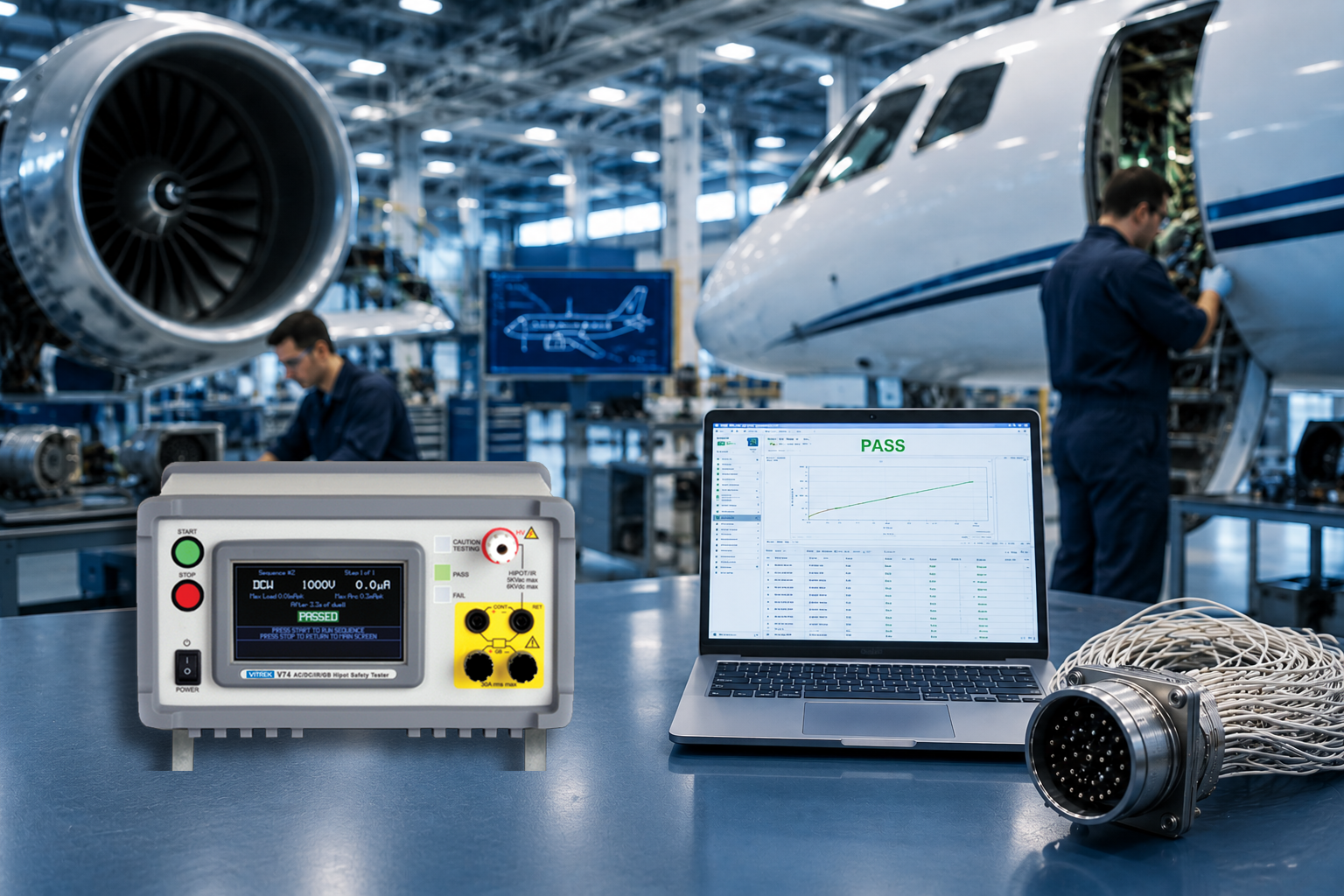
Standardizing Electrical Safety Testing Across Global Aerospace Manufacturing
Introduction Modern aerospace manufacturing demands more than accurate electrical safety testing. As production programs expand across multiple facilities worldwide, manufacturers must ensure every product is tested using identical procedures while maintaining complete traceability and documentation. For one of the world’s leading business jet manufacturers, introducing a newly developed electronic device into global production required a standardized electrical safety testing solution.. The device required dielectric withstand (hipot) and insulation resistance (IR) testing before deployment at manufacturing sites around the world. Because production personnel had limited experience with high-voltage electrical safety testing, the company needed a solution that was easy to [...]
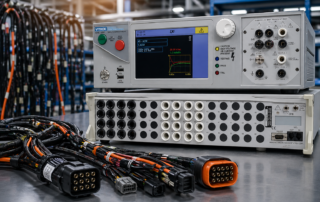 Automating Complex Cable Testing with the Vitrek V10X and 964i Gallery
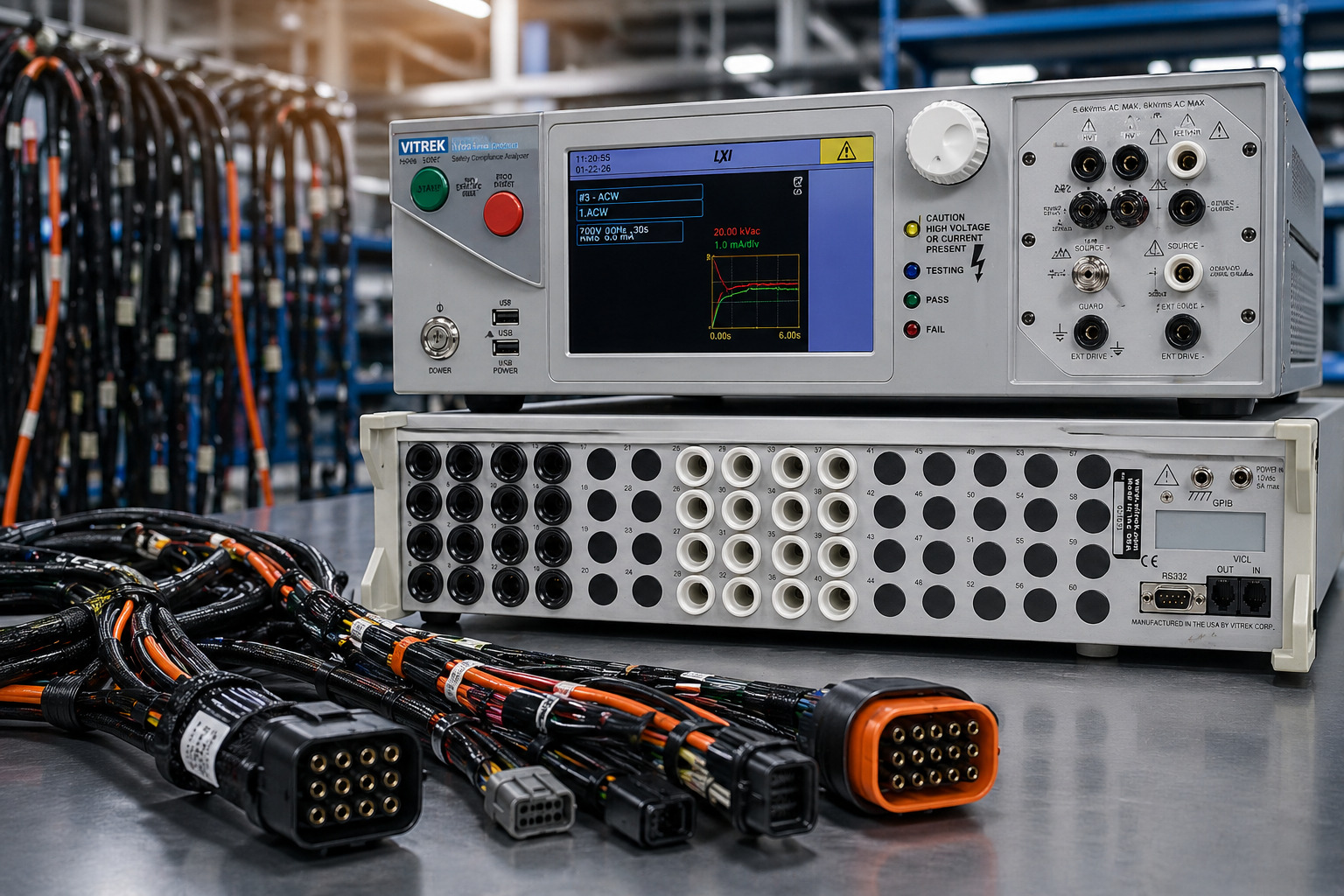
Automating Complex Cable Testing with the Vitrek V10X and 964i
Application Notes-Vitrek, Brand-Vitrek, Industry-Aerospace, Industry-Automotive, Industry-Cable Test, Industry-Compliance Testing, Industry-Consumer Products, Industry-Electronics, Industry-Government/Military, Industry-Lighting, Industry-Manufacturing, Industry-Medical, Whitepapers-Vitrek
Automating Complex Cable Testing with the Vitrek V10X and 964i
Introduction Cable assemblies are no longer simple pass/fail products. Modern harnesses may contain dozens—or hundreds—of conductors, shielding paths, insulation systems, and termination points. Testing them manually is slow, labor intensive, and prone to inconsistency. The combination of the Vitrek V10X Hipot Tester and Vitrek 964i High Voltage Switching System creates a modern automated platform for validating cable safety and integrity with higher speed and repeatability. The Challenge Manufacturers of advanced cable assemblies are under constant pressure to improve quality while keeping production moving. Many products now use large pin-count connectors and complex multi-conductor designs that require access to numerous [...]



PBS-4100+ Gen4 Portable Vibration and Balancing System
PBS-4100+ Gen4 PBS-4100+ GEN4 Portable Aircraft Engine Vibration & Balancing System The 4th generation of the industry-standard turbine vibration analysis and balancing tool. Deliver fast on-wing vibration assessment and precise rapid "one-shot" balancing with seamless integration directly into digital aircraft data buses using advanced ARINC interfaces. Calculate Your ROI Request Quote Download Brochure POWERFUL. PRECISE. INTUITIVE. Advanced Digital Engine Vibration Analysis The PBS-4100+ Gen4 is the premier portable vibration analysis and engine trim balance system designed for commercial, military, and corporate [...]
 Choosing the Right Hipot Platform for Modern Manufacturing Electrical Safety Testing Gallery
Choosing the Right Hipot Platform for Modern Manufacturing Electrical Safety Testing
Articles-Vitrek, Industry-Automotive, Industry-Battery, Industry-Cable Test, Industry-Compliance Testing, Industry-Consumer Products, Industry-Electronics, Industry-Government/Military, Industry-Lighting, Industry-Manufacturing, Industry-Medical, Industry-R&D, Knowledge Center-Vitrek, New & Press Releases, Whitepapers-Vitrek
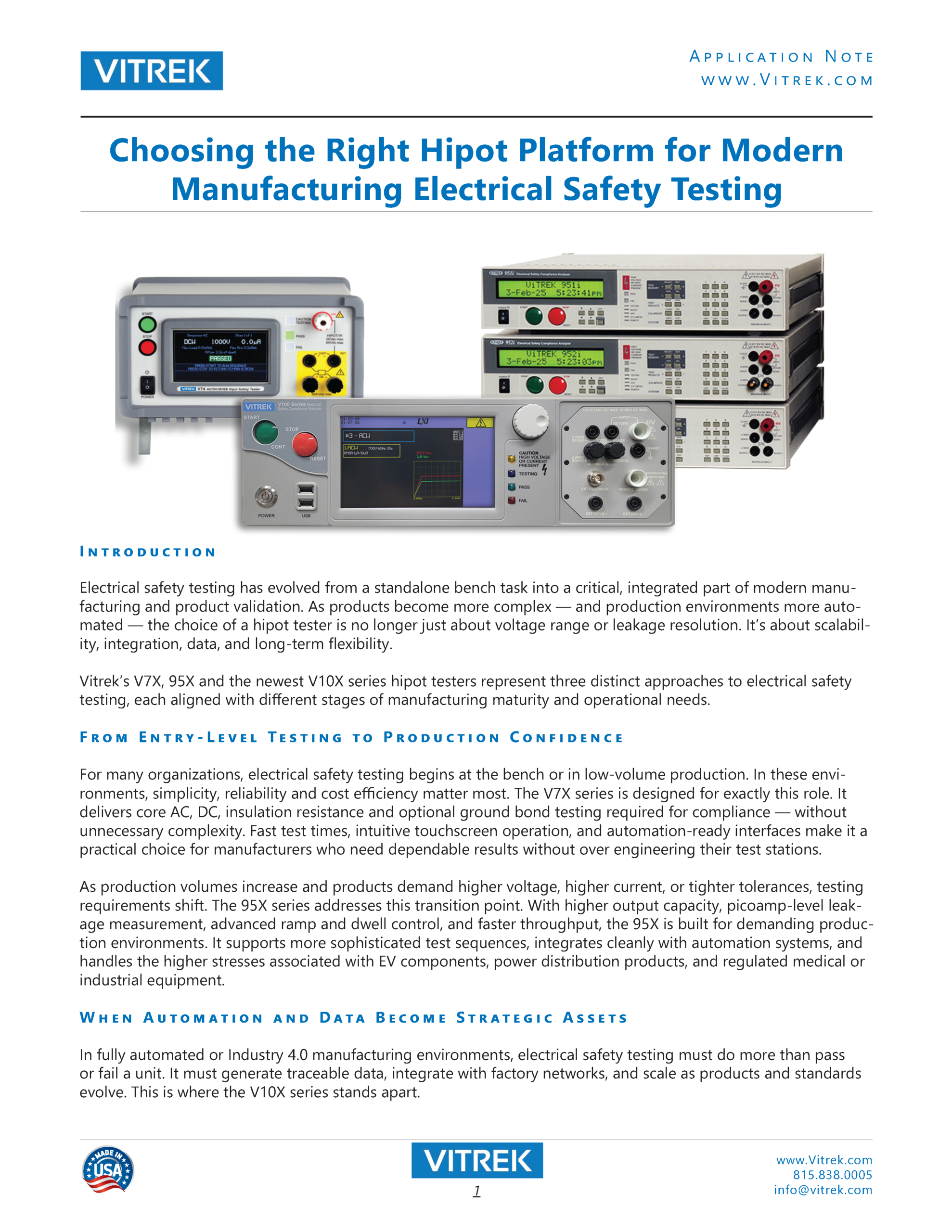
Choosing the Right Hipot Platform for Modern Manufacturing Electrical Safety Testing
Introduction Electrical safety testing has evolved from a standalone bench task into a critical, integrated part of modern manufacturing and product validation. As products become more complex — and production environments more automated — the choice of a hipot tester is no longer just about voltage range or leakage resolution. It’s about scalability, integration, data, and long-term flexibility. Vitrek’s V7X, 95X and the newest V10X series hipot testers represent three distinct approaches to electrical safety testing, each aligned with different stages of manufacturing maturity and operational needs. From Entry-Level Testing to Production Confidence For many organizations, electrical safety testing [...]
 Enabling Intelligent, Automation-Ready Electrical Safety Testing in Modern Production Gallery
Enabling Intelligent, Automation-Ready Electrical Safety Testing in Modern Production
Application Notes-Vitrek, Brand-Vitrek, Industry-Compliance Testing, Industry-Electronics, Industry-Manufacturing, Industry-Measurement Applications, Whitepapers-Vitrek
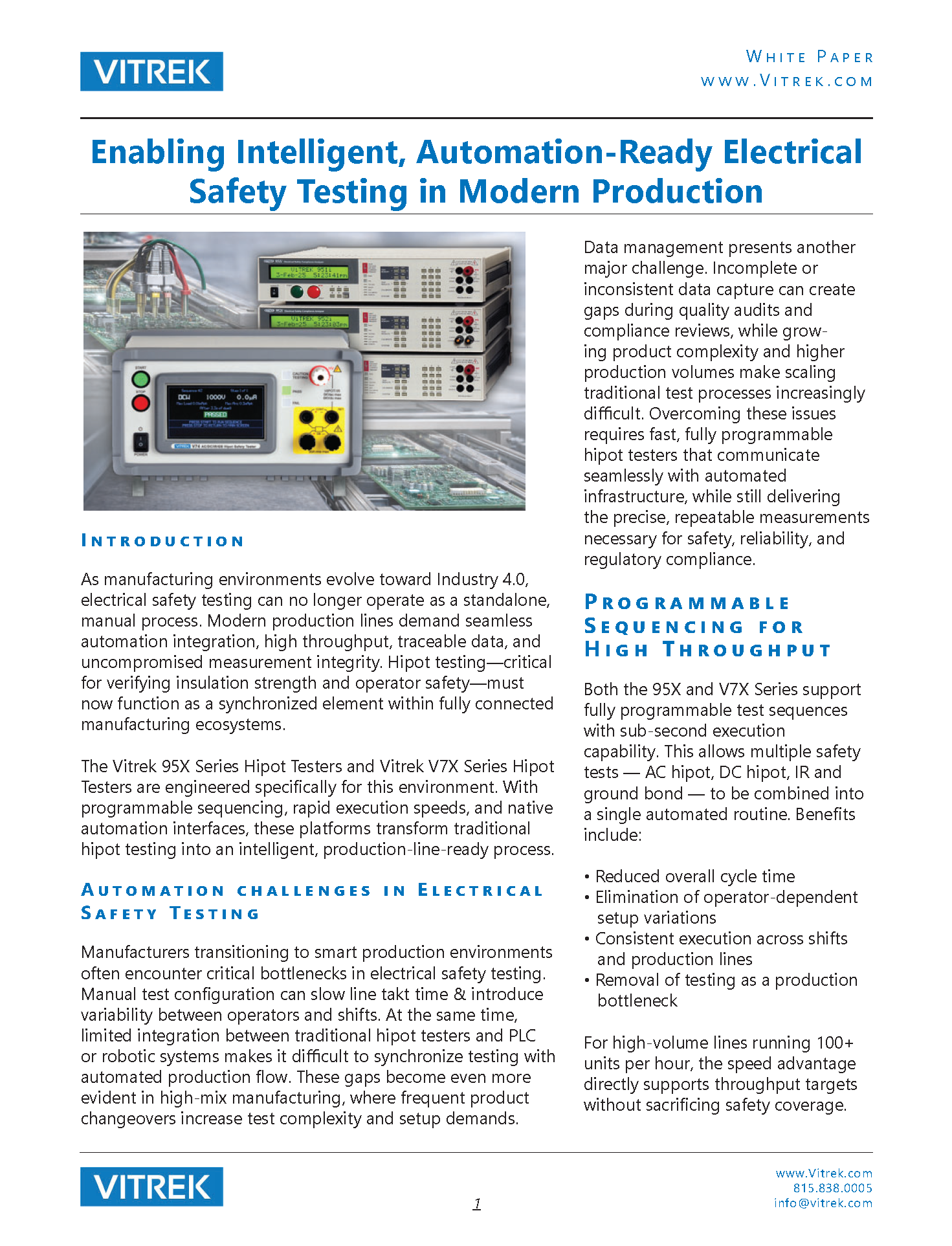
Enabling Intelligent, Automation-Ready Electrical Safety Testing in Modern Production
Application Note: Enabling Intelligent, Automation-Ready Electrical Safety Testing in Modern Production Introduction As manufacturing environments evolve toward Industry 4.0, electrical safety testing can no longer operate as a standalone, manual process. Modern production lines demand seamless automation integration, high throughput, traceable data, and uncompromised measurement integrity. Hipot testing—critical for verifying insulation strength and operator safety—must now function as a synchronized element within fully connected manufacturing ecosystems. The Vitrek 95X Series Hipot Testers and Vitrek V7X Series Hipot Testers are engineered specifically for this environment. With programmable sequencing, rapid execution speeds, and native automation interfaces, these platforms transform traditional [...]
 Testing Energy-Efficient Washing Machines with the PA900 Power Analyzer Gallery
Testing Energy-Efficient Washing Machines with the PA900 Power Analyzer
Application Notes-Vitrek, Brand-Vitrek, Industry-Compliance Testing, Industry-Electronics, Industry-Manufacturing, Industry-Measurement Applications, Whitepapers-Vitrek

Testing Energy-Efficient Washing Machines with the PA900 Power Analyzer
Application Note: Testing Energy-Efficient Washing Machines with the PA900 Power Analyzer Introduction Today’s consumers demand home appliances that use less energy and water. Washing machines are no exception. Manufacturers must meet strict energy labeling standards and provide proof that their products are truly efficient. This means accurate, repeatable measurements of electrical power and energy use throughout a full wash cycle are essential. The Vitrek PA900 Power Analyzer is an ideal tool for this task. Testing Challenges Testing a washing machine for energy efficiency isn’t as simple as reading its average power draw. Wash cycles can last over an [...]