
Transmission Electron Microscopy for Imaging of Biological Molecules
Transmission Electron Microscopy for Imaging of Biological Molecules Customer Case The customer is improving their customized Transmission Electron Microscope (TEM) that is optimized for imaging unstained biological molecules with minimal radiation damage. Diffraction-limited resolution of 0.25 nm is routinely obtained with a cold field-emission electron-gun operating at 40 keV. The sample is maintained at about 123 K (i.e. -150°C), both to eliminate contamination and to reduce mass-loss. The scan raster is 512 x 512 points with a dwell time of 30 microseconds per pixel (over 8.5 seconds per raster-scan). For most mass measurements, the pixels are separated by 1 [...]
 MEMS and Capacitance-Based Semiconductor Wafer Measurement Gallery
MEMS and Capacitance-Based Semiconductor Wafer Measurement
Application Notes-MTI, Brand-MTI, Industry-Compliance Testing, Industry-Consumer Products, Industry-Electronics, Industry-Manufacturing, Industry-Semiconductor, Industry-Semiconductor-MTI, Industry-Sensors, Products-MTI-Capacitance, Products-MTI-Semiconductor/Metrology, Z-REPUB, z1
MEMS and Capacitance-Based Semiconductor Wafer Measurement
MEMS Technology and Capacitance-Based Wafer Measurement Micro-electrical-mechanical systems (MEMS) are tiny devices that house electrical and mechanical components on a single silicon chip or integrated circuit (IC). They integrate mechanical structures with electronics that are normally fabricated with complementary metal-oxide-semiconductor (CMOS) technologies. In addition to miniaturization, the benefits of MEMS include expanded functionalities at lower cost and with improved performance and reliability. With MEMS devices, critical physical dimensions range from smaller than one micron (µ) to larger than several millimeters (mm). In complex systems, multiple moving elements may be controlled by integrated electronics. Examples of the mechanical components in [...]
Treadmill Power Glitch Monitoring
Treadmill Power Glitch Monitoring Customer Case A customer develops gym equipment such as treadmills. The requirement is for an inexpensive way to monitor voltage signals for long periods of time. The treadmills are controlled by microprocessors that drive the LED displays. The customer has observed that some units intermittently fail during testing, a condition known as a "glitch" or a "brown-out". A glitch can have many causes, one of which is a weak power supply. The customer needs to capture certain key signals when a glitch occurs. At that stage, based on the captured data, it can be determined [...]

PAxx Power Analyzers using External Current Sensors: Application Notes
Current Sensors use two main techniques. A current transformer divides current. So for instance a 100:1 current transformer would see an input of 10A and output 100mA. Note that this technique is only useful for AC current. When using a current transformer you can directly input the current into one of our internal shunts as long as you stay within the current limitations of the input. Notice that current transformers are inductive so they act as a low pass filter. If you use a current transformer it is important to select a transformer that will work accurately at your frequency [...]
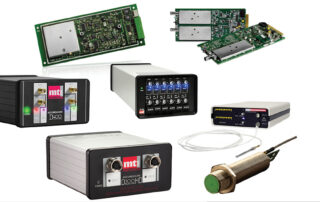 MTI Instruments’ Accumeasure HD System Proven to Be Highest Resolution Capacitance System in the World Gallery
MTI Instruments’ Accumeasure HD System Proven to Be Highest Resolution Capacitance System in the World
Blog, Brand-MTI, Industry-Sensors, New & Press Releases, News-MTI, Press Releases-Vitrek, Products-MTI-Capacitance, Z-REPUB, z1
MTI Instruments’ Accumeasure HD System Proven to Be Highest Resolution Capacitance System in the World
Lockport, IL, April 9, 2021 /PRNewswire/ — MTI Instruments, Inc. (“MTI Instruments”), a wholly-owned subsidiary of Mechanical Technology, Incorporated, (NASDAQ: MKTY), announced today that its Accumeasure HD system technology has been proven to measure distances as small as 69 picometers, setting a new bar for capacitance systems. The results were recently published in a white paper by Kevin Harding of Optical Metrology Solutions. Harding’s white paper can be accessed on MTI Instruments’ website. Harding’s independent study confirmed the findings of an internal experiment by MTI Instruments that concluded the Accumeasure HD system can provide picometer-level accuracy when used with [...]

Capacitive Displacement Sensors: Working Principle & Precision Measurement Applications
Capacitive Displacement Sensors: Working Principle & Precision Measurement Applications Capacitive displacement sensors are precision non-contact measurement devices that utilize capacitance changes to determine position, distance, and thickness with exceptional accuracy. These capacitive distance sensors offer superior performance in applications requiring high-resolution measurements, making them essential tools across manufacturing, automation, and research industries. How Capacitive Displacement Sensors Work Capacitive Sensor Working Principle Capacitive displacement sensors operate on the fundamental principle of measuring capacitance variations between two conductive surfaces. The sensor probe acts as one plate of a parallel plate capacitor, while the [...]
 Press Release: Vitrek Expands into the DAQ Market by Acquiring Dynamic Signals Gallery
Press Release: Vitrek Expands into the DAQ Market by Acquiring Dynamic Signals
Brand-GaGe, Brand-Vitrek, Brands-All, New & Press Releases, News-All Brands, News-GaGe, News-Industry, News-Vitrek, Press Releases-Vitrek, z1
Press Release: Vitrek Expands into the DAQ Market by Acquiring Dynamic Signals
Vitrek Expands into the DAQ Market by Acquiring DynamicSignals Expands Vitrek product portfolio to include high-performance signal capture and processing solutions; Integration of global engineering, sales and production strengthens reach in semiconductor, pharmaceutical and mil/aero industries. […]


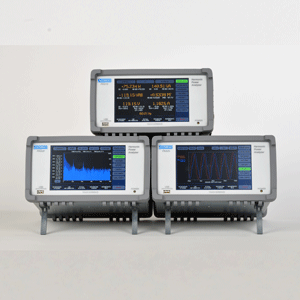
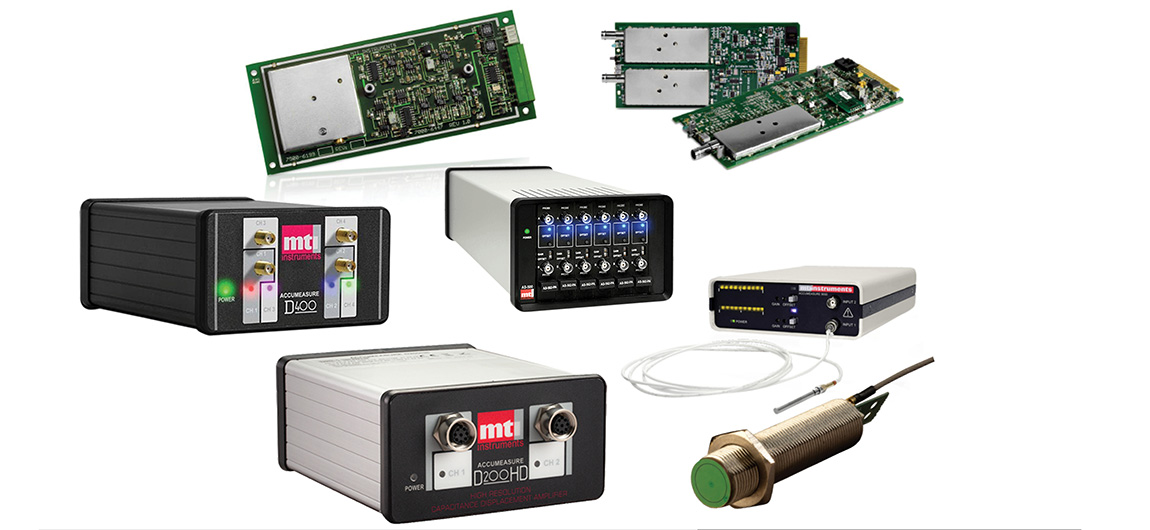

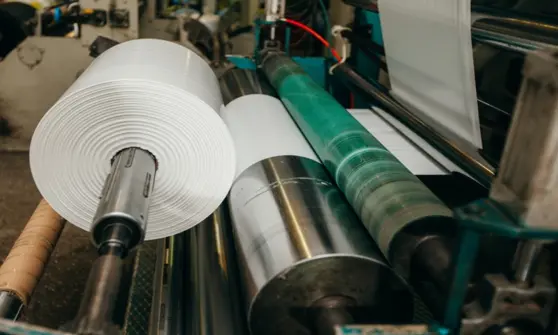
Measuring the Step Height Thickness of Non- Woven Conductive Films
Establishing and maintaining product quality throughout the production process is a common challenge of all manufacturers. How does an organization ensure the optimal output from their production lines, especially in real time? Key to this is strong non-destructive measurement practices that can take place at various points along the production process. The case study below is an example of how this was done at Saint-Gobain to measure the thickness and density of foam materials. They engaged with MTI's team of experts as their current direction was proving cost-prohibitive. Saint-Gobain's R&D organization, led by Dr. Mickael Boinet, found a solution [...]
 How Aircraft Operators Reduce Downtime While “Sweating the Assets” Gallery
How Aircraft Operators Reduce Downtime While “Sweating the Assets”
Articles-MTI, Brand-MTI, Industry-Aerospace, Industry-Compliance Testing, Industry-Government/Military, Industry-Manufacturing, Industry: Transportation, News-MTI-PBS, Products-MTI-Engine Balancing, Z-REPUB, z1

How Aircraft Operators Reduce Downtime While “Sweating the Assets”
In a recent article called “UPS Gives Old Jets New Life,” Bloomberg reports how United Parcel Service (UPS) is replacing the cockpit computers on its Airbus SE freighters in order to reduce downtime, increase productivity, and avoid large capital expenses. Known as “sweating the assets,” this business strategy is also benefitting the two aviation maintenance repair and overhaul (MRO) organizations that are performing the computer upgrades. “Doing such work,” writes Bloomberg’s Thomas Black, “is a huge potential market.” As the article explains, UPS purchased flight computers for over 50 Airbus A300-600 jets some twenty years ago. However, the memory [...]
 MTI Instruments’ PBS-4100+ Series Training Eligible for FAA Training Credit Gallery
MTI Instruments’ PBS-4100+ Series Training Eligible for FAA Training Credit
Brand-MTI, Industry-Aerospace, Industry-Government/Military, New & Press Releases, News-MTI, News-MTI-PBS, News-Products, Press Releases-Vitrek, Products-MTI-Engine Balancing, Z-REPUB, z1

MTI Instruments’ PBS-4100+ Series Training Eligible for FAA Training Credit
MTI Instruments' PBS-4100+ Series Training Now Eligible for Credit Under William (Bill) O'Brien Aviation Maintenance Technician (AMT) Awards Program Lockport, IL Feb. 23, 2021 /PRNewswire/ -- MTI Instruments, Inc. (MTI Instruments), a wholly-owned subsidiary of Mechanical Technology, Incorporated (OTCQB:MKTY), today announced that its training course on the PBS-4100+ engine vibration measurement and balancing system is now credit-eligible under the Federal Aviation Administration's (FAA's) William (Bill) O'Brien Aviation Maintenance Technician (AMT) Awards Program. With the new credit designation, MTI Instrument's course, "Vibration Analysis and Engine Balancing Using the PBS-4100 System," can earn an eligible individual up to 16 hours of credit towards AMT Awards issued through the FAA [...]