
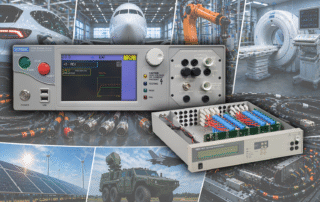
 Whitepaper: The Future of Cable Testing: Why Intelligent Automation is Replacing Manual Validation Gallery
Whitepaper: The Future of Cable Testing: Why Intelligent Automation is Replacing Manual Validation
Brand-Vitrek, Industry-Aerospace, Industry-Automotive, Industry-Cable Test, Industry-Compliance Testing, Industry-Consumer Products, Industry-Electronics, Industry-Government/Military, Industry-Lighting, Industry-Manufacturing, Industry-Medical, New & Press Releases, Whitepapers-Vitrek
Whitepaper: The Future of Cable Testing: Why Intelligent Automation is Replacing Manual Validation
Introduction Cable assemblies are evolving rapidly as products become more compact, more powerful, and more connected. Today’s designs often operate at higher voltages while fitting into smaller packaging envelopes, forcing engineers to balance electrical performance with limited physical space. At the same time, many assemblies now include a greater number of conductors and increasingly combine mixed signal and power paths within a single harness. Environmental demands are also rising. Cable systems may need to withstand vibration, temperature extremes, moisture, chemicals, or continuous motion depending on the application. Alongside these technical requirements, manufacturers face growing expectations for stronger quality documentation [...]
 Automating Complex Cable Testing with the Vitrek V10X and 964i Gallery
Automating Complex Cable Testing with the Vitrek V10X and 964i
Application Notes-Vitrek, Brand-Vitrek, Industry-Aerospace, Industry-Automotive, Industry-Cable Test, Industry-Compliance Testing, Industry-Consumer Products, Industry-Electronics, Industry-Government/Military, Industry-Lighting, Industry-Manufacturing, Industry-Medical, Whitepapers-Vitrek
Automating Complex Cable Testing with the Vitrek V10X and 964i
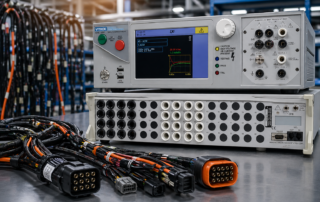
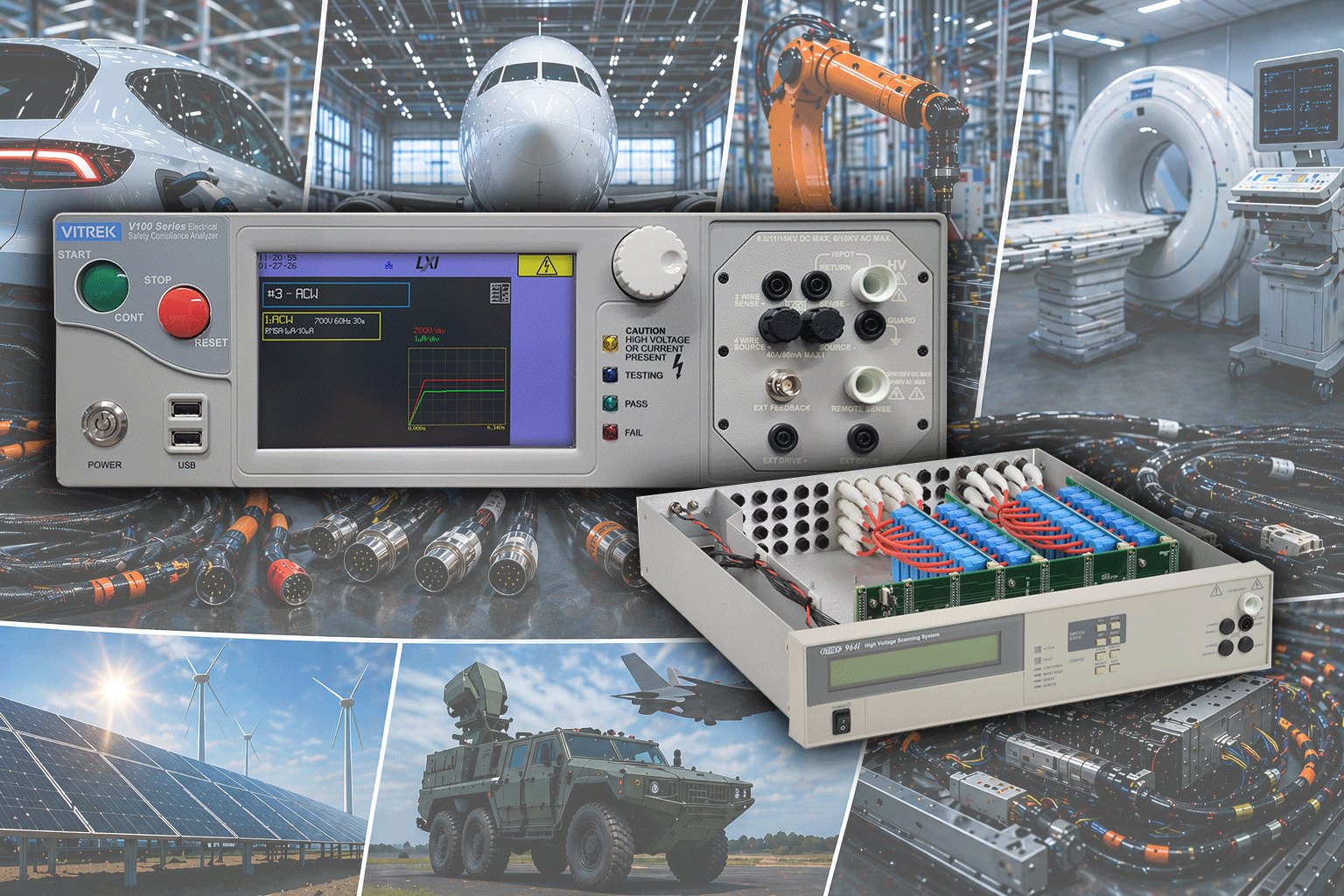
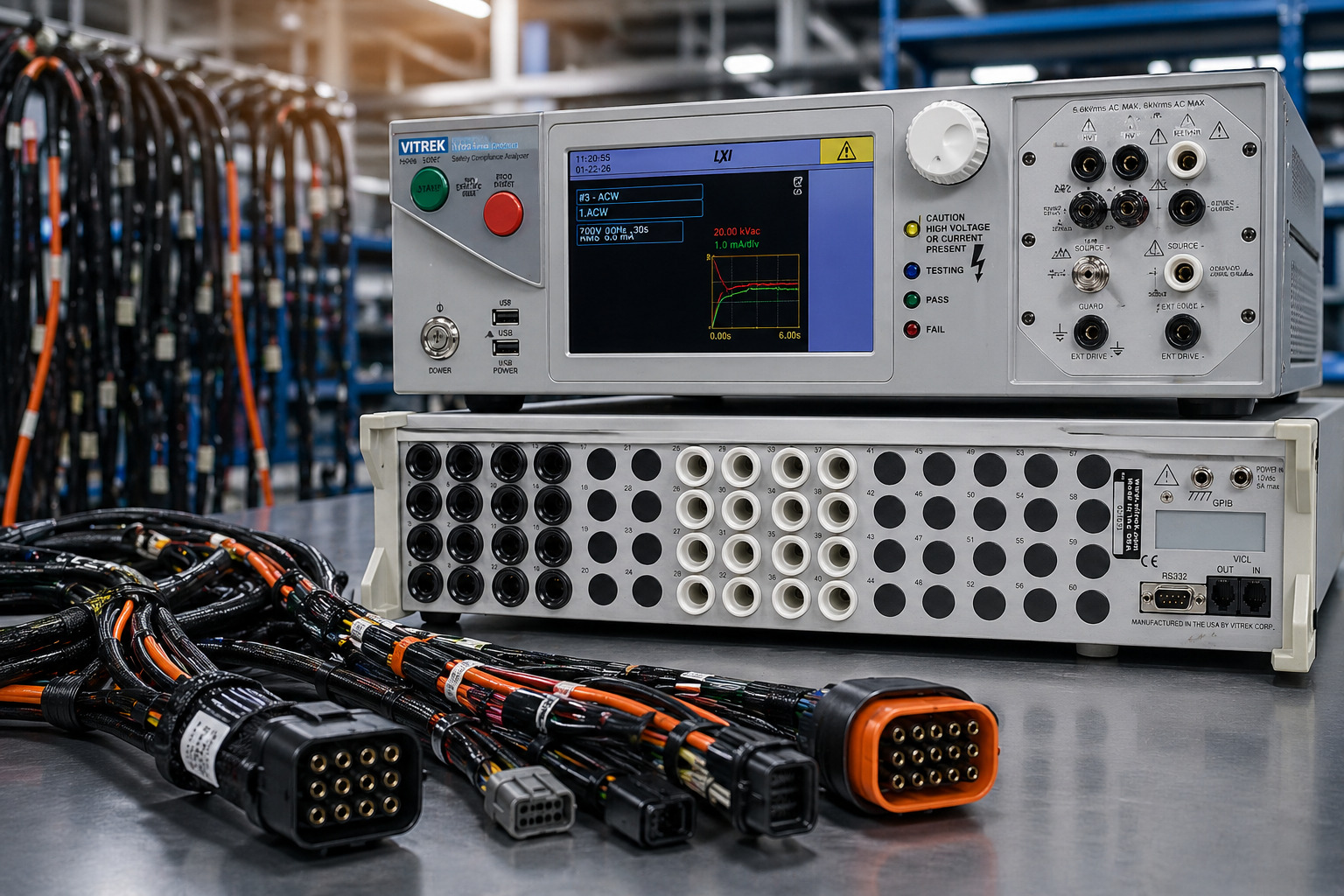
Introduction Cable assemblies are no longer simple pass/fail products. Modern harnesses may contain dozens—or hundreds—of conductors, shielding paths, insulation systems, and termination points. Testing them manually is slow, labor intensive, and prone to inconsistency. The combination of the Vitrek V10X Hipot Tester and Vitrek 964i High Voltage Switching System creates a modern automated platform for validating cable safety and integrity with higher speed and repeatability. The Challenge Manufacturers of advanced cable assemblies are under constant pressure to improve quality while keeping production moving. Many products now use large pin-count connectors and complex multi-conductor designs that require access to numerous [...]
Application Note: Modernizing a Legacy Military Avionics Test System with a Programmable GaGe High-Speed Digitizer
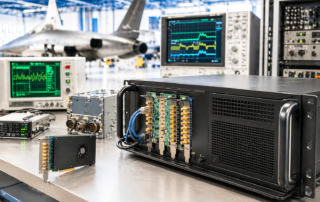
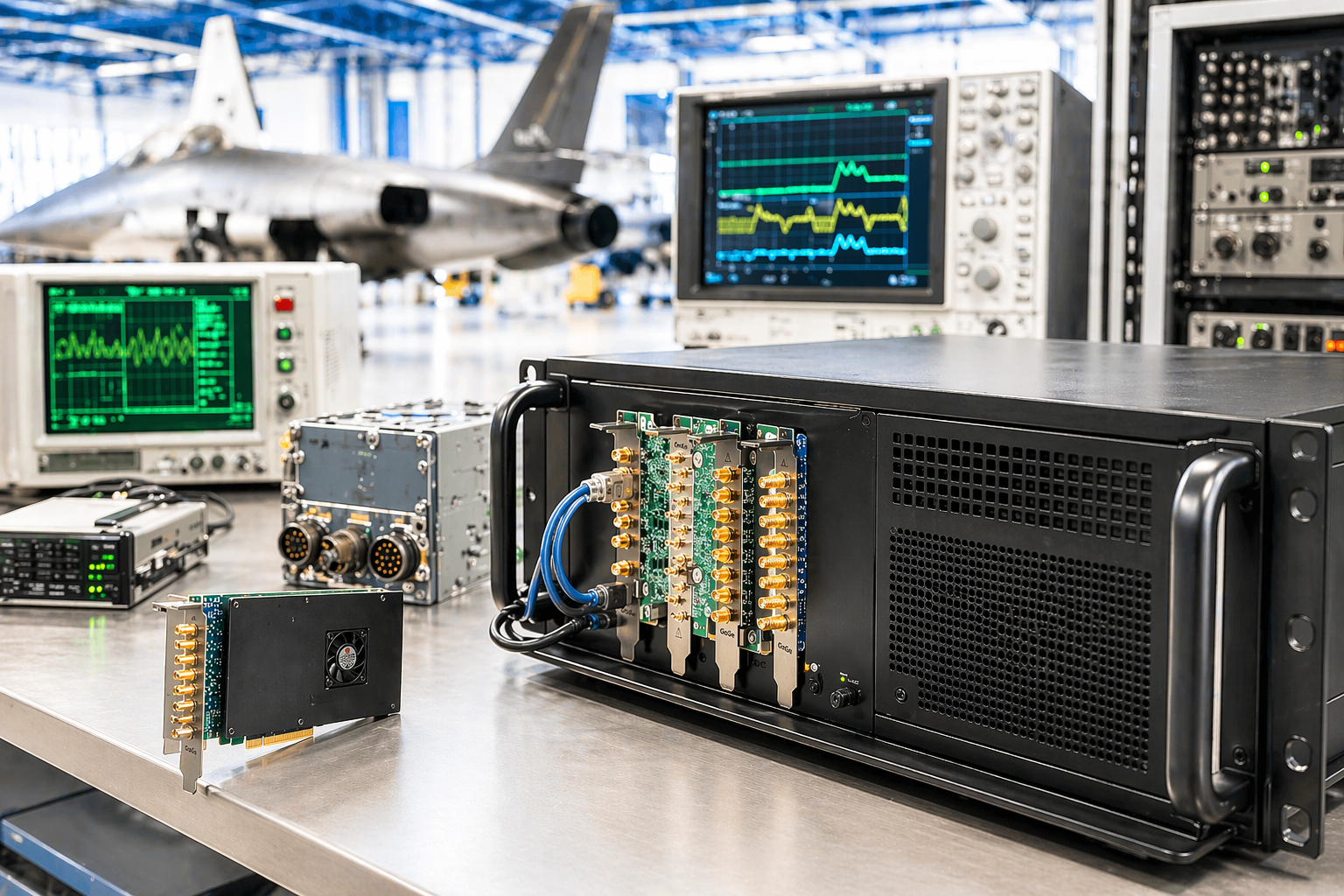
Introduction Across military and aerospace maintenance operations, many proven test systems remain in service decades after their original deployment. These systems often support critical certification procedures, validated workflows, and platform-specific compliance tests that are costly or impractical to replace. While the airframes and missions may evolve, the test infrastructure built around them often remains indispensable. The challenge arises when key instruments inside those systems become obsolete. Aging oscilloscopes, digitizers, controllers, and interface hardware can create maintenance burdens, calibration issues, and long-term support risks. Replacing them is rarely simple. In regulated or mission-critical environments, a modern instrument must not only [...]
Application Note: Improving Optical Measurements Through High-Speed Data Acquisition
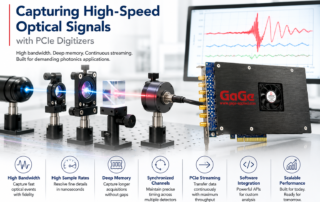
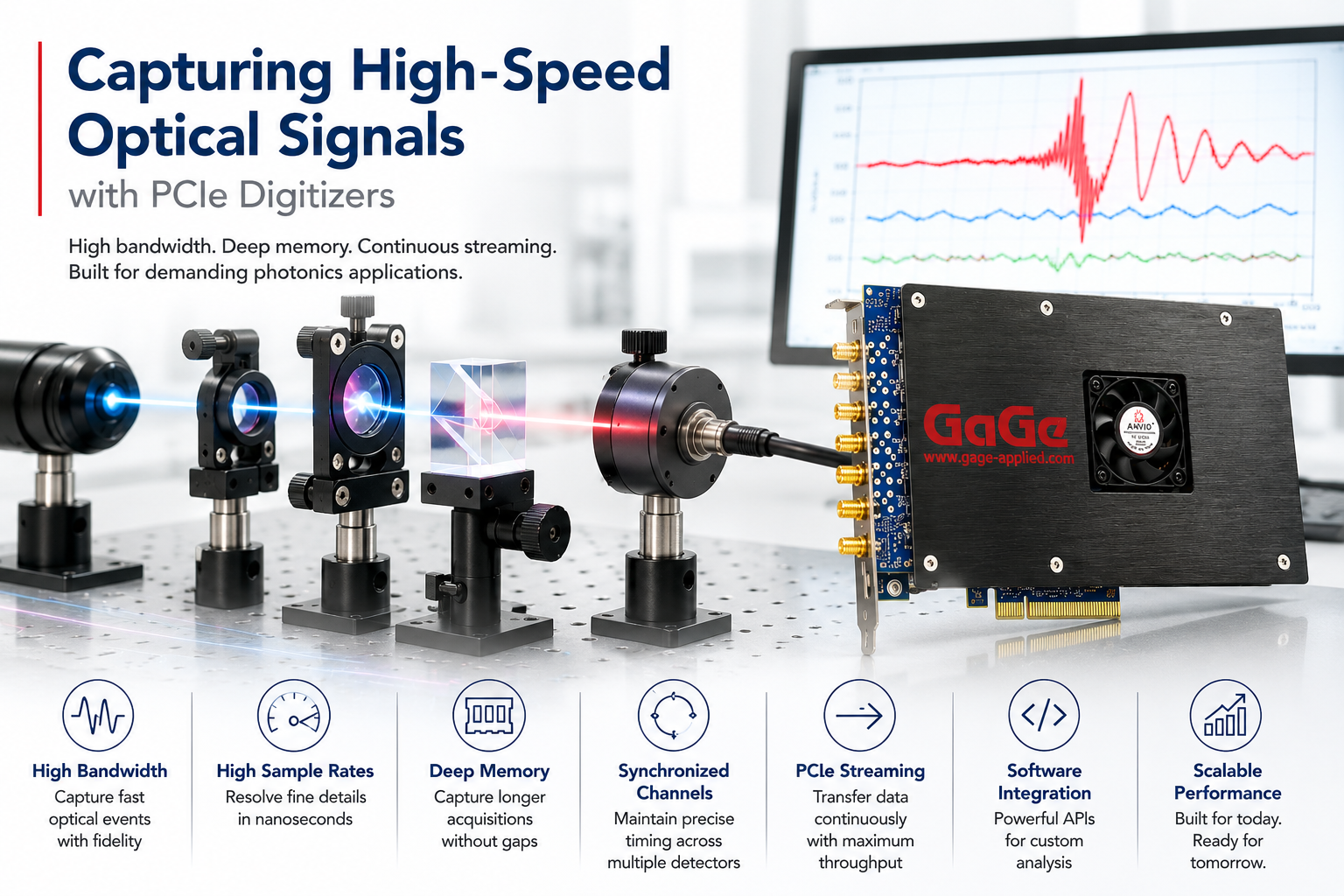
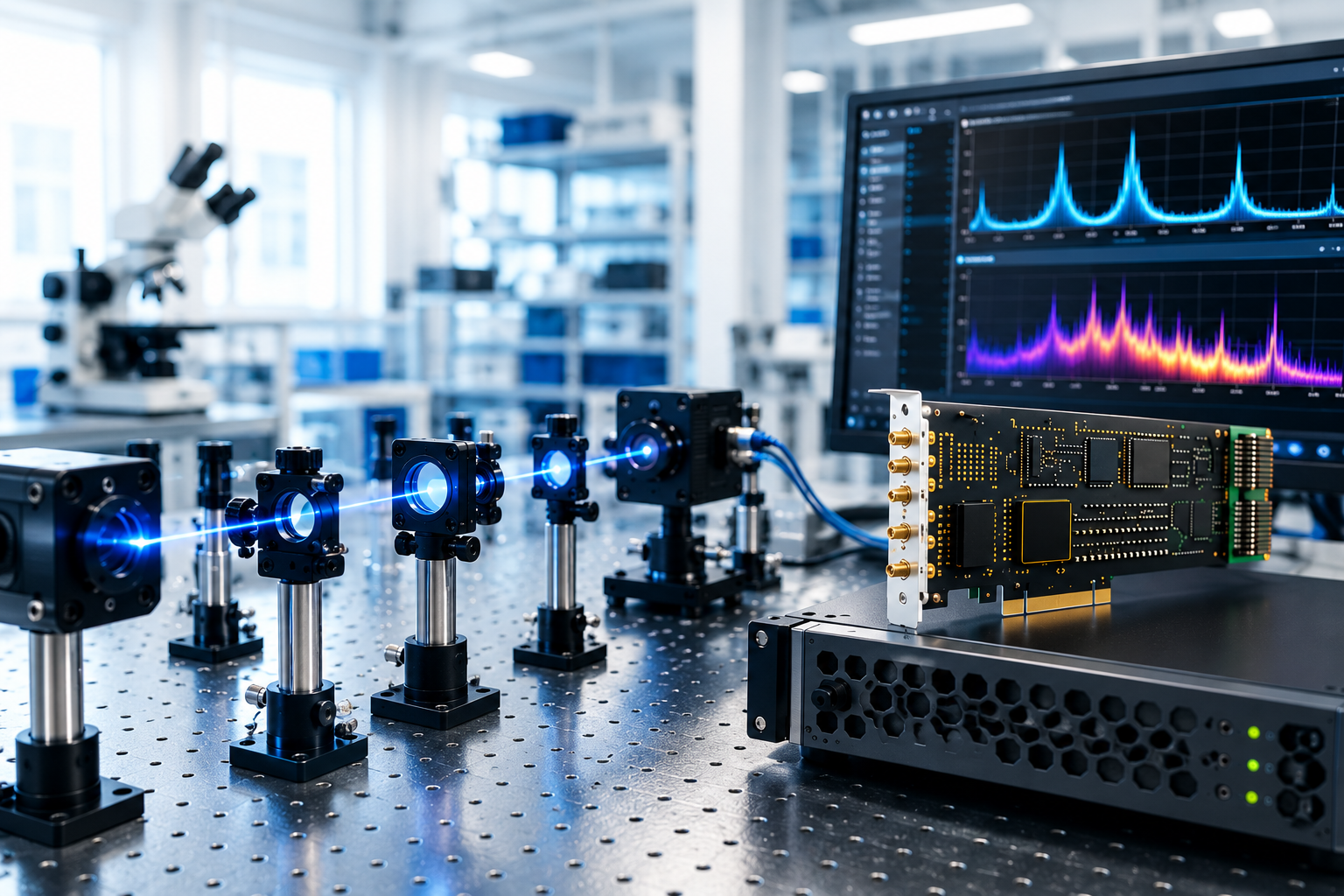
Introduction Advances in optical engineering are driving the need for faster, more accurate data acquisition systems. Whether characterizing laser pulses, measuring fiber optic sensors, or analyzing highspeed optical communications, today’s photonics applications generate electrical signals that demand exceptional sampling performance and timing accuracy. While the optical source may be light, the measurement ultimately depends on capturing an electrical waveform produced by a photodiode or other optical detector. Preserving the integrity of that waveform is critical, as lost detail or timing errors can directly affect measurement accuracy, image quality, or system performance. High-speed PCIe digitizers provide the bandwidth, memory depth, [...]
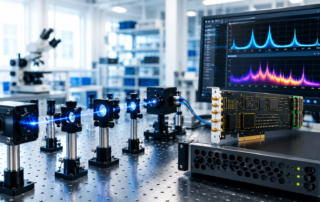
Whitepaper: Choosing the Right Data Acquisition Architecture for Photonics Applications
Introduction Photonics has become one of the fastest-growing fields in engineering, enabling advances in autonomous vehicles, optical communications, medical imaging, aerospace, semiconductor manufacturing, and quantum technologies. As these systems continue to evolve, engineers are challenged to capture increasingly complex optical signals while maintaining exceptional measurement accuracy, repeatability, and timing precision. At the heart of every optical measurement system is a detector that converts light into an electrical signal. The quality of the resulting data depends not only on the detector itself, but also on the architecture used to acquire, process, and analyze that signal. Selecting the appropriate data acquisition [...]
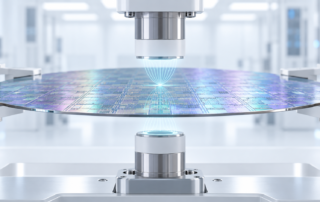
Whitepaper: Thickness Metrology for AI Accelerators, HBM and Chiplet-Based Advanced Packaging
Introduction Artificial intelligence and high-performance computing are reshaping semiconductor design and manufacturing. Instead of relying exclusively on increasingly large monolithic devices, manufacturers are integrating logic, memory and specialized functions through chiplets, 2.5D packaging, 3D stacking and high-bandwidth memory. These architectures improve computing density, bandwidth and energy efficiency, but they also place greater demands on wafer thinning and backside processing. Individual wafers and dies may need to be made significantly thinner before stacking, bonding or package assembly. As thickness decreases, however, wafers become more susceptible to breakage, warpage, handling damage and non-uniform material removal. Thickness metrology therefore becomes more than [...]
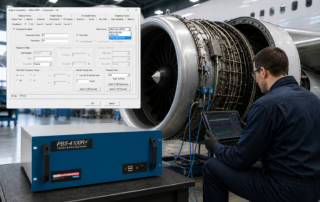
Engine Balancing in the Digital Age: Unlocking Faster, Smarter MRO with Integrated Aircraft Data
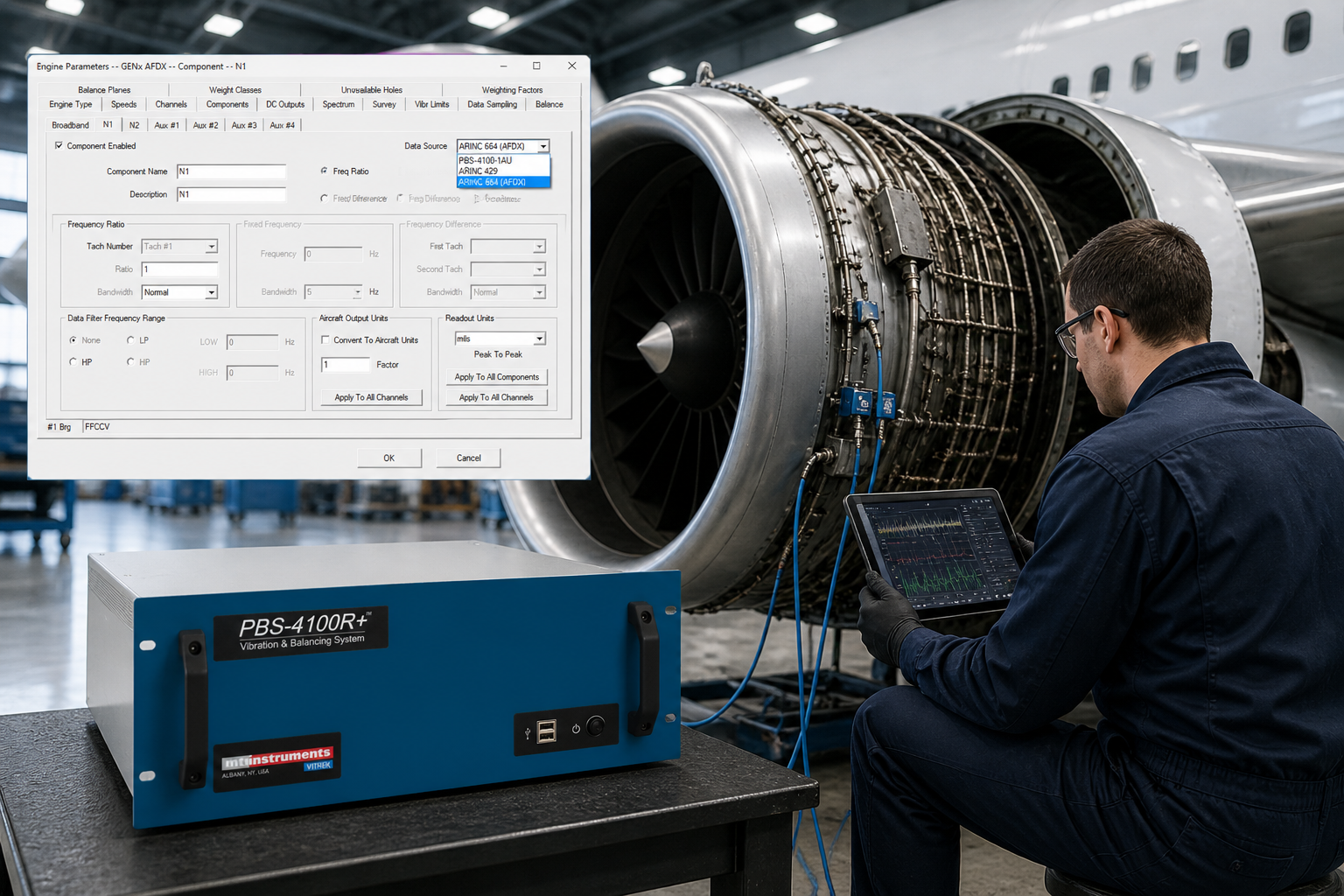
Introduction Modern aircraft engines generate vast amounts of operational data, yet much of this information has historically remained under utilized during maintenance procedures like vibration balancing. As fleets transition to digitally connected avionics architectures, MRO teams are rethinking how they access and apply engine data to improve efficiency and accuracy. By leveraging direct integration with onboard data networks, today’s vibration balancing systems can streamline setup, reduce dependency on external instrumentation, and deliver faster, more reliable results—ultimately helping operators minimize downtime and maintain peak engine performance. The Role of Engine Vibration Balancing MRO Jet engines operate under extreme mechanical stress, [...]
Understanding Semiconductor Wafer Stress: A Practical Guide to Thin-Film Stress, Wafer Curvature Measurement & Process Control
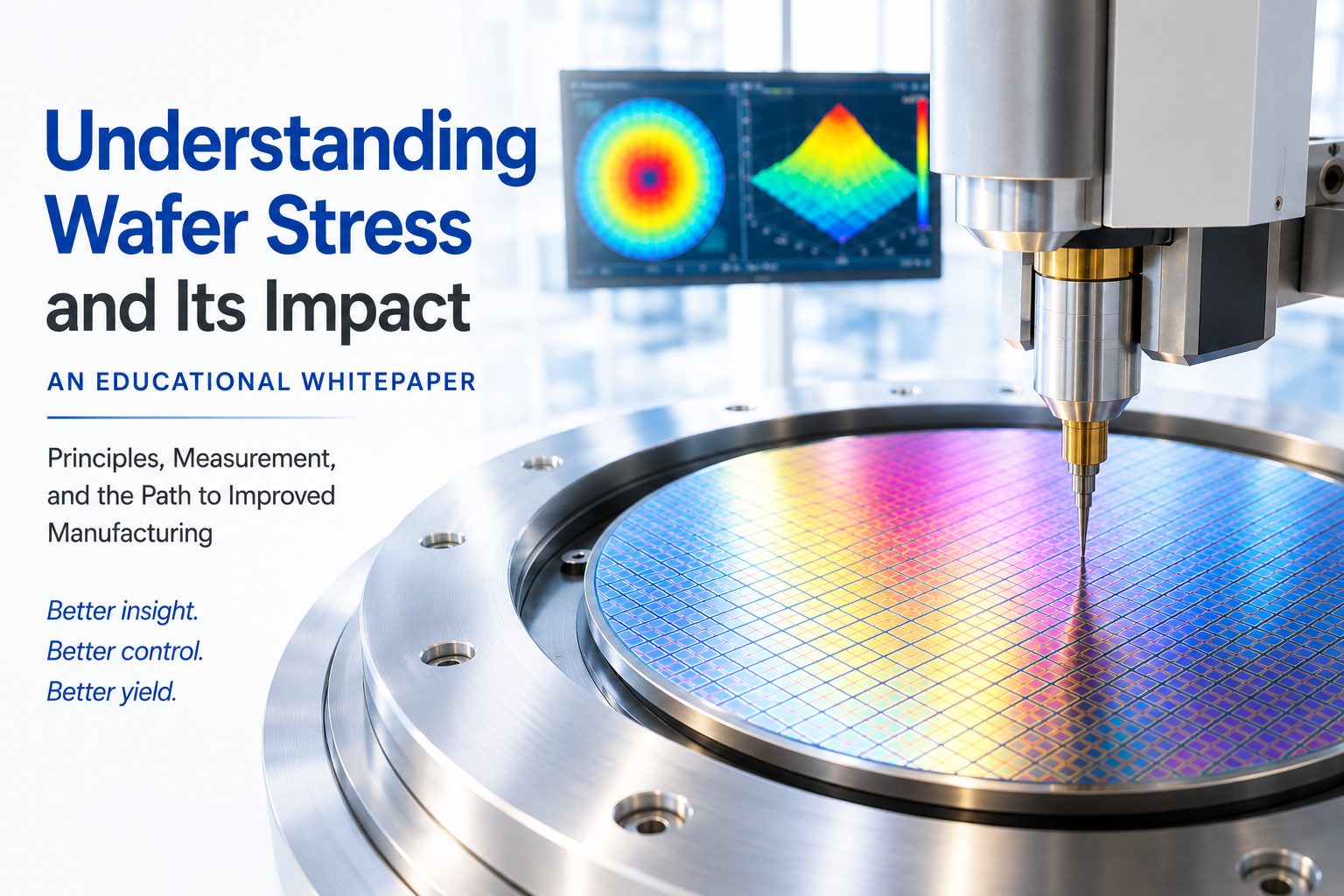
Introduction Every semiconductor device begins with a nearly perfect wafer. Yet throughout fabrication, that wafer is repeatedly transformed by dozens of manufacturing processes including thin-film deposition, oxidation, implantation, annealing, polishing, and packaging. While each process is designed to modify the electrical properties of the device, it also alters something far less visible—its mechanical condition. The addition of every thin film introduces internal mechanical forces that can subtly change the shape of the wafer. These changes, often measured in only a few micrometers across a 200 mm or 300 mm substrate, may appear insignificant. However, as semiconductor devices continue to [...]

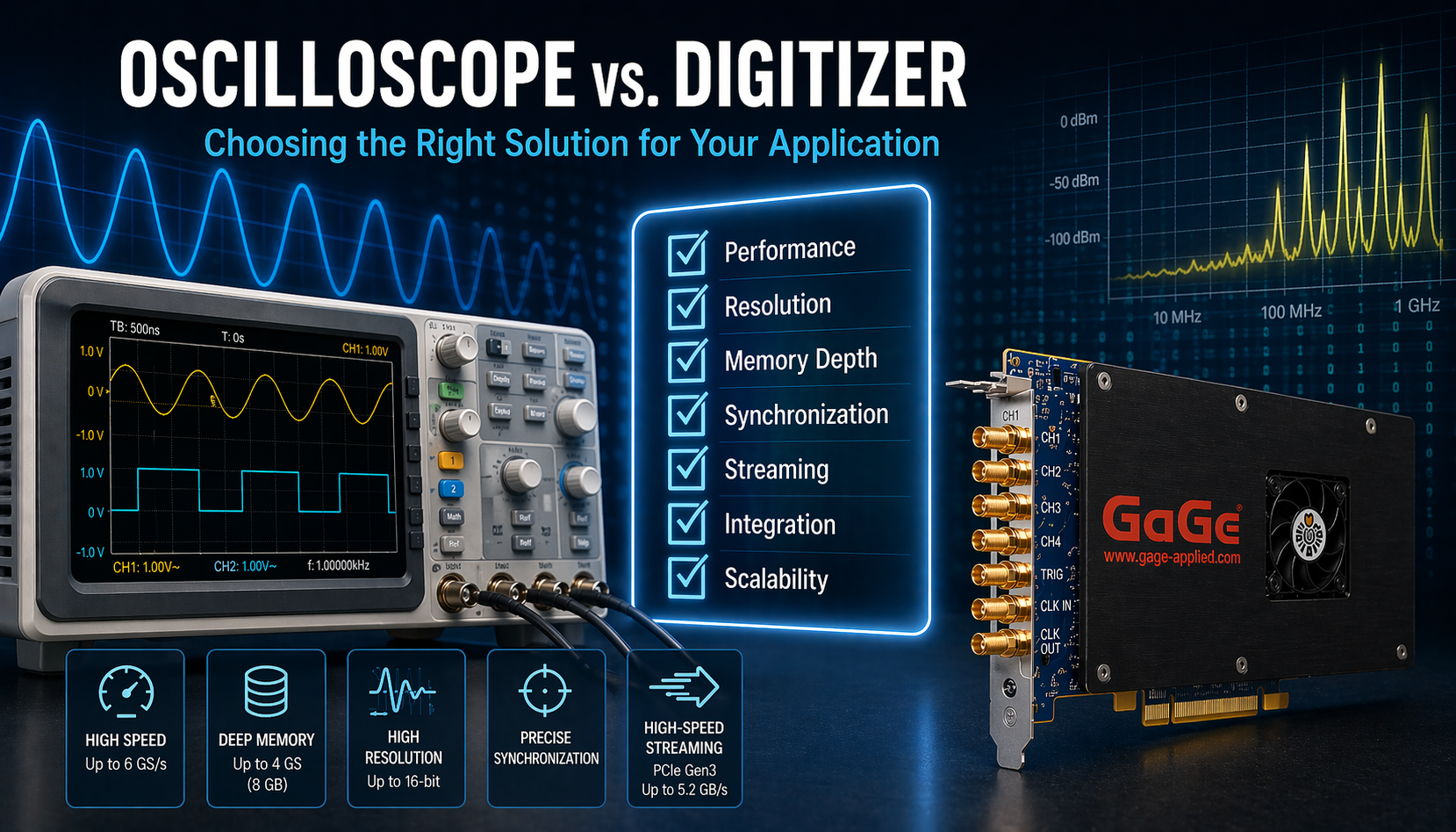
Whitepaper: Oscilloscopes vs Digitizers: Choosing the Right Platform for Wideband Signal Acquisition
Introduction As signal environments become faster, more complex, and more data-intensive, engineers need acquisition tools that match the demands of modern testing. Whether validating next-generation communications systems, capturing radar pulses, analyzing ultrasound returns, or troubleshooting electronics, the quality of captured data directly impacts design confidence and test accuracy. Two of the most common signal acquisition platforms are oscilloscopes and digitizers. While both sample electrical signals and convert them into digital data, they are designed for different workflows. Oscilloscopes excel in interactive debugging and real-time waveform visualization. Digitizers are optimized for sustained acquisition, deep memory capture, system integration, and high-performance [...]
 Application Note: Replace Three Legacy Systems with One: Modernizing Aerospace/Defense Test Cells with PBS eXpress Gallery
Application Note: Replace Three Legacy Systems with One: Modernizing Aerospace/Defense Test Cells with PBS eXpress
Application Notes-MTI, Brand-MTI, Industry-Aerospace, New & Press Releases, News-Industry, News-MTI, Whitepapers-MTI
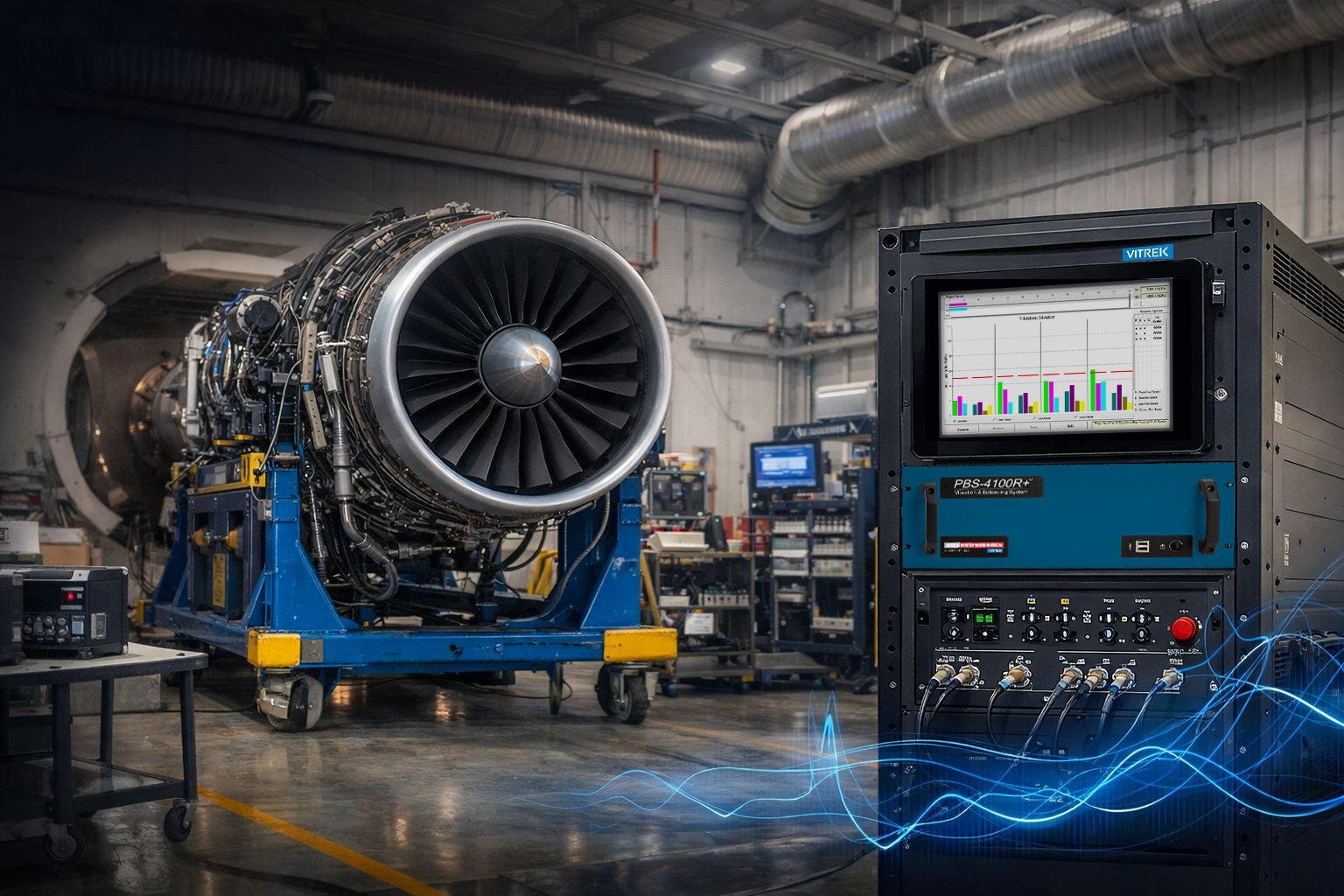
Application Note: Replace Three Legacy Systems with One: Modernizing Aerospace/Defense Test Cells with PBS eXpress
Introduction Many military/defense and commercial aerospace test cells still rely on aging analog instruments that, while functional, introduces risk through calibration challenges, legacy components, and lack of digital data access. As testing demands evolve, the industry is moving toward compact, digital platforms that simplify workflows and improve data usability. A Vitrek customer faced this challenge across multiple engine test cells. Their solution: replace two legacy systems with a single PBS eXpress R+, enabling faster setup, digital data acquisition, and automated reporting. The Challenge The customer’s test cells were built around a mix of aging instrumentation, including TrigTek tracking filters, [...]