
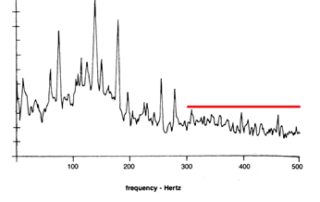
How Often Should Vibration Analysis Be Performed?
How Often Should Vibration Analysis Be Performed? Once a customer takes delivery of a PBS system and learns how to use it, the next logical question is: “How often should we use it?” At a minimum, your approved maintenance program (whether it’s a program developed by your operation, or the maintenance procedures outlined by the engine/airframe manufacturer) will tell you about the intervals at which to perform a vibration analysis. Usually, there is a procedure to specify how an engine vibration analysis and balance need be only completed when squawked by a pilot or after the completion of maintenance [...]
Electron Paramagnetic Resonance Imaging (EPRI) Measuring of Tumor Oxygen Levels
Electron Paramagnetic Resonance Imaging (EPRI) Measuring of Tumor Oxygen Levels Customer Case The customer is improving their Electron Paramagnetic Resonance Imaging (EPRI) system that is used for the diagnosis of tumors. Using this non-invasive method, the concentration of oxygen in living tissues can be determined without the need for biopsies. Tumors that have little or no oxygen content (i.e. hypoxia) also have increased resistance to radio-frequency radiation, making it less effective as a choice for cancer treatment. Identifying those patients with hypoxic tumors allow alternative treatments to be used instead. The requirement is to capture the returned RF signals [...]
 Contact vs. Non-Contact Measurement and Linear Displacement Sensors Gallery
Contact vs. Non-Contact Measurement and Linear Displacement Sensors
Application Notes-MTI, Brand-MTI, Industry-Compliance Testing, Industry-Consumer Products, Industry-Electronics, Industry-Manufacturing, Industry-Semiconductor, Industry-Semiconductor-MTI, Industry-Sensors, Products-MTI-Capacitance, Z-REPUB, z1, ZOK
Contact vs. Non-Contact Measurement and Linear Displacement Sensors
Contact vs. Non-Contact Measurements Choosing between a contact measurement system and a non-contact measurement system requires careful evaluation of your application’s performance needs, material properties, environmental conditions, and measurement goals. Each system type offers unique advantages- and understanding these distinctions can help you make a more informed decision. Let's explores how contact and non-contact measurement techniques work, their strengths and limitations, and where they’re best applied. What Are Contact Measurement Systems? Contact measurement systems involve tools and sensors that physically touch the object to determine various physical characteristics. These systems are widely used in dimensional metrology, offering high precision, [...]
Transmission Electron Microscopy for Imaging of Biological Molecules
Transmission Electron Microscopy for Imaging of Biological Molecules Customer Case The customer is improving their customized Transmission Electron Microscope (TEM) that is optimized for imaging unstained biological molecules with minimal radiation damage. Diffraction-limited resolution of 0.25 nm is routinely obtained with a cold field-emission electron-gun operating at 40 keV. The sample is maintained at about 123 K (i.e. -150°C), both to eliminate contamination and to reduce mass-loss. The scan raster is 512 x 512 points with a dwell time of 30 microseconds per pixel (over 8.5 seconds per raster-scan). For most mass measurements, the pixels are separated by 1 [...]
Treadmill Power Glitch Monitoring
Treadmill Power Glitch Monitoring Customer Case A customer develops gym equipment such as treadmills. The requirement is for an inexpensive way to monitor voltage signals for long periods of time. The treadmills are controlled by microprocessors that drive the LED displays. The customer has observed that some units intermittently fail during testing, a condition known as a "glitch" or a "brown-out". A glitch can have many causes, one of which is a weak power supply. The customer needs to capture certain key signals when a glitch occurs. At that stage, based on the captured data, it can be determined [...]
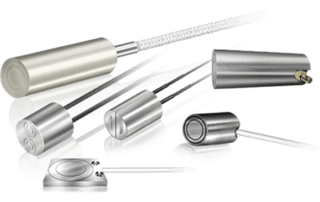
Capacitance Sensors vs. Eddy Current Sensors Application Note
Capacitance Sensors vs. Eddy Current Sensors Application Note Capacitance sensors and Eddy current sensors are both used for non-contact measurements. Capacitive probes use electric fields to measure the distance from the sensor face to the surface of a target that is typically conductive and grounded. Eddy current probes use an alternating AC current to induce a magnetic field in a conductive target instead. In turn, the induced magnetic field produces a back magnetic field that is proportional to the gap between the probe face and the target. In a recent application note, MTI Instruments examines the differences between capacitance [...]
Foam Density Measurement: Capacitance Sensors vs. Nuclear Gauges
This application note from MTI Instruments compares two technologies for measuring foam density: capacitance sensors and nuclear gauges. It examines the basic operating principles of each technology and explains why capacitance measurement is recommended for in-line measurement during foam manufacturing. Capacitance Sensors Capacitive probes are non-contact devices that use electric fields to measure foam density. In combination with a thickness value, a density measurement may be calculated. These probes consist of a capacitance sensor inside of a protective housing and are part of a larger measurement system that includes amplifiers, cables, and software. With parallel plate capacitance, the capacitance probe [...]
Get More Out Of Your Military & Aerospace Applications
When testing the electrical systems for your military and aerospace applications, you need to ensure they are ready for the job and meet all the necessary standards. These specialized systems work to keep the highly sophisticated and advanced technology housed in these applications running at full strength, which requires the right amount of power to do their jobs effectively. Having the right electrical safety and performance testing equipment on hand can help determine the overall effectiveness of your applications. […]
Capacitance Sensing vs. Strain Gauge Sensing Application Note
Capacitance Sensing vs. Strain Gauge Sensing Application Note Capacitance probes that are embedded in piezo flexure stages can provide significantly greater accuracy than strain gauges. Although some minor mounting modifications are required, capacitance probes with picoscale positioning provide higher linearity, greater long-term stability, and better direct measurement. Capacitance sensors cost more, however, and are limited by sensing distance. Therefore, strain gauge sensors remain a good choice for applications where cost is a consideration, sensing distances are larger, and high resolution or high accuracy are required. In a recent application note, MTI Instruments examines the differences between capacitance probes and [...]

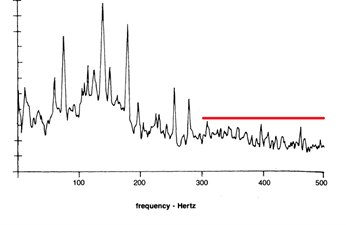

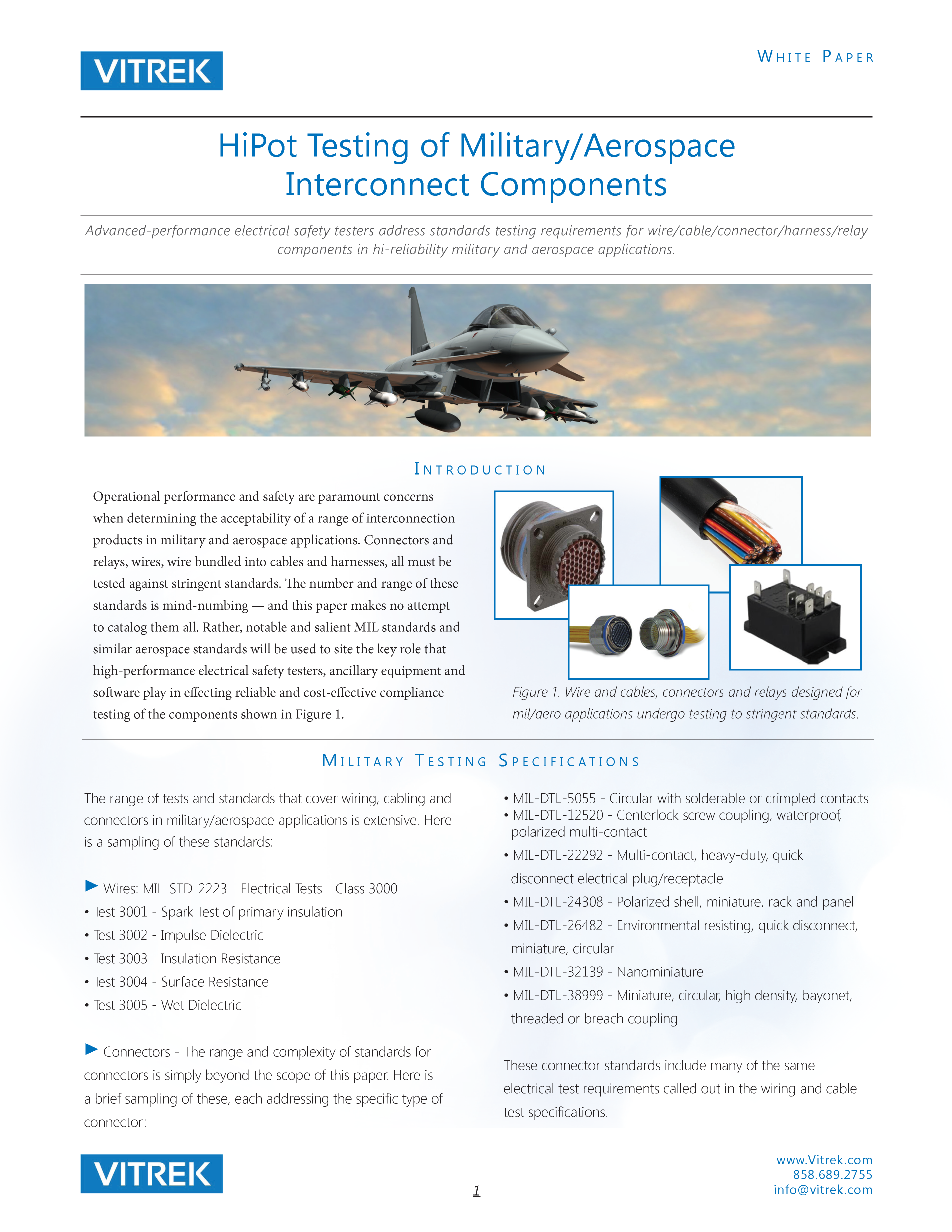
White Paper: Hipot Testing of Military/Aerospace Interconnect Components
Introduction Operational performance and safety are paramount concerns when determining the acceptability of a range of interconnection products in military and aerospace applications. Connectors and relays, wires, wire bundled into cables and harnesses, all must be tested against stringent standards. The number and range of these standards is mind-numbing — and this paper makes no attempt to catalog them all. Rather, notable and salient MIL standards and similar aerospace standards will be used to site the key role that high-performance electrical safety testers, ancillary equipment and software play in effecting reliable and cost-effective compliance testing of components as [...]