Radio Astronomy Measurements Using a GaGe
RazorMax Digitizer

Introduction
Radio astronomy relies on highly sensitive measurements of weak electromagnetic emissions originating from cosmic sources, including galactic hydrogen clouds, star-forming regions, pulsars, and the Cosmic Microwave Background (CMB). These emissions typically fall below 10 GHz, spanning the radio-frequency (RF) and microwave bands. In many cosmological studies—particularly those investigating early-universe star formation—signals of interest are concentrated well below 300 MHz.
In the application described here, a customer is monitoring astronomical RF emissions centered near 100 MHz, originating from extremely distant sources. At these frequencies, signal power levels are exceedingly small and embedded within wideband noise, placing stringent requirements on dynamic range, noise performance, frequency resolution, and long-duration acquisition stability.
Unlike higher-frequency radio astronomy systems that require RF down-conversion stages, the relatively low operating frequency in this application allows direct digitization, eliminating mixer-induced noise, phase distortion, and calibration complexity.
Direct RF Digitization Strategy
Direct digitization is feasible when the following criteria are satisfied:
- Signal frequencies lie within the analog bandwidth of the digitizer.
- Sampling rate exceeds the Nyquist requirement with margin.
- Front-end filtering suppresses out-of-band energy.
- ADC resolution supports the required dynamic range.
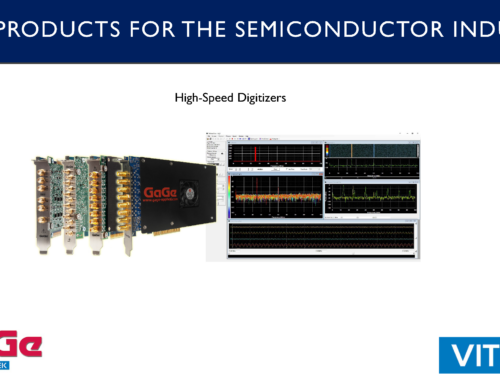
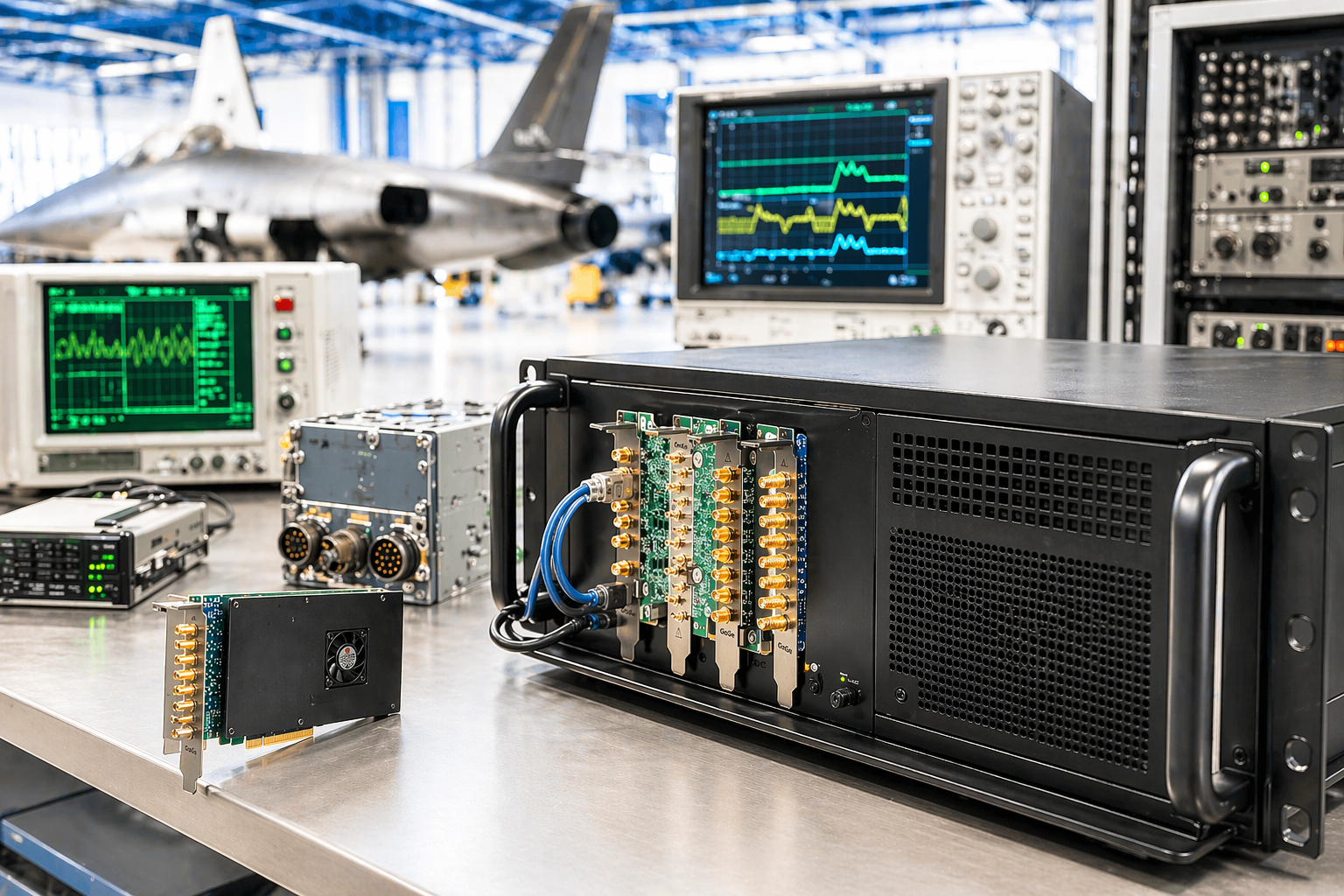
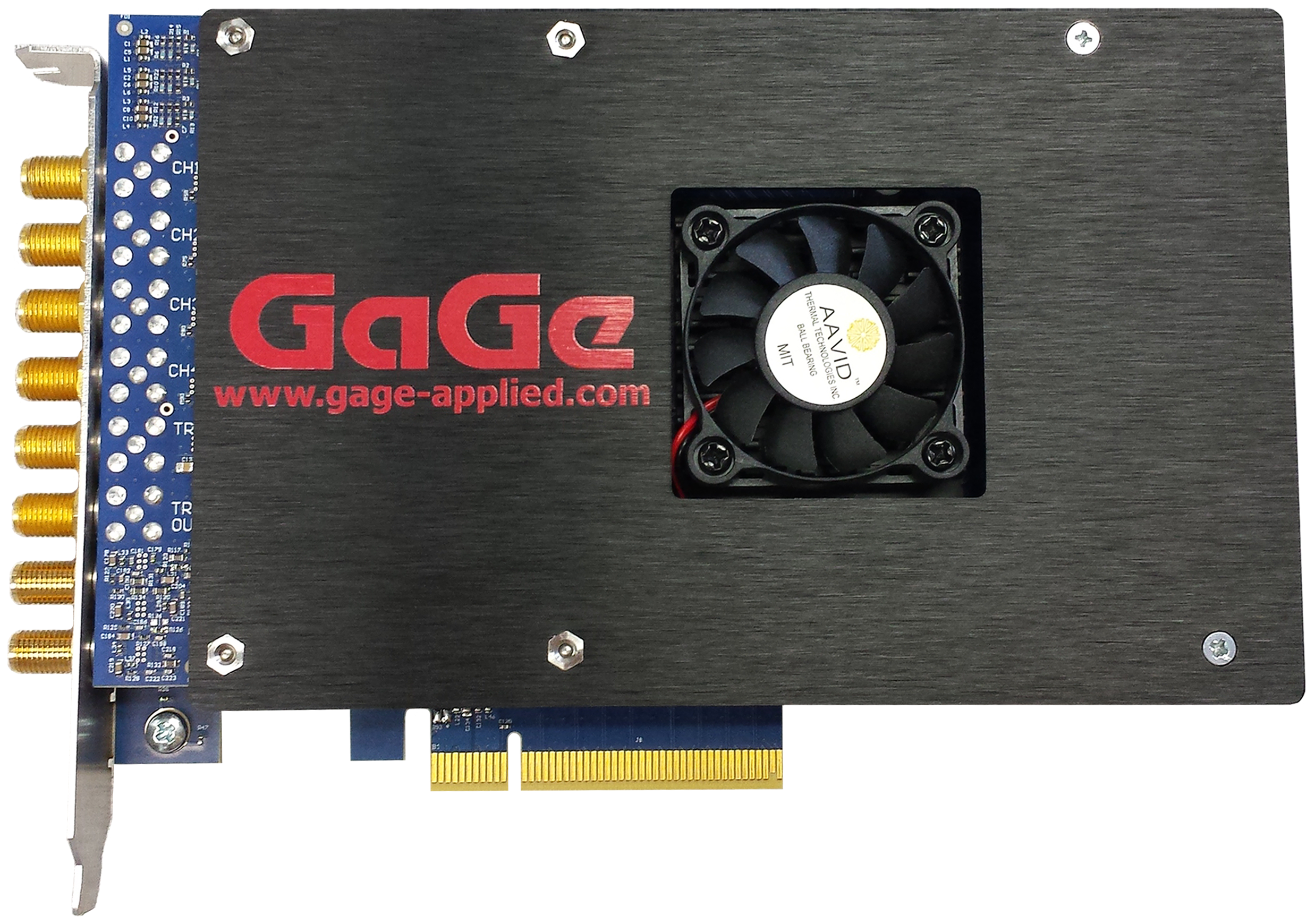
In this case, the customer selected the GaGe RazorMax CompuScope 16502, a high-performance PCIe digitizer featuring:
- 2 synchronous input channels
- 16-bit vertical resolution
- Maximum sampling rate of 500 MS/s
- 300 MHz analog input bandwidth (-3 dB)
This configuration enables direct capture of 100 MHz astronomical signals with minimal attenuation and excellent amplitude fidelity.
Bandwidth, Sampling Rate & Anti-Aliasing Considerations
At a maximum sampling rate of 500 MS/s, the digitizer provides a Nyquist bandwidth of 250 MHz, which comfortably exceeds the signal band of interest. To prevent aliasing and reduce broadband noise, the input signal path incorporates low-pass filtering, ensuring that frequency components above the Nyquist limit are strongly attenuated.
The 300 MHz analog front-end bandwidth ensures that the passband distortion across the 100 MHz region remains minimal. Any residual roll-off can be characterized and compensated during system calibration.
This approach avoids the need for superheterodyne architectures while preserving phase coherence and amplitude linearity, both of which are critical for spectral averaging and long-term integration.
Dynamic Range and ADC Resolution
Radio astronomy signals often exhibit extreme dynamic-range variation across frequency bins. Weak spectral features may coexist with stronger broadband or narrowband components, requiring simultaneous detection without saturation or quantization loss.
The RazorMax’s 16-bit ADC provides a theoretical signal-to-quantization-noise ratio (SQNR) of approximately 98 dB, enabling:
- Detection of very low-amplitude spectral components
- Preservation of higher-amplitude features without clipping
- Improved sensitivity after FFT averaging
This high vertical resolution is especially advantageous when integrating signals over long time spans, where quantization noise would otherwise limit detectability.
Continuous Streaming and Data Throughput
Radio astronomy observations typically span hours to days of uninterrupted acquisition, requiring sustained streaming from the digitizer to host processing systems.
At 500 MS/s with 16-bit samples:
Each sample = 2 bytes
Per-channel data rate = 1 GB/s
Two channels = 2 GB/s (if both are used simultaneously)
The RazorMax’s PCIe Gen3 x8 interface supports sustained transfer rates exceeding 4 GB/s, providing ample margin for continuous, loss-free acquisition.
This architecture eliminates reliance on onboard memory depth and enables real-time signal processing pipelines.
Real-Time Digital Signal Processing Architecture
Because radio astronomy data are rarely analyzed in the time domain, all acquired waveforms are routed immediately into a frequency-domain DSP workflow.
The customer’s system distributes raw time-domain data to a combination of:
- High-performance CPUs
- Multiple GPU accelerators
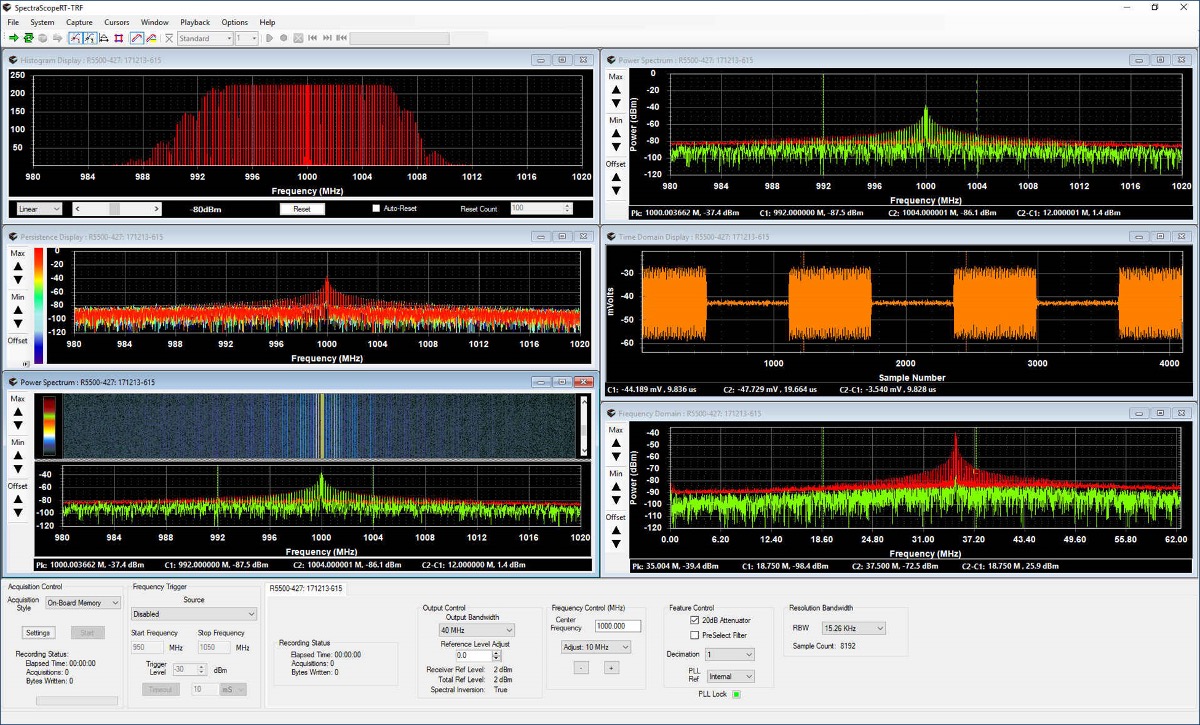
The continuous data stream is segmented into short time records—typically a few thousand samples per segment, corresponding to microsecond-scale durations. Each segment undergoes Fast Fourier Transform (FFT) processing, producing thousands of spectral frames per second.
These spectra are then:
- Averaged over time to improve SNR
- Analyzed to extract peak frequency components
- Used to characterize broadband spectral backgrounds
- Tracked for temporal and frequency-domain variability
Because the acquisition runs continuously, the DSP infrastructure must reliably consume ~1 GB/s per channel. Any bottleneck in processing or data transfer would result in buffer overflow and data loss, making sustained throughput a critical system-level requirement.
System-Level Benefits
By combining a high-resolution, high-bandwidth digitizer with modern GPU-accelerated DSP, the customer has implemented a cost-effective yet highly capable radio astronomy measurement platform that delivers:
- Direct RF digitization without down-conversion
- Excellent dynamic range for weak-signal detection
- High spectral resolution through dense FFT processing
- Continuous multi-day acquisition with no data gaps
- Scalability using commodity PC and GPU hardware
Conclusion
Modern radio astronomy places extreme demands on data-acquisition systems, requiring high dynamic range, wide analog bandwidth, sustained streaming performance, and long-term measurement stability. As demonstrated in this application, direct RF digitization at frequencies near 100 MHz eliminates the
complexity and uncertainty introduced by traditional down-conversion stages while preserving signal integrity and phase coherence.
By combining a high-resolution, wideband PCIe digitizer with continuous high-throughput streaming and GPU-accelerated digital signal processing, researchers can perform dense FFT-based spectral analysis in real time over multi-day observation periods. The result is a scalable, cost-effective architecture capable of detecting weak astronomical emissions while simultaneously characterizing broadband spectral behavior with high precision.
This approach is not limited to radio astronomy alone. The same design principles—direct digitization, high dynamic range, deterministic data transfer, and parallel DSP—are directly applicable to other weak signal, high-data-rate measurement challenges in physics research, spectrum monitoring, and advanced instrumentation. As computing and digitizer technologies continue to advance, direct RF acquisition architectures such as this will increasingly form the foundation of next-generation scientific measurement systems.