
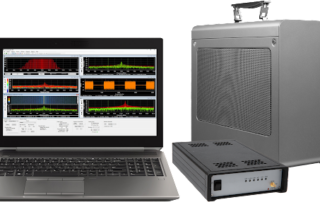
Time for a New Webinar — New Virtual Product Training Coming for Our Ultra-Portable RF Recording Solutions
When it comes to using the Vitrek family of products, knowing how to properly implement and understand the data they provide is of the utmost importance. While some people have prior knowledge of our products, it’s not out of the question that you might need a refresher course or a deeper dive into what makes these products tick. Our online training webinars provide our customers with the ability to speak with our industry experts and acquire the product knowledge training they need. […]
Nuclear Ion Testing
Nuclear Ion Testing Customer Case This customer is involved in nuclear ion testing. The pulse amplitudes of nuclear ions from a detector must be measured and sorted into a histogram, which will show the number of times a given amplitude was received. The customer wants a "multi-channel analyzer" capable of analyzing 4,000 to 8,000 "channels." In the customer's terminology, "channels" are actually histogram bins. The customer has pulses coming in at 20 - 30 ms minimum interval and needs to peak detect (calculate the maximum value of the pulse). Then, based on peak height, each is stored in a [...]
Alpha Particle Counting
Alpha Particle Counting Customer Case A customer has to characterize a new design for a solid state alpha particle detector. The detector is essentially a silicon diode with a large area face. Because alpha particles, which are high-speed helium nuclei, are electrically charged, they interact strongly with matter and lose their energy quickly upon entering a solid. When an alpha particle decelerates within the depletion region of the diode, it creates electron-hole pairs. The carriers are collected by the diode's electrodes and create a measurable current pulse. The customer's experimental solid state detector has two implanted electrodes whose signals [...]
 Aircraft Vibration Analysis and Measurement Techniques Gallery
Aircraft Vibration Analysis and Measurement Techniques
Brand-MTI, Industry-Aerospace, Industry-Compliance Testing, Industry-Government/Military, Industry-Manufacturing, Industry: Transportation, Knowledge Center-MTI, News-MTI-PBS, Whitepapers-MTI, Z-REPUB, z1
Aircraft Vibration Analysis and Measurement Techniques
Aircraft engine vibration is a critical indicator of engine health and overall flight safety. While some level of vibration in aircraft is expected during normal operations, excessive or abnormal vibrations often signal underlying mechanical issues that demand immediate attention. With modern jet engines becoming more complex, real-time vibration monitoring and precise balancing tools are essential for both aircraft maintenance teams and aviation diagnostics specialists. Aircraft vibration measurement tools detect and quantify these issues, enabling maintenance teams to take corrective actions before minor imbalances escalate into major faults. Types of Aircraft Vibrations There are two main categories of aircraft vibrations: [...]
Laser Spectroscopy
Laser Spectroscopy Customer Case An academic researcher is studying the attenuation properties of different materials inside Laser cavities for applications in Laser Spectroscopy. The Laser pulses are generated by one Laser, and are then transmitted by mirrors into another cavity filled with gaseous material. In the second cavity, the light pulses are continuously reflected by opposite mirrors and their intensities are measured by a transducer which converts them into decaying pulses of 30 nanosecond width. The decay takes about 40 microseconds to settle. The researcher is required to capture the decaying pulses and save the captured data onto the [...]

How Capacitive Measurement Can Help Reduce Packaging Waste
Product packaging is often made of lightweight polymeric foams or plastic sheets and films. These materials are relatively inexpensive, but manufacturers still want to minimize waste and maximize yields. Across high volumes of low-cost materials, even a small per-unit savings can become significant, especially as the price of petroleum – a key ingredient in many polymers – continues to rise. For companies with environmental sustainability efforts, there are other important considerations as well. The excessive use of packaging materials can contribute to environmental pollution, especially with polymers that are slow to degrade. Yet, materials such as plastic sheets and [...]
Laser Transient Absorption Spectroscopy
Laser Transient Absorption Spectroscopy Customer Case The customer's setup is a scientific application in which transient signals from a Laser Absorption Spectroscope are transferred to a computer. The laser power is modified in steps and the process is repeated. The measurement sensitivity is limited by noise generated by the current digitizer. The customer wants to capture and continuously average very small pulse responses. The lowest signal pulse height is 0.5 milliVolts and can range up to 2 mV. The duration of each response pulse is 1 to 10 microseconds. The Pulse Repetition Frequency (PRF) is 10 Hz. The customer's [...]

Vitrek Power Analyzers — Key Takeaways From Our Webinar
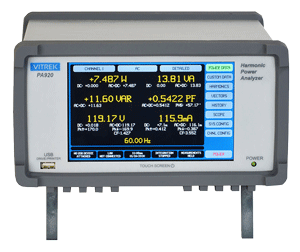
Power analyzers are a critical component of knowing the energy output of a given device once it’s turned on. Understanding the power consumption of specific units with a high degree of accuracy can help assess their overall performance and whether you need to perform a more in-depth maintenance check. […]




GaGe White Paper: ENOB: The Best Digitizer Performance Metric
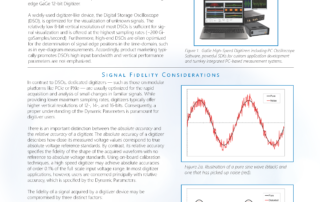
Introduction Figure 1. GaGe High-Speed Digitizers including PC Oscilloscope Software, powerful SDKs for custom application development and turnkey integrated PC-based measurement systems. While the nominal vertical resolution of a high-speed waveform digitizer (specified in bits) is often promoted, its true performance is provided by its measured Dynamic Parameters and in particular by its Effective Number of Bits (ENOB). This article describes measurement of the Dynamic Parameters and presents measurements for a leading-edge GaGe 12-bit Digitizer. A widely used digitizer-like device, the Digital Storage Oscilloscope (DSO), is optimized for the visualization of unknown signals. The relatively [...]
Charge-Couple Device (CCD) Data Capture
Charge-Couple Device (CCD) Data Capture Customer Case The client is involved in developing a charge-couple device (CCD) based system to function as an imaging spectrometer. The spectrometer will image 5x5 mm squares that will form a 50 mm line or 1.5x1.5 mm squares in a 15 mm line. The line is to be imaged on a CCD chip. In this application the customer needs to simultaneously acquire 10 independent spectra that are 200 pixels long each with 12-bit resolution. The read-out rate is 1000 frames per second for a period of 10 seconds. The 12-bit data is to be [...]