
 Press Release: MTI Instruments Introduces PBS eXpress: Portable Engine Balancing System for Business & Regional Jets Gallery
Press Release: MTI Instruments Introduces PBS eXpress: Portable Engine Balancing System for Business & Regional Jets
Brand-MTI, Industry-Aerospace, Industry-Government/Military, New & Press Releases, News-MTI, News-MTI-PBS, News-Product Updates, News-Products, Press Releases-Vitrek, Products-MTI-Engine Balancing, z1
Press Release: MTI Instruments Introduces PBS eXpress: Portable Engine Balancing System for Business & Regional Jets
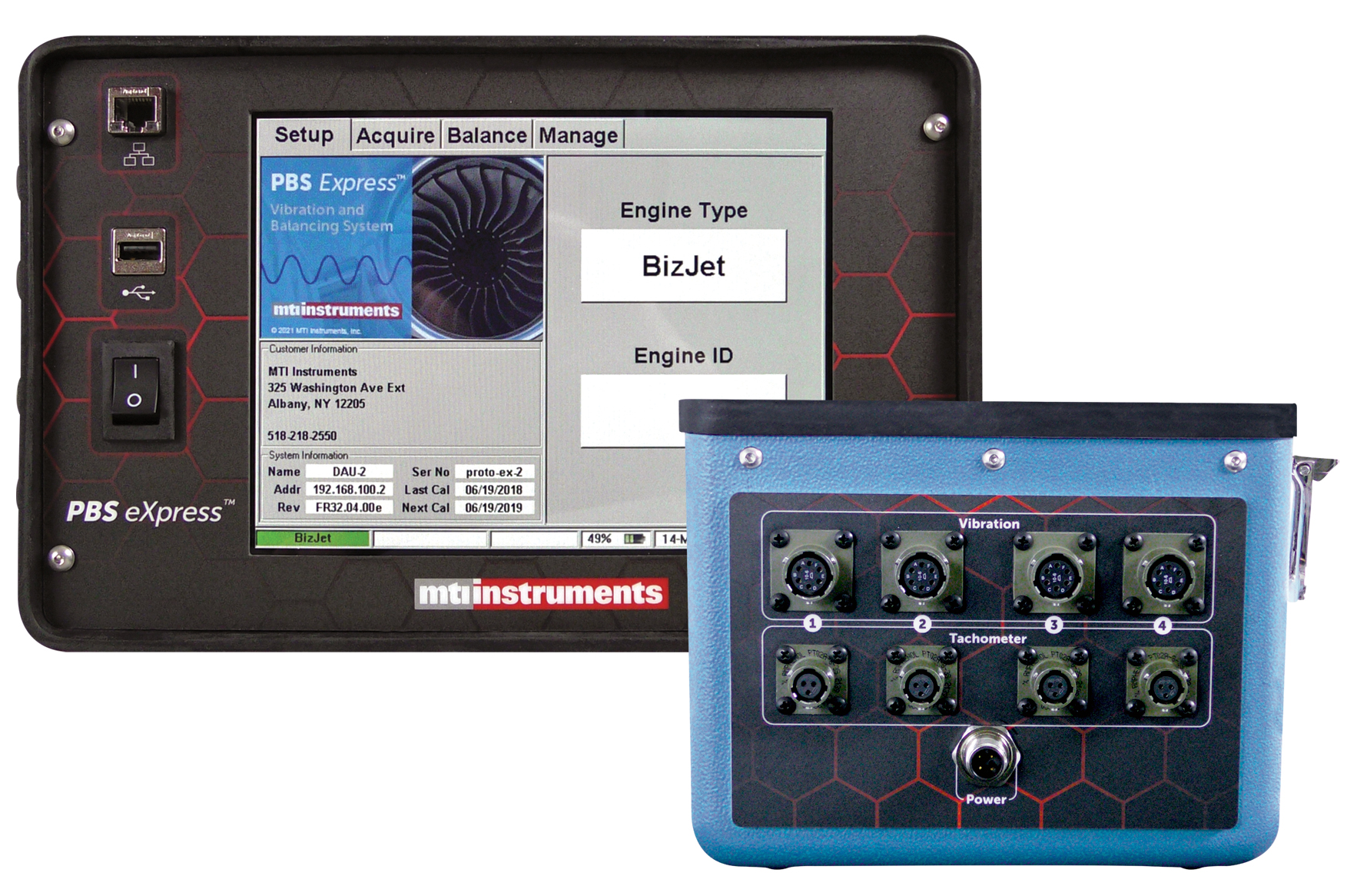
MTI Instruments Introduces PBS eXpress: Portable Engine Balancing System for Business & Regional Jets PBS eXpress marks evolution in company’s proven PBS-4100+ turbofan engine vibration and balancing technology; Lightweight, portable system optimizes and simplifies testing of small-frame turbofan and turboprop engines Lockport, IL — April 26, 2022 — MTI Instruments, a U.S.-based manufacturer of advanced test and measurement equipment, introduces the PBS eXpress aircraft engine vibration analysis and balancing system. The PBS eXpress is designed to optimize small-frame turbofan and turboprop engines, commonly utilized in regional jet, business jet and general aviation. The PBS eXpress runs advanced algorithms [...]
 Press Release: MTI Instruments’ WiFi-Enabled 1520 Portable Signal Simulator/Calibrator Brings Enhanced Functionality, Laboratory-Grade Accuracy Directly to Flightline and Test-Cell Gallery
Press Release: MTI Instruments’ WiFi-Enabled 1520 Portable Signal Simulator/Calibrator Brings Enhanced Functionality, Laboratory-Grade Accuracy Directly to Flightline and Test-Cell
Brand-MTI, Industry-Aerospace, Industry-Government/Military, Industry-Manufacturing, Industry: Transportation, New & Press Releases, News-MTI-PBS, Press Releases-Vitrek, Products-MTI-Signal Generators, z1
Press Release: MTI Instruments’ WiFi-Enabled 1520 Portable Signal Simulator/Calibrator Brings Enhanced Functionality, Laboratory-Grade Accuracy Directly to Flightline and Test-Cell
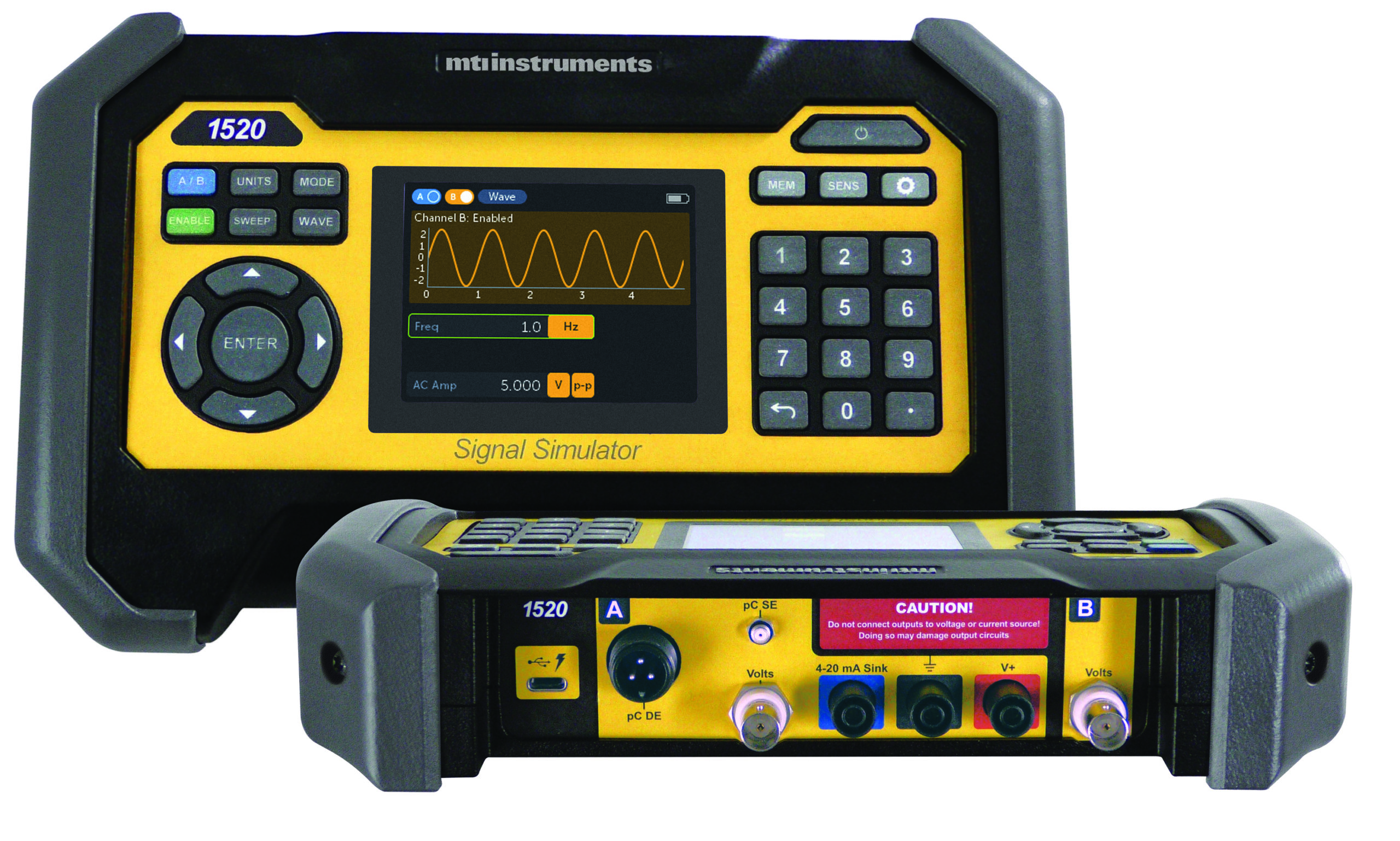
MTI Instruments’ WiFi-Enabled 1520 Portable Signal Simulator/Calibrator Brings Enhanced Functionality, Laboratory-Grade Accuracy Directly to Flightline and Test-Cell Rugged and portable, the 1520 signal simulator offers up to 10 hours of battery life and extends remote operation; Market-leading visualization and ergonomic features for testing/calibrating sensor-driven aviation systems; Unique WiFi capability eliminates need for second technician to conduct tests . . . Lockport, IL — May 3, 2022 — MTI Instruments, a U.S.-based manufacturer of advanced test and measurement equipment, introduces the 1520 Signal Simulator and Calibrator offering market-leading WiFi connectivity, ergonomic and visualization features, and up to 10 hours [...]
 Press Release: Vitrek Acquires MTI Instruments, Expanding Its Portfolio of Precision Measurement Solutions Gallery
Press Release: Vitrek Acquires MTI Instruments, Expanding Its Portfolio of Precision Measurement Solutions
Brand-MTI, Brand-Vitrek, New & Press Releases, News-All Brands, News-GaGe, News-Industry, News-MTI, News-Vitrek, Press Releases-Vitrek, z1
Press Release: Vitrek Acquires MTI Instruments, Expanding Its Portfolio of Precision Measurement Solutions
Vitrek Acquires MTI Instruments, Expanding Its Portfolio of Precision Measurement Solutions Vitrek's product portfolio now includes precision measurement tools for applications including turbine balancing and vibration analysis and non-contact measurements Poway, CA - April 13, 2022 — Vitrek, the leader in high-voltage test and measurement equipment and board-level data acquisition systems, announces the acquisition of MTI Instruments, a U.S.-based manufacturer of sophisticated test and measurement equipment. MTI Instruments' precision tools, systems and solutions are utilized in non-contact metrology, position, displacement and vibration applications within the design, QA/QC, manufacturing, production, test and research markets. Products include: Turbine Engine/Rotating Machine [...]
Synchronizing Over A Wide Sampling Speed Range
Synchronizing Over A Wide Sampling Speed Range Customer Case The client has set up an experiment where he needs to generate a stimulus signal and apply it to a He-Ne Laser with some polarizing optics. The response signal is a measurement of the Faraday effect. The signal is noisy and requires averaging over a very long time. The stimulus and response must be synchronized over a wide frequency range. For synchronization, the application requires a wide band of sampling speed from, 1 KS/s to 50 MS/s. GaGe Case Solution While GaGe's CompuScope 14100 provides the required digitizer performance, it [...]

Soluna Holdings Announces Sale of its MTI Instruments Business
$10.75 Million Sale Price Allows for Further Acceleration of Cryptocurrency Mining Business Soluna Holdings, Inc. (“SHI” or the “Company”), (NASDAQ: SLNH), the parent company of Soluna Computing, Inc. (“SCI”), a developer of green data centers for cryptocurrency mining and other intensive computing, today announced the sale of its MTI Instruments subsidiary to Vitrek LLC, a strategic buyer in the test and measurement space. Per the sale agreement, the Buyer is acquiring 100% of the common stock of MTI Instruments for $10.75 million. With the sale completed, Soluna Holdings expects that it will be solely focused on developing and monetizing [...]
 White Paper: High Performance Test Equipment Assures LED Lighting Products Comply with Industry Standards Gallery
White Paper: High Performance Test Equipment Assures LED Lighting Products Comply with Industry Standards
Brand-Vitrek, Industry-Consumer Products, Industry-Lighting, News-Industry, News-Vitrek, Products-Vitrek, Whitepapers-Vitrek, z1

White Paper: High Performance Test Equipment Assures LED Lighting Products Comply with Industry Standards
Introduction Manufacturers and users of LED lighting applications need to be assured that their products will be qualified according to a multitude of reliability and efficiency standards. In addition to voluntary initiatives and programs like EnergyStar, mandatory standards and specifications for the lighting industry must be kept in mind during project development, including the latest IES LM-79-19 and the ANSI C82.16 documents. This article gives an overview of relevant lighting standards and specifications for LED lighting products. It also describes the features of Vitrek’s test equipment, including the PA900 power analyzer — featuring built-in lighting specifications — as [...]
Time Resolved Spectroscopy of Protein Crystals
Time Resolved Spectroscopy of Protein Crystals Customer Case The customer is involved in Time Resolved Spectroscopy of protein crystals. This involves shooting a laser onto the protein crystals and measuring the pulses generated by the crystals (as they are projected out of the sample) and their decay over time. Due to the very noisy nature of the return signals, it is essential to average many pulses in order to recover the pulse shape and measure the decay. The decay takes place over many tens of milliseconds, so it is necessary to acquire very long records (in the order of [...]
 The Benefits of Manual, Semi-Automated, and Fully-Automated Systems for Semiconductor Wafer Inspection and Metrology Gallery
The Benefits of Manual, Semi-Automated, and Fully-Automated Systems for Semiconductor Wafer Inspection and Metrology
Application Notes-MTI, Brand-MTI, Industry-Consumer Products, Industry-Electronics, Industry-Manufacturing, Industry-Semiconductor, Industry-Semiconductor-MTI, News-MTI-Metrology, Products-MTI-Semiconductor/Metrology, z1
The Benefits of Manual, Semi-Automated, and Fully-Automated Systems for Semiconductor Wafer Inspection and Metrology
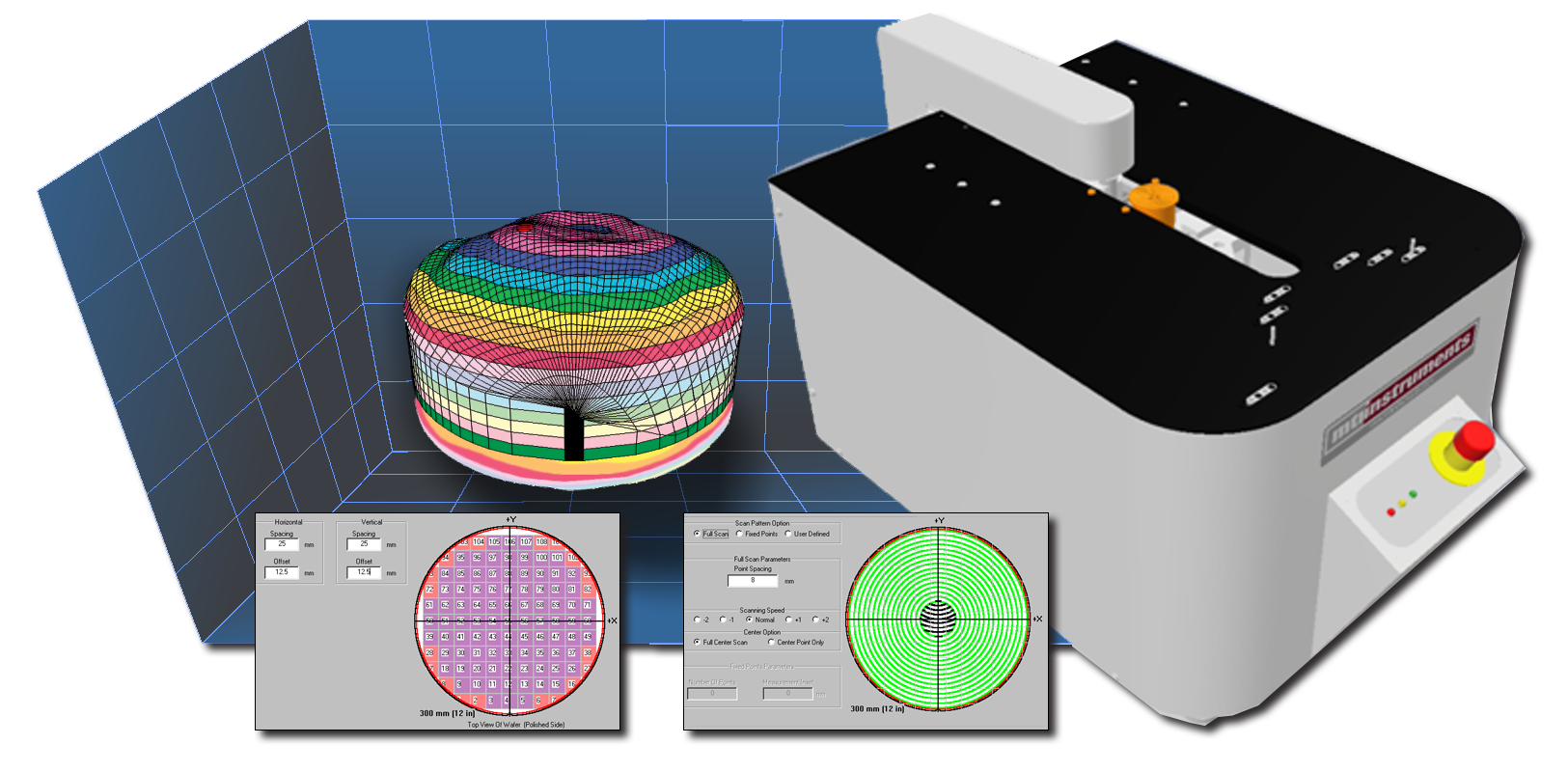
This is the third of three articles in Semiconductor Wafer Measurement for Increased Profitability. The first article in this series explains why disc geometry matters. The second article examines the cost of failing to inspect semiconductor wafers. Fully automated systems that can load, scan, and unload wafers are fast, convenient, and efficient at high volumes. They’re useful for checking every wafer in every batch, but these systems are expensive. Semi-automated and manual systems cost significantly less and are generally used for lower volumes; however, they’re also easy-to-use and can make fast, accurate measurements that support production flow. Semi-automated and [...]
Hyper Remote Laser Sensor
Hyper Remote Laser Sensor Customer Case The customer is at the prototype stage for building a hyper remote sensor which will fly over the ocean and be able to see 100 to 200 feet below the surface. The sensor is being designed in order to determine the composition of the ocean and the ocean floor. This remote sensor will be extremely useful in the detection of pollution and studying the way pollution is being distributed by ocean currents. It will also be useful to the military (navy) for creating mine-finding systems. A deep blue laser will be used to [...]
 Why Disc Geometry Matters In Wafer Production Gallery
Why Disc Geometry Matters In Wafer Production
Application Notes-MTI, Brand-MTI, Industry-Consumer Products, Industry-Electronics, Industry-Manufacturing, Industry-Semiconductor, Industry-Semiconductor-MTI, News-MTI-Metrology, Products-MTI-Semiconductor/Metrology, z1

Why Disc Geometry Matters In Wafer Production
This is the first of three articles in Semiconductor Wafer Measurement for Increased Profitability. The second article examines the cost of failing to inspect semiconductor wafers. The third article describes the benefits of using semi-automated, fully-automated, and manual systems for wafer metrology and inspection. Semiconductor wafers are cut from cylindrical silicon crystals, or ingots. The flatness of these disc-shaped wafers is controlled to tight tolerances to ensure that the entire wafer surface is suitable for integrated circuit (IC) production. If disc geometry is out-of-spec after cutting, it may be possible to reprocess the wafer. Cutting is only the first [...]