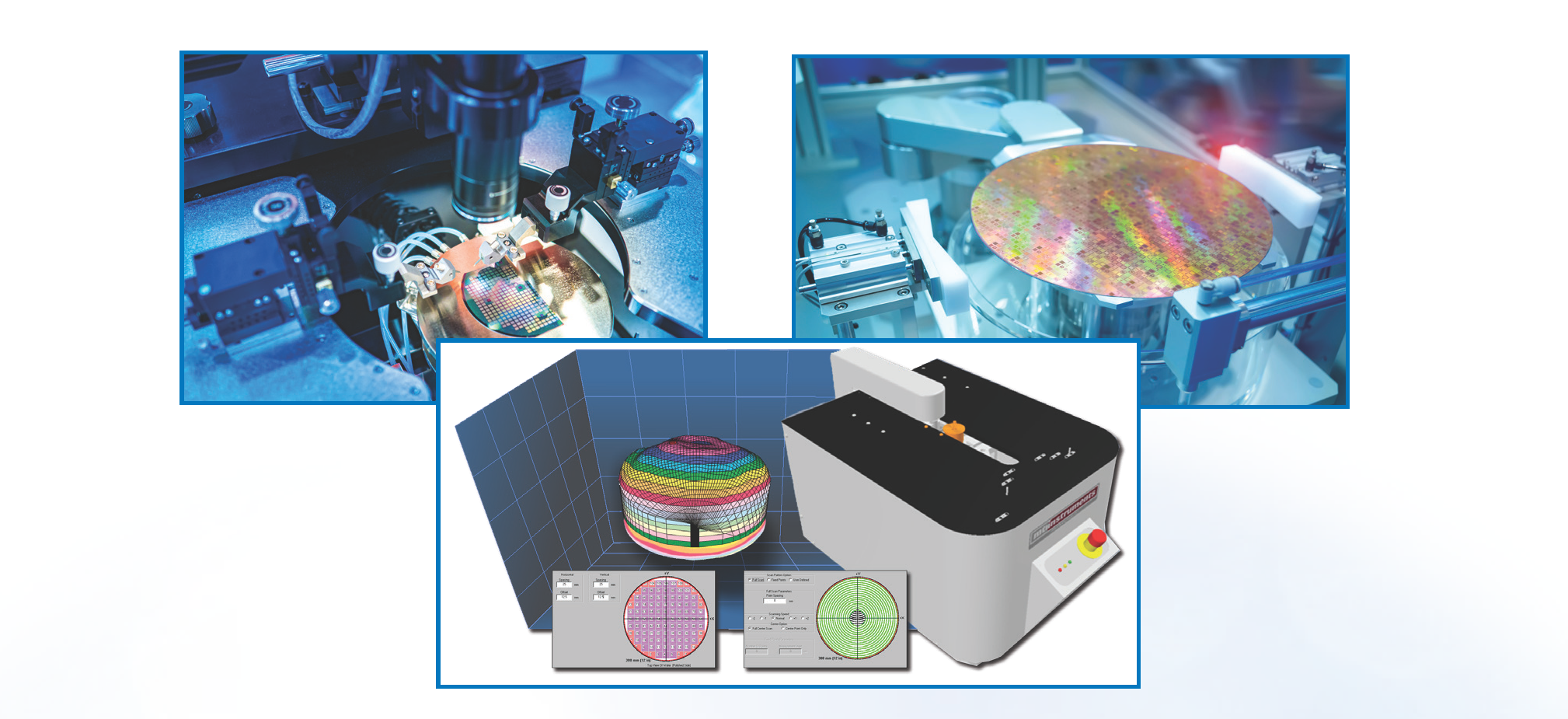
Whitepaper: Semiconductor Wafer Measurement for Increased Productivity Gallery
Whitepaper: Semiconductor Wafer Measurement for Increased Productivity
Brand-GaGe, Brand-MTI, Brand-Vitrek, Brands-All, Industry-Consumer Products, Industry-Electronics, Industry-Manufacturing, Industry-OEM, Industry-Semiconductor, Industry-Semiconductor-MTI, Knowledge Center-MTI, News-Industry, News-MTI, Whitepapers-MTI
Whitepaper: Semiconductor Wafer Measurement for Increased Productivity
Semiconductor Wafer Measurement for Increased Productivity This three-part article describes how manufacturers leverage capacitance-based inspection systems for semiconductor wafers. The article reviews best-practices, consequences of failing to inspect semiconductor wafers and benefits of using semi-automated, fully-automated and manual systems for wafer metrology and inspection. Part 1: Why Disc Geometry Matters in Wafer Production Semiconductor wafers are cut from cylindrical silicon crystals, or ingots. The flatness of these disc-shaped wafers is controlled to tight tolerances to ensure that the entire wafer surface is suitable for integrated circuit (IC) production. If disc geometry is out-of-spec [...]

Analog Electrical Engineer
Location: Lockport, IL 60441 Schedule: Full Time Job Summary: Vitrek is a leader in measurement, metrology, and balancing products. We are looking for a Senior Analog Electrical Engineer who will be performing design, simulation, board layout, and testing of analog circuitry. Vitrek plays a critical role in high profile projects with global impact. At Vitrek, your input will have an impact on product development. You will be part of a team that delivers cutting edge products to high tech industries. What You’ll Do: • Analog circuit design including component selection, SPICE simulation, schematic/layout/BOM and debugging • Circuit Performance testing, [...]
Business Development Specialist
Location: Lockport, IL 60441, Lockport, IL 60441 Schedule: Full Time Job Summary: Vitrek is looking for a results-driven Western and Eastern region sales representative to actively seek out and engage customer prospects. Your detailed knowledge of our Test & Measurement equipment product line and the applications they fulfill, will guide you to provide complete and appropriate solutions for our customers. What You’ll Do: · Demonstrate, promote and sell products/services using strong product and application knowledge to existing and prospective customers. · Establish, develop and maintain positive business and customer relationships. · [...]
 Signatec Adds New Features to Its DsScope Signal Recording Software – Press Release 2023-01 Gallery
Signatec Adds New Features to Its DsScope Signal Recording Software – Press Release 2023-01
Brand-GaGe, New & Press Releases, News-GaGe, News-Product Updates, Press Releases-Vitrek, Products-GaGe-Oscilloscope, z1
Signatec Adds New Features to Its DsScope Signal Recording Software – Press Release 2023-01
Signatec Adds New Features to Its DsScope Signal Recording Software Popular signal recording application requires no programming; New features expand and enhance functionality Lockport, IL—January 12, 2023— Signatec, a US-based manufacturer of signal recording systems, announces three significant feature additions to its DsScope Windows-based signal recording software. DsScope is a Windows-based PC oscilloscope application that requires no programming and allows the operator to: view/edit all digitizer hardware settings, display the acquired signal data for analysis, and conduct real-time signal recording monitored operations to drive storage. The new feature upgrades are designed to expand and enhance the [...]
 MTI Press Release: MTI Instruments’ 1520 Portable Signal Simulator/Calibrator Wins Silver in LEAP Award’s “Test & Measurement” Category Gallery
MTI Press Release: MTI Instruments’ 1520 Portable Signal Simulator/Calibrator Wins Silver in LEAP Award’s “Test & Measurement” Category
Brand-MTI, New & Press Releases, News-MTI, News-MTI-Instrumentation, News-Products, Press Releases-Vitrek, Products-MTI-Signal Generators, z1
MTI Press Release: MTI Instruments’ 1520 Portable Signal Simulator/Calibrator Wins Silver in LEAP Award’s “Test & Measurement” Category
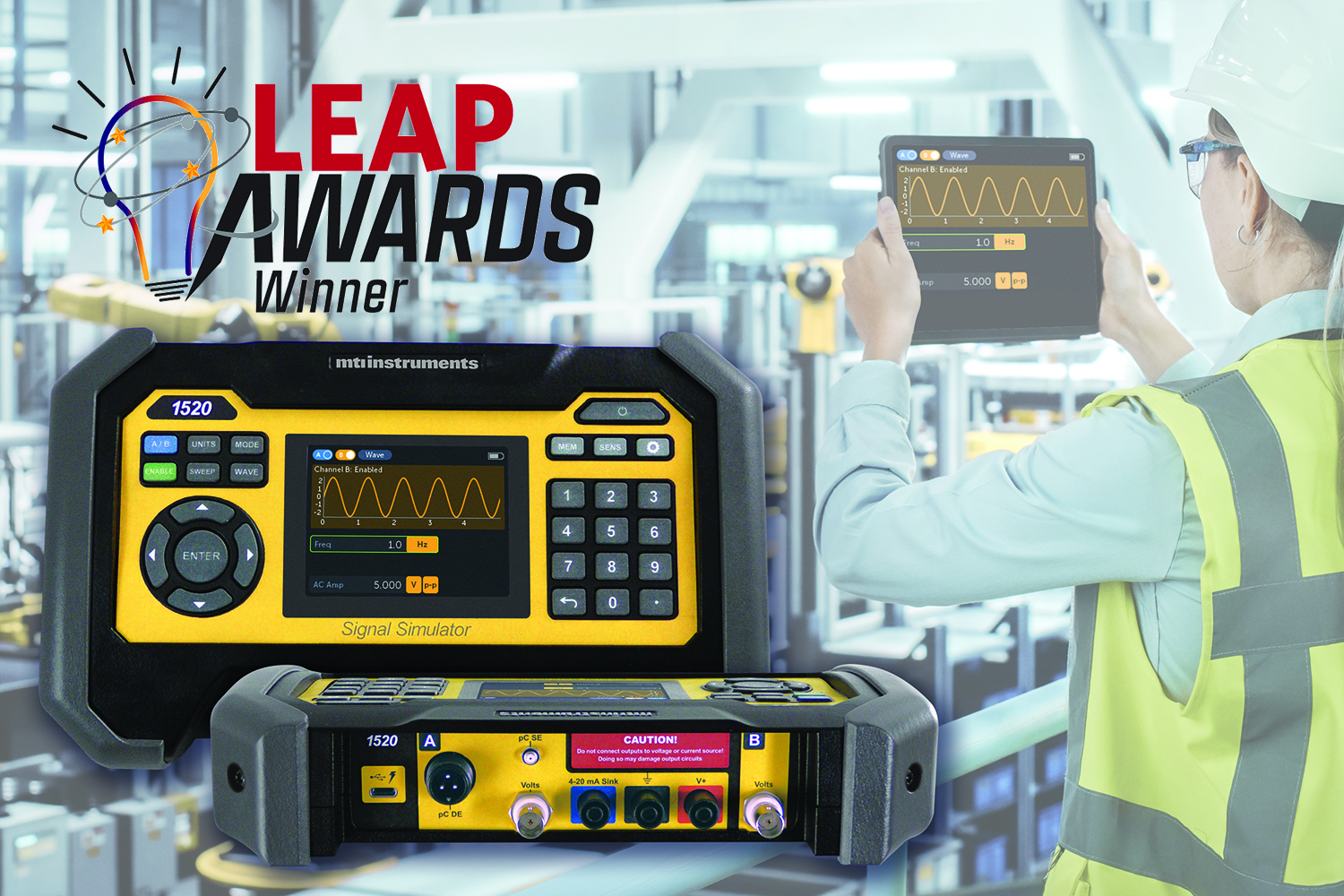
MTI Instruments’ 1520 Portable Signal Simulator/Calibrator Wins Silver in LEAP Award’s “Test & Measurement” Category Prestigious Leadership in Engineering Achievement Program (LEAP) competition celebrates innovation in engineering design. The 1520’s clever game console design features a glove-friendly, two-handed controller and a color touchscreen for viewing high-precision graphical waveforms in the field. Lockport, IL—November 3, 2022—MTI Instruments by Vitrek, a U.S.-based manufacturer of advanced test and measurement equipment, announces that its 1520 Signal Simulator and Calibrator is a LEAP Award winner. The 1520 – offering market-leading WiFi operation, ergonomic design, advanced visualization and 10-hour (max) battery life [...]
 MTI Application Note: How to Achieve Gallery
MTI Application Note: How to Achieve <1um Accuracy When Measuring Roller Gap
Application Notes-MTI, Brand-MTI, Industry-Compliance Testing, Industry-Consumer Products, Industry-Manufacturing, Industry-Sensors, News-MTI-Metrology, Products-MTI-Capacitance, z1
MTI Application Note: How to Achieve <1um Accuracy When Measuring Roller Gap
How to Achieve <1um Accuracy When Measuring Roller Gap Roller Gap Measurement with MTI Digital Accumeasure Capacitive Probes Many roll-to-roll finishing processes typically use a calender, or series of hard pressure rollers, to deliver smooth, high-quality products of plastic, textile, or paper (Fig 1). Ensuring a consistent material thickness, however, depends on the ability to monitor, and maintain, a precise gap between rollers. This application note describes a quick and easy means for roller gap measurement. Problem How to measure the small gap between rollers to keep track of product thickness. Typically, it’s not possible to [...]
MTI Product Development Overview Video
View this quick video to learn how MTI's engineering team develops new products from prototype to finished product!





MTI Case-In-Point: Gap Monitor Keeps Wind Turbines Running
Gap Monitor Keeps Wind Turbines Running System helps operators minimize downtime and protect against catastrophic failure Introduction Wind turbine production has been steadily increasing to meet growing demand for renewable energy. As power outputs and the number of installations climb, maintenance becomes ever more critical. Operators want to minimize downtime and protect against catastrophic failure. The ability to predict when maintenance will be required can go a long way to ensure these goals are met. Challenge A leading manufacturer of wind turbine power generators approached MTI for critical gap monitoring sensors. Specifically, the company wished to monitor [...]
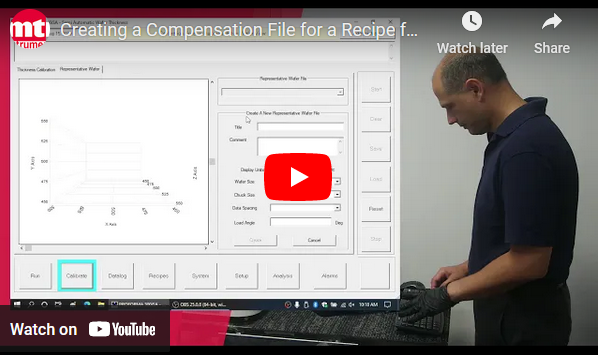
 Creating a Compensation File for a Recipe for the Proforma 300iSA – Video Gallery
Creating a Compensation File for a Recipe for the Proforma 300iSA – Video
Brand-MTI, Industry-Compliance Testing, Industry-Electronics, Industry-Manufacturing, Industry-Semiconductor, Industry-Semiconductor-MTI, Industry-Semiconductor-Videos, News-MTI-Metrology, Products-MTI-Semiconductor/Metrology, Videos-MTI-Manual Semiconductor Metrology System, Videos-MTI-Semiautomated Metrology System, z1