
Capacitance Sensing vs. Strain Gauge Sensing Application Note
Capacitance Sensing vs. Strain Gauge Sensing Application Note Capacitance probes that are embedded in piezo flexure stages can provide significantly greater accuracy than strain gauges. Although some minor mounting modifications are required, capacitance probes with picoscale positioning provide higher linearity, greater long-term stability, and better direct measurement. Capacitance sensors cost more, however, and are limited by sensing distance. Therefore, strain gauge sensors remain a good choice for applications where cost is a consideration, sensing distances are larger, and high resolution or high accuracy are required. In a recent application note, MTI Instruments examines the differences between capacitance probes and [...]
Ultrasound Imaging
Ultrasound Imaging Customer Case This customer's application involves capturing ultrasound echoes from a medical imaging system, to be used in bedside monitors, defibrillators, intervascular ultrasound, ECG, etc. The live imaging rate is 30 frames per second (fps). Each image frame depicts a full 360-degree circular section. A frame is 240 echoes, so the pulse repeat frequency (PRF) is 7200 Hz, or one echo every 140 us. The customer anticipates signals at 50 MHz with a 50% bandwidth (the passband must extend to at least 75 MHz). The echo duration is 15 us; the signal size is roughly +/- 70 [...]
Ultrasonic Imaging
Ultrasonic Imaging Customer Case The customer is digitizing signals returned from an ultrasonic transducer used in the study of cardiac phenomena. At the moment, a 5 MHz transducer is being used, but the customer wants to upgrade to a 10 MHz transducer in the near future. This transducer will give him better spacial resolution. The customer needs one channel of very fast (100 MSPS), preferably 12-bit A/D conversion which is controlled by an external trigger signal. Bandwidth of the analog front-end of the A/D card or system must be very flat up to 15 or 20 MHz. The application [...]
 Using Capacitance Sensors for Non-Conductive Material Measurement Gallery
Using Capacitance Sensors for Non-Conductive Material Measurement
Application Notes-MTI, Brand-MTI, Industry-Compliance Testing, Industry-Consumer Products, Industry-Electronics, Industry-Manufacturing, Industry-Sensors, News-MTI, News-MTI-Instrumentation, Products-MTI-Capacitance, Z-REPUB, z1
Using Capacitance Sensors for Non-Conductive Material Measurement
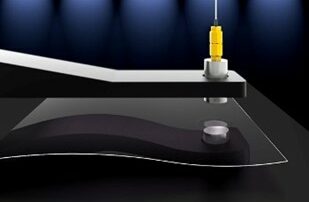
Non-Conductive Material Measurement with Capacitance Sensors Capacitance sensors are non-contact devices that can be used to obtain position, thickness, and dynamic measurements with a high degree of precision, accuracy, and resolution. Capacitive measurement is used with electrically-conductive materials such as metals but can also be used to measure non-conductive materials such as glass, sapphire, and many plastics. Even if a non-conductive material is relatively inexpensive (such as closed cell foam), manufacturers want to avoid errors that can result in significant waste across high volumes. Importantly, capacitance measurement is also used with semi-insulating materials such as gallium arsenide (GaAs) and [...]
Ultrasound Tissue Imaging
Ultrasound Tissue Imaging Customer Case This customer is building a system to be used as a test station for examining human tissue for disease. Diseased organs differ from healthy organs in ways that can be measured via the echoes of ultrasound transmissions which are passed through the tissues. The customer's system will build a 3D image of the tissue under examination. In order to obtain a clear ultrasound image of the object being studied, the successive data captures have to be aligned to eliminate a distorted image. Jitter which would result from an asynchronous triggering is not acceptable. The [...]
Ultrasonic Medical Imaging System
Ultrasonic Medical Imaging System Customer Case A customer wants to construct an ultrasonic medical imaging system based on a transducer array. A central ultrasonic generation transducer generates a burst of ultrasonic energy which travels towards a tissue specimen. Echoes reflected off the tissue specimen are simultaneously detected by an array of 48 ultrasonic receiver transducers arranged in a dish-like pattern. The customer must simultaneously digitize all 48 signals and download them to PC RAM as quickly as possible. The customer requires 8 bit vertical resolution and would like to sample at 40 MS/s, but 20 MS/s would be acceptable. [...]
 Why Demand for SiC Wafers is Soaring and Durable Gallery
Why Demand for SiC Wafers is Soaring and Durable
Brand-MTI, Industry-Consumer Products, Industry-Electronics, Industry-Manufacturing, Industry-Semiconductor, Industry-Semiconductor-MTI, MTI Blog, News-MTI, News-MTI-Metrology, Products-MTI-Semiconductor/Metrology, Z-REPUB, z1
Why Demand for SiC Wafers is Soaring and Durable
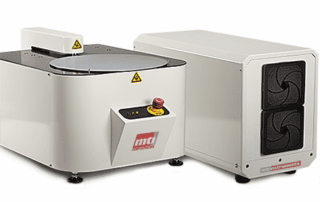
Silicon carbide (SiC) wafers are in high demand, particularly in high-temperature applications. Silicon carbide (SiC), a semiconductor material made of both silicon and carbon, can withstand extreme temperatures of up to 2700°C. Often referred to as carborundum, SiC’s unique properties also make it a key material in non-electronic applications such as bulletproof vests, extrusion dies, sandpaper, and high-performance disc brakes. In the electronics industry, SiC wafers are crucial for devices operating under high temperatures, high voltages, or both. For example, they are used in electric vehicle (EV) power electronics, 5G communication systems, and LED technology, making SiC a material [...]
Wafer Stress Analysis Using the 300iSA
Wafer Stress Analysis Using MTI Instruments Proforma 300iSA Wafer processing involves several stages that can lead to mechanical changes in the wafer structure. These changes, or stresses, may result in deformities, making the wafer either unusable or only marginally usable. To evaluate these stresses and determine the wafer's quality, wafer stress measurement is essential. The Proforma 300iSA wafer characterization tool offers a powerful solution for wafer stress analysis. It allows for the analysis of a wafer both before and after processing. By comparing these two states, the Proforma 300iSA effectively evaluates the wafer's stress levels and mechanical alterations, providing [...]
Laser Scanning Microscope Interface
Laser Scanning Microscope Interface Customer Case This customer needs to interface a scanning laser microscope to their PC so that image data can be acquired and stored. Data is received from the laser microscope via an optical sensor at 1300 line scans per image. Each scan has an 8 ms duration, but 2/3 of that time is scan time and 1/3 is flyback time (dead time). The customer has determined that a 1 us sample width (or faster) would be adequate. There is also a price vs. performance issue - the customer has a tight budget and wants the [...]




Weathering the storm: Keys to resiliency in MRO
Weathering the storm: Keys to resiliency in MRO By Ken Ameika It’s no secret that COVID-19 has adversely affected the airline industry, and consequently the MRO and test cell markets. But the impacts are nuanced. Commercial aircraft utilization is way down; meanwhile, freight carrier business is expanding markedly. Operators are spending less; but they still have needs, which often require quick turnaround. It’s been hard for many. But there’s good news: COVID provided lessons that we can all use to make our businesses, or our careers, more resilient to the next major disruption. Diversify Your Business Commercial passenger traffic—or [...]