Introduction
Across military and aerospace maintenance operations, many proven test systems remain in service decades after their original deployment. These systems often support critical certification procedures, validated workflows, and platform-specific compliance tests that are costly or impractical to replace. While the airframes and missions may evolve, the test infrastructure built around them often remains indispensable.
The challenge arises when key instruments inside those systems become obsolete. Aging oscilloscopes, digitizers, controllers, and interface hardware can create maintenance burdens, calibration issues, and long-term support risks. Replacing them is rarely simple. In regulated or mission-critical environments, a modern instrument must not only outperform the original—it must integrate seamlessly with existing software, interfaces, and procedures.
This application note explains how a military customer modernized a legacy jet aircraft avionics test platform using a programmable GaGe high-speed digitizer, preserving full backward compatibility while dramatically improving reliability and maintainability.
The Challenge: Keeping a Proven Test Platform Operational
A military customer relied on a legacy avionics test system used to certify Line Replaceable Units (LRUs) for a jet aircraft platform.
An LRU is a modular avionics component designed for rapid replacement at the operating location. Typical LRUs may include:
- Navigation modules
- Communication electronics
- Radar assemblies
- Flight control processors
- Power systems
- Sensor interface modules
Before the units can be returned to service, they must pass established qualification and functional test procedures.
The existing test system had been developed in the 1980s and remained in operation because several compliance tests depended on its validated architecture. Although the master computer had been upgraded in the 1990s, the original software environment and instrument communication methods were still in use.
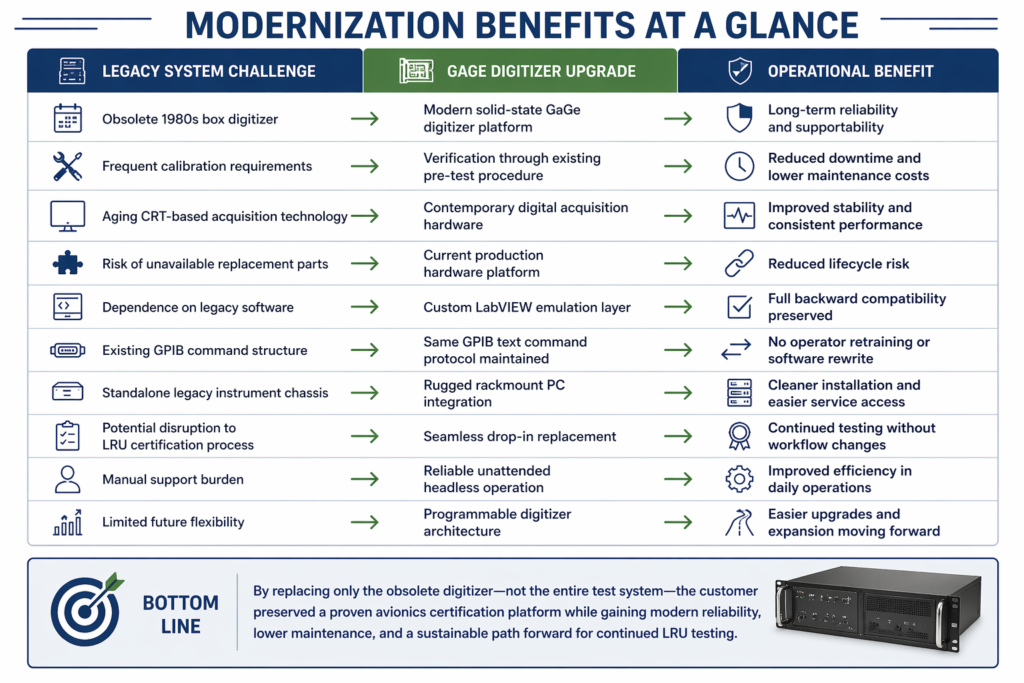
At the center of the problem was an obsolete box digitizer that provided two input channels, 8-bit resolution, and 200 MS/s sampling performance, while relying on CRT-based digitizing elements and a GPIB communication interface. Although the instrument continued to function, its aging technology made maintenance increasingly difficult, costly, and unsustainable for long-term operation.
Problems with the Legacy Digitizer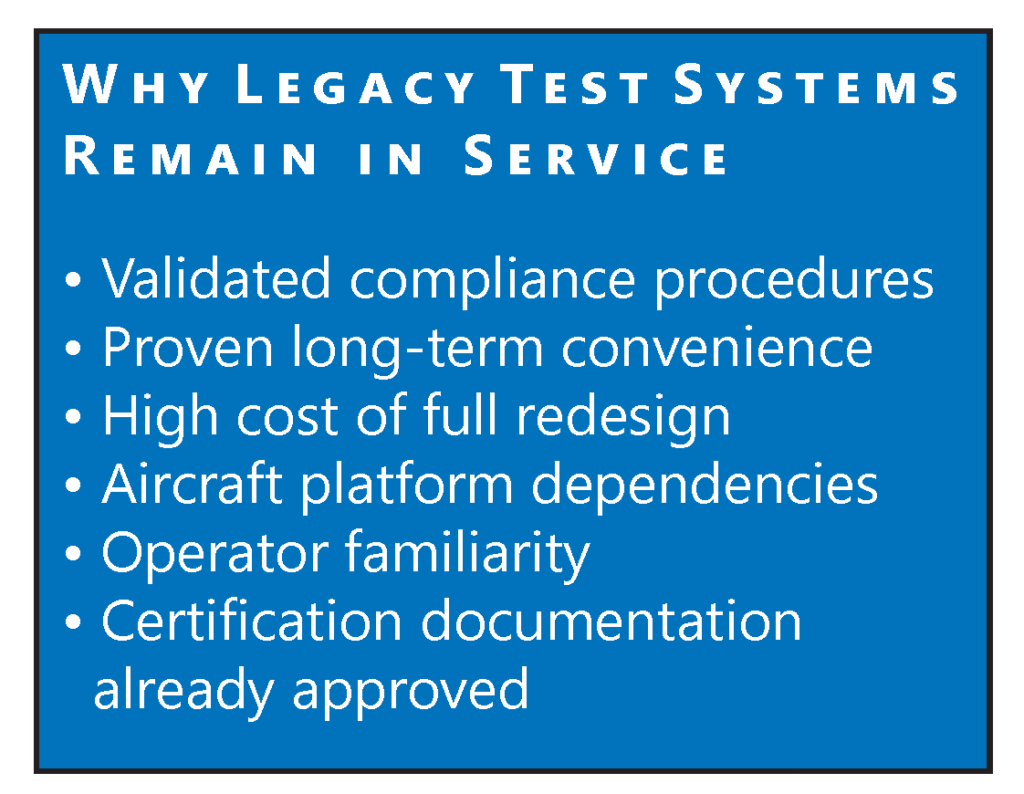
The original digitizer created multiple operational challenges:
Frequent Calibration Requirements
The CRT-based acquisition hardware required calibration several times per year, increasing downtime and maintenance overhead.
Obsolescence Risk
Replacement parts and service expertise for 1980s-era hardware were increasingly scarce.
Software Dependency
The legacy test software expected exact command behavior and instrument responses. Any change could invalidate workflows or require expensive recertification.
Interface Constraints
The system communicated through a legacy GPIB (General Purpose Interface Bus) connection, requiring continued support for older protocols.
Operational Reliability
In military maintenance environments, unexpected instrument failures can delay aircraft readiness and create support bottlenecks.

The Requirement: A Surgical Replacement
The new digitizer solution had to:
- Match the original unit’s behavior
- Preserve existing software compatibility
- Use the same GPIB command structure
- Fit into a rugged operational environment
- Improve long-term reliability
- Eliminate frequent calibration cycles
- Support ongoing LRU certification without process changes
In short, the replacement had to be invisible to the rest of the system.
The Vitrek GaGe Digitizer Solution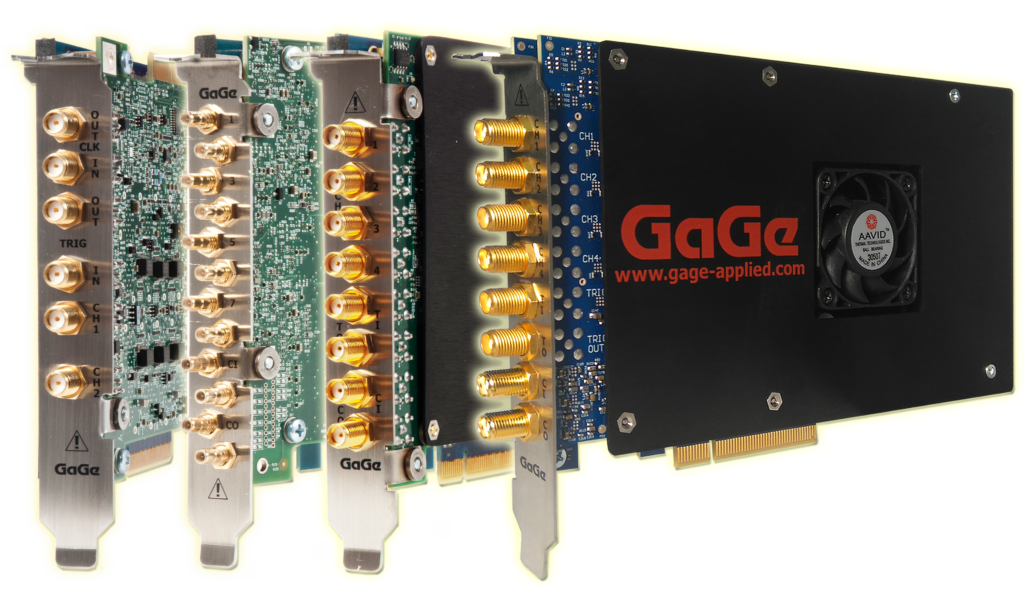
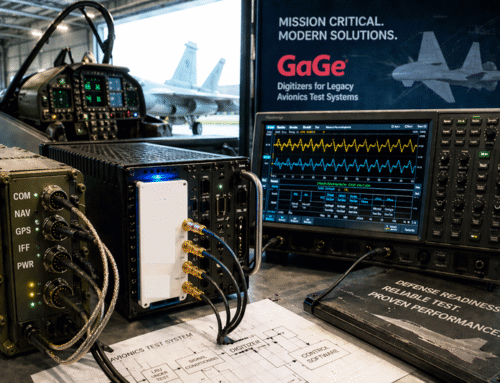
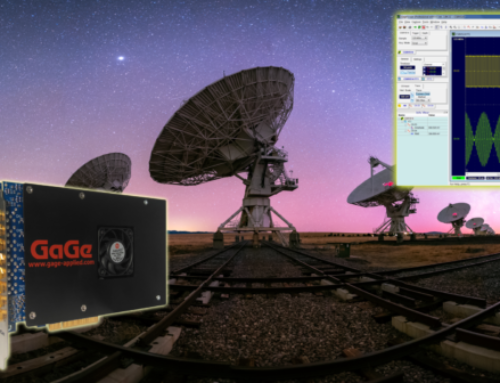
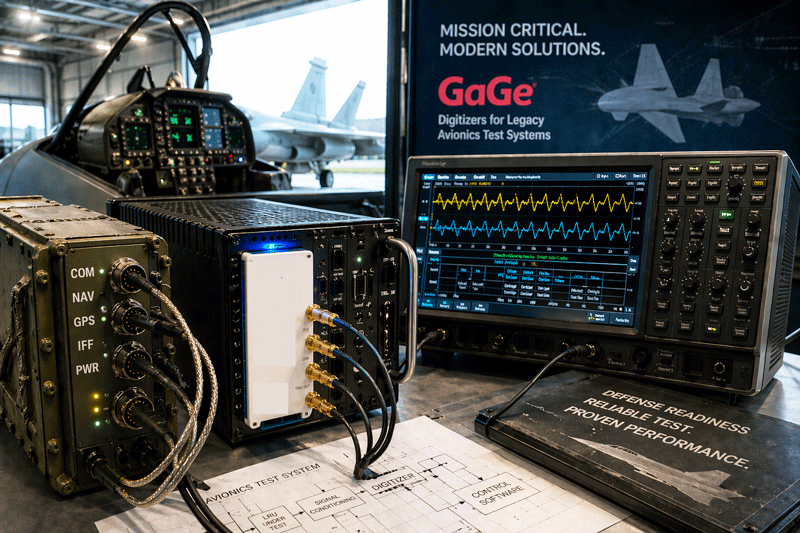
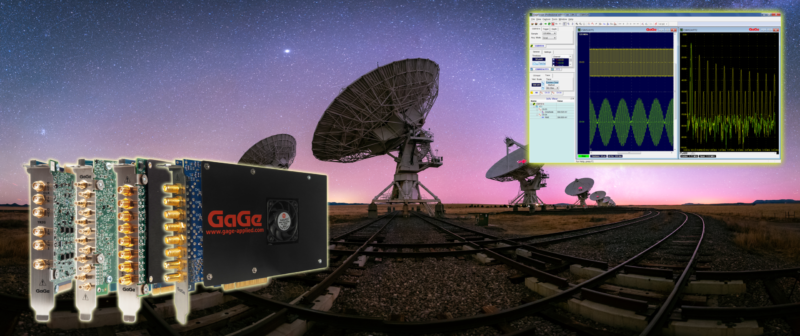
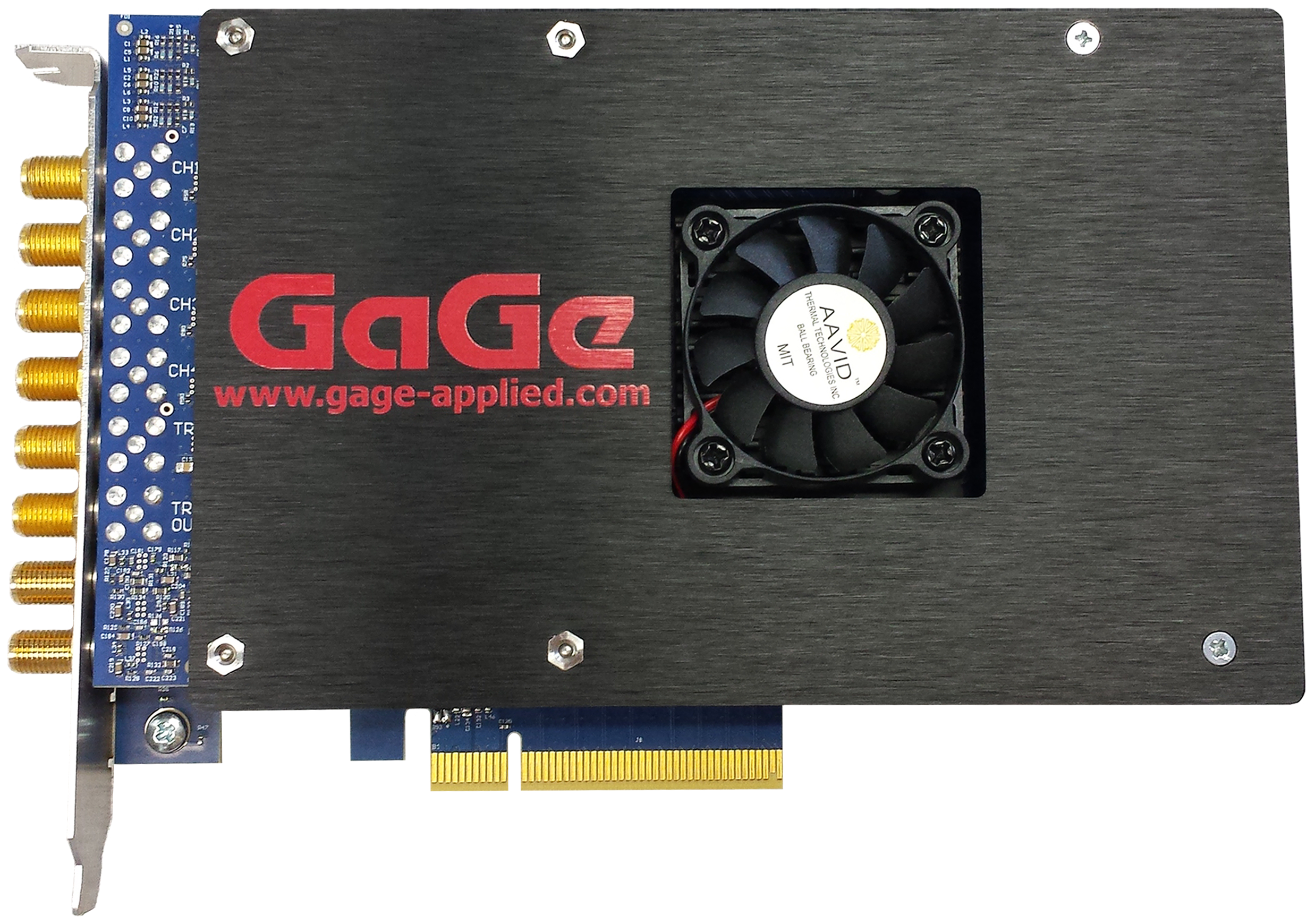
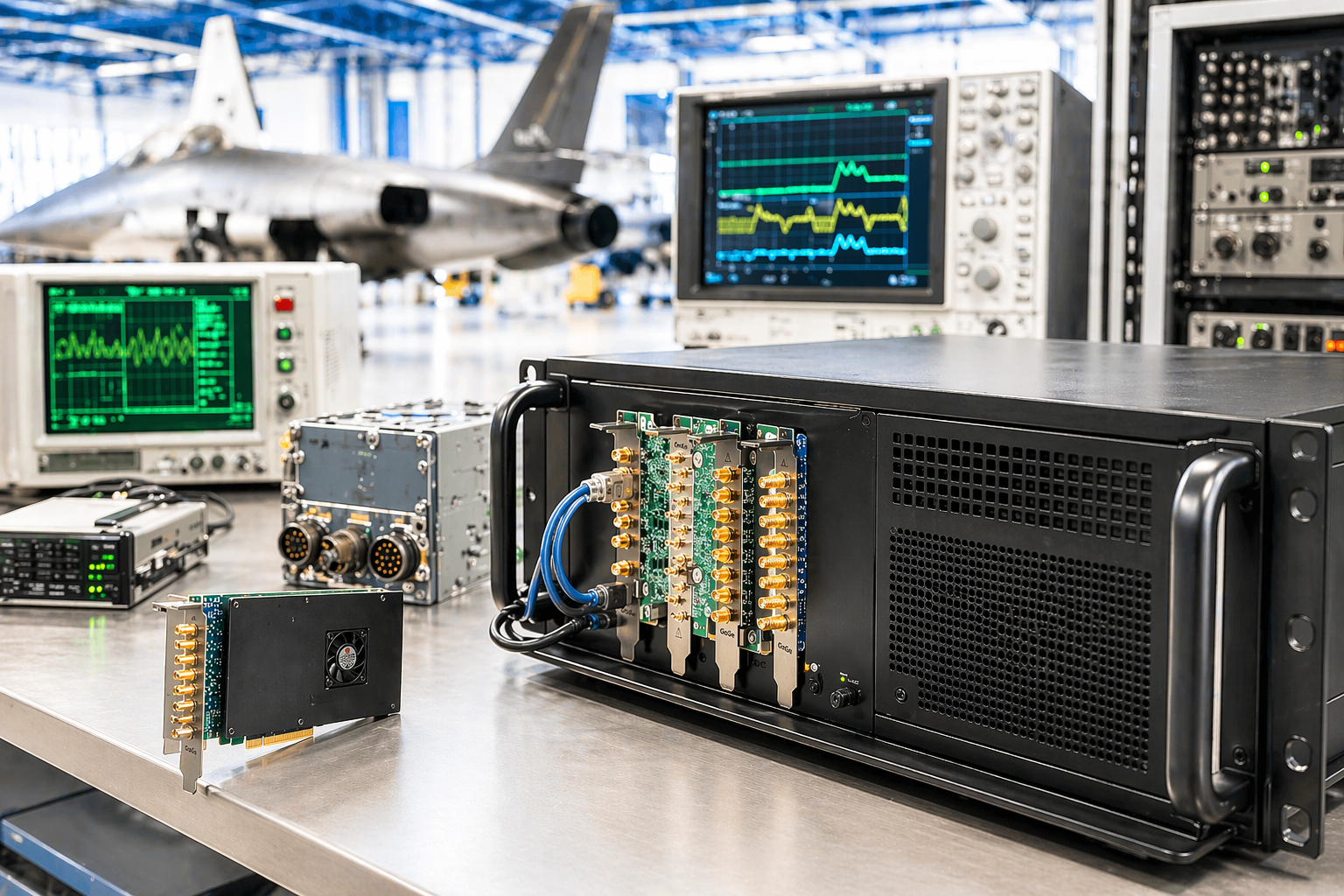
Vitrek’s GaGe digitizer delivered a modernized drop-in architecture built around a programmable high-speed digitizer platform.
The solution included:
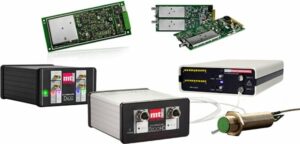
- 2-channel GaGe digitizer card
- 8-bit resolution
- 200 MS/s sampling performance
- Rugged rackmount Windows PC
- Front-accessible connectors
- Standard GPIB interface card
- Headless system operation
Rather than forcing the customer to redesign the test environment, the GaGe platform was customized to replicate the original instrument’s behavior.
Engineering for Backwards Compatibility
Hardware replacement alone was not enough. The legacy software had to continue operating exactly as before. To accomplish this, GaGe engineers developed a LabVIEW shell that emulated the original digitizer. The custom interface performed several critical functions:
Startup Initialization
On power-up, the system initialized the GaGe digitizer to the same default state as the legacy box instrument.
Command Emulation
Incoming GPIB text commands were interpreted exactly as the original hardware expected.
Response Matching
Measurement data and system responses were returned through the GPIB interface in the same format used by the legacy software.
Hardware Mapping
Sampling rates, input ranges, and acquisition behavior were modified to mirror the original unit.
This created a seamless bridge between modern acquisition hardware and decades-old control software.
Results In The Field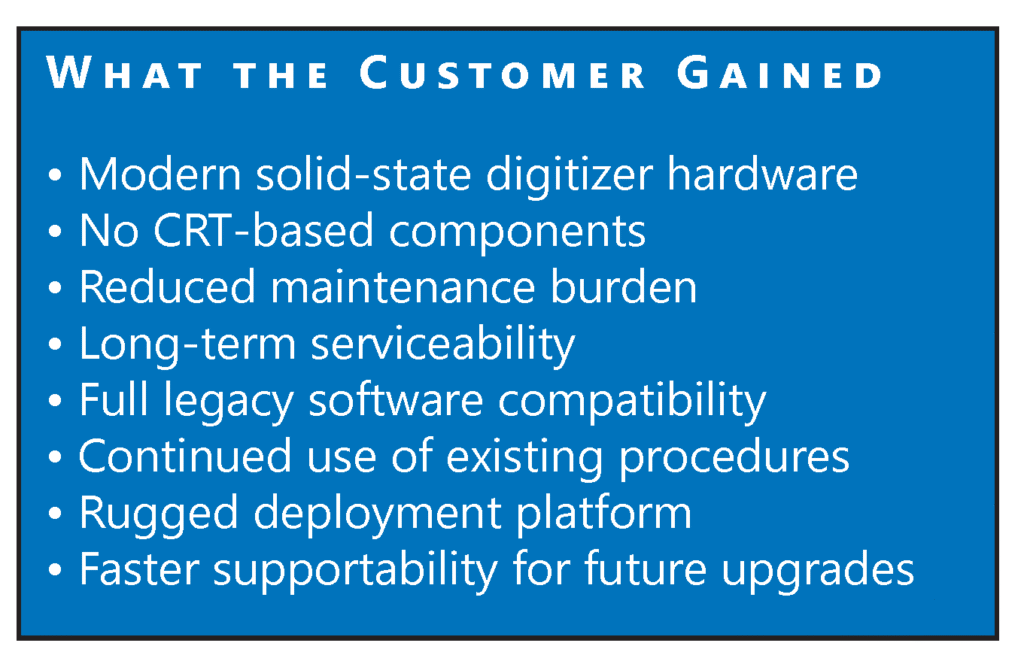
Multiple GaGe-based systems were deployed successfully into operational use.
The customer reported long-term reliability with no need for routine calibration cycles previously required by the legacy digitizer.
Instead, calibration integrity is verified using the customer’s existing pre-test validation routine before each LRU certification cycle. GaGe digitizer units are only removed from service if they fail that built-in verification process.
These upgraded systems have remained in service for years and have supported the testing of thousands of LRUs.
Why GaGe Digitizers Were the Right Fix
GaGe high-speed digitizers are well suited for modernization programs because they combine:
- • High-performance waveform capture
- Programmable architecture
- Long product lifecycle support
- PCIe-based integration flexibility
- Custom software control options
- Reliable solid-state operation
- Compatibility with automated test systems
Conclusion
Legacy military test systems often remain mission-critical long after their original hardware becomes obsolete. Replacing a failed instrument is rarely about adding new features—it is about preserving trusted workflows while eliminating support risk.
By integrating a programmable GaGe high-speed digitizer into the customer’s avionics LRU test platform, the obsolete 1980s digitizer was replaced with a modern, reliable, and supportable solution that behaved exactly like the original.
The result was a low-risk modernization strategy that extended the life of a proven test system, reduced maintenance demands, and ensured continued readiness for thousands of mission-critical avionics components.
For aerospace and defense organizations facing similar legacy test challenges, GaGe digitizers offer a powerful way to modernize without starting over.