
 Case-In-Point: High-Accuracy Capacitive Thickness Measurement Optimizes Li-Ion EV Battery Plate Qualities Gallery
Case-In-Point: High-Accuracy Capacitive Thickness Measurement Optimizes Li-Ion EV Battery Plate Qualities
Application Notes-MTI, Brand-MTI, Industry-Automotive, Industry-Battery, Industry-Compliance Testing, Industry-Consumer Products, Industry-Electronics, Industry-Manufacturing, Products-MTI-Capacitance, Z-REPUB, z1
Case-In-Point: High-Accuracy Capacitive Thickness Measurement Optimizes Li-Ion EV Battery Plate Qualities
High-Accuracy Capacitive Thickness Measurement Optimizes Li-Ion EV Battery Plate Qualities EV Battery manufacturers need to measure EV battery plate thickness with a high degree of precision (repeatable <2um accuracy and resolution) to optimize manufacturing efficiencies while maintaining uniform cell capacity and minimizing waste. The MTI Accumeasure System provides an effective means of monitoring plate thickness achieving sub 2um accuracy with high repeatability Introduction The rapidly expanding demand for electric vehicles is driving advances in the production of rechargeable cells that comprise the first stage in the composition of EV battery packs. Individual Li-Ion cells are combined to form [...]
 MTI App Note: Step Height Measurement (Thickness) of Copper Foil or EV Battery Film on a Roller Rig Gallery
MTI App Note: Step Height Measurement (Thickness) of Copper Foil or EV Battery Film on a Roller Rig
Application Notes-MTI, Brand-MTI, Industry-Consumer Products, Industry-Manufacturing, Products-MTI-Capacitance, z1
MTI App Note: Step Height Measurement (Thickness) of Copper Foil or EV Battery Film on a Roller Rig
Step Height Measurement (Thickness) of Copper Foil or EV Battery Film on a Roller Rig Leverage MTI Instruments' digital Accumeasure system to measure the thickness of the material used as anode and cathode plates in rechargeable Li-Ion battery cells Introduction Figure 1. Simplified structure of a Li-Ion battery cell This white paper describes, in detail, how Non-Contact Measurement systems can be used to measure the thickness of the material used as anode and cathode plates in a rechargeable Li-Ion battery Cell. Figure 1 describes the elements comprising a Li-Ion battery cell. The cathode is comprised of [...]
TIRE TREAD INSPECTION WITH 1D LASER SENSOR
Tire manufacturers wants to satisfy their customers, and protect themselves from liabilities, manufacturers are moving to 100% tire inspection for defects and abnormalities. Defects not only cause potential safety issues but they can also introduce unwanted vibration into the vehicle suspension system. Belts can be overlapped, or not cover the complete tire surface, causing weak or bubbled areas and imbalances. The tread depth can be too shallow, leading to decreased service life. An uneven tire can cause excessive runout and vibration. MTI was approached by a major manufacturer requesting a solution to measure tread depth, runout and blistering. They [...]

Torque Converter
Industry Automotive Applications Torque Converter Measurement Type Surface Description Since minute defects in the torque converter casing wall thickness can result in unacceptable and dangerous torque converter expansion, a precision measurement system was needed to measure the impeller hub displacement and thus the torque converter axial displacement. An AC dynamometer would be required to spin the torque converter at a high rate of speed while a fast response hydraulic system is needed to pressurize the converter to pressures up to 150 psi. MTI’s MicroTrak laser sensor was selected because it offered [...]
 MTI Application Note: How to Achieve Gallery
MTI Application Note: How to Achieve <1um Accuracy When Measuring Roller Gap
Application Notes-MTI, Brand-MTI, Industry-Compliance Testing, Industry-Consumer Products, Industry-Manufacturing, Industry-Sensors, News-MTI-Metrology, Products-MTI-Capacitance, z1
MTI Application Note: How to Achieve <1um Accuracy When Measuring Roller Gap
How to Achieve <1um Accuracy When Measuring Roller Gap Roller Gap Measurement with MTI Digital Accumeasure Capacitive Probes Many roll-to-roll finishing processes typically use a calender, or series of hard pressure rollers, to deliver smooth, high-quality products of plastic, textile, or paper (Fig 1). Ensuring a consistent material thickness, however, depends on the ability to monitor, and maintain, a precise gap between rollers. This application note describes a quick and easy means for roller gap measurement. Problem How to measure the small gap between rollers to keep track of product thickness. Typically, it’s not possible to [...]

GaGe Application Note: Creating a Data Link Signal Integrity Test Platform
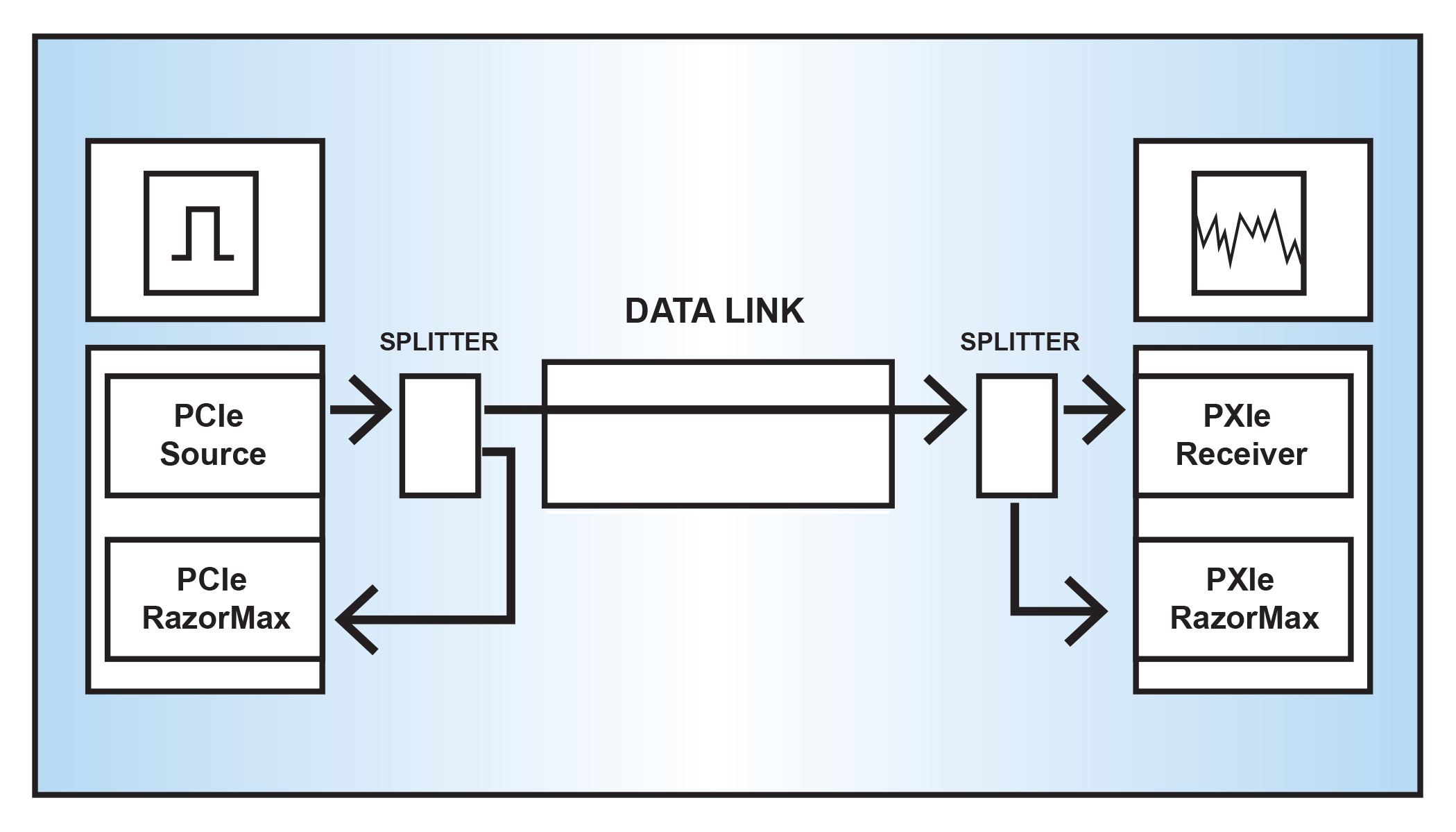
Creating a Data Link Signal Integrity Test PlatformThis application note describes how a manufacturer of data links utilizes GaGe Instruments’ PC-basedhigh-speed data acquisition digitizers to perform production-level signal integrity testing. Data Link Device Testing The data link device under test (Figure 1) is characterized by comparing test signals that are input to the link with signals measured at the link output. Differences between these two test signals indicate a degradation by the link during transmission. The input and output test signals require sampling at 1 GS/s (GigaSample per second) with at least 14-bit vertical resolution. Both signals must [...]
FIBER OPTIC PROBES MEASURE STATOR BAR VIBRATION
[Application Note 11718] One of the primary concerns in large generator design is vibration. Excessive vibration can lead to premature breakdown of insulation and other materials, ultimately resulting in early failure of the generator itself. The Problem A leading manufacturer of power generating equipment required a sensing system able to measure stator bar vibration in a partial generator mockup. Specifically, the company’s multi-day testing program demanded a sensing system that was immune to the large magnetic field generated by live stator bars capable of withstanding high heat built up from prolonged testing, and compatible with a proprietary stator bar [...]
 MTI Application Note: Security of Flight Doors Improved Through Use of MTI-2100 Fotonic Sensor Gallery
MTI Application Note: Security of Flight Doors Improved Through Use of MTI-2100 Fotonic Sensor
Application Notes-MTI, Brand-MTI, Industry-Aerospace, Industry-Government/Military, Products-MTI-Laser/Fiber Optic, z1
MTI Application Note: Security of Flight Doors Improved Through Use of MTI-2100 Fotonic Sensor
Security of Flight Doors Improved Through Use of MTI-2100 Fotonic Sensor Increased Safety & Reliability for Aircraft Cockpit Doors NTSB safety records point to numerous incidents involving cockpit door locking/unlocking mechanisms, either accidentally opening/closing or not operating fact enough upon command. Learn how one key industry supplier leveraged Fotonic Sensors to increase reliability and safety for their door locking mechanisms. Introduction Figure 1. Example of a typical cockpit door strike NTSB safety records point to numerous incidents involving cockpit door locking/unlocking mechanisms, either accidentally opening/closing or not operating fast enough upon command. In the assembly [...]







MTI Product Development Overview Video
View this quick video to learn how MTI's engineering team develops new products from prototype to finished product!