
 Aircraft Vibration Analysis and Measurement Techniques Gallery
Aircraft Vibration Analysis and Measurement Techniques
Brand-MTI, Industry-Aerospace, Industry-Compliance Testing, Industry-Government/Military, Industry-Manufacturing, Industry: Transportation, Knowledge Center-MTI, News-MTI-PBS, Whitepapers-MTI, Z-REPUB, z1
Aircraft Vibration Analysis and Measurement Techniques
Aircraft engine vibration is a critical indicator of engine health and overall flight safety. While some level of vibration in aircraft is expected during normal operations, excessive or abnormal vibrations often signal underlying mechanical issues that demand immediate attention. With modern jet engines becoming more complex, real-time vibration monitoring and precise balancing tools are essential for both aircraft maintenance teams and aviation diagnostics specialists. Aircraft vibration measurement tools detect and quantify these issues, enabling maintenance teams to take corrective actions before minor imbalances escalate into major faults. Types of Aircraft Vibrations There are two main categories of aircraft vibrations: [...]

Non-Contact Displacement Sensors for Detection and Measurement
Non-contact displacement sensors are designed to detect or measure physical properties such as linear displacement, thickness, proximity, and distance without physically touching the target. By emitting various forms of energy, such as capacitance, fiber optic, or laser triangulation, these sensors capture highly accurate readings without physically touching the object. This contrasts with traditional contact sensors, which rely on direct mechanical contact to gauge displacement or other physical properties. Benefits of Non-Contact vs. Contact Displacement Sensors Compared to contact sensors, non-contact displacement sensors offer faster response times, higher sampling rates, and minimal interference with the object being measured. They are [...]
 Advantages of Measuring Semiconductor Thin Film Thickness with Capacitance Gallery
Advantages of Measuring Semiconductor Thin Film Thickness with Capacitance
Application Notes-MTI, Brand-MTI, Industry-Compliance Testing, Industry-Electronics, Industry-Manufacturing, Industry-R&D, Industry-Semiconductor, Industry-Semiconductor-MTI, Industry-Sensors, Products-MTI-Capacitance, Products-MTI-Laser/Fiber Optic, Products-MTI-Semiconductor/Metrology, Z-REPUB, z1
Advantages of Measuring Semiconductor Thin Film Thickness with Capacitance
Thin Film Thickness Measurement Using Capacitance in the Semiconductor Industry In the semiconductor industry, the precise measurement of thin film thickness is crucial for ensuring the quality and functionality of wafer coatings. Thin films are deposited onto silicon and other wafer materials one atomic layer at a time, and the thickness of these coatings significantly impacts the wafer’s electrical, optical, and mechanical properties. Thin film thickness measurement is particularly important for semiconductor wafers, which may have either conductive metallic films or non-conductive metal oxide films deposited onto them. Common deposition methods include chemical vapor deposition (CVD) and physical vapor [...]
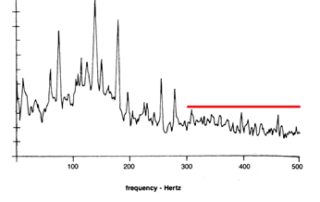
How Often Should Vibration Analysis Be Performed?
How Often Should Vibration Analysis Be Performed? Once a customer takes delivery of a PBS system and learns how to use it, the next logical question is: “How often should we use it?” At a minimum, your approved maintenance program (whether it’s a program developed by your operation, or the maintenance procedures outlined by the engine/airframe manufacturer) will tell you about the intervals at which to perform a vibration analysis. Usually, there is a procedure to specify how an engine vibration analysis and balance need be only completed when squawked by a pilot or after the completion of maintenance [...]
 Contact vs. Non-Contact Measurement and Linear Displacement Sensors Gallery
Contact vs. Non-Contact Measurement and Linear Displacement Sensors
Application Notes-MTI, Brand-MTI, Industry-Compliance Testing, Industry-Consumer Products, Industry-Electronics, Industry-Manufacturing, Industry-Semiconductor, Industry-Semiconductor-MTI, Industry-Sensors, Products-MTI-Capacitance, Z-REPUB, z1, ZOK
Contact vs. Non-Contact Measurement and Linear Displacement Sensors
Contact vs. Non-Contact Measurements Choosing between a contact measurement system and a non-contact measurement system requires careful evaluation of your application’s performance needs, material properties, environmental conditions, and measurement goals. Each system type offers unique advantages- and understanding these distinctions can help you make a more informed decision. Let's explores how contact and non-contact measurement techniques work, their strengths and limitations, and where they’re best applied. What Are Contact Measurement Systems? Contact measurement systems involve tools and sensors that physically touch the object to determine various physical characteristics. These systems are widely used in dimensional metrology, offering high precision, [...]
Foam Density Measurement: Capacitance Sensors vs. Nuclear Gauges
This application note from MTI Instruments compares two technologies for measuring foam density: capacitance sensors and nuclear gauges. It examines the basic operating principles of each technology and explains why capacitance measurement is recommended for in-line measurement during foam manufacturing. Capacitance Sensors Capacitive probes are non-contact devices that use electric fields to measure foam density. In combination with a thickness value, a density measurement may be calculated. These probes consist of a capacitance sensor inside of a protective housing and are part of a larger measurement system that includes amplifiers, cables, and software. With parallel plate capacitance, the capacitance probe [...]
Webinar Recap: Vitrek Products for Metrology and Calibration Labs
Metrology requires equipment capable of precise measurements and accurate readings. Taking the time to ensure that the instruments you use remain properly calibrated requires the right tools and training to ensure that they are in good working order. In our webinar: Vitrek Products for Metrology and Calibration Labs, we cover why you need the right calibration tools and why Vitrek offers the best high voltage tester options on the market in the form of our 4700 High Voltage Meter, PA920 Power Analyzer, and 2000MN Calibrator. […]
 Using Capacitance Sensors for Non-Conductive Material Measurement Gallery
Using Capacitance Sensors for Non-Conductive Material Measurement
Application Notes-MTI, Brand-MTI, Industry-Compliance Testing, Industry-Consumer Products, Industry-Electronics, Industry-Manufacturing, Industry-Sensors, News-MTI, News-MTI-Instrumentation, Products-MTI-Capacitance, Z-REPUB, z1
Using Capacitance Sensors for Non-Conductive Material Measurement
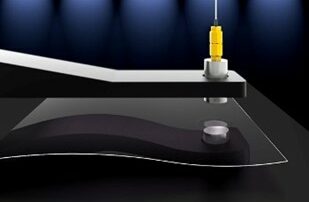
Non-Conductive Material Measurement with Capacitance Sensors Capacitance sensors are non-contact devices that can be used to obtain position, thickness, and dynamic measurements with a high degree of precision, accuracy, and resolution. Capacitive measurement is used with electrically-conductive materials such as metals but can also be used to measure non-conductive materials such as glass, sapphire, and many plastics. Even if a non-conductive material is relatively inexpensive (such as closed cell foam), manufacturers want to avoid errors that can result in significant waste across high volumes. Importantly, capacitance measurement is also used with semi-insulating materials such as gallium arsenide (GaAs) and [...]
Webinar Recap: Cable Testing Systems
For over thirty years, Vitrek has been a leading provider of high-quality, multi-functional electrical and high voltage testing equipment. Based in San Diego, CA, Vitrek is an internationally recognized electrical and safety test equipment manufacturer supplying customers in 30 countries. Vitrek designs and manufactures cutting-edge test equipment used in industries such as aerospace, military, medical, automotive, and many more! […]




Capacitance Probes vs. Strain Gauges in Piezo Flexure Stages
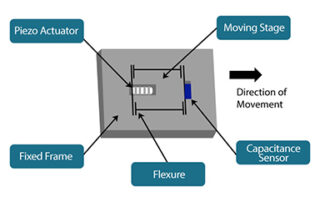
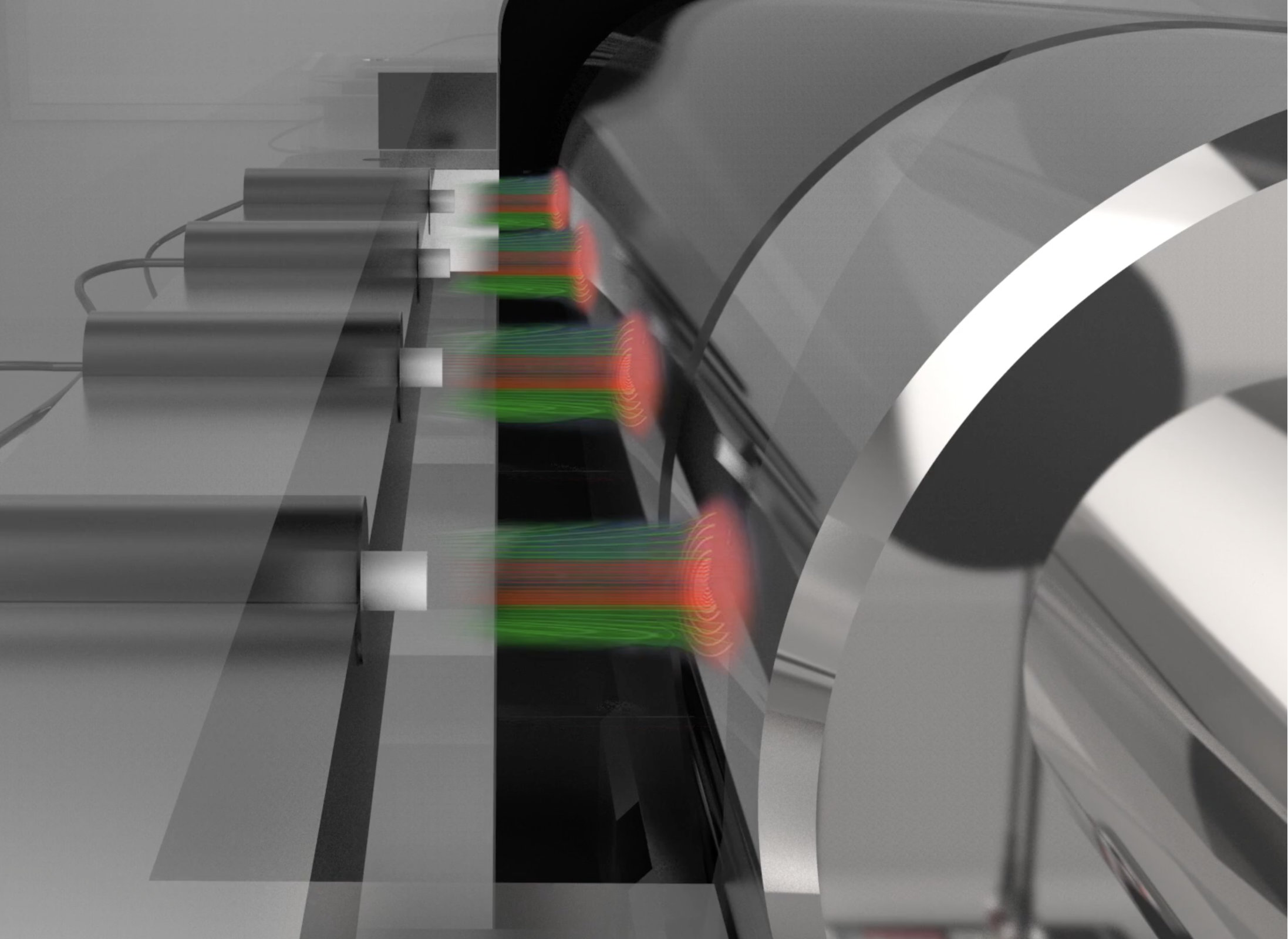
Capacitance probes with pico-positioning sensors can be embedded in piezo flexure stages. With minor mounting modifications, these non-contact probes provide significantly greater accuracy than strain gauges. Piezo flexure stages are positioning devices with a high degree of resolution. These motion stages contain a piezoelectric actuator that converts an electrical signal into displacement based on the reverse piezoelectric effect, which is the ability of a piezo electric material to elongate when a voltage is applied. When a voltage (e.g., 0-150 VDC) is applied to the actuator, the stage moves in proportion to the applied voltage. Yet, the exact position remains [...]