
 How the Aviation Industry Solves Vibration and Balancing Challenges Gallery
How the Aviation Industry Solves Vibration and Balancing Challenges
Application Notes-MTI, Brand-MTI, Industry-Aerospace, Industry-Automotive, Industry-Compliance Testing, Industry-Consumer Products, Industry-Government/Military, Industry-Manufacturing, Industry: Transportation, News-MTI-PBS, Products-MTI-Engine Balancing, Z-REPUB, z1
How the Aviation Industry Solves Vibration and Balancing Challenges
The aviation industry spends significant amounts of time and money on problems caused by engine vibration. Imbalance, the most common cause of engine vibration, happens because of bird strikes and other impacts, but also because of natural wear and corrosion that redistribute mass. In turn, out-of-balance parts can result in cabin noise, metal fatigue, and cracked turbine, fan, or compressor components. In the most extreme cases, catastrophic engine failure may result MTI Instruments, a worldwide supplier of precision measurement solutions, makes equipment for monitoring vibration levels and balancing rotors. For maintenance, repair and overhaul (MRO) crews who want to [...]
Direct Digital Outputs for Precise Sensor Measurement Without Programming
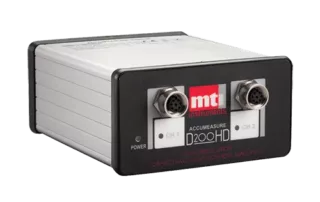
MTI’s Digital Accumeasure converts highly reliable capacitive electric field measurements into highly precise 24-bit digital readings. This digital capacitance displacement gauge interfaces with DASYLab, data acquisition (DAQ) software from Measurement Computing with tools and functions for application development without programming. By interfacing MTI’s Digital Accumeasure with DASYLab, you can get precise sensor measurements without sacrificing speed, reliability, or ease-of-use. The Digital Accumeasure connects to DASYLab through a Modbus interface. Because MTI’s precision measurement technology has direct digital outputs, you can directly import digital displacement values instead of lower-resolutions analog values. In other words, instead of converting measurements to analog [...]

Industry 4.0 for Test and Measurement
Industry 4.0 promises greater integration, interoperability, and information exchange. This Fourth Wave of the Industrial Revolution isn’t about a single technology such as machine learning. It’s not just about artificial intelligence (AI) or Big Data either. Rather, Industry 4.0 is a family of connected technologies that will enable industry to collect, analyze, and act upon massive amounts of diverse and distributed data. Smart sensors for precise test and measurement are essential for these advanced systems. MTI Instruments, a global supplier of precision measurement solutions, is developing a new class of wireless and wired sensors to support digital connections for [...]
 Five Common Mistakes with Semiconductor Wafer Measurement Gallery
Five Common Mistakes with Semiconductor Wafer Measurement
Application Notes-MTI, Brand-MTI, Industry-Compliance Testing, Industry-Consumer Products, Industry-Electronics, Industry-Manufacturing, Industry-Semiconductor, Industry-Semiconductor-MTI, Z-REPUB, z1
Five Common Mistakes with Semiconductor Wafer Measurement
Semiconductor wafer measurement requires a high degree of precision. The right metrology equipment and inspection processes are important, but so is procedural consistency and attention to detail. If you’re not getting the results you want, it’s time to look beyond the measurements. With bare semiconductor wafers, users need to avoid these five common mistakes. Mistake #1 | Turning the Device Off Most users turn on metrology devices only when it’s time to use them. As soon as semiconductor wafer measurement is complete, the devices are turned off. This reduces electricity consumption but also introduces thermal instability that can cause [...]
Capacitance Probes: Five Things You Need to Know
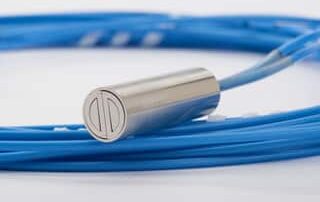
Capacitance probes are non-contact measurement devices with a capacitance sensor inside a protective shell or housing. They use cables and connectors to integrate with amplifiers and are an important part of capacitance measurement systems. By using capacitance, engineers can measure physical parameters such as vibration, pressure, liquid levels, metal contamination, and seismic activity – just to name a few. There’s a lot to know about capacitance probes, but five key facts to understand. Capacitance probes are highly accurate and very stable. They’re better than older devices and competing technologies. They require little calibration and support miniaturization and embedding. They [...]
Capacitance Sensors: Three Things You Need to Know
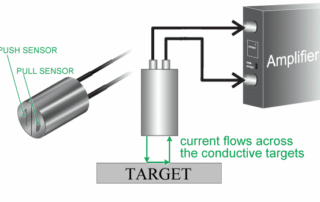
Capacitance sensors are precision measurement tools for process automation, quality control, and tool automation control. They’re used in a many different industries and are suitable for virtually any application where accuracy is paramount. There’s a lot to know about capacitive sensors (as they’re sometimes called), but engineers need to start with three key questions. What are the parameters to specify when selecting a capacitance sensor? What are factors to consider when embedding a capacitive sensor in an industrial application? What is the future of capacitance-based measurement products? MTI Instruments has been providing U.S.-made capacitance sensor systems for over 50 [...]
How to Implement a Complete Digital Closed Loop Control System
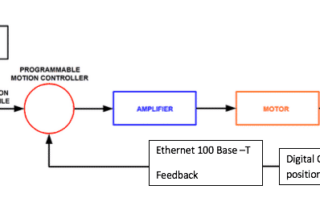
Co-authored by Don Welch, Director of Engineering and Business Development Cory Bufi, Software Engineer Isaac Abbott,Product Innovation Engineer – PBS Group Request Whitepaper Today’s electronic designs often call for reasonably fast and precise positioning of miniature components for process deposition elements such as ink jet nozzles, 3D printing elements etc. And as process control moves from mm positioning to micron to sub-micron positioning it becomes necessary to monitor and control positioning actuators such as piezo flexure stage and voice coil motors. Open loop control of the positioning stage may have been adequate in non-precision applications but piezo electric [...]
 Measuring Brake Rotor Thickness Variation with Capacitive Sensing Gallery
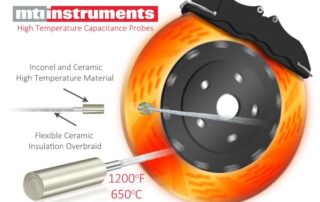
Measuring Brake Rotor Thickness Variation with Capacitive Sensing
Brand-MTI, Industry-Aerospace, Industry-Automotive, Industry-Consumer Products, Industry-Government/Military, Industry-Manufacturing, Industry: Transportation, Knowledge Center-MTI, Products-MTI-Capacitance, Whitepapers-MTI, Z-REPUB, z1
Measuring Brake Rotor Thickness Variation with Capacitive Sensing
Brake rotor thickness variation, or disc thickness variation (DTV), causes uneven wear to brake rotors, disc-shaped automotive parts that are squeezed between brake pads to slow or stop a vehicle’s wheels. When a brake rotor has areas of different thickness, the amount of clamping force that’s applied across the rotor’s surface varies. These differences in clamping force lead to difference in torque, and the results may include brake shuddering, pulsating, or vibration. Even under normal driving conditions, brake rotors are subjected to extreme conditions that can cause performance-related issues. To ensure that brake rotors can perform [...]





Aircraft Engine Test Cell is World’s Largest
The world’s largest aircraft engine test cell is in Atlanta, Georgia (USA), home of the upcoming MRO Americas 2019 show for the commercial air-transport maintenance, repair and overhaul (MRO) industry. Delta TechOps, a division of Delta Airlines and a full-service MRO, recently opened a $100 million test cell at its Atlanta facility that’s capable of running a jet engine at 150,000 lb. thrust. That’s more thrust than the GE Aviation GE90 engine, which powers Delta’s Boeing 777-200 LR fleet, can produce.“This test cell is a vote of confidence in Delta TechOps,” said Ed Bastian, Delta Airlines CEO, in an article [...]
 Proforma 300i SA Video Shows Semiconductor Metrology Gallery
Proforma 300i SA Video Shows Semiconductor Metrology
Brand-MTI, Industry-Compliance Testing, Industry-Consumer Products, Industry-Electronics, Industry-Manufacturing, Industry-R&D, Industry-Semiconductor, Industry-Semiconductor-MTI, New & Press Releases, News-MTI-Metrology, News-Product Updates, Press Releases-Vitrek, Products-MTI-Semiconductor/Metrology, Videos-MTI, Videos-MTI-Manual Semiconductor Metrology System, Z-REPUB, z1

Proforma 300i SA Video Shows Semiconductor Metrology
MTI Instruments, a worldwide leader in precision measurement solutions, has released a YouTube video that shows how its Proforma™ 300i SA semi-automated measurement tool measures silicon carbide wafers for semiconductors. George Relan, MTI’s Global Director of Sales, demonstrates how the desktop metrology system provides non-contact full wafer scanning and 3D mapping of measurement features such as thickness and shape. MTI’s video also shows how the Proforma 300i SA interfaces with an external computer and provides powerful Windows-based software for analysis and reporting. By utilizing MTI push/pull technology, the Proforma 300i SA doesn’t require the semiconductor wafers to have a [...]