Introduction
Modern aircraft engines generate vast amounts of operational data, yet much of this information has historically remained under utilized during maintenance procedures like vibration balancing. As fleets transition to digitally connected avionics architectures, MRO teams are rethinking how they access and apply engine data to improve efficiency and accuracy. By leveraging direct integration with onboard data networks, today’s vibration balancing systems can streamline setup, reduce dependency on external instrumentation, and deliver faster, more reliable results—ultimately helping operators minimize downtime and maintain peak engine performance.
The Role of Engine Vibration Balancing MRO
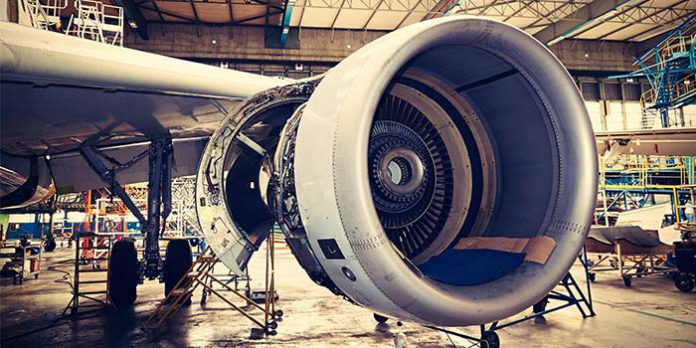
Jet engines operate under extreme mechanical stress, and even small rotor imbalances can create vibration levels that accelerate wear on bearings, blades, and supporting structures. If left uncorrected, excessive vibration can result in:
• Reduced engine efficiency
• Increased fuel consumption
• Premature component failure
• Increased maintenance intervals
• Aircraft downtime
To prevent these issues, MRO technicians perform trim balancing procedures during scheduled maintenance events or after engine installations. This process measures vibration levels and calculates the optimal weight adjustments required to reduce vibration to acceptable limits.
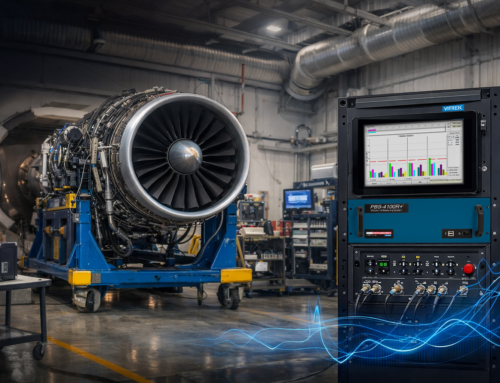
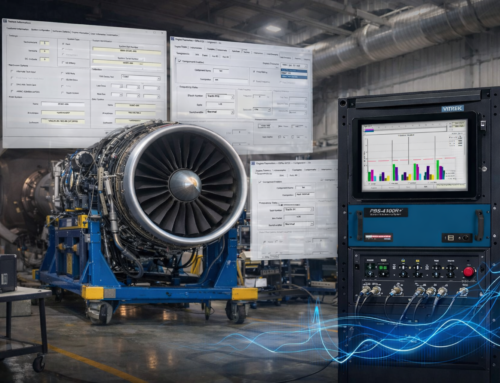
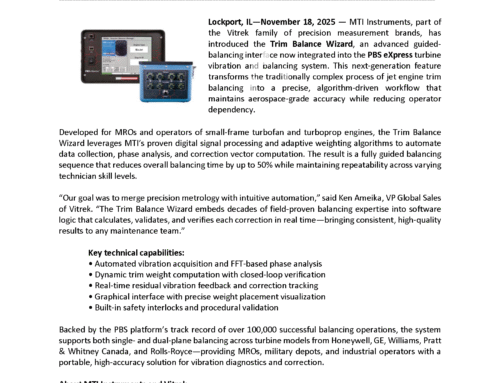
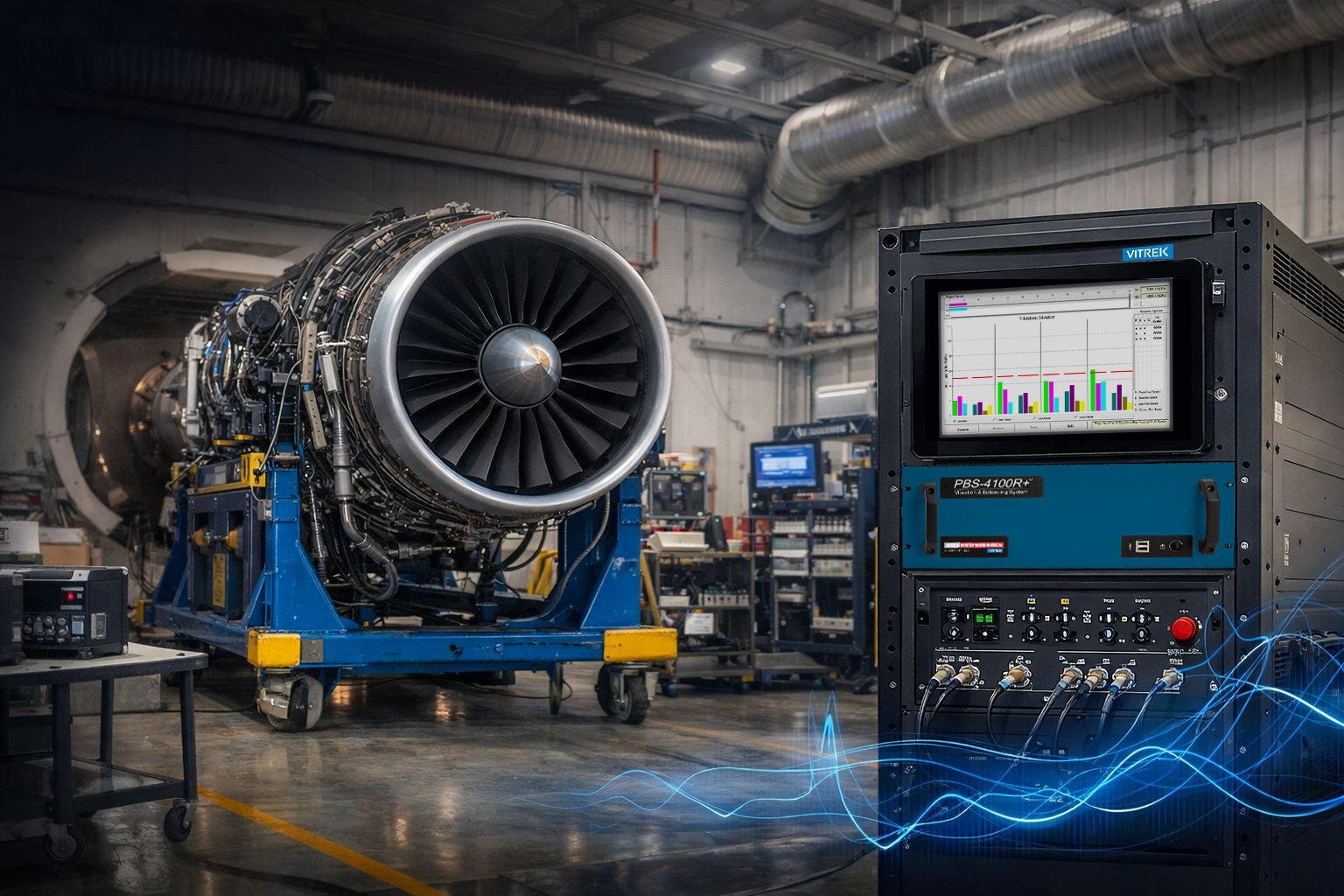
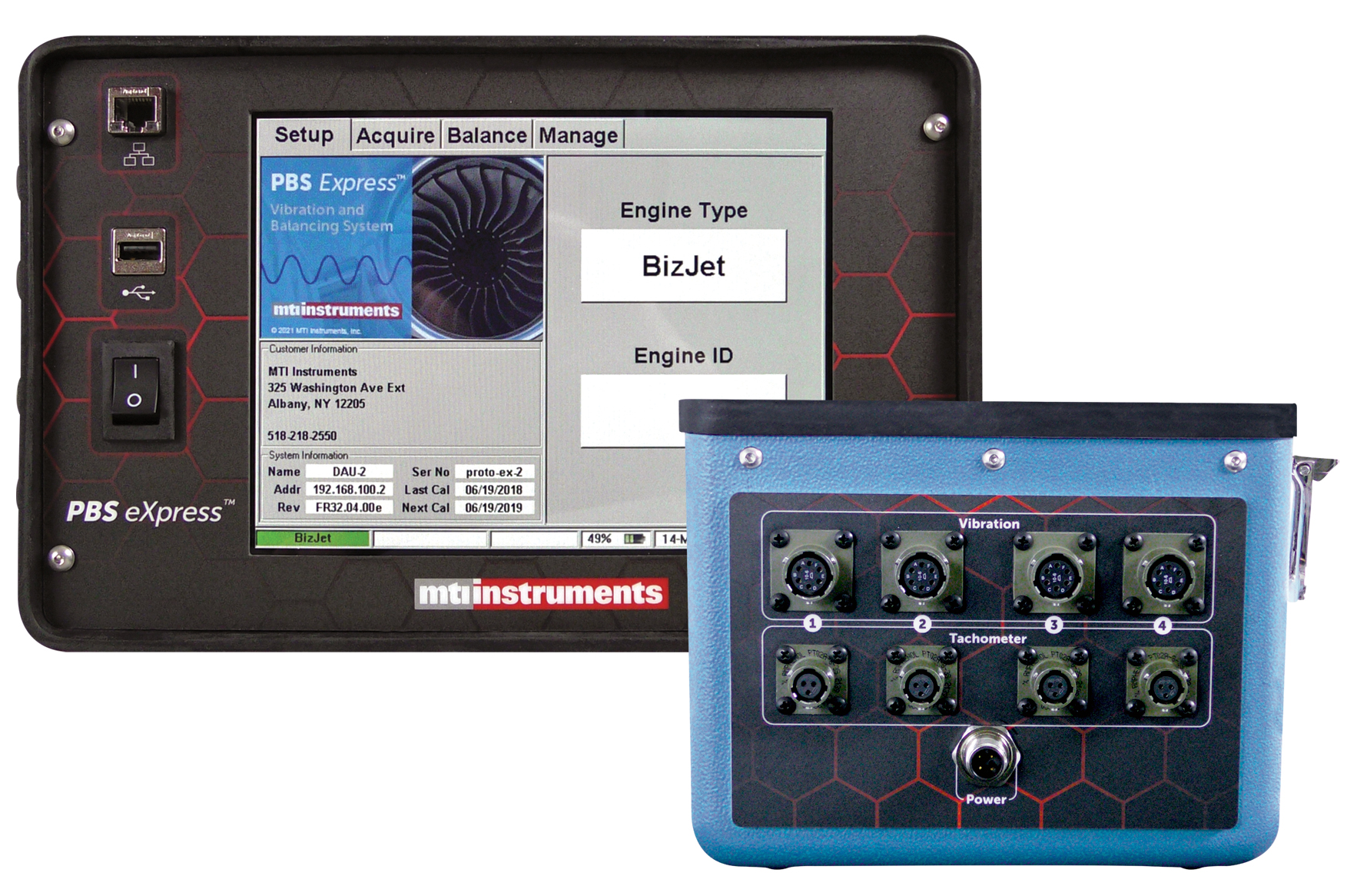
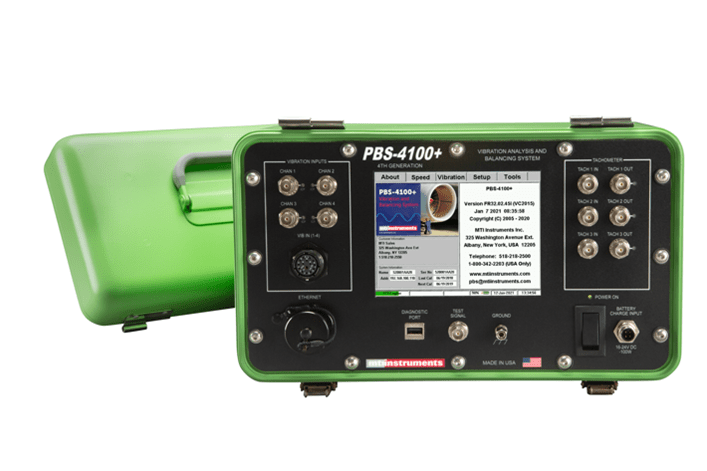
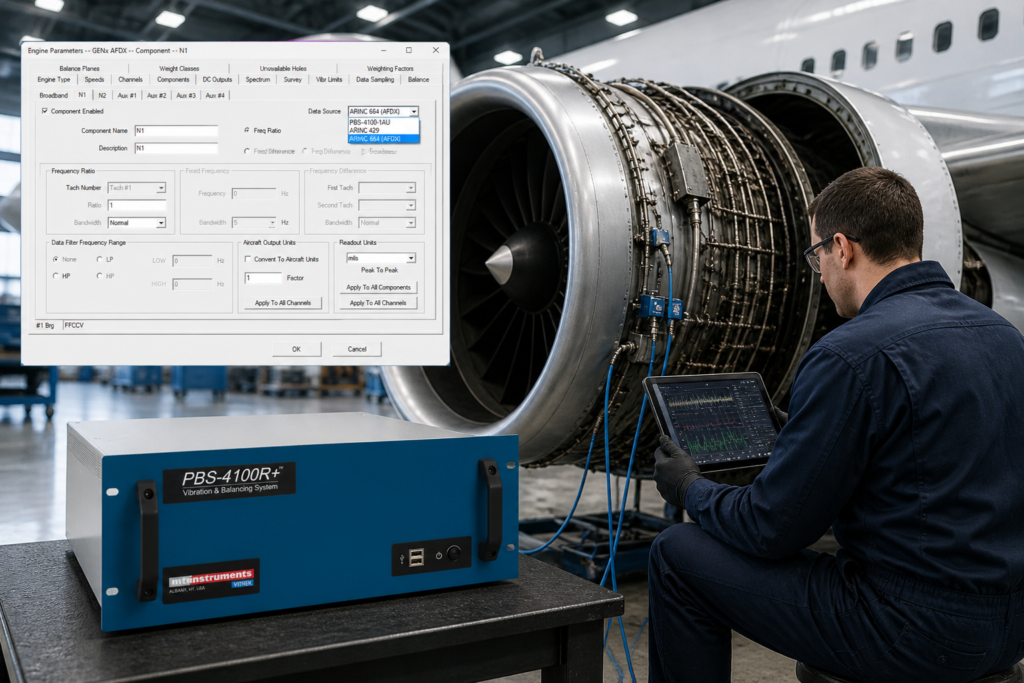
Modern balancing systems such as the Vitrek MTI PBS-4100 series combine vibration sensors, tachometer inputs, and advanced software algorithms to guide technicians through rapid one- or two-run balancing procedures.
The Challenge: Digital Aircraft Systems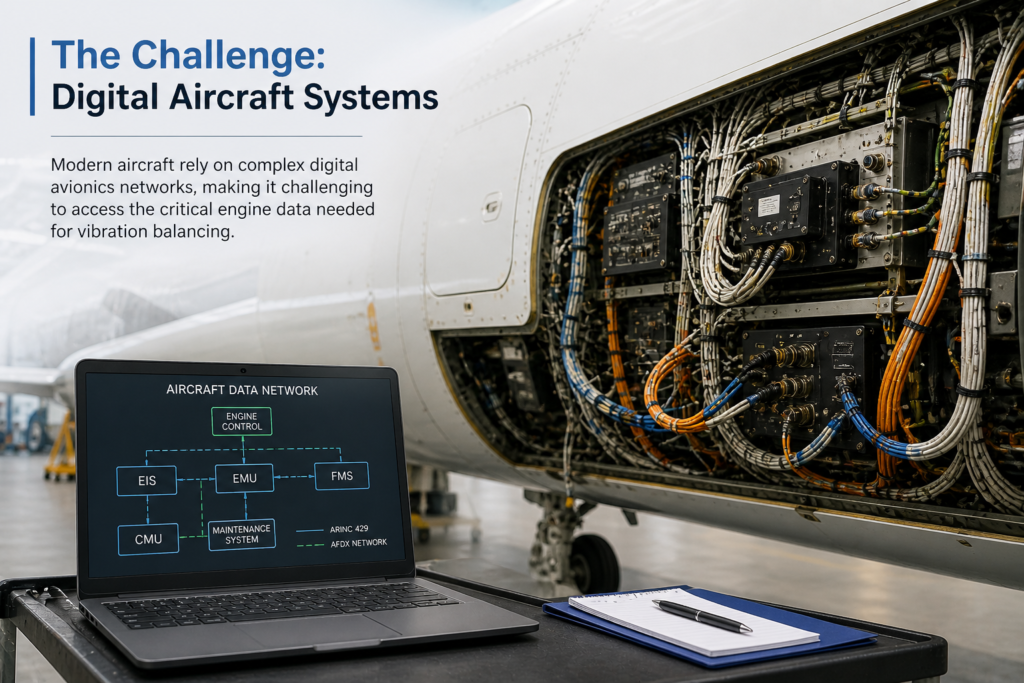
While vibration sensors and tachometer pickups have traditionally been connected using analog wiring, modern aircraft platforms now rely heavily on digital
avionics networks for engine monitoring.
Aircraft such as the Airbus A320neo, Boeing 737 MAX, Airbus A350, and Boeing 787 utilize digital data buses to transmit engine parameters from the engine control
system to the aircraft’s monitoring and maintenance systems.
Key parameters available on these buses include:
• Engine speed (N1, N2)
• Vibration levels
• Engine control data
• System health parameters
Without direct access to these digital data sources, maintenance technicians often need to install additional sensors or interface hardware to capture the information required for balancing procedures. This increases setup time and introduces additional potential sources of error.
Integrating ARINC 429 and AFDX Data
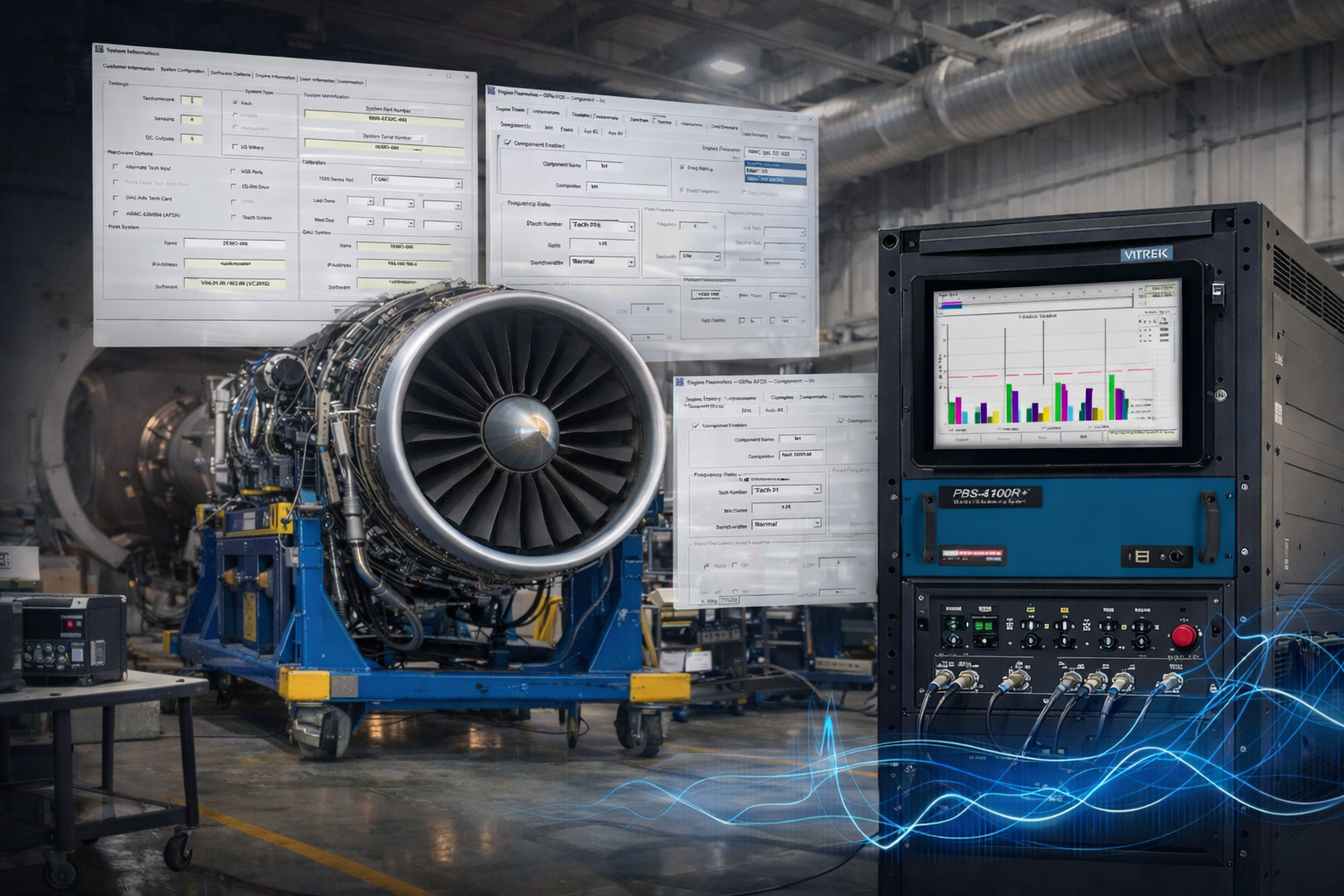
The latest update to the MTI PBS-4100 and PBS-4100R engine vibration balancing systems enables direct support for two widely used avionics data interfaces:
• ARINC 429 – the long-standing digital communication standard used in many commercial aircraft avionics systems
• ARINC 664 (AFDX) – an Ethernet-based avionics network used in modern fly-by-wire aircraft architectures
By connecting directly to these digital buses, the PBS system can access engine data transmitted from the aircraft’s Engine Monitoring Unit (EMU) or Electronic Engine Controller (EEC).
This integration allows the vibration balancing system to obtain critical engine parameters without requiring additional external sensors.
Benefits for Aircraft MRO Operations
Faster Test Setup
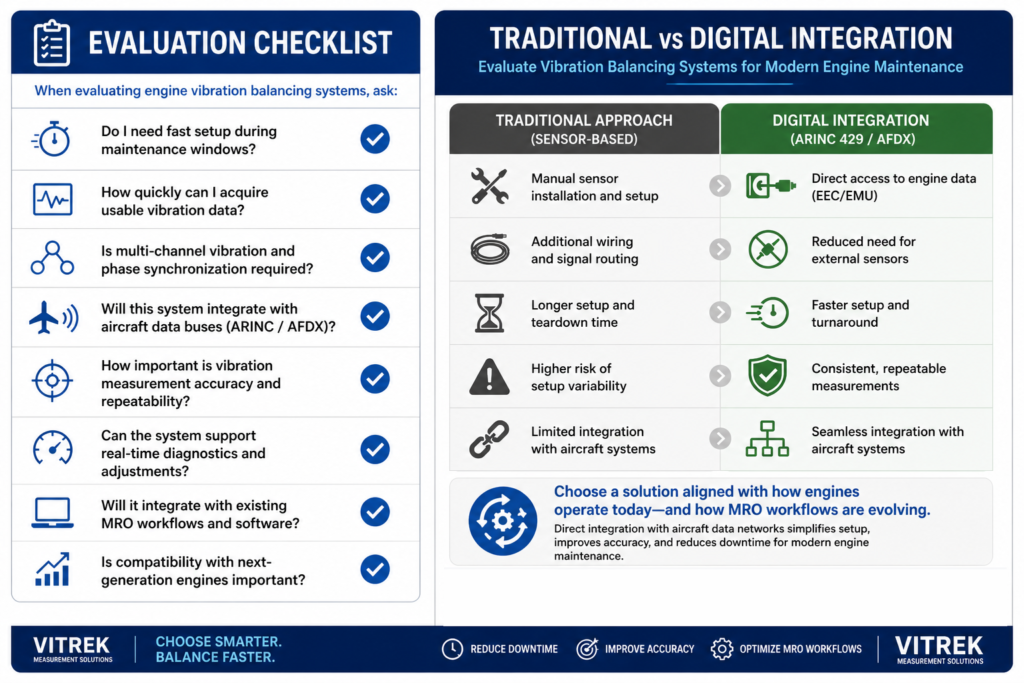
Direct access to digital engine data significantly reduces the time required to configure vibration measurement systems. Instead of routing additional tachometer signals or installing temporary instrumentation, technicians can acquire the necessary parameters directly from the engine or aircraft data network. This streamlined setup allows MRO teams to complete balancing procedures faster during scheduled maintenance windows.
Reduced Wiring and Hardware
Traditional vibration measurement setups often require multiple external connections, including tachometer probes and signal conditioning hardware. With ARINC and AFDX support, much of this instrumentation can be eliminated. The result is a simpler test configuration with fewer cables and fewer potential failure points.
Measurement Cross Verification
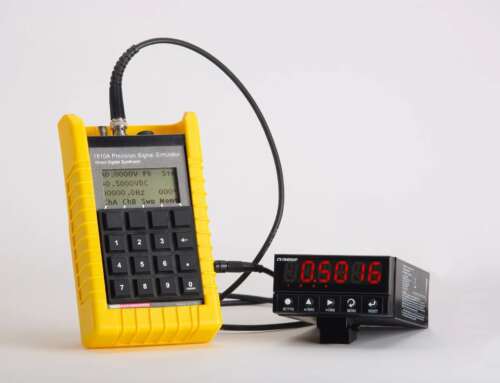
Digital data retrieved from the aircraft’s engine monitoring systems provides measurements for key parameters such as engine speed and tracked vibration amplitude. The accuracy of this data should be routinely verified using a NIST-traceable calibration standard, such as the PBS-4100, which can display both analog and digital data simultaneously. This allows technicians to cross-verify measurements from onboard systems with vibration sensors connected to the balancing system.
This cross-verification capability improves confidence in on-board diagnostic results and helps ensure accurate balancing calculations.
Compatibility with Next-Generation Engines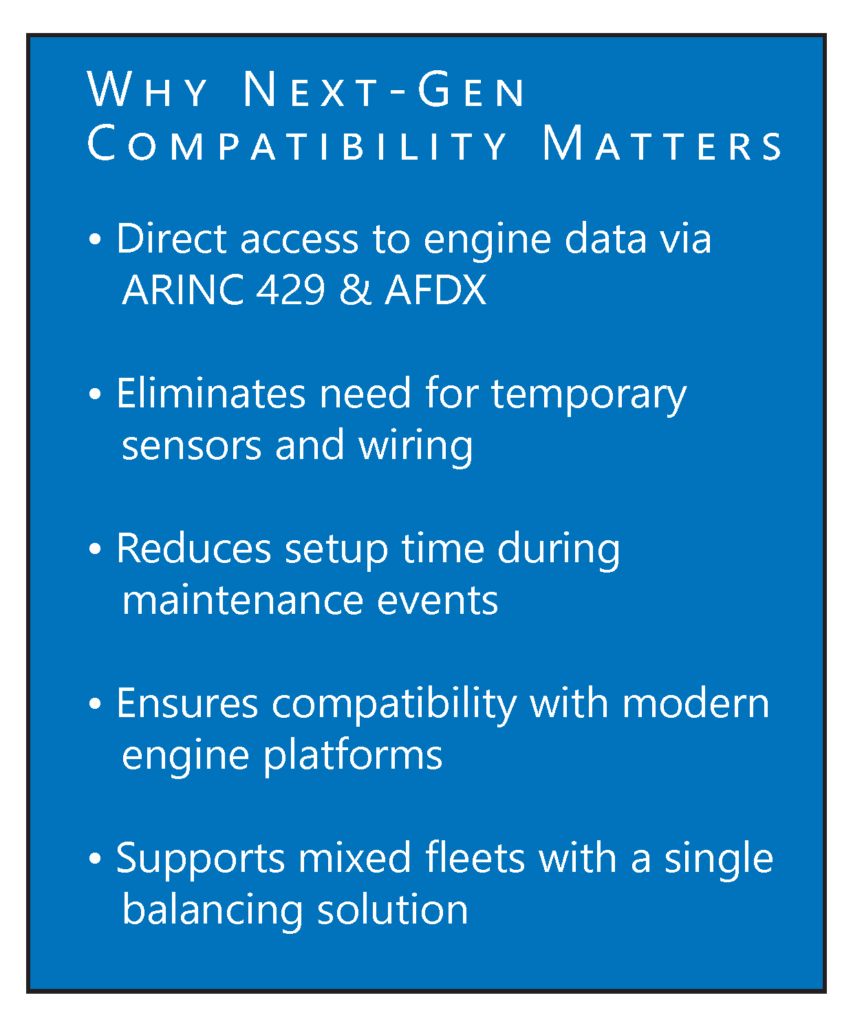
Modern turbofan engines are no longer standalone mechanical systems—they are digitally managed platforms integrated into aircraft avionics networks. Engines such as the LEAP-1A/1B, Pratt & Whitney PW1500G, Rolls-Royce Trent XWB, and GE GEnx continuously transmit performance and vibration data through onboard systems like the Electronic Engine Controller (EEC) and Engine Monitoring Unit (EMU), using ARINC 429 and AFDX (ARINC 664) interfaces.
This shift from analog signals to digital data presents both an opportunity and a requirement for MRO operations. Traditional balancing methods that rely on external sensors and signal conditioning can add complexity and setup time. In contrast, systems that integrate directly with aircraft data buses can access native engine parameters—such as N1/N2 speeds and vibration levels—without additional instrumentation.
Supporting ARINC and AFDX ensures compatibility with modern engine architectures while simplifying test setups and improving measurement consistency. It also allows MRO teams to standardize on a single solution across mixed fleets, supporting both legacy and next-generation aircraft without duplicating equipment or workflows.
Ultimately, direct integration with digital avionics networks aligns vibration balancing with the evolution of aircraft systems—enabling faster, more accurate, and more scalable maintenance operations.
Enabling Predictive Maintenance
Access to digital engine data also supports broader predictive maintenance strategies. By combining vibration measurements with data obtained from other aircraft monitoring systems, MRO teams can build a more complete picture of engine health.
This integrated approach helps operators:
• Identify emerging vibration trends
• Diagnose root causes of imbalance
• Reduce unscheduled maintenance events
• Extend engine service intervals
As airlines seek to maximize aircraft utilization while controlling maintenance costs, tools that support faster diagnostics and better data integration are becoming increasingly important.
Conclusion
The integration of ARINC 429 and AFDX data support into modern vibration balancing systems represents a meaningful shift in how engine maintenance is performed. By enabling direct access to onboard engine data, these systems eliminate much of the complexity associated with traditional sensor-based setups—reducing wiring, minimizing setup time, and lowering the risk of measurement errors.
Beyond immediate workflow improvements, this approach aligns vibration balancing with the broader digital transformation of aircraft systems. As engines and avionics become increasingly interconnected, maintenance tools must evolve to operate within the same data-driven ecosystem. Direct integration with aircraft networks allows MRO teams to leverage validated engine parameters, improving confidence in diagnostics while accelerating maintenance procedures.
This capability also positions operators for long-term success. As fleets continue to incorporate next-generation aircraft, maintenance providers need scalable solutions that can support both legacy and modern platforms without duplicating equipment or processes. Systems that combine traditional measurement inputs with digital data access provide the flexibility required to standardize operations across diverse fleets.
Ultimately, integrating digital avionics data into vibration balancing workflows enables faster, more accurate, and more efficient engine maintenance. By reducing downtime, improving diagnostic quality, and simplifying test setups, these systems help MRO organizations meet the growing demands of modern aviation while maintaining high standards of safety, reliability, and operational performance.