Introduction
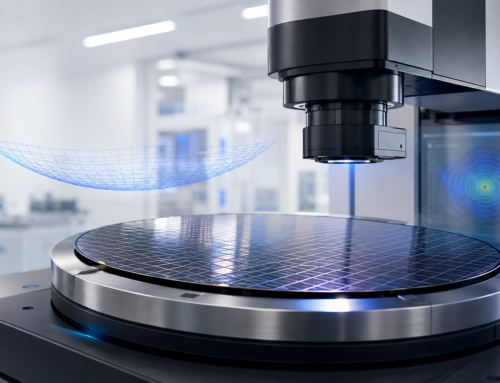
Photonics has become one of the fastest-growing fields in engineering, enabling advances in autonomous vehicles, optical communications, medical imaging, aerospace, semiconductor manufacturing, and quantum technologies. As these systems continue to evolve, engineers are challenged to capture increasingly complex optical signals while maintaining exceptional measurement accuracy, repeatability, and timing precision.
At the heart of every optical measurement system is a detector that converts light into an electrical signal. The quality of the resulting data depends not only on the detector itself, but also on the architecture used to acquire, process, and analyze that signal. Selecting the appropriate data acquisition platform has therefore become a critical design decision, particularly as bandwidths increase and automated testing becomes standard practice.
This paper examines the characteristics of modern optical measurements, discusses the performance requirements driving today’s acquisition systems, and provides guidance for selecting an architecture capable of supporting current and future photonics applications.
The Evolution of Optical Measurement
Optical systems have changed dramatically over the past decade.
Many early photonics applications focused primarily on relatively static measurements involving beam alignment, optical power, imaging, or component characterization. Today’s systems are fundamentally different. Engineers now routinely measure rapidly changing waveforms produced by pulsed lasers, high-speed optical modulators, interferometers, avalanche photodiodes, and photomultiplier tubes. These signals often contain critical timing and amplitude
information that directly influences overall system performance.
Applications such as LiDAR, Optical Coherence Tomography (OCT), Distributed Fiber Optic Sensing (DFOS), laser ultrasonics, and advanced optical communications continue pushing measurement systems toward higher bandwidths, faster sampling rates, and increasingly sophisticated analysis techniques.
As optical technology advances, data acquisition has become an essential part of the measurement chain rather than simply the final step in recording results.
What Defines an Effective Data Acquisition System?
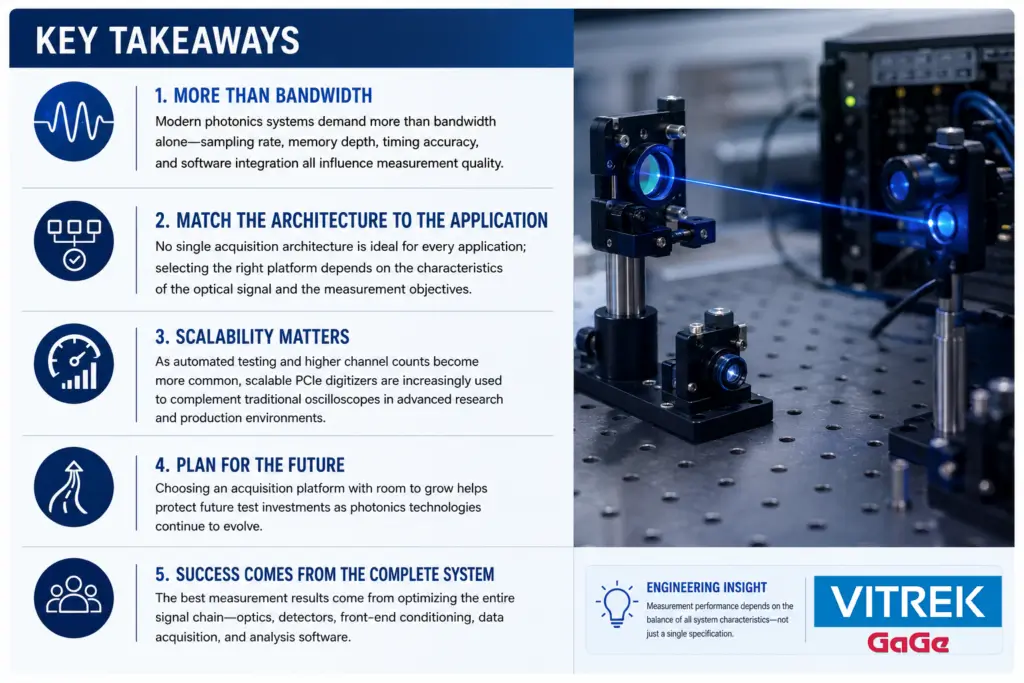
Choosing the proper acquisition platform requires more than selecting the highest sampling rate. Several characteristics work together to determine how accurately an instrument reproduces real-world optical events.
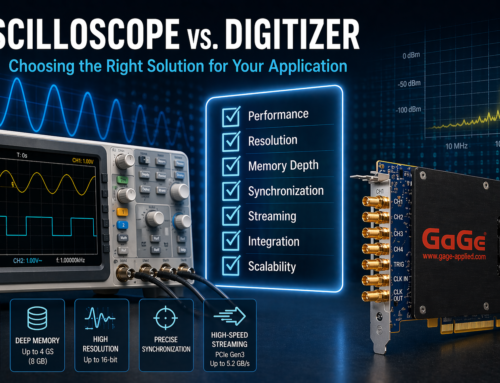
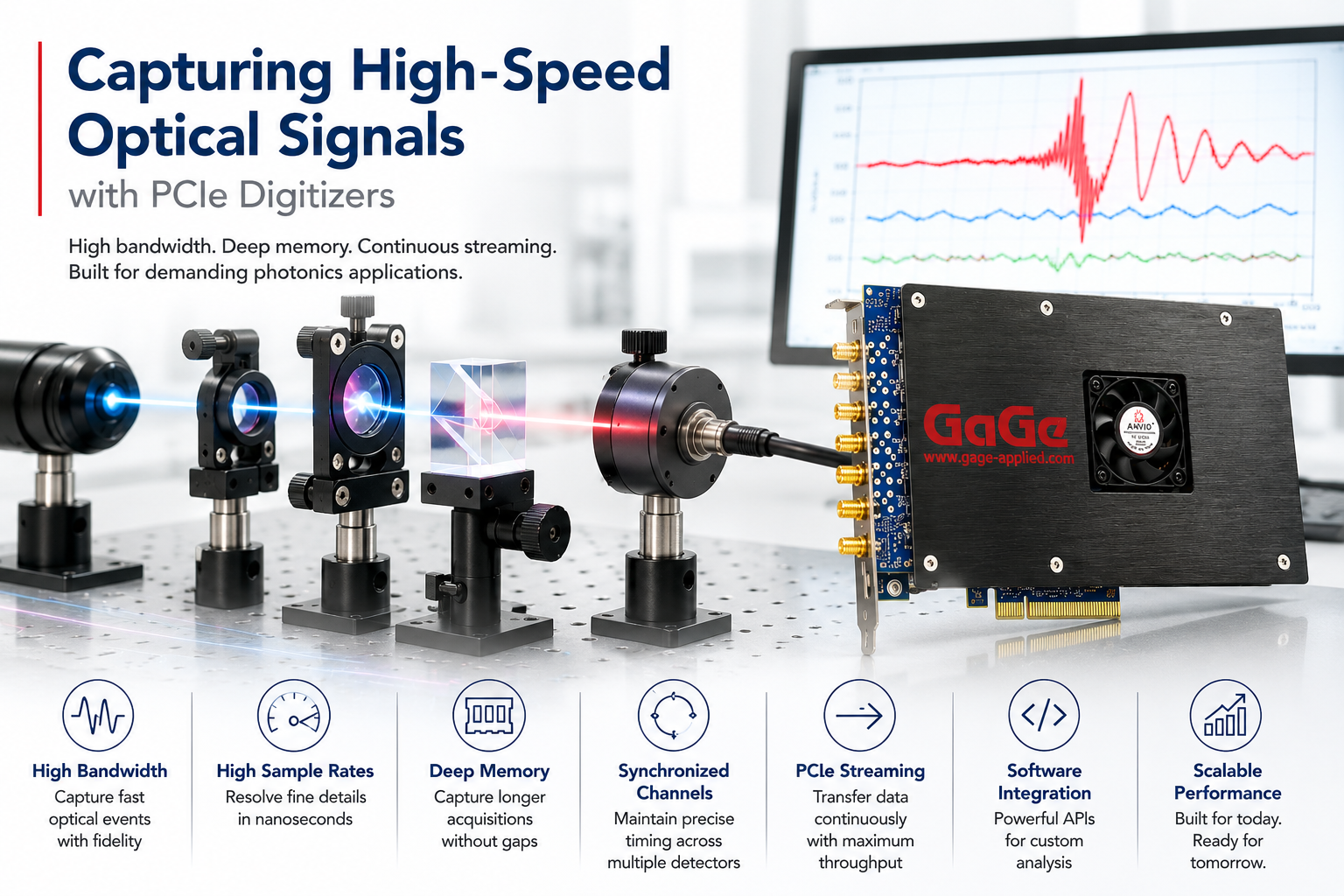
Bandwidth determines the highest frequency content that can be faithfully reproduced without excessive attenuation. Sampling rate governs how accurately rapidly changing waveforms are reconstructed. Memory depth influences the duration of signals that can be captured while maintaining full resolution, and trigger performance determines whether transient events are acquired consistently and repeatably with stable and accurate time-alignment.
Equally important are dynamic range, channel synchronization, and software integration. As laboratories move toward automated testing and higher channel counts, these capabilities often become just as important as raw acquisition speed.
Successful measurement systems balance all of these characteristics to match the requirements of the application rather than optimizing a single specification.
Comparing Data Acquisition Architecture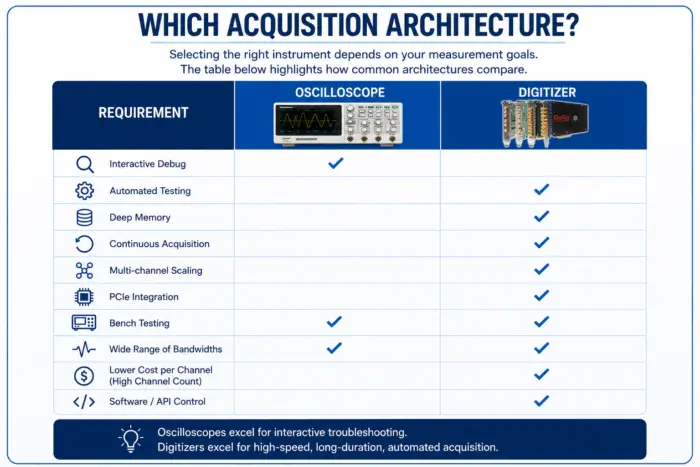
Today’s engineers have numerous options available for acquiring optical signals, each offering distinct advantages depending on the measurement objective.
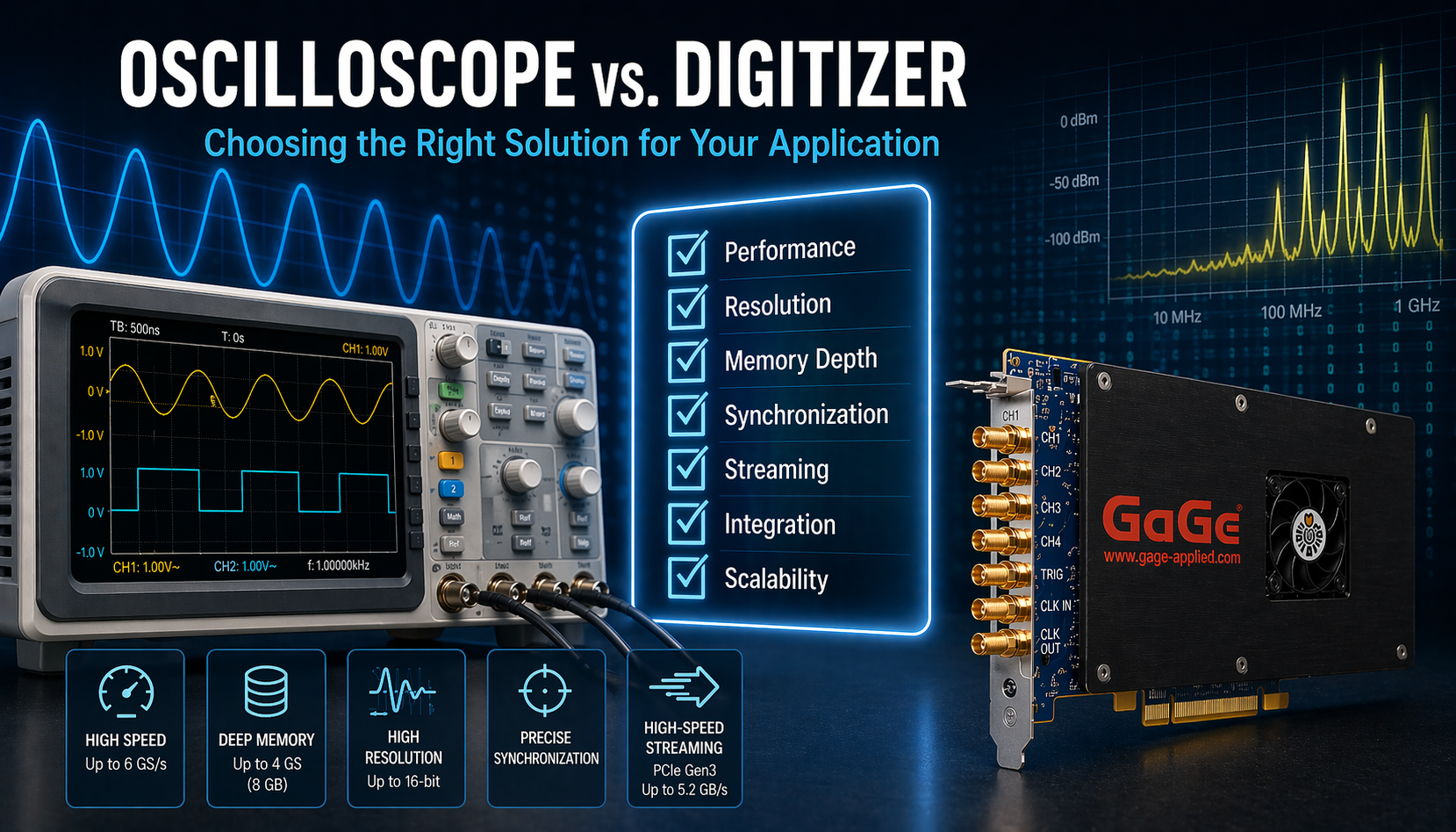
Traditional oscilloscopes remain indispensable for interactive debugging and general-purpose waveform visualization. Their intuitive user interfaces and flexible triggering make them ideal during system development and troubleshooting.
Conventional data acquisition systems excel when monitoring slowly changing analog signals across many channels over extended periods. They are widely used for temperature, pressure, displacement, and other lower-bandwidth measurements.
Spectrum analyzers provide exceptional insight into frequency-domain behavior but are not intended to preserve complete time-domain waveforms.
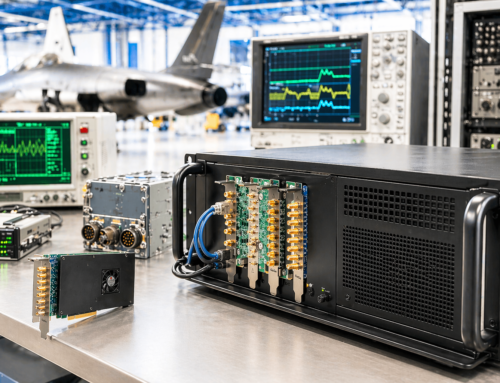
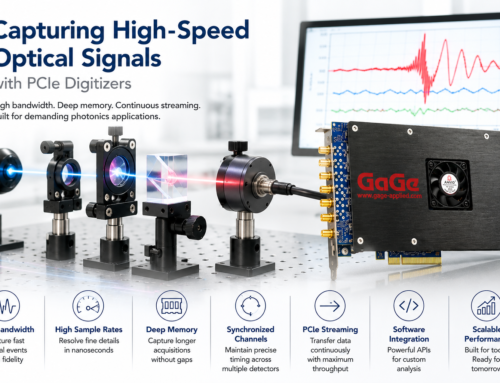
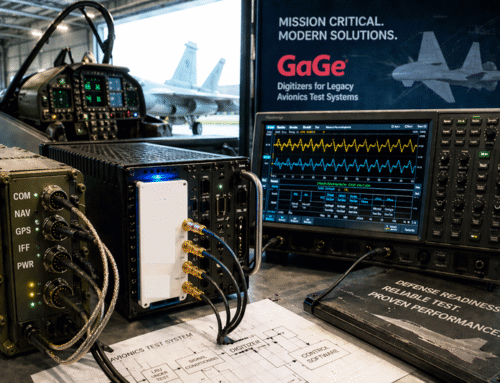
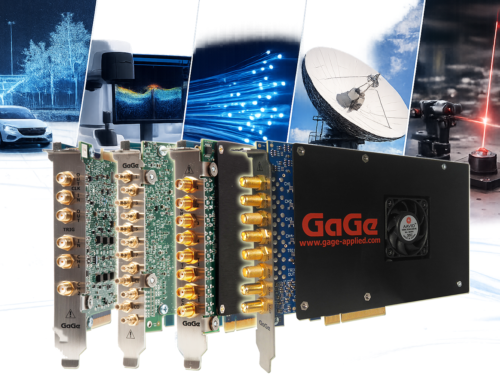
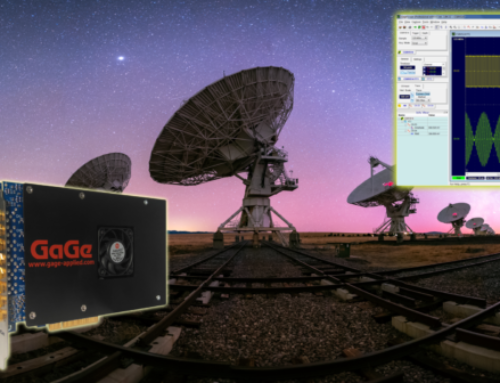
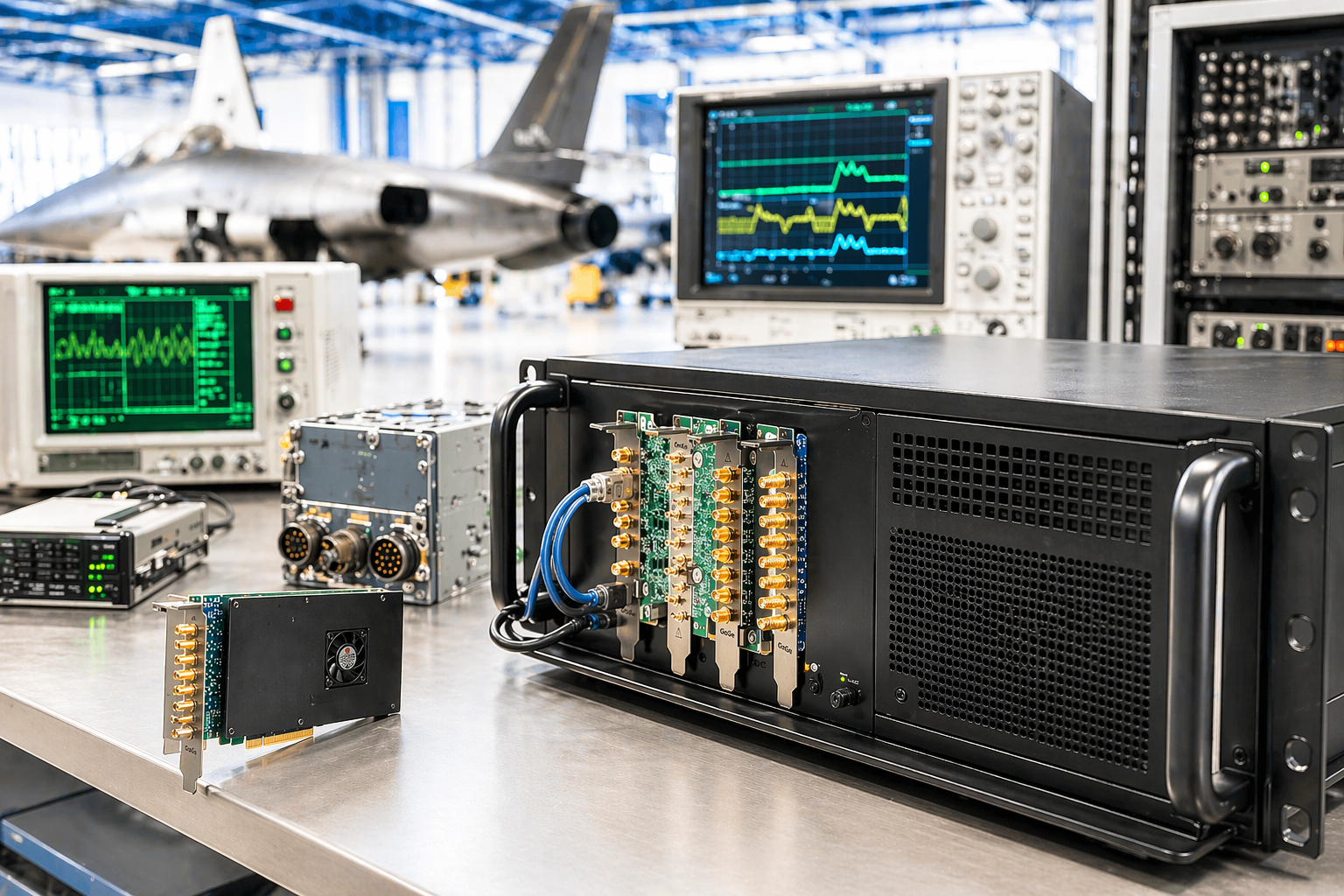
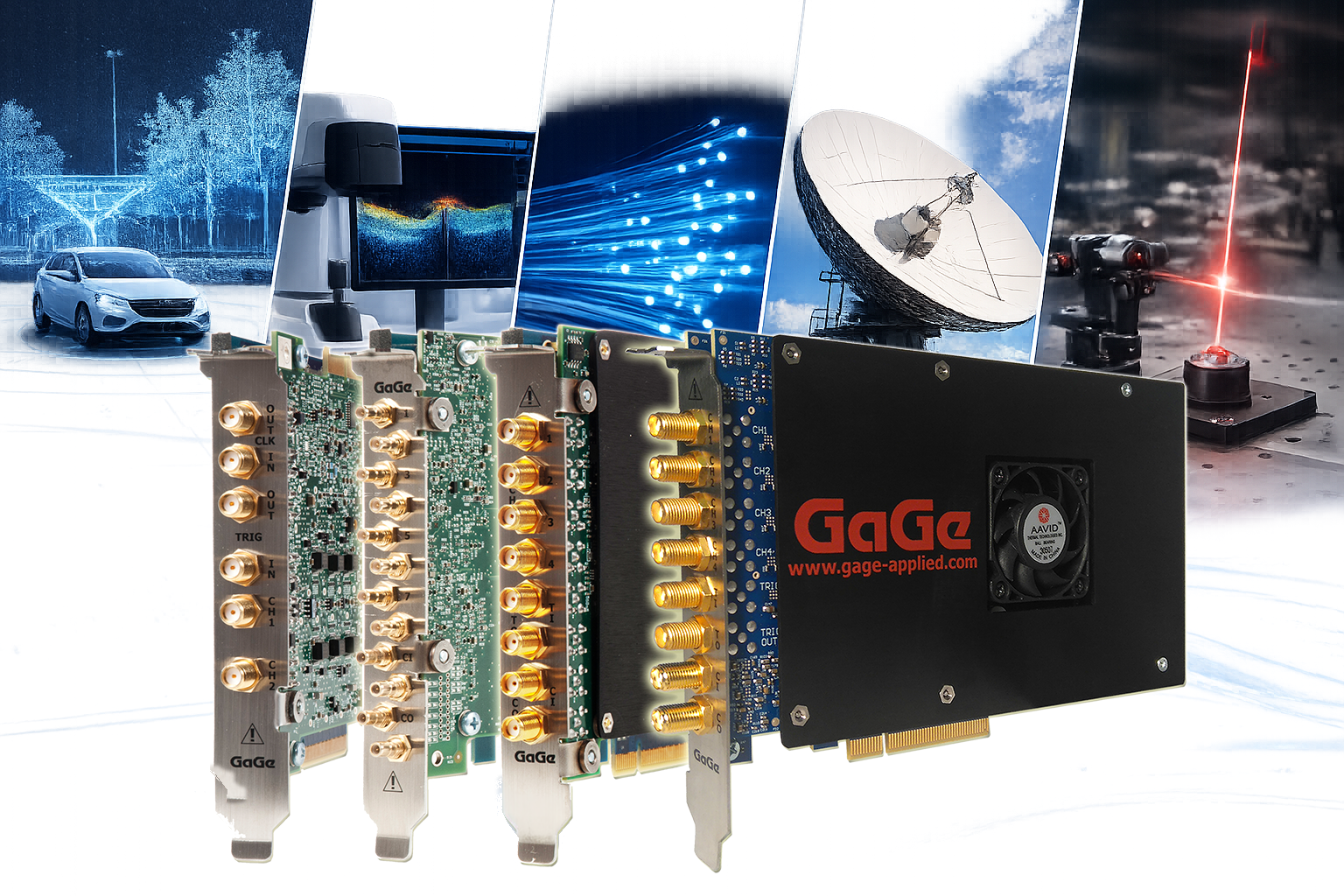
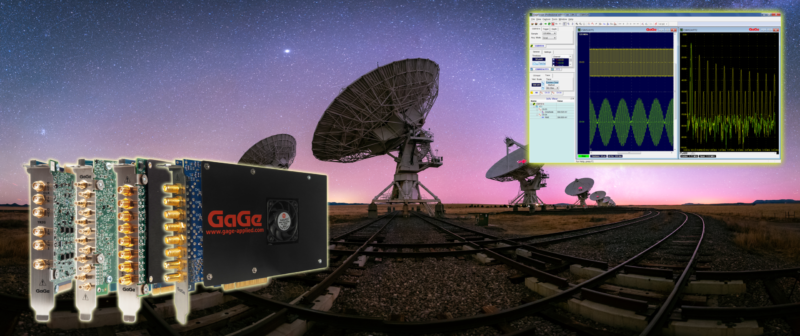
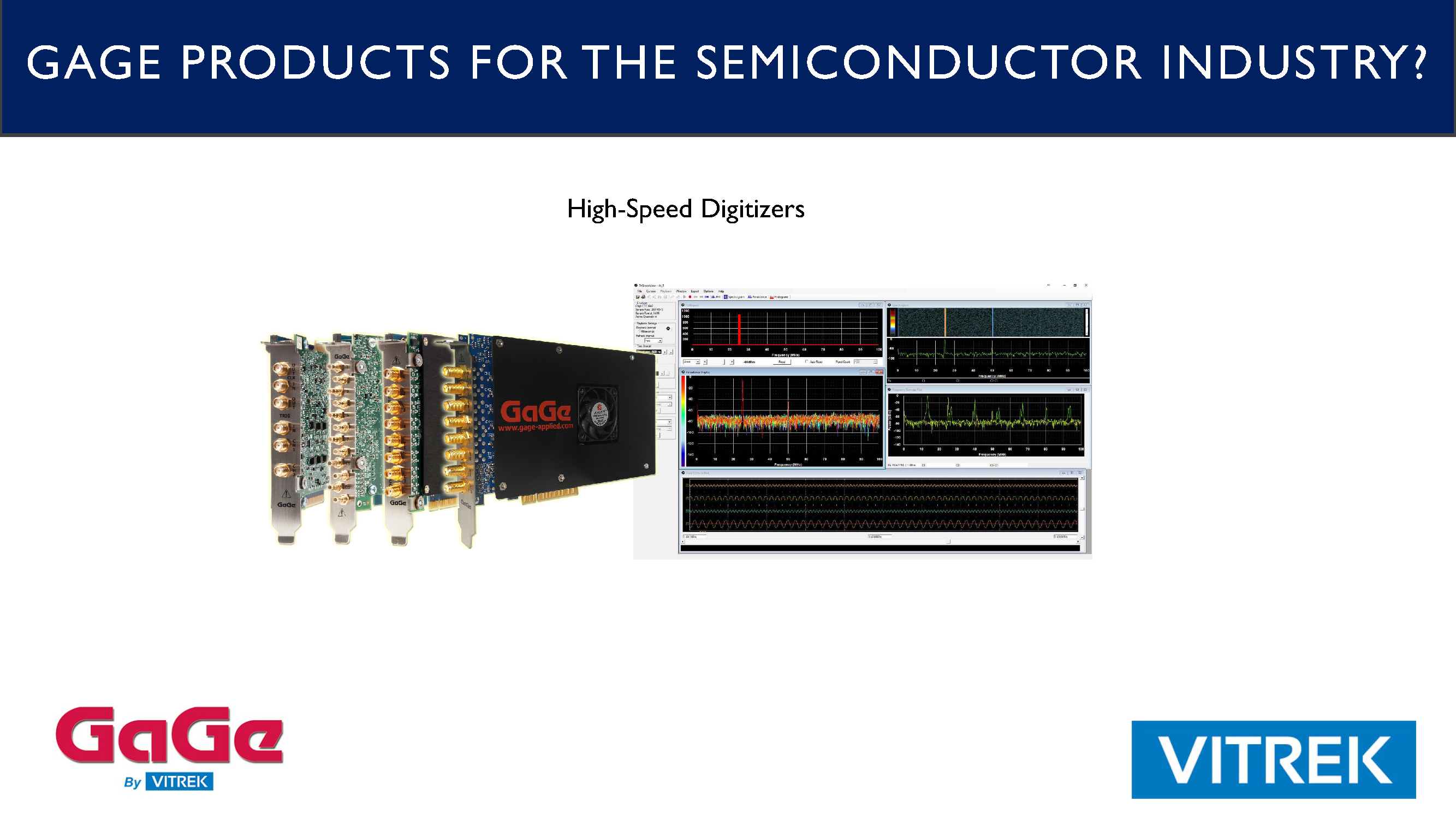
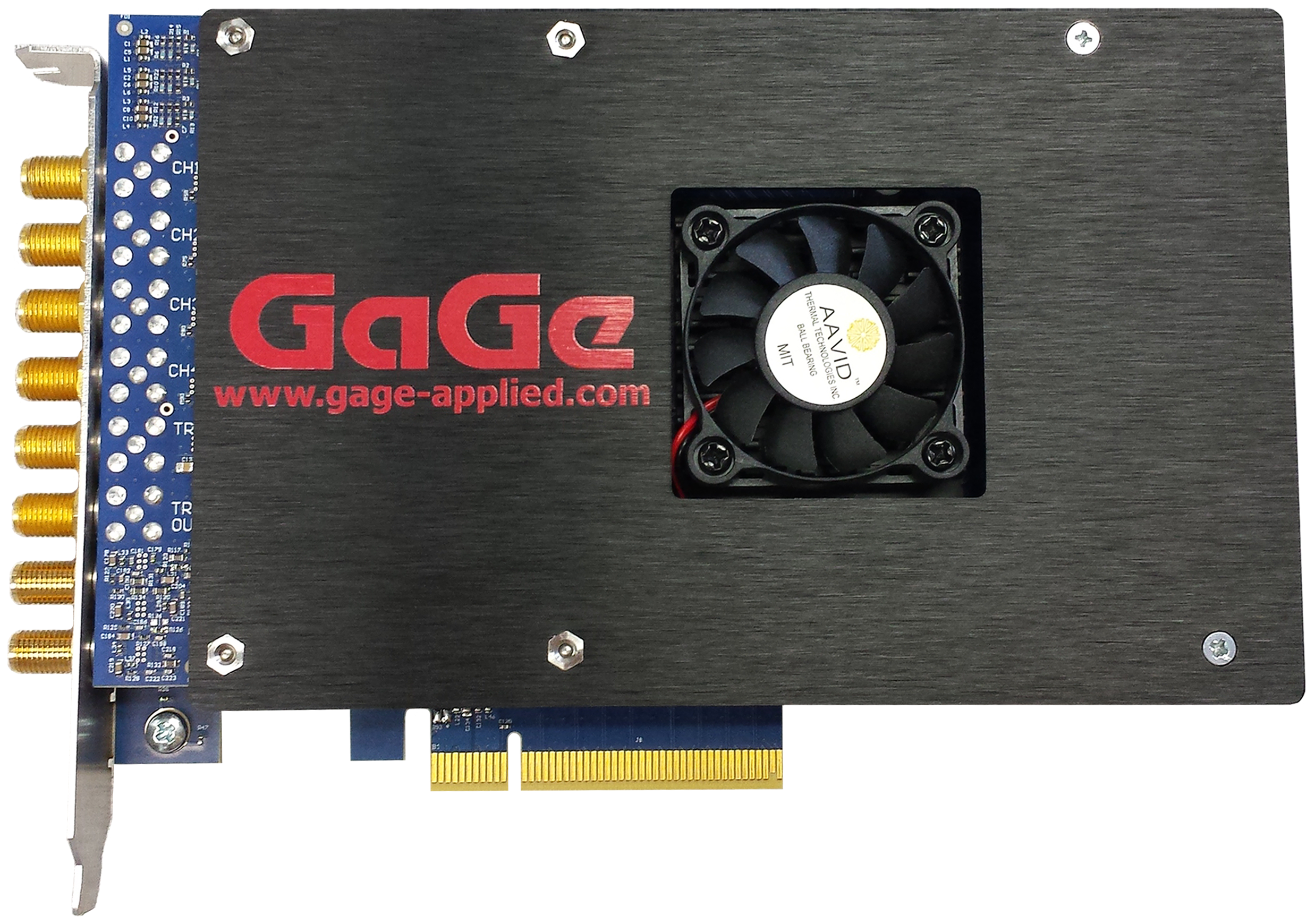
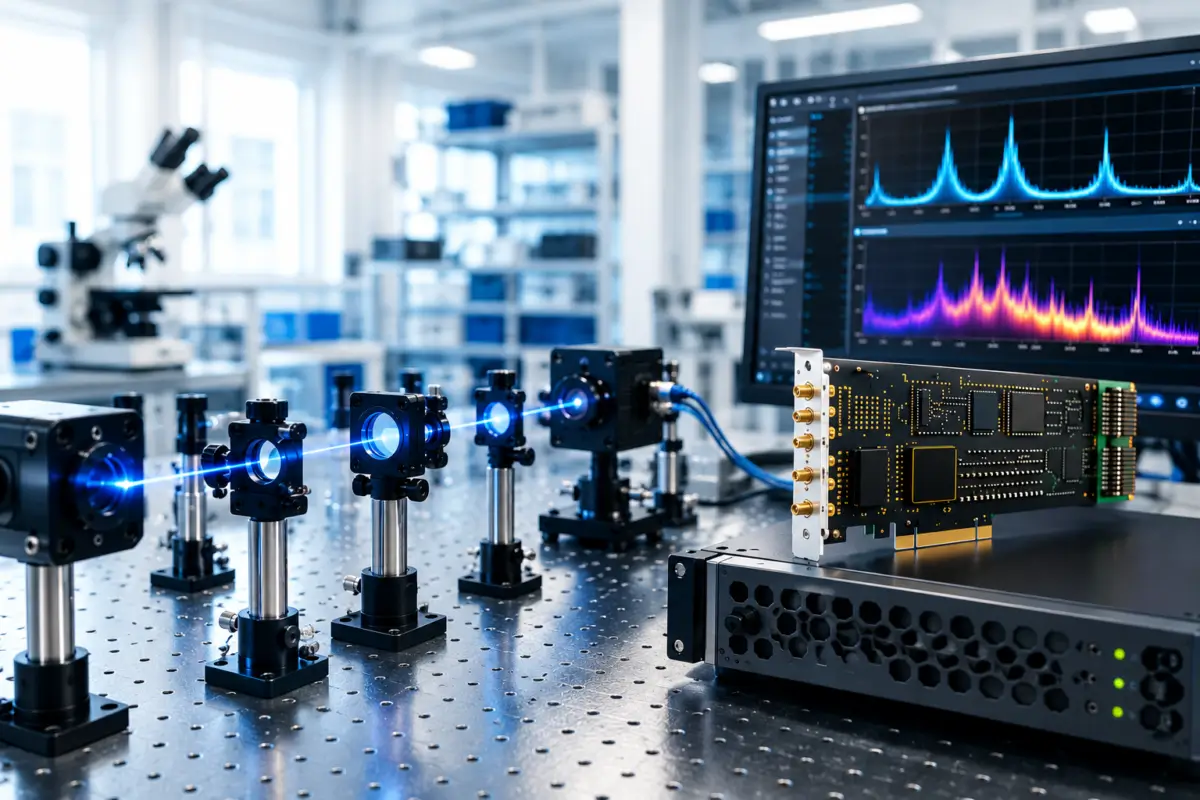
High-speed PC-based digitizers occupy a different role. Installed directly within the PCIe slot in a conventional PC. These capabilities make them particularly valuable in research laboratories and automated production environments where engineers must acquire large volumes of high-speed waveform data while maintaining simultaneous alignment across multiple channels.
Rather than replacing traditional instruments, digitizers complement them by addressing applications where acquisition performance becomes the limiting factor.
Modern Photonics Applications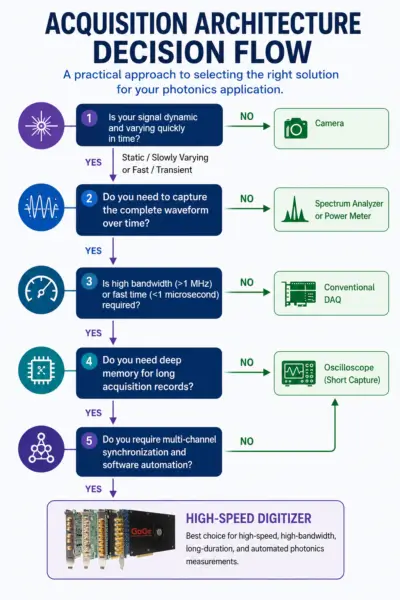
The demand for high-performance data acquisition continues growing across a broad range of photonics applications. LiDAR systems depend on precise timing measurements to determine distances and object locations, making accurate acquisition of laser return signals essential to system performance.
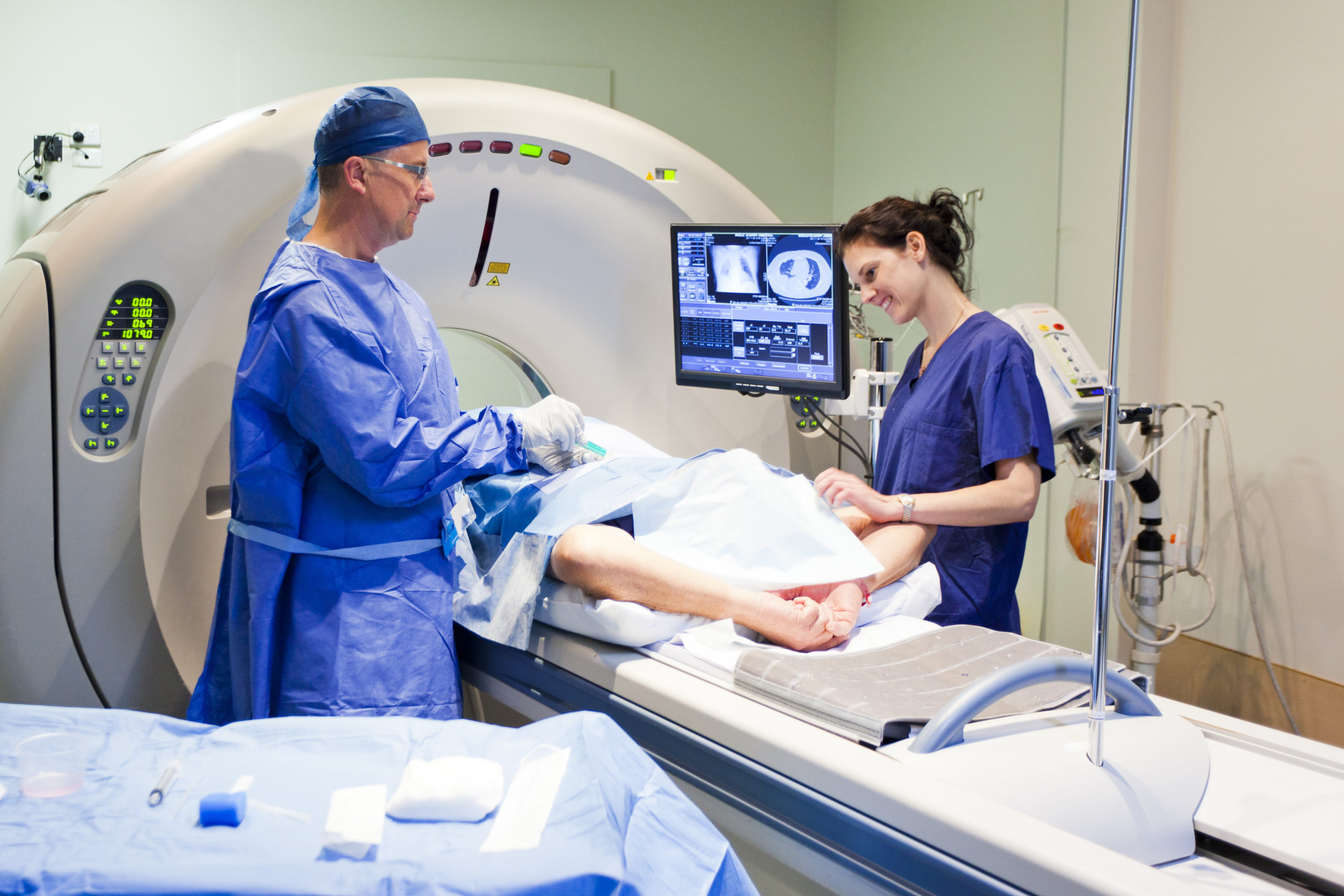
Optical Coherence Tomography combines high-speed optical scanning with interferometric detection to generate detailed cross-sectional images used in medical diagnostics and industrial inspection.
Distributed fiber optic sensing enables continuous monitoring of pipelines, bridges, power infrastructure, and aerospace structures by analyzing subtle optical changes over long distances with optical communication fiber.
Laser ultrasonics allows engineers to perform non-contact inspection of materials by converting laser-generated ultrasonic waves into electrical waveforms suitable for analysis.
High-speed optical communications continue increasing transmission rates while demanding greater signal integrity, timing accuracy, and modulation analysis throughout development and manufacturing.
Although each application presents unique measurement challenges, they all share a common requirement: accurately capturing rapidly changing optical signals while preserving the information necessary for meaningful analysis.
Looking Beyond Today’s Requirements
Photonics technologies continue advancing at an extraordinary pace. Emerging developments in silicon photonics, quantum communications, hyperspectral imaging, advanced semiconductor inspection, and satellite communications will place even greater demands on data acquisition systems over the coming years.
Selecting an acquisition architecture capable of supporting these evolving requirements can help reduce future redesign efforts while providing engineers with a platform that adapts as measurement complexity increases.
For many research organizations and advanced manufacturing facilities, flexible software integration, scalable channel counts, and sustained high-speed acquisition have become just as valuable as higher sampling rates alone.
What’s Next for Photonics?
Emerging technologies including silicon photonics, coherent optical communications, quantum sensing, integrated LiDAR, and AI-assisted signal processing will continue increasing demands on measurement systems. Selecting an acquisition architecture capable of adapting to these advances can help extend the useful life of both research and production test platforms.
Conclusion
As optical systems become faster, more automated, and increasingly data intensive, the role of data acquisition continues to expand. Engineers must now consider bandwidth, sampling rate, memory depth, synchronization, software integration, and long-term scalability when selecting instrumentation for modern
photonics applications.
While no single instrument is ideal for every measurement task, high-speed digitizers have become an increasingly important part of the optical engineer’s toolkit, enabling accurate capture of transient events, supporting automated workflows, and providing the performance necessary for many of today’s most
demanding photonics applications.
The continued growth of LiDAR, optical communications, medical imaging, aerospace sensing, and quantum technologies ensures that data acquisition will remain a critical element in the development of next-generation optical systems.