Introduction
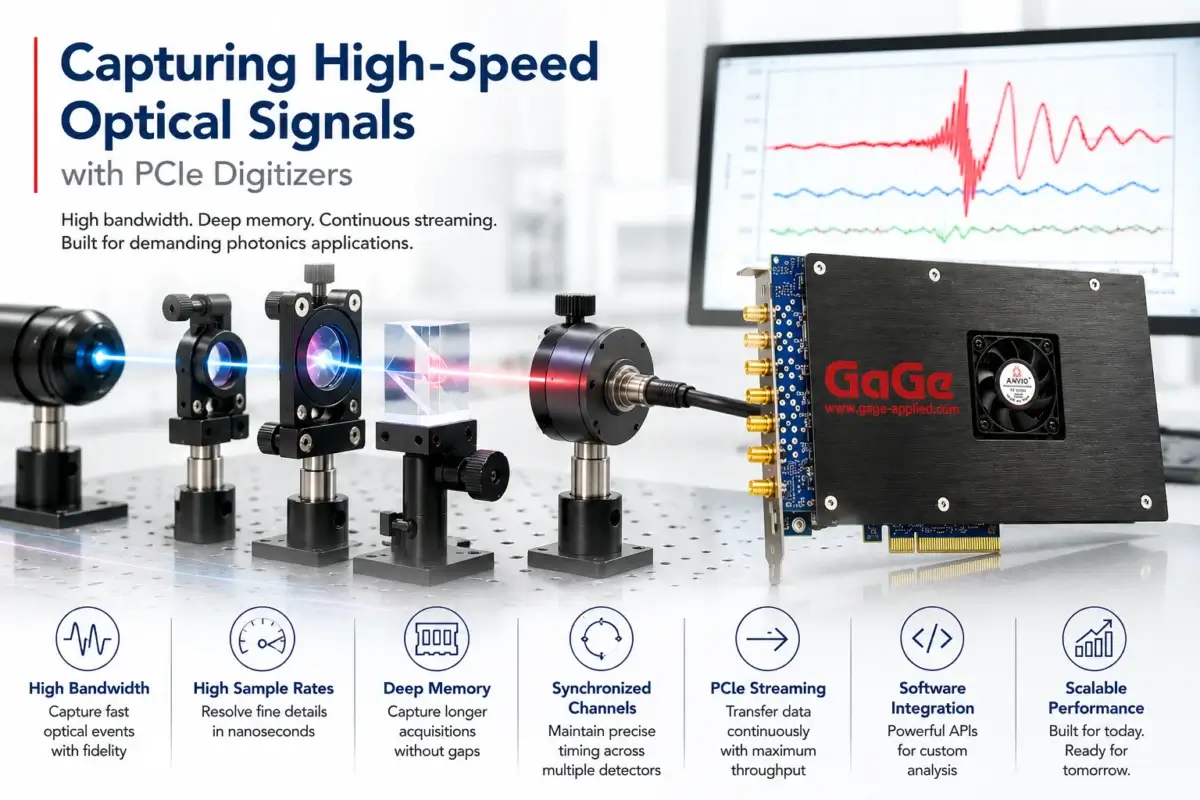
Advances in optical engineering are driving the need for faster, more accurate data acquisition systems. Whether characterizing laser pulses, measuring fiber optic sensors, or analyzing highspeed optical communications, today’s photonics applications generate electrical signals that demand exceptional sampling performance and timing accuracy.
While the optical source may be light, the measurement ultimately depends on capturing an electrical waveform produced by a photodiode or other optical detector. Preserving the integrity of that waveform is critical, as lost detail or timing errors can directly affect measurement accuracy, image quality, or system performance.
High-speed PCIe digitizers provide the bandwidth, memory depth, and continuous streaming capabilities required to acquire these signals while integrating seamlessly into automated laboratory and production environments.
Understanding the Measurement Challenge
Not every optical measurement requires high-speed waveform acquisition. Many laboratory systems use continuous-wave (CW) light sources to characterize lenses, displays, or imaging components where the measured signal changes slowly over time. In these applications, conventional data acquisition hardware or precision optical instrumentation may be all that is required.
The challenge changes dramatically when the optical signal itself varies rapidly. Pulsed laser systems, high-speed detectors, interferometers, and modulated optical communication networks generate transient electrical waveforms that may last only a few nanoseconds. Capturing these events requires acquisition hardware capable of preserving both signal amplitude and timing without distortion.
Optical systems have changed dramatically over the past decade. As optical systems continue increasing in speed and complexity, engineers must consider not only sample rate, but also analog bandwidth, onboard memory, synchronization, and sustained data throughput when selecting an acquisition platform.
Typical Optical Measurement System
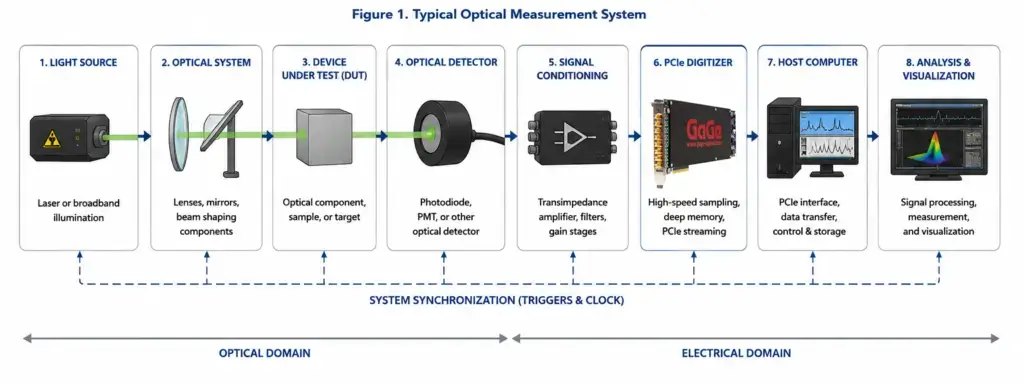
Although optical systems use light to interact with the world, the state of these systems is usually determined by electrical signals produced by photodetectors
and other optoelectronic components. Accurately capturing these signals is essential for characterizing system performance, extracting meaningful information, and making design decisions with confidence.
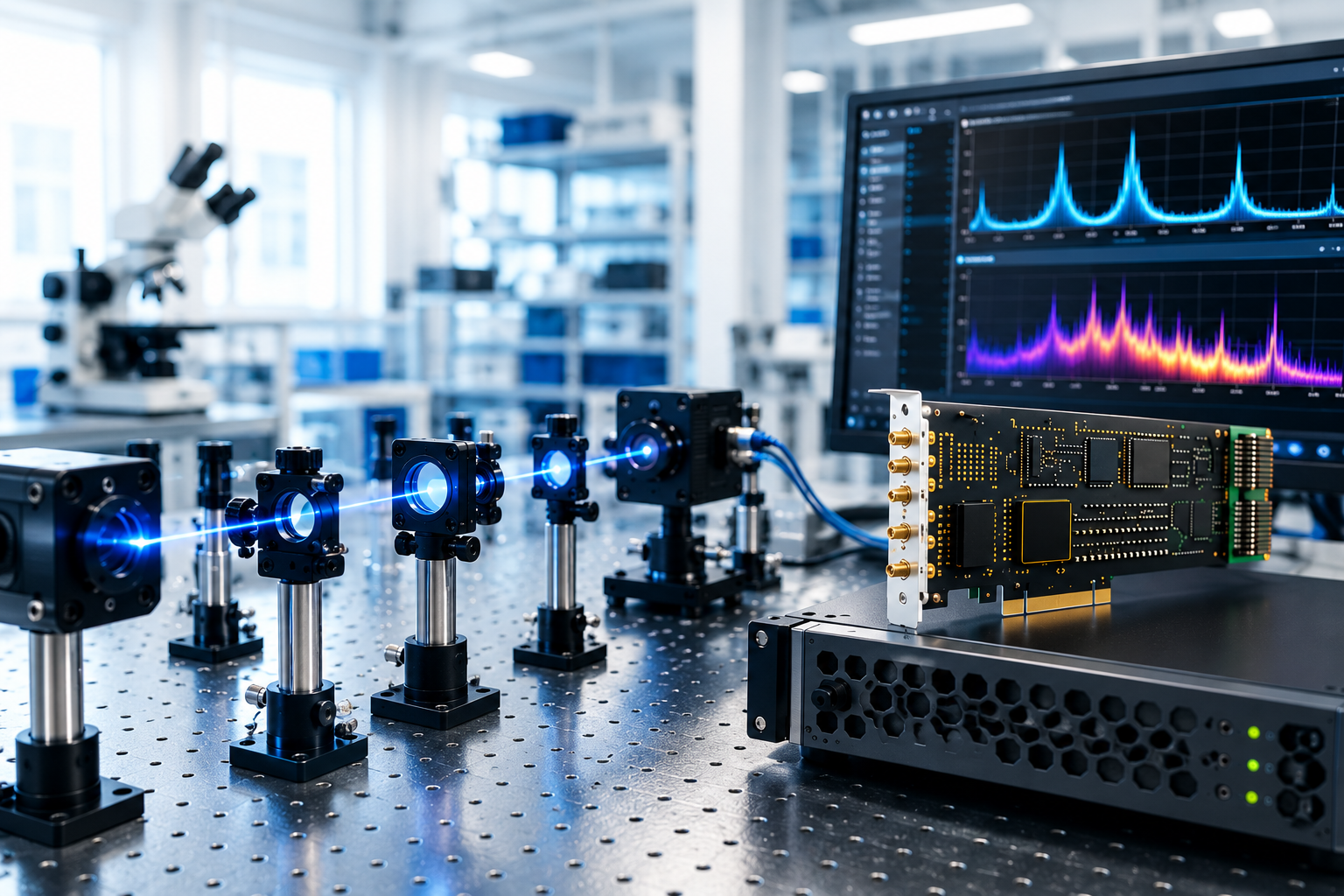
Most high-speed optical measurement systems follow a common architecture, beginning with an optical source that illuminates a device or sample under test. The resulting optical response is converted into an electrical signal, conditioned for optimal measurement, and then digitized using a high-speed data acquisition system. The digitized data are transferred to a host computer for processing, analysis and visualization. Each stage in this signal path plays a critical role in preserving signal fidelity and ensuring the accuracy of the final measurement.
Choosing the Right Acquisition Platform
Engineers often focus on sampling rate when selecting a digitizer, but several factors influence overall measurement quality.
Analog bandwidth determines whether high-frequency signal components reach the analog-to-digital converter without attenuation. Sampling rate controls how accurately those signals are reconstructed, while memory depth determines how much data can be captured before transfer to the host computer. Applications requiring multiple synchronized detectors must also maintain precise timing relationships across every acquisition channel.
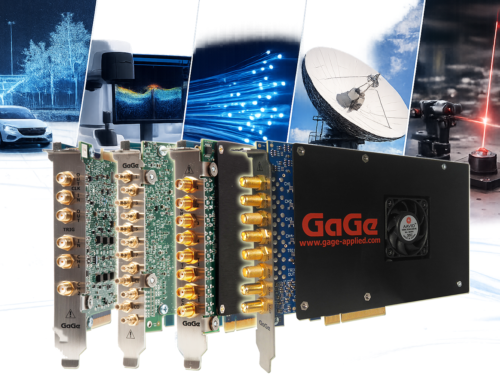
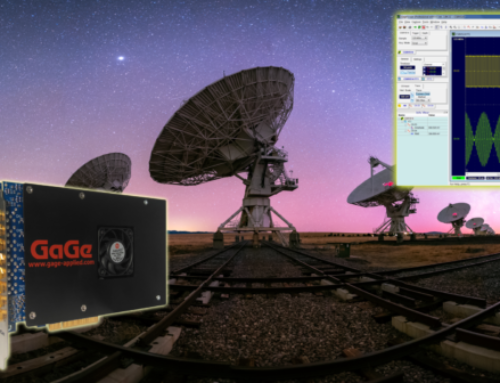
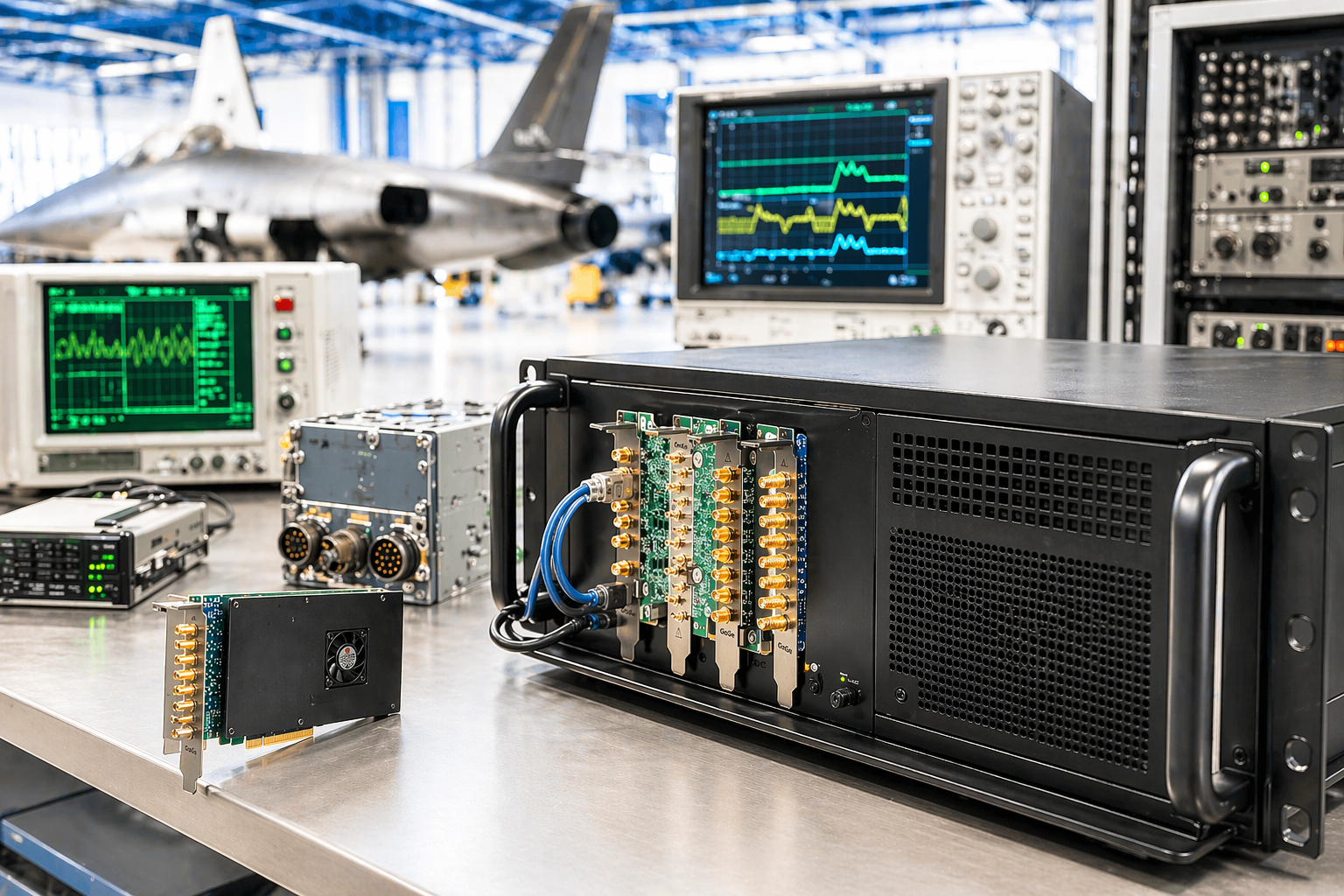
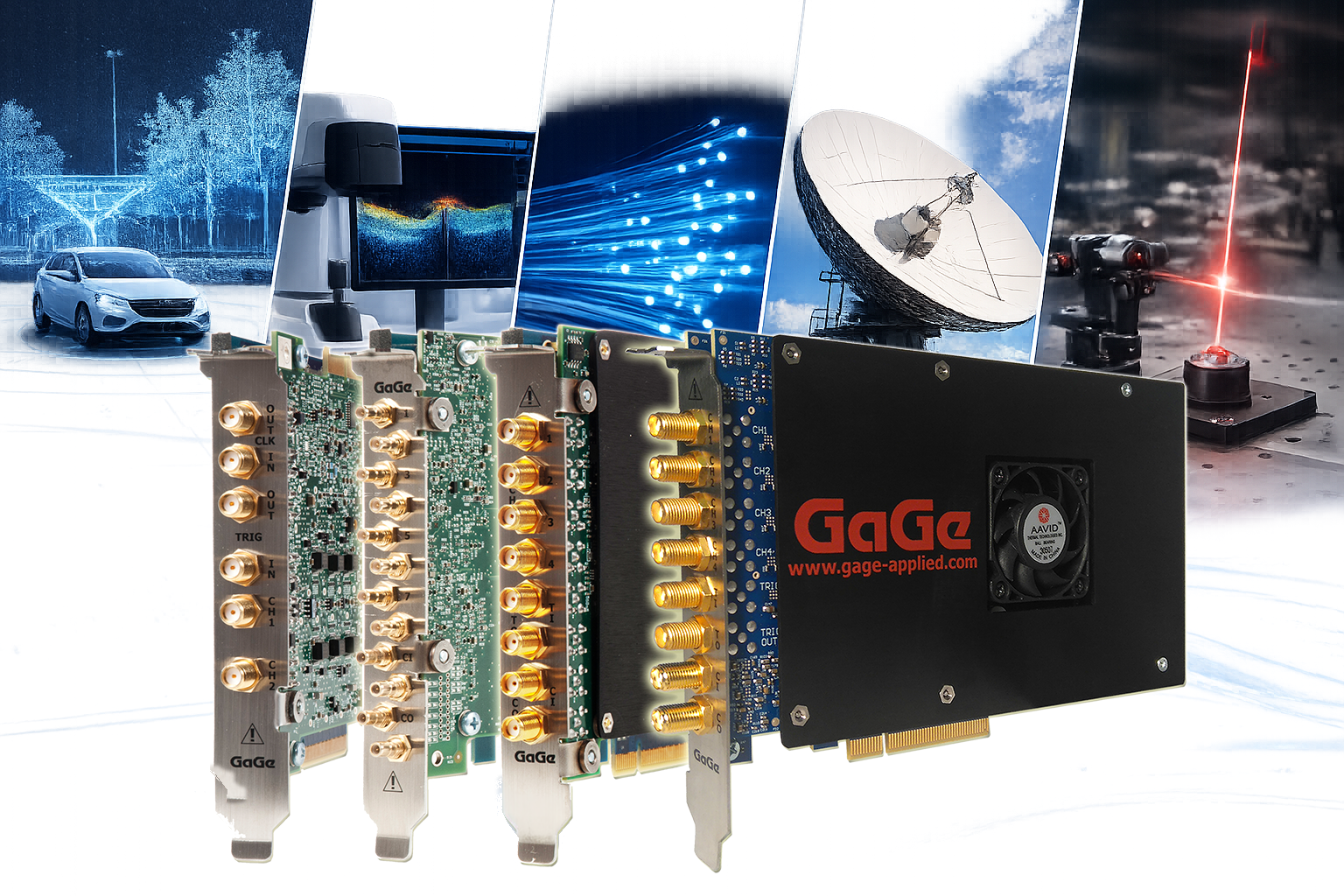
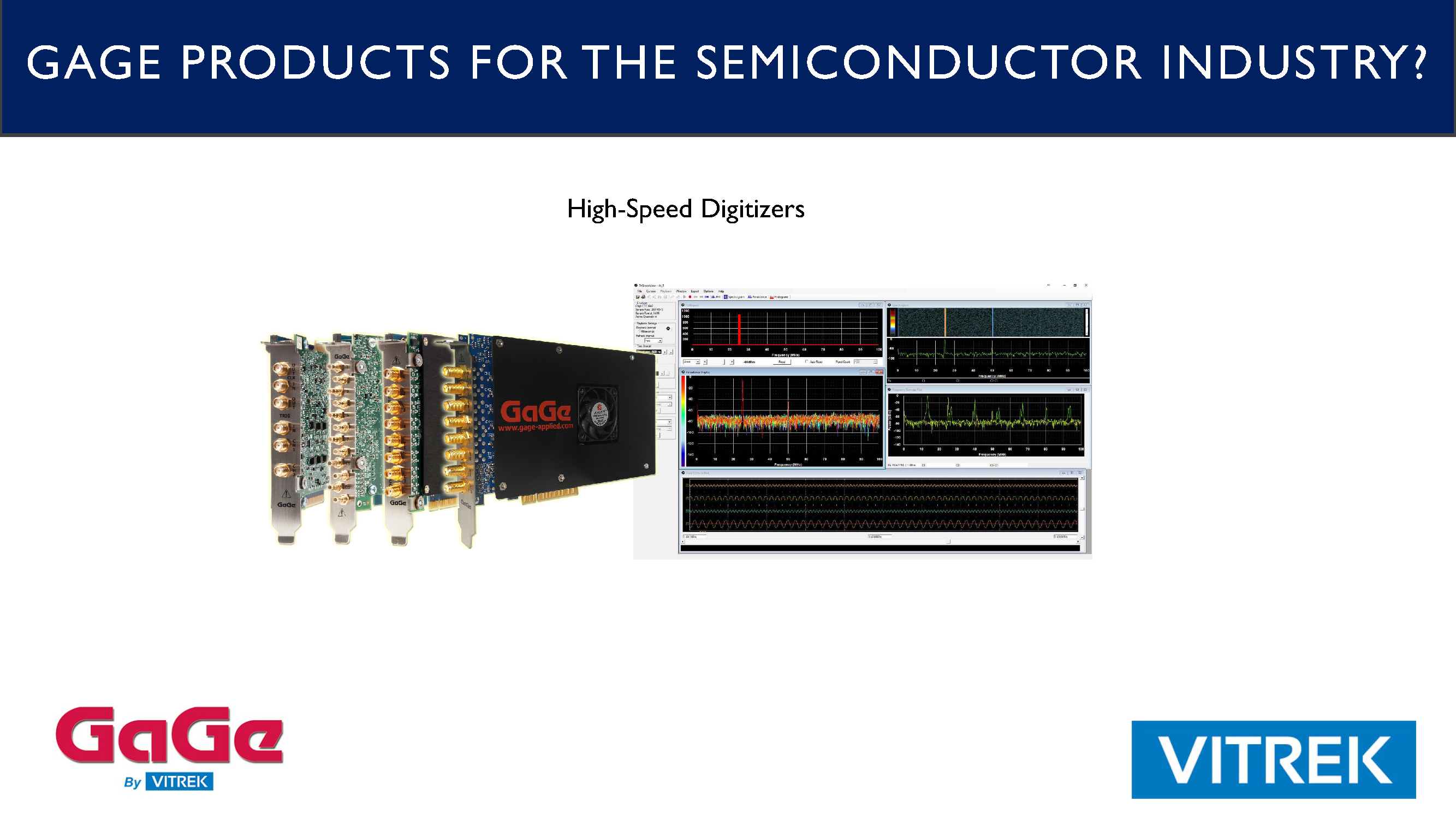
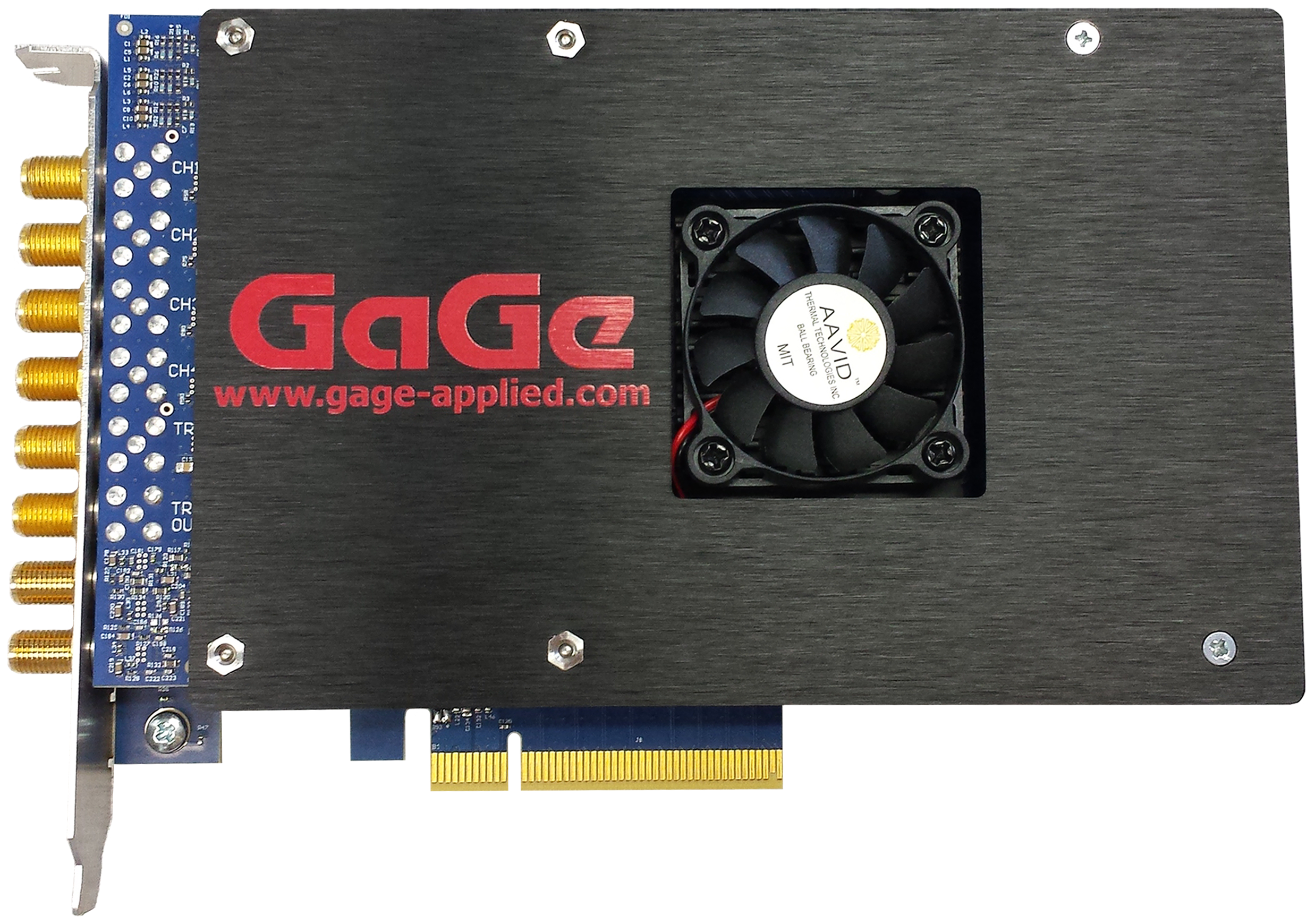
For laboratory research and OEM instruments, GaGe PCIe digitizers provide continuous DMA-based PCIe streaming. Rather than limiting acquisition time to onboard memory, data can be transferred directly into host memory or high-speed storage for virtually uninterrupted recording.
Together, these capabilities enable measurements that would be difficult or impossible using a conven-tional stand-alone oscilloscope — despite its similar general functionality.
Real-World Example: Inspecting Parts with High-Speed Optical Scanning
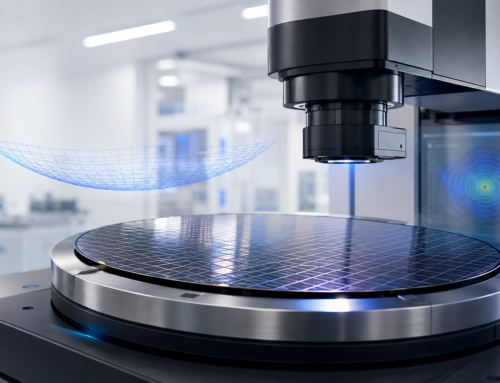
Imagine a manufacturer inspecting thousands of precision-machined parts as they move down a production line. A laser shines on each part while a fast-moving mirror scans across its surface. As the beam passes over scratches, edges, or tiny defects, the amount of reflected light changes almost instantly.
A photodetector converts these changing light levels into electrical signals. These signals contain all the information needed to determine whether the part passes inspection—but only if they are captured accurately. If the acquisition system cannot keep up with these rapid changes, important details may be missed or distorted, making small defects difficult to detect.
By replacing a conventional data acquisition system with a high-speed PCIe digitizer, the engineering team was able to capture every change in the detector signal with greater accuracy. The digitizer continuously streamed data to the host computer for analysis, eliminating missed events and allowing every part to be inspected without slowing production. The result was more reliable defect detection, improved measurement repeatability, and faster inspection times.
While this example focuses on optical inspection, the same measurement principles apply to applications such as LiDAR, Optical Coherence Tomography (OCT), laser ultrasonics, and high-speed optical communi-cations, where preserving fast-changing optical signals is critical to system performance.
Applications that Benefit from High-Speed Digitizers
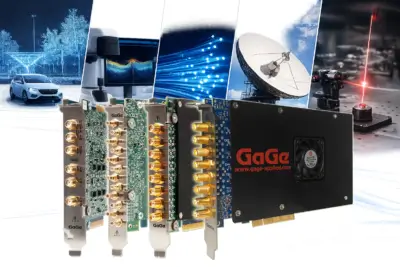
High-speed digitizers are commonly used wherever optical detectors produce rapidly changing electrical signals requiring precise waveform capture. Typical applications include:
• LiDAR and autonomous navigation
• Distributed Fiber Optic Sensing (DFOS)
• Optical Coherence Tomography (OCT)
• Laser ultrasonics
• Optical microscopy
• Cavity ring-down spectroscopy
• High-speed optical communications
• Comb spectroscopy
• High-speed microscopy and imaging research
Each application places different demands on bandwidth, memory, synchronization, and data throughput, but all depend on accurate waveform acquisition.
Why PCIe Digitizers Excel
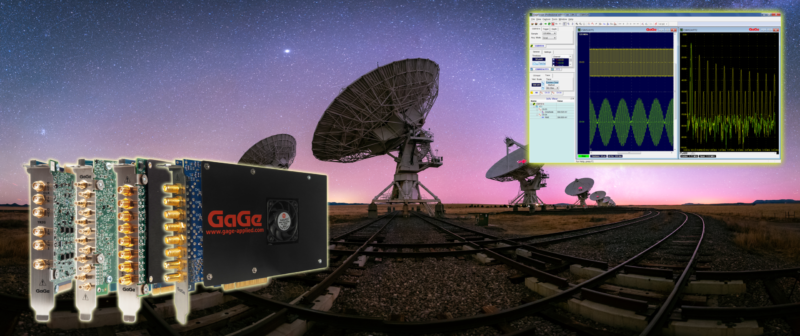
Unlike traditional standalone oscilloscopes, GaGe PCIe digitizers are designed to become an integrated part of automated optical measurement systems through C/C++, Python, and MATLAB SDKs. Installed directly within the host computer, they provide exceptionally high data throughput while supporting automated software environments commonly used in research laboratories and production equipment.
High-performance PCIe architectures also simplify multi-channel expansion by presenting several simultaneous channels across multiple GaGe digitizer boards. This capability is particularly valuable in interferometry, beamforming, and multi-detector optical systems where phase alignment directly influences measurement quality.
Because data is transferred directly across the PCIe bus, large acquisitions can be processed immediately using custom software, GPUs, or AI-based analysis algorithms without the delays associated with manually transferring waveform files from external instruments.
Selecting the Right Digitizer
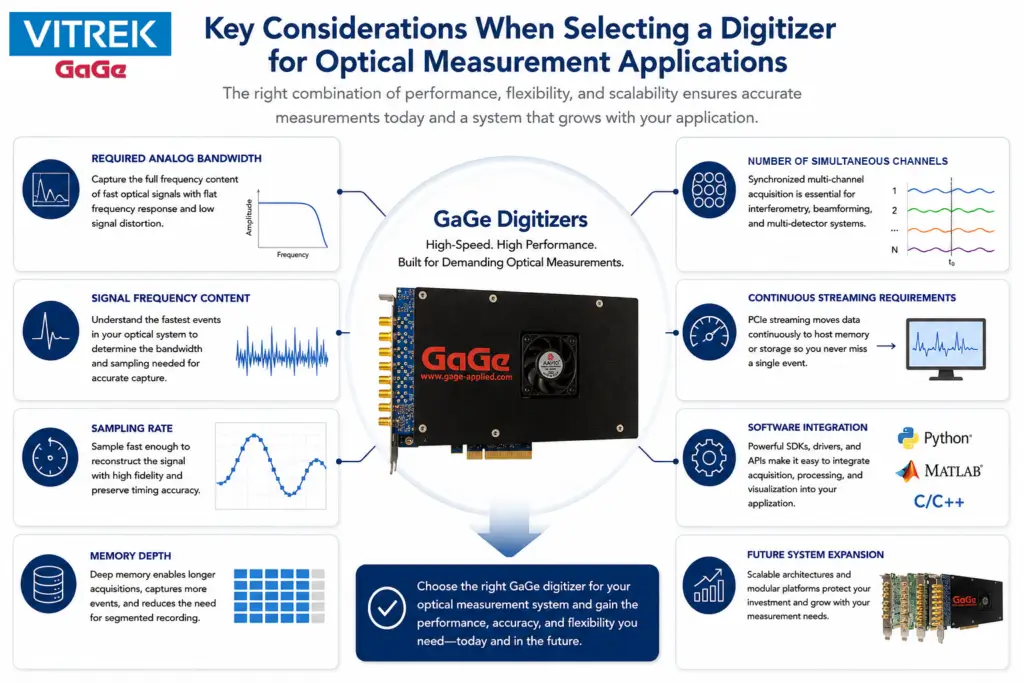
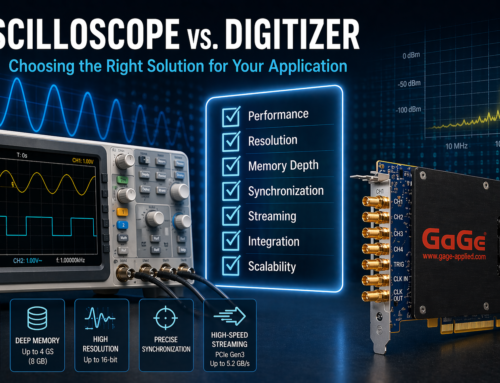
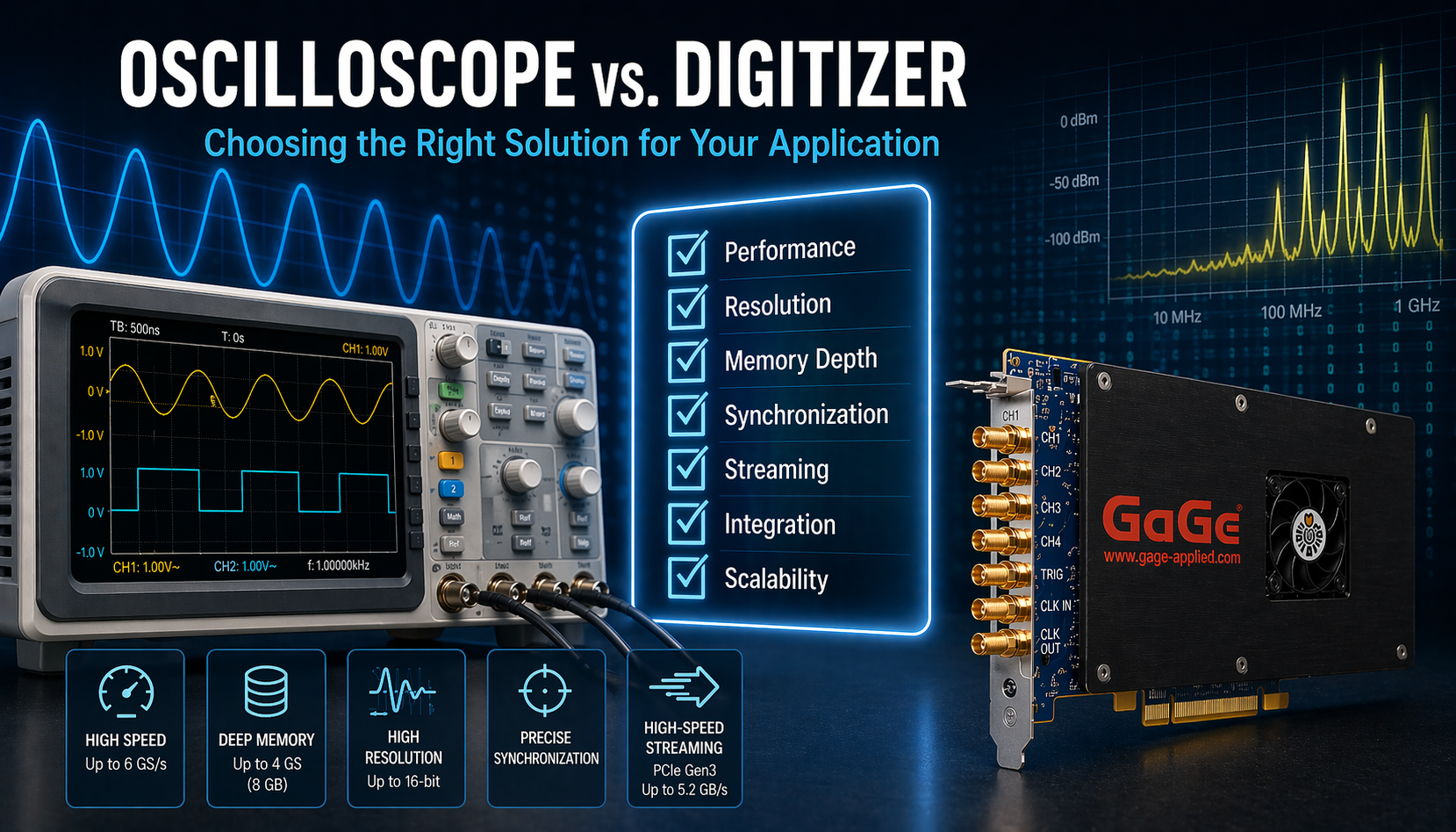
Selecting the right digitizer requires balancing multiple performance parameters rather than optimizing a single specification. Bandwidth, sample rate, memory depth, synchronization, software integration, and scalability all contribute to measurement accuracy. Figure 2 summarizes the most important considerations
when evaluating a data acquisition platform for demanding photonics applications.
Why Engineers Choose GaGe Digitizers
Modern GaGe PCIe digitizers combine high analog bandwidth, multi-giga sample acquisition, deep onboard memory, deterministic triggering, continuous DMA streaming, and flexible software development tools within a single measurement platform. These capabilities allow engineers to build scalable optical
test systems capable of supporting both laboratory research and automated production environments.
Conclusion
As optical measurement systems continue advancing, data acquisition has become a critical component of overall system performance. Whether measuring nanosecond laser pulses, synchronizing multiple detectors, or continuously streaming high-speed waveform data, the acquisition platform must preserve
signal integrity without limiting system throughput.
PCIe digitizers provide the combination of bandwidth, memory, synchronization, and software integration required by today’s most demanding photonics applications. By selecting an acquisition architecture that matches both current and future measurement requirements, engineers can improve accuracy, simplify
automation, and build scalable optical test systems ready for the next generation of research and product development.