
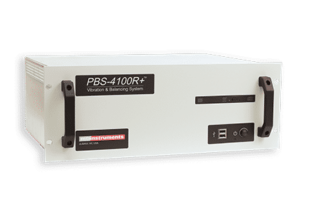
PBS-4100R+ Test Cell Vibration and Balancing System
PBS-4100R+ PBS-4100R+ Test Cell Vibration & Balancing System The industry-standard turbine vibration analysis and balancing tool engineered specifically for test cell and MRO environments. Deliver comprehensive vibration assessment and precise rapid balancing with seamless integration into your facility's data acquisition and control systems. Request Quote Download Data Sheet April ‘25 Press Release POWERFUL. PRECISE. INTUITIVE. Advanced Digital Engine Vibration Analysis for Test Cells The PBS-4100R+ is the premier rack-mounted vibration analysis and engine trim balance system designed for [...]

Aircraft Engine Test Cell is World’s Largest
The world’s largest aircraft engine test cell is in Atlanta, Georgia (USA), home of the upcoming MRO Americas 2019 show for the commercial air-transport maintenance, repair and overhaul (MRO) industry. Delta TechOps, a division of Delta Airlines and a full-service MRO, recently opened a $100 million test cell at its Atlanta facility that’s capable of running a jet engine at 150,000 lb. thrust. That’s more thrust than the GE Aviation GE90 engine, which powers Delta’s Boeing 777-200 LR fleet, can produce.“This test cell is a vote of confidence in Delta TechOps,” said Ed Bastian, Delta Airlines CEO, in an article [...]
 Proforma 300i SA Video Shows Semiconductor Metrology Gallery
Proforma 300i SA Video Shows Semiconductor Metrology
Brand-MTI, Industry-Compliance Testing, Industry-Consumer Products, Industry-Electronics, Industry-Manufacturing, Industry-R&D, Industry-Semiconductor, Industry-Semiconductor-MTI, New & Press Releases, News-MTI-Metrology, News-Product Updates, Press Releases-Vitrek, Products-MTI-Semiconductor/Metrology, Videos-MTI, Videos-MTI-Manual Semiconductor Metrology System, Z-REPUB, z1
Proforma 300i SA Video Shows Semiconductor Metrology
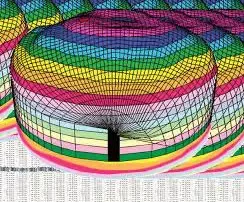
MTI Instruments, a worldwide leader in precision measurement solutions, has released a YouTube video that shows how its Proforma™ 300i SA semi-automated measurement tool measures silicon carbide wafers for semiconductors. George Relan, MTI’s Global Director of Sales, demonstrates how the desktop metrology system provides non-contact full wafer scanning and 3D mapping of measurement features such as thickness and shape. MTI’s video also shows how the Proforma 300i SA interfaces with an external computer and provides powerful Windows-based software for analysis and reporting. By utilizing MTI push/pull technology, the Proforma 300i SA doesn’t require the semiconductor wafers to have a [...]
 Navy Orders Avionics Test and Measurement Systems Gallery
Navy Orders Avionics Test and Measurement Systems
Applications, Brand-MTI, Industry-Aerospace, Industry-Government/Military, Industry-Manufacturing, Industry: Transportation, New & Press Releases, News-MTI-PBS, Press Releases-Vitrek, Products-MTI, Products-MTI-Capacitance, Products-MTI-Engine Balancing, Z-REPUB, z1
Navy Orders Avionics Test and Measurement Systems
The U.S. Navy wants new avionics test and measurement systems. Under the terms of a $109-million award, the Naval Air Warfare Center Aircraft Division in Lakehurst, New Jersey will buy 41 electronic consolidated automated support systems (eCASS) from Lockheed Martin. This test and measurement equipment helps soldiers and Marines troubleshoot and repair aviation electronics while at sea. Avionics, the electronics used in aircraft, support essential navigation and communications functions. With military aircraft, avionics typically include electro-optical, infrared, and other types of sensors for airborne radar, weapons systems, and heads-up displays. Military avionics also need to support electronic warfare systems, [...]

Engine Vibration and Balancing Principles
What do you think when you’re flying home, cruising at 30,000 feet and the drinks have just been served? Our engineers think about the ripple in the glass. That ripple signals vibration and is an indication that the engine may be in need of a balance. The MTII’s PBS-4100+ Series Turbine Vibration Analyzer/Balancing System was developed to ensure that Turbine engines run as efficiently as possible. Excessive vibration is detrimental for a host of reasons: energy intended for useful output is instead expended on the vibration vibration manifests as acoustic energy (noise), again wasting otherwise useful energy excessive [...]
 3D Integrated Circuits Use Capacitive Sensing to Ensure Coplanarity Gallery
3D Integrated Circuits Use Capacitive Sensing to Ensure Coplanarity
Application Notes-MTI, Brand-MTI, Industry-Consumer Products, Industry-Electronics, Industry-Manufacturing, Industry-Semiconductor, Industry-Semiconductor-MTI, Industry-Sensors, Z-REPUB, z1
3D Integrated Circuits Use Capacitive Sensing to Ensure Coplanarity
Three-dimensional (3D) integrated circuits (ICs) feature silicon wafers and dies that are stacked vertically for improved device performance. By using the Z-axis, 3D ICs can overcome the power and footprint limitations associated with two-dimensional (2D) integrated circuits. Yet 3D ICs need coplanar surfaces to contact all of the pads, pins, and pillars. To determine coplanarity, semiconductor manufacturers measure the angle and gap between two planes. Bonding tool actuators use these measurements to adjust components and ensure that all device pins and solder balls reside on the same geometric plane. This process, active parallelism compensation, promotes proper bonding without residual [...]
Laser Thickness Gauge System Principles
Overview of the Microtrak™ 3 TGS Laser Thickness Measurement System The Microtrak™ 3 TGS is a high-precision laser thickness measuring device engineered for non-contact applications that demand reliable and repeatable results. Utilizing dual laser thickness sensors, this system offers accurate laser thickness measurement across a variety of surfaces and materials. Whether deployed as a standalone laser thickness gauge or integrated into a larger system using PLCs or PCs, the Microtrak™ 3 TGS provides versatile, industrial-grade measurement performance. It's ideal for environments requiring laser panel thickness measurement, laser thickness scanning, or laser gauging of rolled goods, sheets, and extrusions. [...]
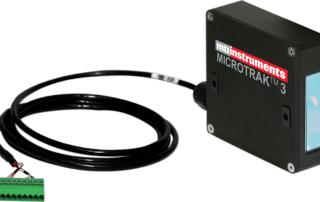
MICROTRAK 3: 1D Laser Displacement Sensor
MICROTRAK 3: 1D Laser Displacement Sensor An essential measurement tool for process automation, quality control and tool automation control. Request Quote Download Brochure Compact laser triangulation sensor head for easy integration to machine control system High resolution, high speed laser displacement sensor (non-contact linear displacement sensor) utilizes the latest CMOS sensor technology that challenges even the most difficult measurement applications. The Microtrak™ 3 is an essential measurement tool for process automation, quality control and tool automation control, for applications such as, thickness measurement, dimensional displacement, part profiling, vibrations testing, build-up [...]





About Wafer Bow And Warp Measurement Systems
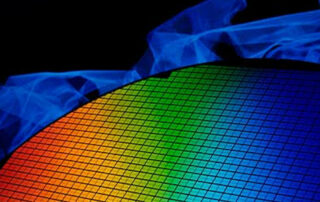
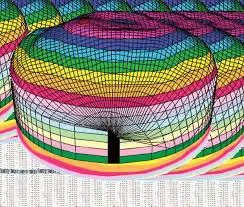
About Wafer Bow And Warp Measurement Systems Semiconductor/Solar Wafer Bow And Warp Metrology/Surface Thickness Measurement for Metrology Systems ASTM F657: The distance through a wafer between corresponding points on the front and back surface. Thickness is expressed in microns or mils (thousandths of an inch). Total Thickness Variation (TTV) ASTM F657: The difference between the maximum and minimum values of thickness encountered during a scan pattern or series of point measurements. TTV is expressed in microns or mils (thousandths of an inch). Figure above shows a wafer placed between two non-contact [...]
Fiber Optic Sensor Principles
The Fotonic Sensor™ is a non-contact instrument, which uses the fiber optics lever principle to perform displacement measurement, vibration analysis and surface-condition measurements. The Fotonic Sensor transmits a beam of light through a flexible fiber-optic probe, receives light reflected from a target surface, and converts this light into an electrical signal proportional to the distance between the probe tip and the target being measured. A simplified example of the fiber optic principal is shown in Figure 2. The output signal voltage from the fiber optic sensor is then used to determine position, displacement, vibration amplitude, frequency and waveshape of a [...]