

Safety Recommendations for Setting Up a Hipot Testing Workstation
Hipot testing is necessary for ensuring the electrical safety compliance of electronic equipment. However, testing the voltage on commercial equipment can result in errors and even death if the operators have not been properly trained on the importance of establishing a safe testing environment. Before any tests are performed, operators should be thoroughly trained on the effects of electrical currents on the human body, the importance of safety interlocks, and how to program the necessary tests and store them in memory. If operators lack the appropriate training, setting up a safe hipot testing workstation would be for naught. After prioritizing [...]

Whitepaper: How to Work Safely with High-Voltage Test & Measurement Equipment
How to Work Safely with High-Voltage Test & Measurement Equipment Vitrek’s advanced 4700 High Voltage Meter and SmartProbes offer alternative to legacy approach to calibrating high-voltage systems. INTRODUCTION When working with high-voltage test and measurement equipment, electrical and test engineers strive to achieve the most precise readings possible while also maintaining a safe work area. Typically, they employ external probes such as high-voltage dividers, but these instruments come with drawbacks and are prone to errors. This whitepaper describes an alternative approach to calibrating high-voltage systems. The advanced solution comprises Vitrek’s 4700 High Voltage Meter for direct measurements [...]
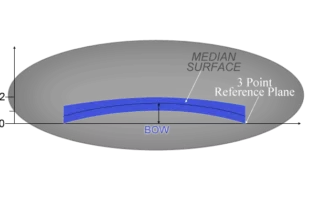
WAFER MEASUREMENT – UNGROUNDED
Industry Semiconductor Applications Wafer Measurement – Ungrounded Measurement Type Metrology Description MTI Instruments Inc. has developed a thickness measurement device that eliminates the effect of varying target conductivity. Called the Push-Pull probe, it’s a unique version of the AccumeasureTM amplifier series. This special design provides accurate surface information for wafer bow and warp. Bow is the deviation of the center point of the median surface of a free, un-clamped wafer from the median surface to the reference plane. Where, the reference plane is defined by three corners of equilateral triangle. This [...]
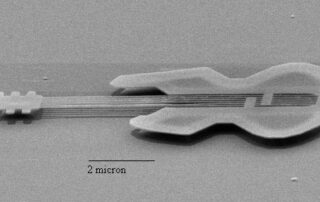
PHOTOLITHOGRAPHY USING CAPACITANCE SENSORS
Industry Semiconductor Applications Lithography Optics Position Focus Measurement Type Positioning Description When it comes to photolithography, how accurate are our sensors? Photo by D. Carr and H. Craighead, Cornell - The world’s smallest guitar is 10 micrometers long — about the size of a single cell — with six strings each about 50 nanometers, or 100 atoms, wide. Made by Cornell University researchers from crystalline silicon, it demonstrates a new technology for a new generation of electromechanical devices. Even the world’s smallest guitar’s 2 micron [...]

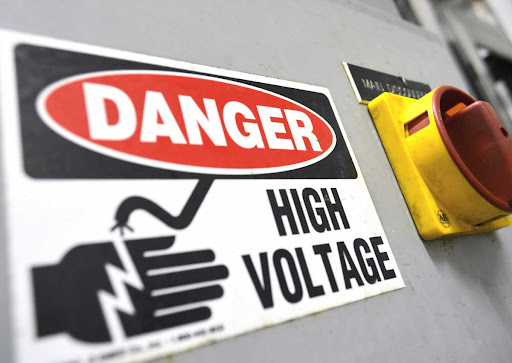



Ensuring Your LED Lighting Products Remain Compliant
LED lighting products and fixtures have helped countless facilities improve their energy efficiency. The lighting and energy industry has done much to improve the overall quality of these products but ensuring that each new iteration meets these new safety and energy standards can prove challenging for engineers and technicians alike. […]
 Case-In-Point: High-Accuracy Capacitive Thickness Measurement Optimizes Li-Ion EV Battery Plate Qualities Gallery
Case-In-Point: High-Accuracy Capacitive Thickness Measurement Optimizes Li-Ion EV Battery Plate Qualities
Application Notes-MTI, Brand-MTI, Industry-Automotive, Industry-Battery, Industry-Compliance Testing, Industry-Consumer Products, Industry-Electronics, Industry-Manufacturing, Products-MTI-Capacitance, Z-REPUB, z1

Case-In-Point: High-Accuracy Capacitive Thickness Measurement Optimizes Li-Ion EV Battery Plate Qualities
High-Accuracy Capacitive Thickness Measurement Optimizes Li-Ion EV Battery Plate Qualities EV Battery manufacturers need to measure EV battery plate thickness with a high degree of precision (repeatable <2um accuracy and resolution) to optimize manufacturing efficiencies while maintaining uniform cell capacity and minimizing waste. The MTI Accumeasure System provides an effective means of monitoring plate thickness achieving sub 2um accuracy with high repeatability Introduction The rapidly expanding demand for electric vehicles is driving advances in the production of rechargeable cells that comprise the first stage in the composition of EV battery packs. Individual Li-Ion cells are combined to form [...]
 MTI App Note: Step Height Measurement (Thickness) of Copper Foil or EV Battery Film on a Roller Rig Gallery
MTI App Note: Step Height Measurement (Thickness) of Copper Foil or EV Battery Film on a Roller Rig
Application Notes-MTI, Brand-MTI, Industry-Consumer Products, Industry-Manufacturing, Products-MTI-Capacitance, z1

MTI App Note: Step Height Measurement (Thickness) of Copper Foil or EV Battery Film on a Roller Rig
Step Height Measurement (Thickness) of Copper Foil or EV Battery Film on a Roller Rig Leverage MTI Instruments' digital Accumeasure system to measure the thickness of the material used as anode and cathode plates in rechargeable Li-Ion battery cells Introduction Figure 1. Simplified structure of a Li-Ion battery cell This white paper describes, in detail, how Non-Contact Measurement systems can be used to measure the thickness of the material used as anode and cathode plates in a rechargeable Li-Ion battery Cell. Figure 1 describes the elements comprising a Li-Ion battery cell. The cathode is comprised of [...]
 MTI Application Note: How to Achieve Gallery
MTI Application Note: How to Achieve <1um Accuracy When Measuring Roller Gap
Application Notes-MTI, Brand-MTI, Industry-Compliance Testing, Industry-Consumer Products, Industry-Manufacturing, Industry-Sensors, News-MTI-Metrology, Products-MTI-Capacitance, z1

MTI Application Note: How to Achieve <1um Accuracy When Measuring Roller Gap
How to Achieve <1um Accuracy When Measuring Roller Gap Roller Gap Measurement with MTI Digital Accumeasure Capacitive Probes Many roll-to-roll finishing processes typically use a calender, or series of hard pressure rollers, to deliver smooth, high-quality products of plastic, textile, or paper (Fig 1). Ensuring a consistent material thickness, however, depends on the ability to monitor, and maintain, a precise gap between rollers. This application note describes a quick and easy means for roller gap measurement. Problem How to measure the small gap between rollers to keep track of product thickness. Typically, it’s not possible to [...]
THICKNESS INFORMATION OF COMPOSITE MATERIALS
Composite materials consist of two or more materials which include a substrate or base material such as paper, cotton cloth, or glass cloth along with a resin or adhesive such as epoxy, melamine, or silicone. To make a thermoset laminate, the base material is coated with the adhesive so that layers of material can be pressed under heat and pressure into sheet form. The Problem: Composite material thickness needed to be verified prior to forming or machining. Due to the size of the sheets typical measurement techniques were not suitable. A consistent method to accurately measure the board thickness [...]