A product that passes in one lab and fails in another usually does not have a product problem first. It has a measurement problem. If your team is working out how to reduce test uncertainty, the fastest gains rarely come from a single instrument upgrade alone. They come from tightening the entire measurement chain – method, fixture, environment, operator practice, calibration, and data treatment.
In regulated and performance-critical environments, uncertainty is not an academic footnote. It affects guardbanding, yield, compliance decisions, root-cause analysis, and customer confidence. The practical objective is not to chase zero uncertainty, which is unattainable. It is to reduce uncertainty to a level that supports valid decisions with known risk.
What test uncertainty actually includes
Test uncertainty is the quantified doubt associated with a measurement result. In production and validation settings, that doubt can come from several sources acting together. Instrument accuracy matters, but so do resolution, drift, noise, lead effects, environmental variation, fixture repeatability, timing, software scaling, and operator influence.
A common mistake is to treat the instrument datasheet as the whole uncertainty budget. It is only one term. If the DUT is sensitive to temperature, if your switching path adds leakage, or if your timing window is inconsistent, the actual uncertainty seen by the test system can be materially higher than the published instrument specification.
That distinction matters most when tolerance bands are tight. A measurement system may be suitable for troubleshooting but not for compliance testing. It may also be acceptable for incoming inspection and still be inadequate for final release. The right question is always application-specific: uncertainty relative to what limit, under what conditions, and for what decision.
How to reduce test uncertainty at the system level
The most reliable way to reduce uncertainty is to stop optimizing one component in isolation. A high-performance analyzer connected through unstable fixturing or poor cabling will still produce suspect data. A well-written procedure run on drifting equipment will do the same.
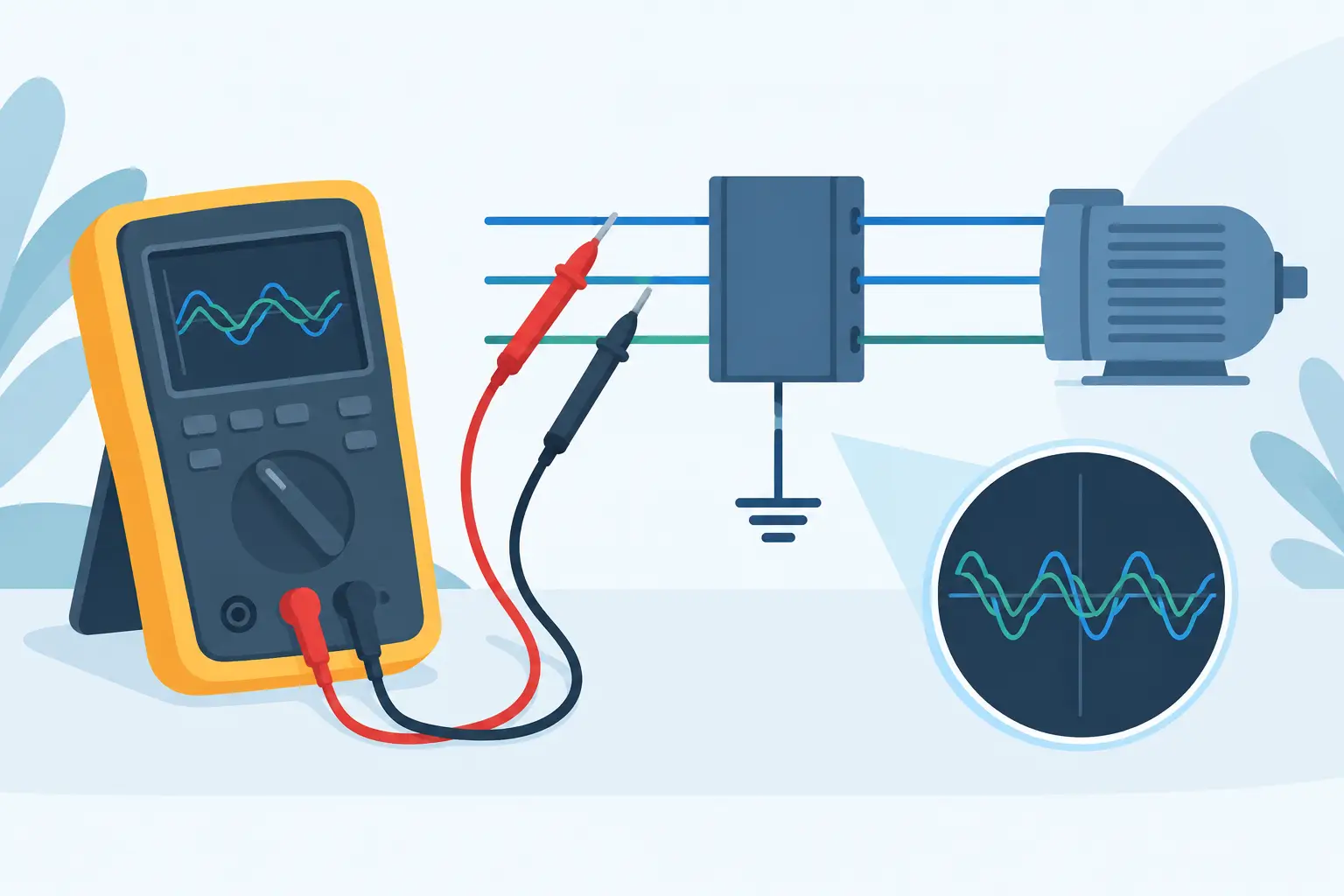
Start by mapping the full measurement path from DUT output to final reported result. Include sensors, probes, switching, signal conditioning, digitization, software calculations, and report formatting. Then identify where error is introduced, amplified, or hidden.
In many systems, the largest contributors are not where teams initially expect them to be. Contact resistance, grounding errors, leakage current paths, bandwidth limitations, digitizer sampling assumptions, and thermal settling often create more variation than nominal instrument accuracy. Until those sources are visible, improvement efforts tend to be expensive and incremental.
Choose instrumentation that matches the decision you need to make
Instrument selection should begin with required uncertainty at the test point, not with a broad preference for higher specification equipment. There is a trade-off here. Overbuying performance can increase capital cost without improving the decision if fixturing or environmental control remains the dominant error source.
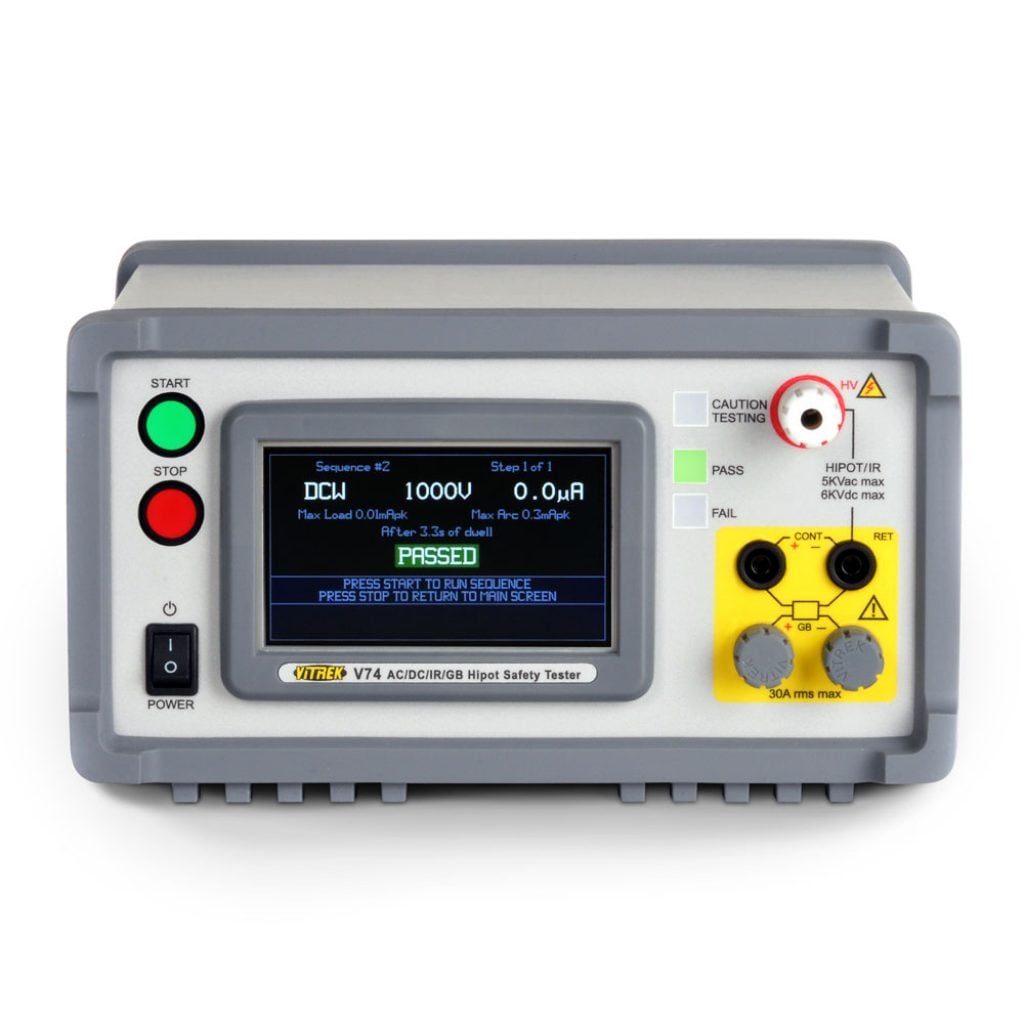
That said, under-specifying the instrument creates problems that no amount of procedural discipline can fix. If the ratio between instrument uncertainty and product tolerance is too high, guardbands become restrictive and false failures rise. For high-voltage, low-current, power analysis, insulation resistance, or precision displacement work, application-fit matters as much as headline specification.
Look closely at operating range, warm-up behavior, drift, input impedance, noise floor, bandwidth, sample rate, and switching characteristics. Also review how specifications are stated. Some are time-limited after calibration, some are temperature-dependent, and some only apply under narrow conditions. Engineers should build uncertainty assumptions from the exact use case, not from best-case catalog numbers.
Control fixturing, cabling, and switching
Test fixtures are often treated as accessories when they should be treated as metrology components. Mechanical instability, worn contacts, poor shielding, parasitic capacitance, and leakage paths can shift readings enough to distort pass/fail outcomes.
If you are evaluating how to reduce test uncertainty in automated systems, inspect the path between instrument and DUT with the same discipline used for the DUT itself. Use appropriate cable quality and length, maintain connector integrity, minimize unnecessary adapters, and verify that switching hardware does not compromise the signal being measured. In high-voltage or low-level current applications, insulation quality, guarding, and layout become especially important.
Repeatability testing of the fixture itself can reveal whether variation is coming from the product or from the interface to the product. When results move after reseating the DUT, the fixture is part of the uncertainty budget whether it appears on the report or not.
Calibration helps, but only if it matches use conditions
Calibration is necessary, but it is not a blanket guarantee of low uncertainty. A recently calibrated instrument can still be unsuitable for a given test if the calibration scope does not align with the operating range, environmental conditions, or required measurement function.
What matters is traceable calibration combined with verification at the points that matter most to your process. If your critical measurements happen near the low end of a range, verify there. If your safety test depends on high-voltage switching integrity, verify the switched path, not just the source instrument in isolation.
Interval setting also deserves attention. Annual calibration may be appropriate for one instrument class and too long for another depending on usage, transport, thermal stress, and risk tolerance. Shortening the interval has a cost, but so does using an instrument whose drift is unknown between service events.
For teams operating under formal quality systems, uncertainty statements from calibration providers should feed directly into internal test uncertainty budgets. That creates a more defensible basis for audit readiness and limit decisions.
Standardize the method before chasing more decimal places
Many uncertainty problems are procedural. Different operators use different settle times. Different stations apply different lead dress. Firmware versions change scaling. Software rounds values differently than the instrument display. Each variation may appear minor on its own, but together they create avoidable spread.
A strong test method defines setup, warm-up, environmental conditions, range selection, timing, fixture orientation, operator actions, calculation method, and acceptance logic. It should also state what to do when readings are unstable or when the DUT behavior is borderline. Ambiguity increases uncertainty because it turns repeatability into a matter of judgment.
Where possible, automate the sequence. Automation does not eliminate uncertainty by itself, but it reduces operator-dependent variation and improves consistency of timing and data capture. The trade-off is that automated systems need controlled software revision practices and periodic validation. A hidden script change can shift results just as easily as a hardware issue.
Manage environmental effects explicitly
Temperature, humidity, vibration, EMI, and power quality all affect test integrity. Some DUTs are highly sensitive to these variables, and some instruments are more tolerant than others. In both cases, uncontrolled conditions increase measurement spread.
The right level of control depends on the application. A production floor may not need laboratory-grade environmental isolation, but it does need defined operating limits and monitoring. If your uncertainty budget assumes 23 C and stable humidity while the line routinely operates outside that band, the budget is optimistic.
Environmental management can be straightforward: warm-up discipline, stable power, shielding, grounded layouts, separated noisy loads, and clear criteria for when to pause testing. These are not secondary details. They often determine whether a system performs like its specification or like its worst day.
Use data analysis to find hidden contributors
If measurement spread remains stubborn after instrument and method reviews, look at the data structure. Trend by station, operator, fixture, ambient condition, time since calibration, and DUT family. Bias and variance often become obvious once data is grouped in a useful way.
Gauge repeatability and reproducibility studies can help, but only if they reflect real operating conditions. A sanitized study on ideal samples may miss the instability seen with actual products. The goal is not to produce a perfect chart. It is to identify which contributors are large enough to change business decisions.
This is also where false precision should be removed. Reporting more digits than the system can support does not improve confidence. It hides the need for better uncertainty discipline.
Reduce decision risk, not just numerical uncertainty
The final purpose of uncertainty work is better decisions. In some applications, that means reducing false failures and unnecessary rework. In others, it means avoiding false passes in safety, medical, aerospace, or defense programs where the consequence is much higher.
That is why guardbanding, specification limits, and uncertainty should be reviewed together. A tighter guardband may improve protection against bad escapes but hurt yield. A looser one may increase throughput while raising risk. The right choice depends on product criticality, compliance exposure, process capability, and customer requirements.
Organizations that perform this well treat uncertainty as part of system design, not post-test cleanup. They select instruments and fixtures around the decision threshold, verify the full measurement path, maintain traceability, and continuously watch for drift in both hardware and method. That discipline is where measurement confidence comes from.
If your test results are driving release, certification, or safety decisions, reducing uncertainty is less about buying a better box and more about building a better measurement process. That is the point where test data becomes something your team can act on without hesitation.