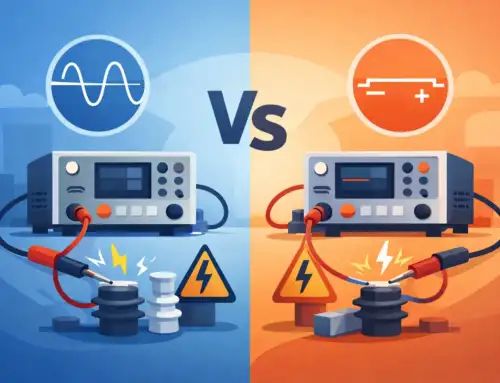
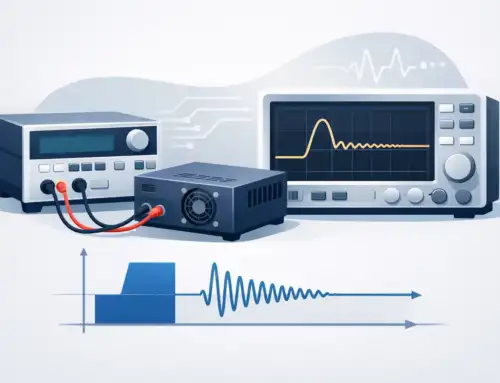
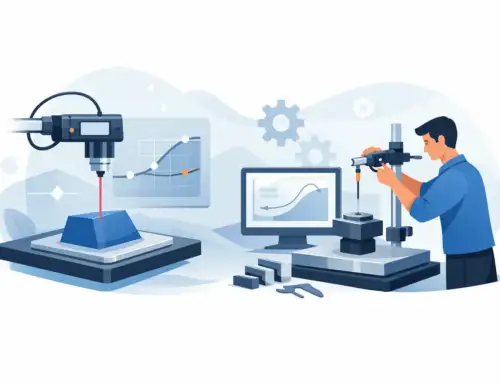
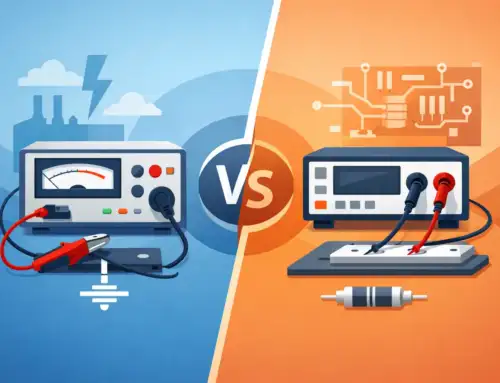
Production engineers face a critical question every day: How precise does a measurement really needs to be? Precision in manufacturing helps create a balance. Some applications require nanometer or even picometer accuracy, but many production line tasks are perfectly served with micron-level resolution. A micron displacement sensor delivers reliable, repeatable data with accuracy down to the micrometer scale. For industries focused on throughput, uptime, and cost efficiency, this level of precision is often exactly what’s required. What is the difference between nanometer and picometer sensors and micron displacement sensors? This post discusses the differences between these systems, introduces you to the benefits of micron displacement measurement and MTI Instruments’ AS-500 modular systems, which are the popular micron displacement sensors designed for applications requiring high level of precision.
What is Micron Displacement Measurement?
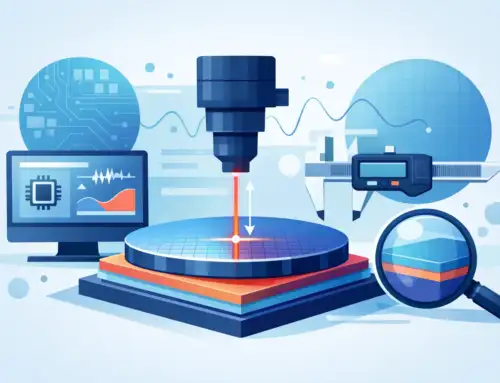
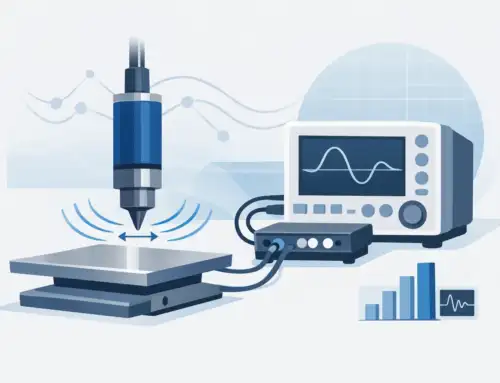
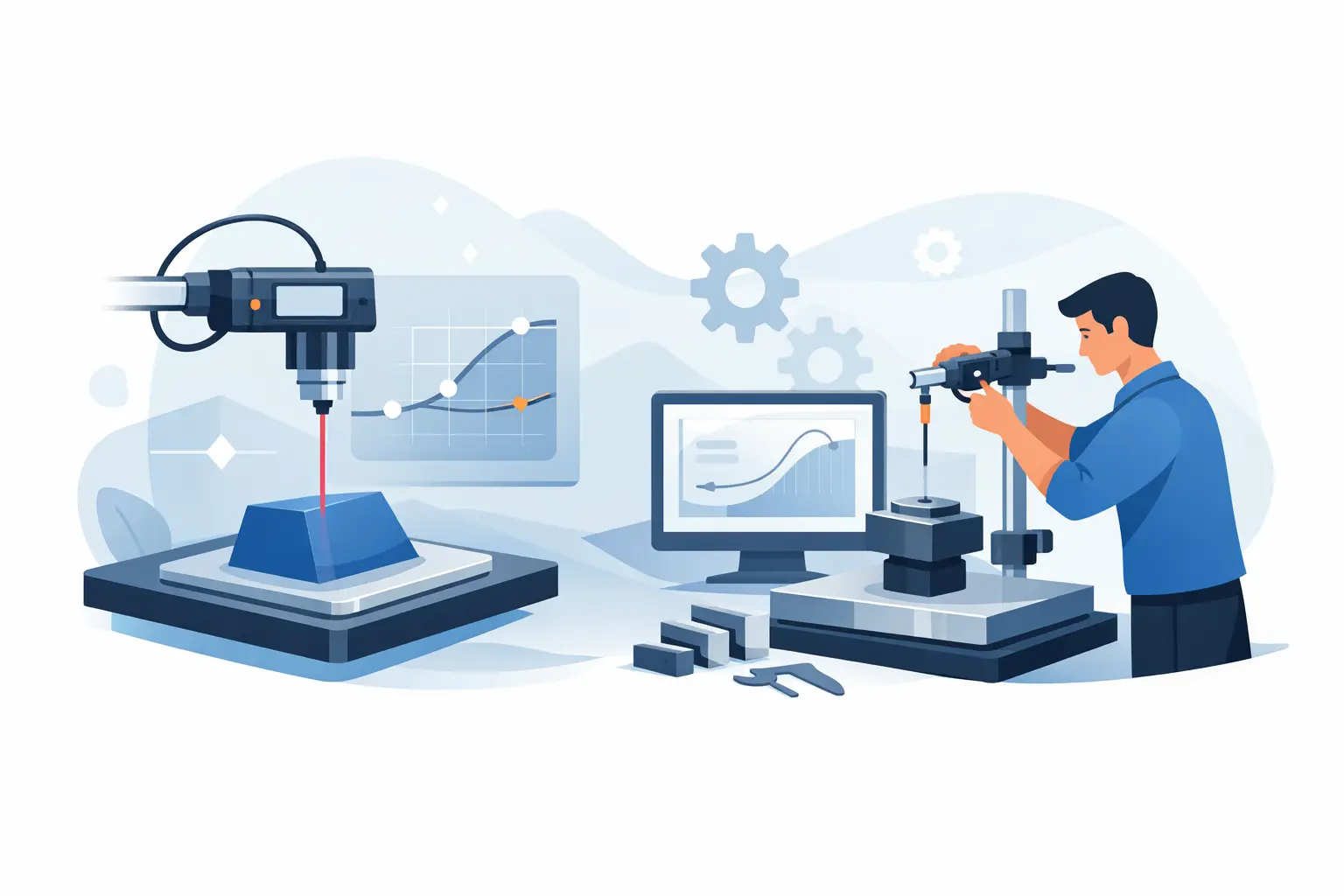
Micron displacement measurement detects movement or position changes at the micrometer level, which is one-thousandth of a millimeter. Micron displacement sensors are typically based on capacitance or laser technology. They translate minuscule physical movements into electrical signals that can be read and analyzed. Although nanometer or picometer sensors are widely used, they are more common in semiconductor research or physics labs. These systems often require high upfront costs and can be difficult to set up and maintain, making them impractical for many production environments.
In industrial environments, micron displacement captures meaningful variations in machine alignment, brake rotor/axle runout, or thermal expansion without requiring the complexity of ultra-high-resolution systems like nanometers or picometer sensors. This makes it the right fit for applications where repeatability, speed, and scalability matter most.
Overview of the Accumeasure AS-500 Modular System
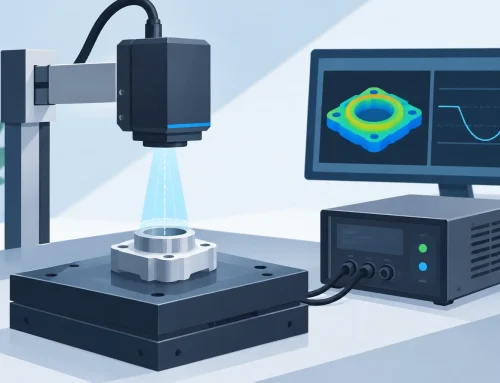
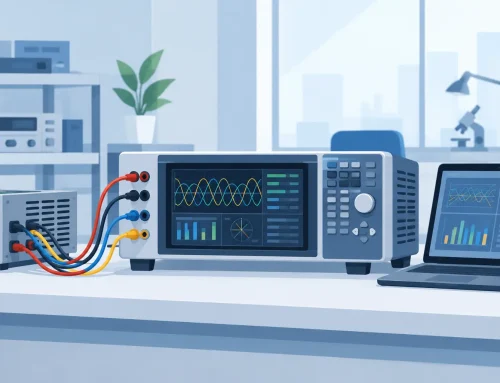
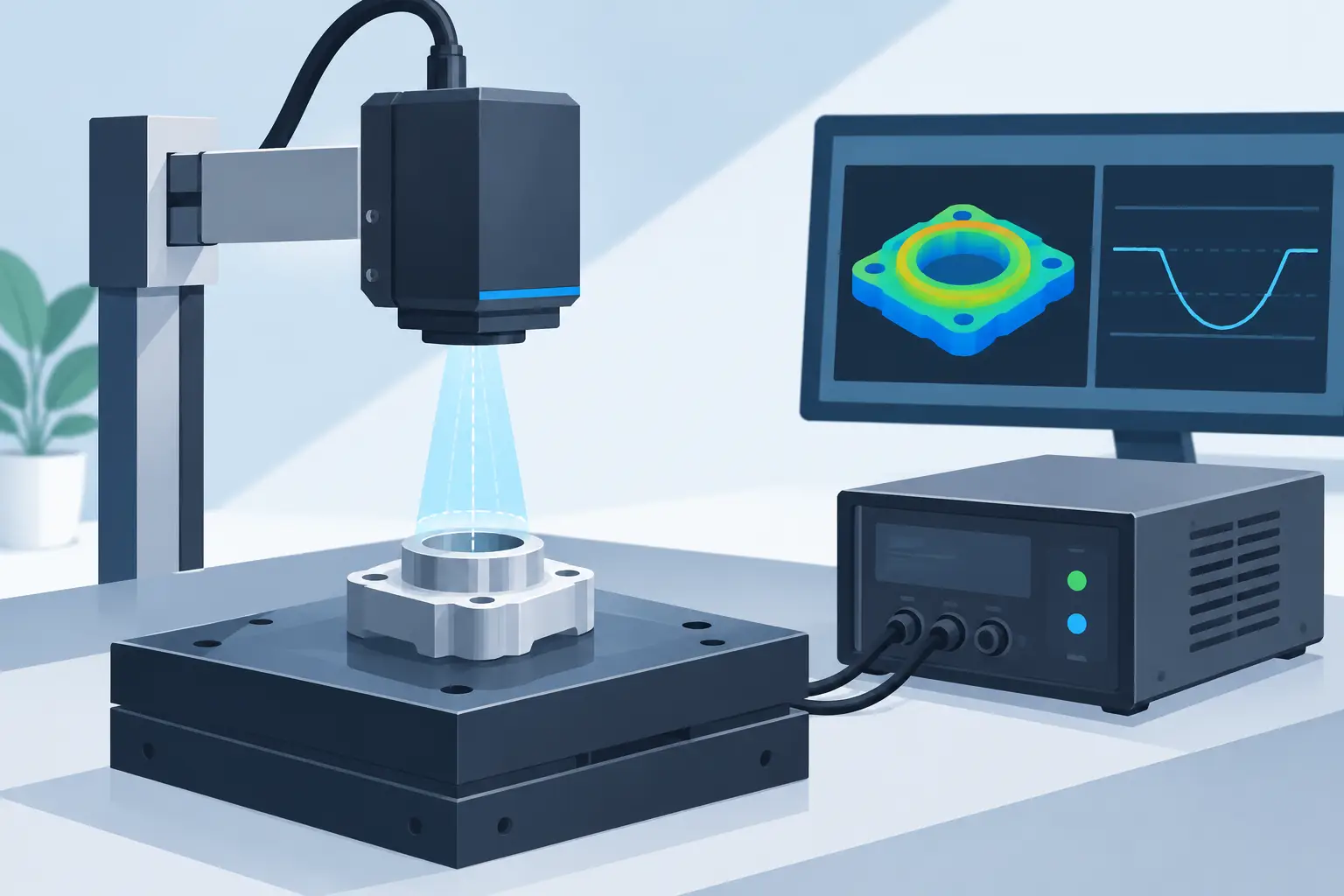
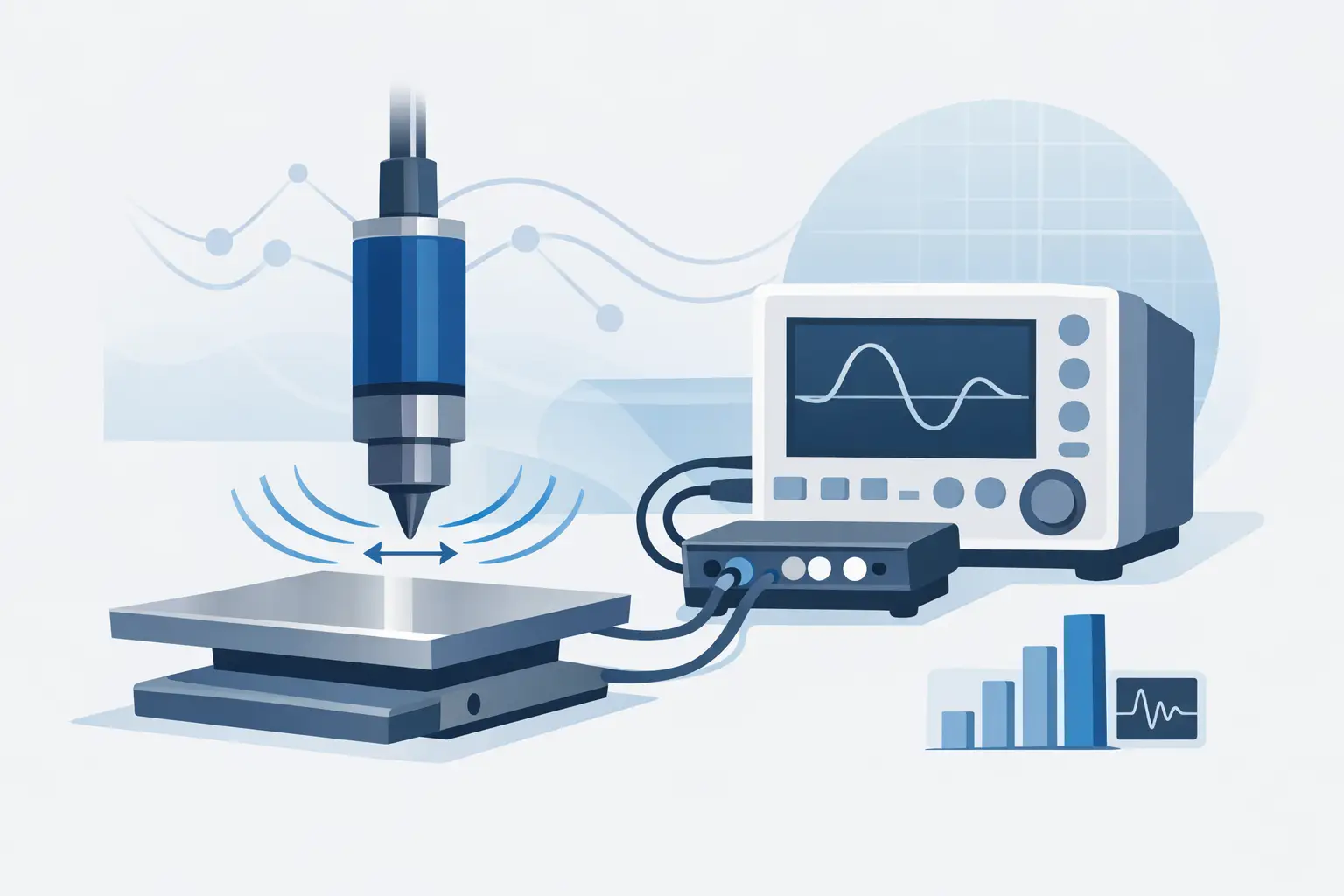
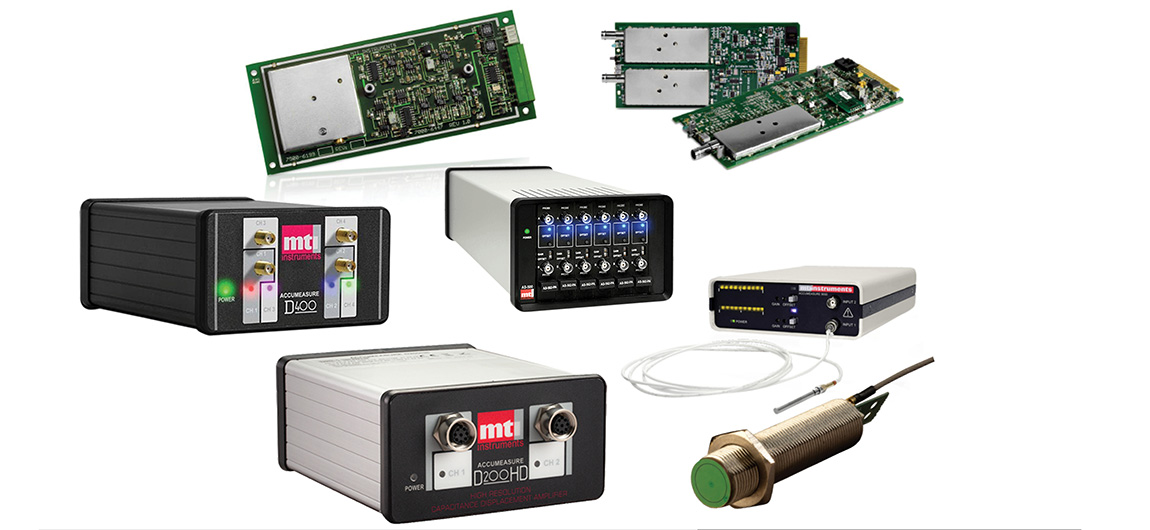
The Accumeasure AS-500 changes how you approach micron displacement measurement in production environments. It is a modular, non-contact displacement measurement system that uses a parallel plate capacitor principle to achieve high-precision, micron resolution measurements.

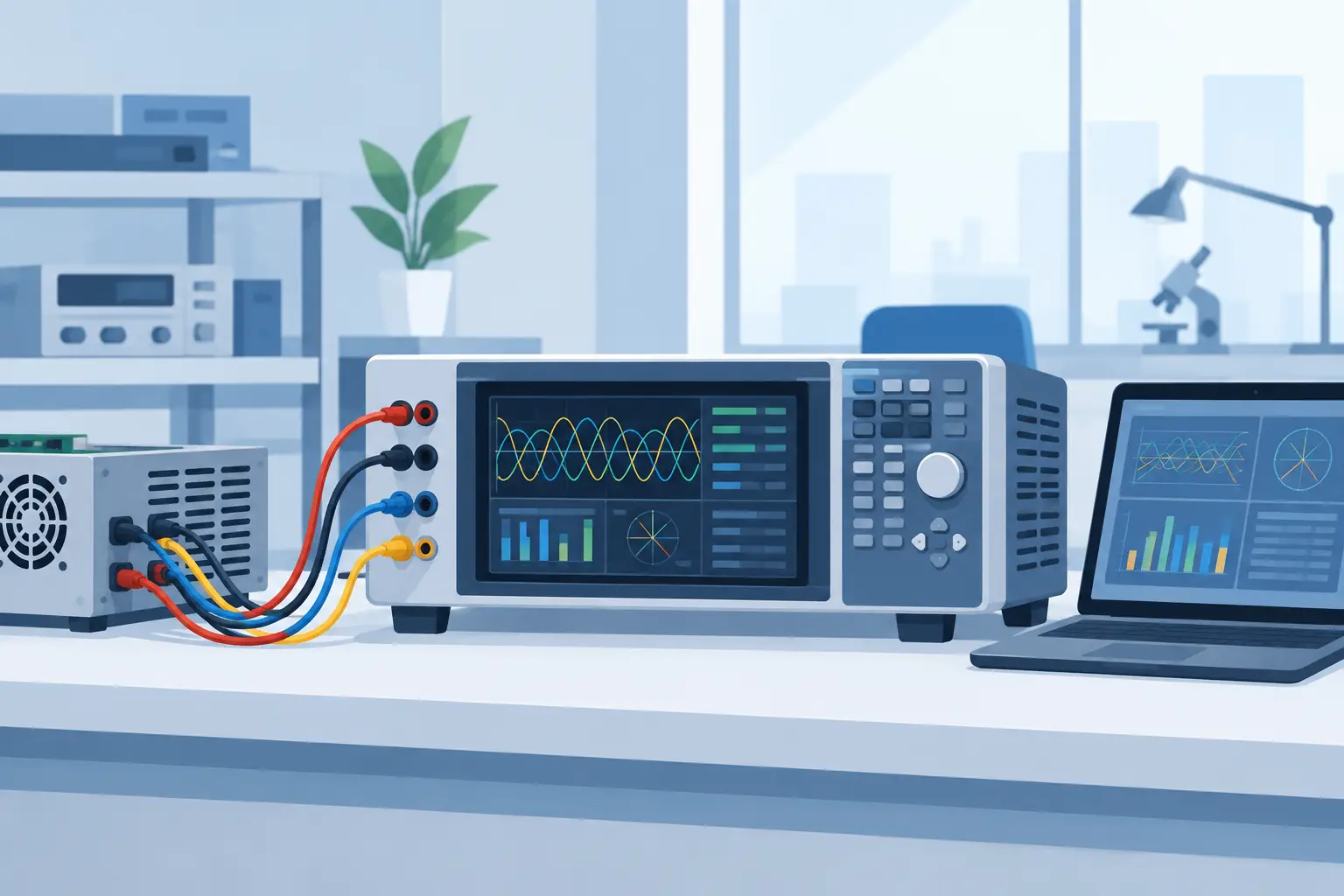
This compact, multi-channel rack system represents a comprehensive solution designed specifically for production line integration and multi-point monitoring applications. Its architecture addresses the real-world challenges of manufacturing environments while providing the flexibility to scale from single-point measurements to complex multi-channel arrays. Here are some pointers regarding how AS-500’s multi-channel architecture addresses modern production requirements.
- Multi-channel design: The simultaneous multi-point monitoring feature provides up to eight channels per module, which enables comprehensive part inspection in a single measurement cycle. It also reduces the inspection time and improves throughput. The multi-channel design enables synchronized data acquisition, wherein sampling can be done simultaneously, avoiding time variations. Also, each channel can be configured and optimized for specific measurement requirements.
- Analog outputs for easy integration: AS-500 offers analog outputs that helps avoid the complexities and failure possibilities in digital protocols. AS-500 is universally compatible. It enables seamless integration of standard 4-20mA and 0-10V outputs directly with existing PLCs, data acquisition systems, and process controllers without protocol conversion. Analog outputs facilitate immediate measurement data without communication delays, enabling real-time process control and immediate reject decisions. Also, troubleshooting and maintenance are quite simple.
- Rack-mounted scalability: AS-500 is absolutely flexible in terms of design and can quickly adapt to varying production requirements. It offers modular expansion to accommodate additional channels without having to shut the ongoing process or reconfigure the system. Its standard 19-inch rack integration: fits seamlessly into existing control panel configurations, minimizing installation complexity. AS-500 has centralized management which allows controlling multiple channels from a single interface.
Applications of AS-500 Micron Displacement Measurement Systems in Production Environments
The strength of the AS-500 lies in its ability to handle multiple measurement points at once, deliver stable analog outputs, and scale with production requirements. This makes it a practical fit across a wide range of industries.
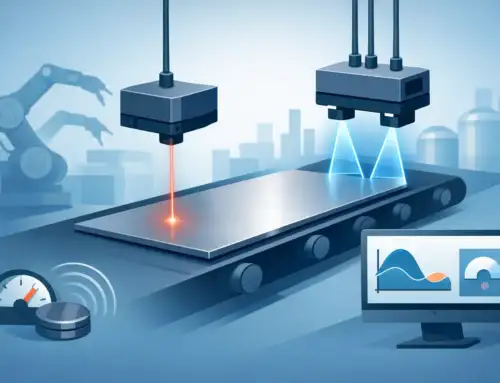
- Automotive Manufacturing: In automotive production, micron-level precision helps address quality control needs. For instance, brake rotor runout measurements, where variations must stay within 25-50 microns to ensure smooth braking performance, need micron resolution for adequate precision. Similarly, wheel hub assemblies require runout control within 50-100 microns, making micron-level systems ideal for these applications. The AS-500 system integrates directly into the production line, measuring rotor runout during the machining process. Multiple sensors monitor different rotor surfaces simultaneously, providing comprehensive runout data without interrupting production flow.
- Industrial Machinery: Machine tool alignment verification typically requires accuracy in the 5–25-micron range. Spindle runout measurements, bearing clearance monitoring, and geometric form verification also can be measured using micron-resolution systems. These applications benefit from the real-time measurement capabilities that micron systems provide without the complexity overhead of higher-resolution alternatives. AS-500 systems provide alignment monitoring, enabling predictive maintenance approaches and preventing quality issues. Also, it has built-in temperature compensation algorithms for thermal expansion effects to help maintain measurement accuracy across varying operating conditions.
- Structural and Thermal Monitoring: Building settlement monitoring, bridge deflection measurement, and thermal expansion tracking in industrial processes require detection of movements in the 10–100-micron range. Micron displacement measurement system has the required environmental robustness which makes it suitable for these construction applications. AS-500 enables simultaneous monitoring of multiple structural points provides comprehensive understanding of system behavior under varying load conditions.
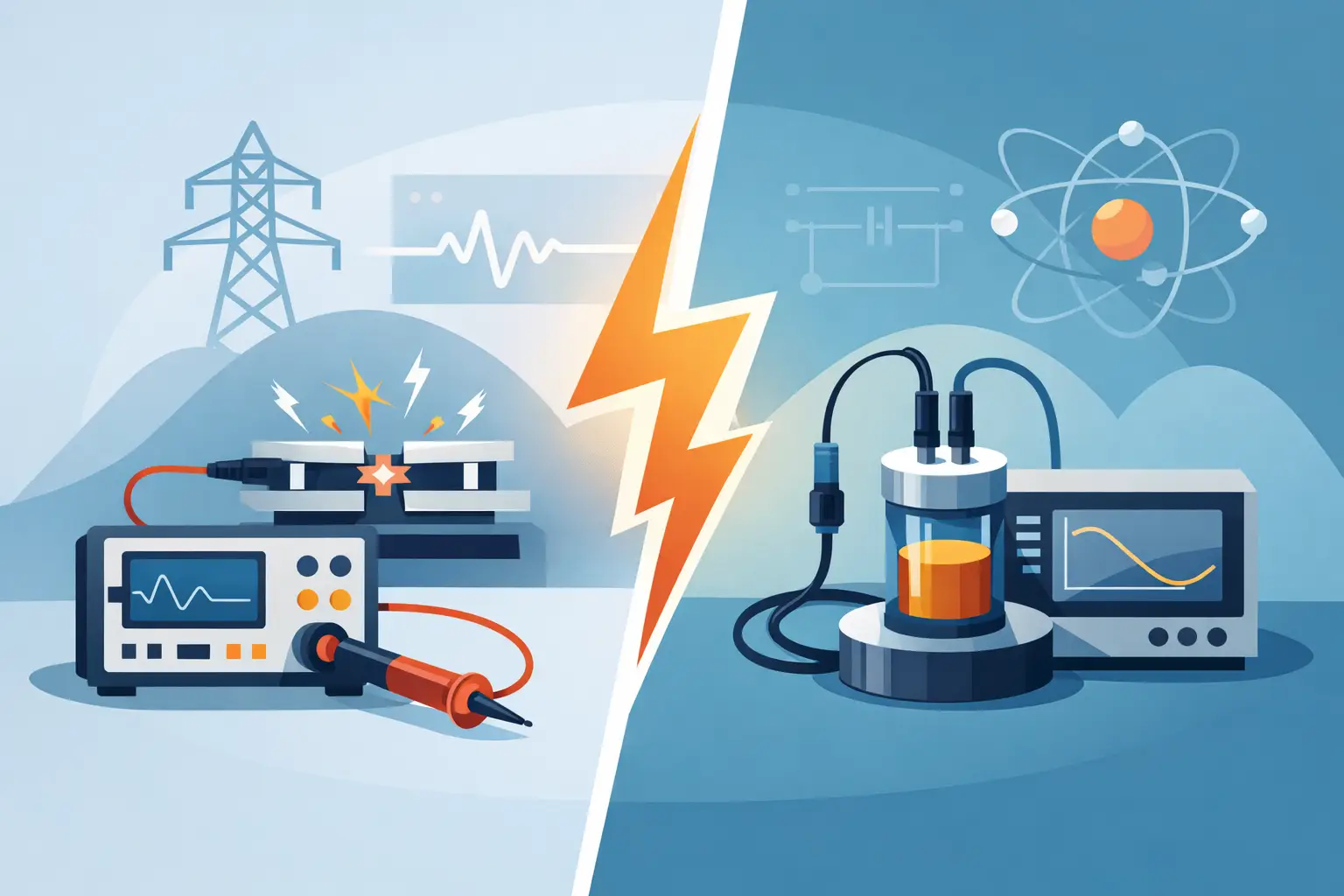
Micron Vs. Nanometer vs Picometer: Which Resolution to Choose?
To be able to choose the right measurement resolution, one needs to weigh the precision requirements against application complexity. Here’s a comparison chart which may help decide on the resolution aspect.
| Resolution Level | Applications | Integration Complexity |
|---|---|---|
| Micron (µm) | Production QC, machine monitoring, structural analysis | Simple analog outputs, minimal setup |
| Nanometer (nm) | Semiconductor manufacturing, optics, precision metrology | Complex digital interfaces, environmental controls required |
| Picometer (pm) | Scientific research, atomic-scale measurement | Extensive isolation, controlled environments mandatory |
Guidance for Engineers to Select the Right System
The above table clearly depicts why choosing micron (µm) resolution accuracy may be optimal for most precision-based applications. Here are some pointers to help you make the right resolution decision.
- Define and analyze application requirements: Review the tolerance specifications and determine the minimum resolution needed for reliable pass/fail decisions based on your application process and environment among other factors. It is always better to get more precision than what is actually required. Micron-level resolution provides 5-10x the precision actually required.
- Assess environmental constraints: Consider your actual production environment. If you cannot practically implement vibration isolation and environmental controls, higher resolution systems may not deliver their theoretical performance.
- Evaluate total cost of ownership: The total cost includes initial equipment cost, installation requirements, training, maintenance, and ongoing calibration when comparing systems. This will help your budget stay on track without compromising on resolution requirements.
- Consider implementation timeline: Micron-level systems typically can be implemented in weeks rather than months, often making them the practical choice even when higher resolution might be theoretically beneficial.
- Tips based on resolution type: These resolution-specific tips may make your decision easy as long as you meet those conditions.
- Picometer resolution: This is suitable for applications where tolerances are extremely tight, and measurement uncertainty must be <0.1% of the measured value.
- Nanometer resolution: Choose this resolution in case of tight tolerances, where in just about 0.1-1% measurement uncertainty is acceptable.
- Micron resolution: You can choose this resolution for the applications that must be able to tolerate where 1-5% measurement uncertainty. Also check the cost and implementation simplicity aspects.
Ready to Bring Micron Precision to Your Production Line?
If you looking for affordable, precise measurement micron displacement solutions for your production environment, Vitrek’s AS-500 is the proven choice for scalable, cost-effective measurement. Its modular, multi-channel design makes it easy to integrate into existing systems, while delivering the accuracy and scalability modern manufacturing demands.
Want to explore how the AS-500 can improve quality, reduce downtime, and streamline your measurement process? Contact MTI Instruments today to discuss your application with our team of experts.