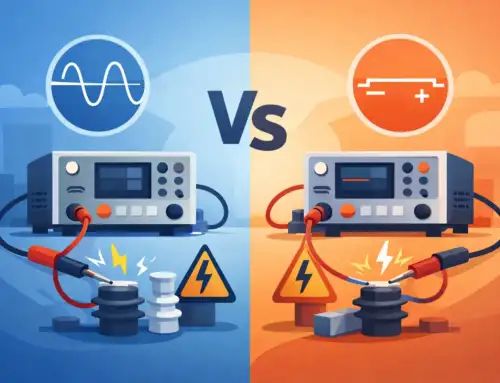
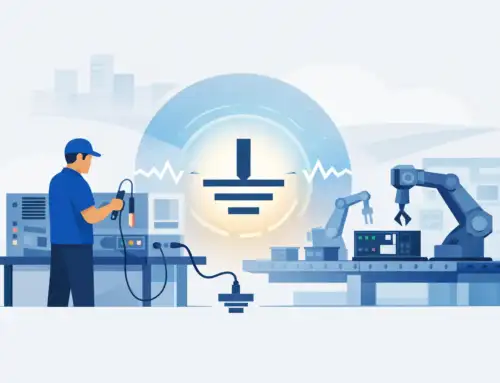
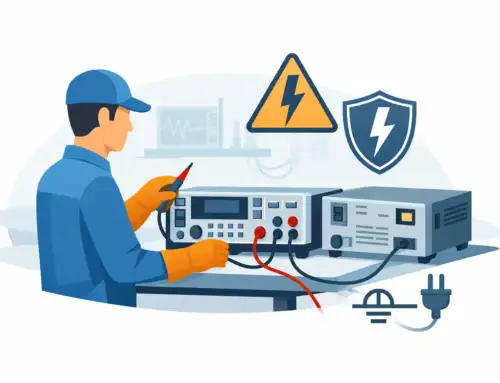
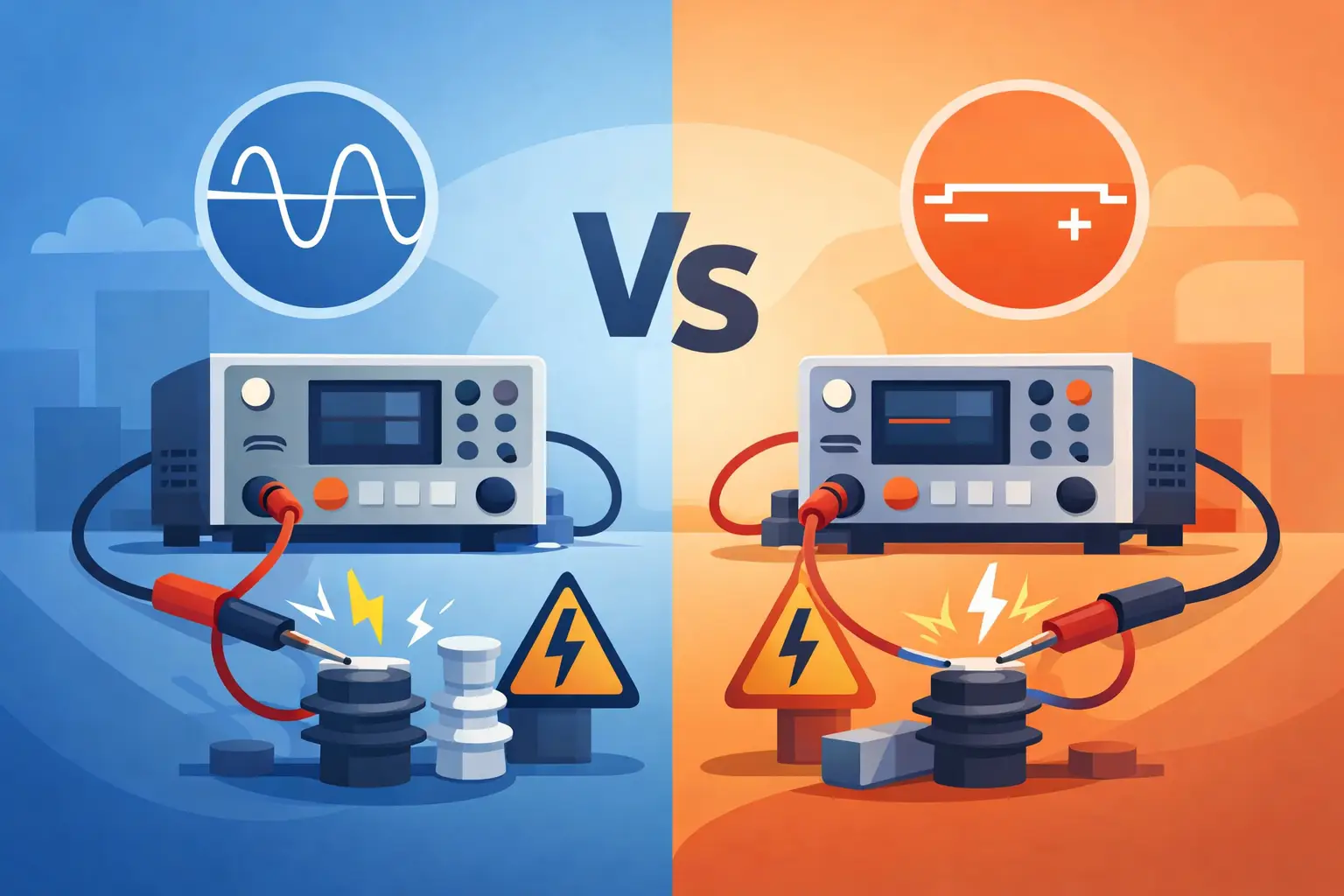
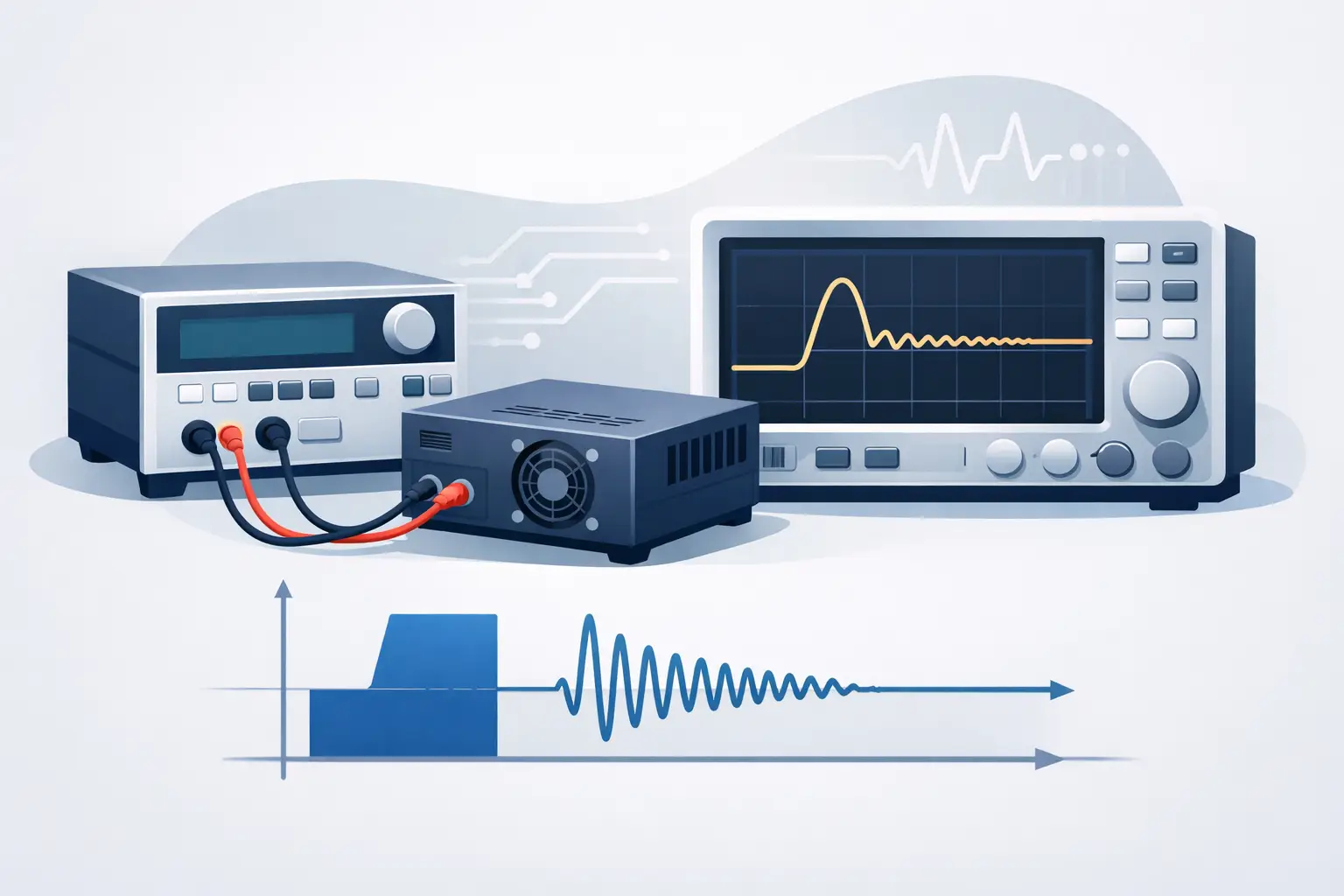
Field calibration has always presented challenges, especially when dealing with AC-powered equipment. Ground loops caused by AC-powered bench supplies can introduce 60 Hz interference, compromising the accuracy of even the most advanced systems. In fact, something as invisible as a ground loop can cause a $50,000 turbine sensor system to fail calibration, leading to costly delays and unnecessary downtime.
This issue becomes even more complicated when you’re working in remote environments like aircraft hangars, offshore platforms, and power substations, where access to clean, stable power can be limited. AC-powered equipment not only introduces ground loop noise but also creates mobility and safety concerns.
Battery-powered signal generators provide a practical solution to these challenges by eliminating ground loops, enabling mobility, and maintaining measurement integrity.
Let’s explore how a battery-powered signal generator enables true portability, maintains calibration accuracy in demanding field environments, and addresses these challenges in practice.
The Critical Need for Portable Calibration
Field service engineers, aircraft maintenance technicians, power plant operators, and calibration specialists often work in environments where lab calibration is not practical. Some key challenges include:
Remote Site Challenges
Field calibration is essential in various industries and remote locations, such as:
- Offshore platforms and wind farms with limited lab facilities
- Aircraft flight lines and hangars, where on-wing checks are necessary
- Power generation sites, where transporting equipment to calibration labs causes costly downtime
- Pipeline compressor stations in isolated locations
- Manufacturing plants, where sensors can’t be removed from production equipment
On-Equipment Testing Requirements
Modern calibration standards increasingly require in-situ verification. Removing sensors for lab testing introduces risks and costs that on-equipment testing eliminates.
Following are some of the critical on-equipment testing scenarios:
- In-situ verification without system shutdown or production interruption
- Verifying sensor installation and wiring integrity after commissioning
- Pre-flight checks on aircraft vibration monitoring systems before takeoff
- Troubleshooting sensor signals at the point of failure for rapid diagnosis
Cost Impact of Lab-Based Calibration:
When calibration requires the removal and transport of equipment, the following costs arise:
- Downtime from removing and reinstalling equipment
- Risk of damage during transport
- Logistics costs for remote site calibration
- Time delays waiting for calibration results
Industry Standards Requiring Field Verification
Field verification is mandated by numerous industry standards to ensure equipment is operating correctly. Some examples include:
- FAA requirements for on-wing checks of aircraft vibration monitoring systems.
- API 670 standards for machinery protection systems, which require in-place testing of components.
- ISO 20816 condition monitoring guidelines for verifying the performance of monitoring equipment.
How Battery Operation Eliminates Ground Loops
One of the most overlooked challenges in field calibration is the presence of ground loops, which can severely impact the accuracy of calibration.
What are Ground Loops
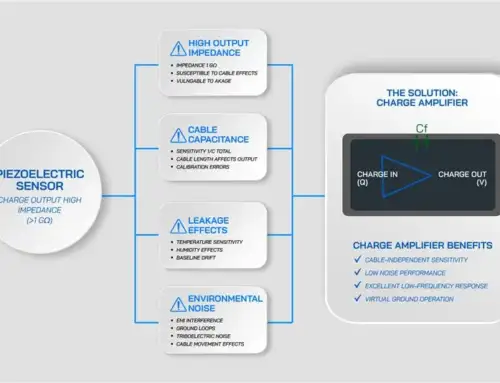
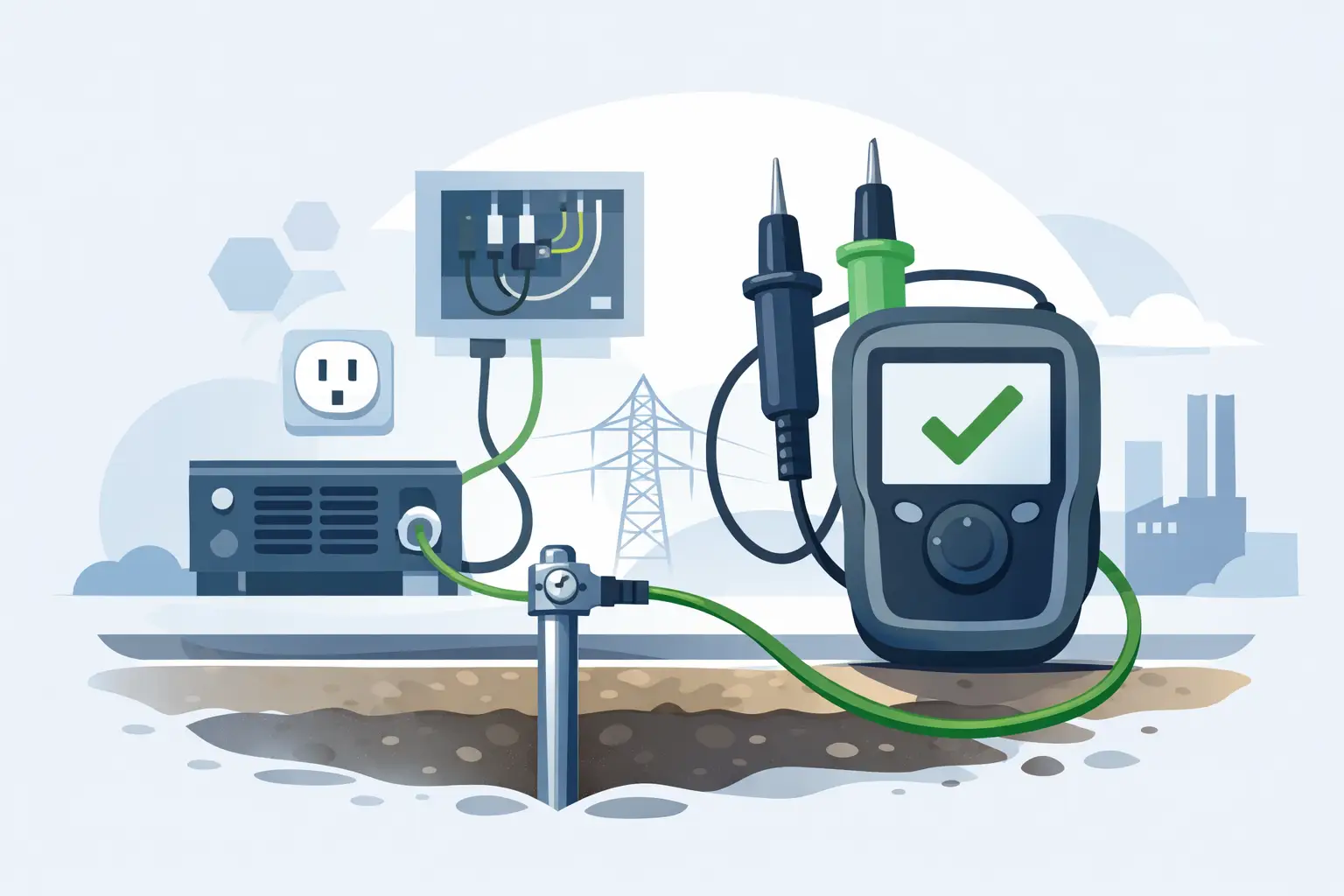
A ground loop is an unwanted current that flows between two or more ground points at different electrical potentials, often leading to significant interference in sensor measurements. This phenomenon can be particularly troublesome for sensitive sensors like piezoelectric accelerometers, which generate small signals that are easily corrupted by ground loop noise. This becomes especially problematic in field calibration environments where multiple pieces of equipment are connected through different grounding paths.
Why AC-Powered Generators Cause Ground Loops
Ground loops are a direct result of using AC-powered equipment for calibration. Here’s why it happens:
- The generator ground is typically connected to the building’s electrical system via a 3-wire power cord.
- The test equipment ground such as oscilloscopes, data acquisition systems, etc. is connected via a separate path.
- This voltage difference between the ground points causes current to flow through the shields of signal cables, resulting in hum, baseline noise, and false vibration readings.
Battery-Powered Signal Generators as the Solution
Eliminating this interference requires breaking the electrical path that allows ground loops to form. Battery-powered signal generators provide:
- Complete galvanic isolation from AC power grounds, meaning there is no physical connection to the building’s electrical system.
- The generator “floats” at the same potential as the device under test, eliminating any potential for ground loops.
- This breaks the loop circuit, providing the same benefits as isolation transformers but without any degradation of the signal.
By removing the physical connection to mains ground, battery-powered signal generators eliminate the primary source of measurement interference in field calibration.
Real-World Impact
When battery-powered signal generators eliminate ground loops, the benefits are clear:
- Noise floor reduction: By eliminating ground loops, the noise floor can drop by as much as 60 dB, which significantly improves measurement clarity.
- Accurate phase measurements: Essential for balancing work and preventing errors in vibration analysis.
- Clean baseline: Low-level vibration measurements (< 0.1 in/sec) become more accurate, without the interference caused by unwanted noise.
- No spectral contamination: FFT (Fast Fourier Transform) analysis no longer shows 60 Hz spectral contamination, improving the reliability of frequency-based diagnostics.
Mobility and Convenience: Beyond Just Portability
Portability isn’t just about taking your equipment wherever you need to go, it’s about ensuring that it’s always ready to work, no matter the environment. Below are the key advantages of using battery-operated equipment.
True Field Mobility
Battery-powered signal generators offer true portability that AC-powered equipment simply can’t match:
- No power cord limitation: Work anywhere, from turbine casings to confined spaces on aircraft wings.
- Avoid the hassle of power source verification: Battery operation eliminates the need to locate reliable power sources in remote or hazardous locations.
- No extension cord: Eliminate trip hazards and issues with voltage drops that can occur with long cords.
Rapid Deployment Advantages
With battery-powered generators, you gain several advantages in terms of quick deployment:
- Quick Setup: Achieve full operational readiness in under 60 seconds, saving valuable time compared to the 5-10 minutes needed for AC-powered equipment.
- Instant-On Capability: Start work immediately without waiting for warm-up time, ensuring efficiency in critical moments.
- Effortless Mobility: Move between test points seamlessly, with no need for repacking or powering down, allowing you to complete tasks faster and more efficiently.
Safety Benefits in Hazardous Locations
Battery-powered units provide additional safety benefits, especially in hazardous environments:
- No AC Shock Hazards: Reduces the risk of 120V AC shocks in wet or conductive environments compared to AC-powered equipment.
- Intrinsically Safe: Minimizes the likelihood of sparks and electrical shock hazards compared to AC-powered systems, making it suitable for use in many volatile environments (subject to site safety requirements).
- Simplified Safety Protocols: Reduces dependence on external power sources, which can help minimize lockout/tagout (LOTO) requirements and streamline safety procedures.
Logistics and Convenience
Battery-powered equipment also streamlines logistics and simplifies the operation:
- Single Technician Operation: Reduces the need for additional personnel to manage power cables or extension cords, enabling more efficient single-operator use.
- Reduced Weight: Eliminates the need for power cables, AC adapters, and isolation transformers, making the equipment lighter and easier to carry and transport.
- TSA-Friendly: Simplifies air transport for traveling technicians, as batteries can be removed to support compliance with shipping and security requirements.
MTI 1510A Battery Features and Performance
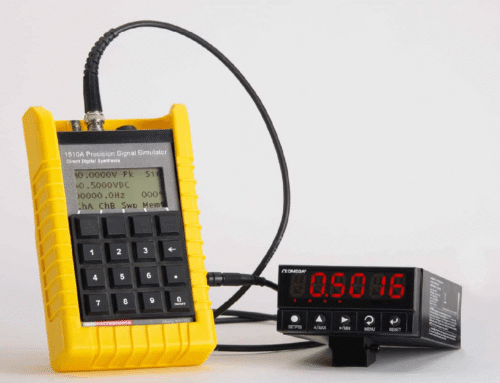
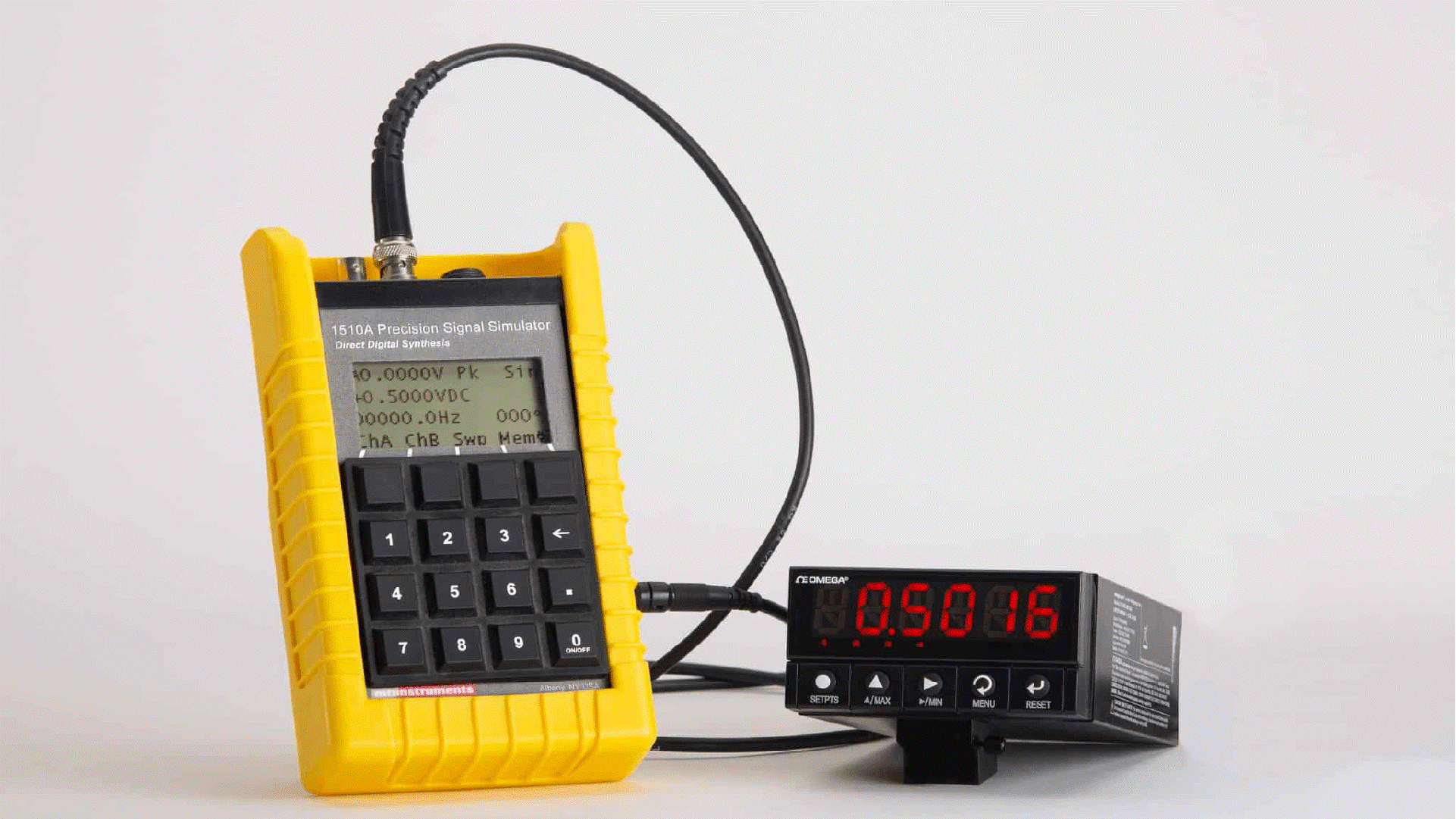
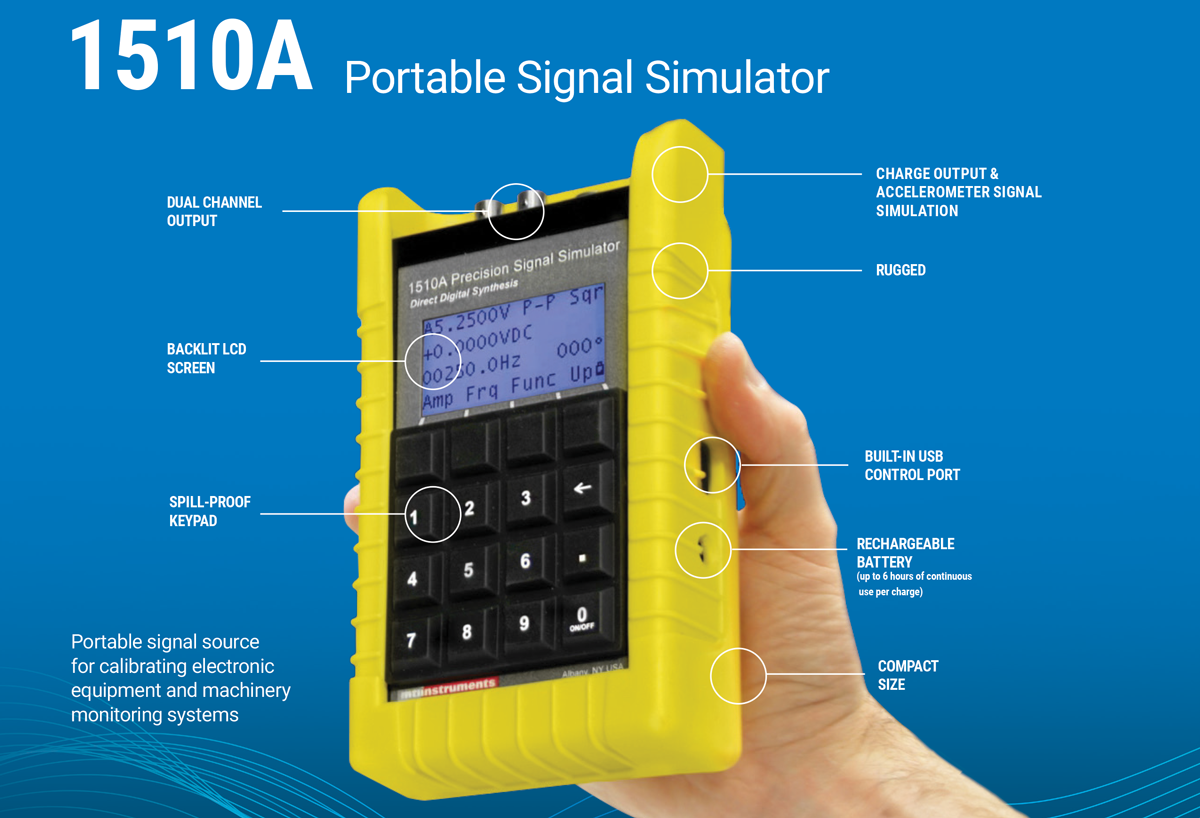
Vitrek’s MTI 1510A signal generator is built to deliver lab-quality precision in a portable, battery-operated form, making it the ideal solution for field calibration. Below are the key features and performance specifications of this high-quality device:
Battery Specifications
- Battery Type: Rechargeable NiMH (Nickel Metal Hydride) 4-cell pack.
- Runtime: Up to 6 hours of continuous operation on a single charge.
- Charging: Built-in charger with a standard AC adapter.
- Battery Replacement: Field-replaceable battery pack (Part #1510A-400-0023-4).
- Battery Status Indicator: Clearly displayed on the LCD for easy monitoring.
Power Management Features
- Auto power-off: Saves battery by turning the unit off automatically after a configurable period of inactivity.
- Low-battery warning: Alerts users before the unit shuts down, ensuring you have ample time to recharge.
- Instant-on capability: Ready for operation without extended warm-up typical of lab equipment.
- Memory retention: Calibration settings are preserved during battery changes, reducing downtime and setup time.
Maintaining Accuracy in Mobile Environments
The MTI 1510A is designed to support accurate calibration in dynamic field conditions when operated within specified limits. Below are the key factors that contribute to performance in such environments:
Temperature Effects and Compensation
Temperature fluctuations in the field can dramatically impact the performance of equipment, but the MTI 1510A is designed to handle these variations:
- Operating range: The MTI 1510A is specified for temperatures between 0°C to 50°C (refer to datasheet for exact limits).
- Thermal stability: The MTI 1510A is designed to maintain performance consistency within normal operating conditions.
- Result: The device retains specified accuracy even in extreme field environments, including hot engine compartments or cold outdoor sites, without requiring recalibration.
Vibration and Shock Protection
Field environments can expose equipment to mechanical stress. The MTI 1510A’s is designed for portable field use:
- Protective design: The device features a compact and portable form factor that supports reliable use in typical field handling conditions.
- Keypad construction: The keypad and external interface are designed to withstand exposure to dust and light contamination during routine field operation.
- Mechanical durability: The unit is built to handle normal mechanical stresses encountered in industrial environments, including movement between test locations.
EMI/RFI Immunity
Electromagnetic interference (EMI) and radio frequency interference (RFI) are common issues in industrial environments, especially near equipment like motors and variable frequency drives (VFDs). The MTI 1510A mitigates these challenges by:
- Reducing EMI sensitivity: Battery operation inherently reduces the device’s susceptibility to conducted EMI, providing cleaner, more stable signals.
- Shielded outputs: It ensures that external interference from nearby equipment doesn’t compromise the quality of your measurements.
- Low-impedance outputs: Designed to handle noisy environments, these outputs drive the signals through cables without distortion from high-noise sources.
Humidity and Condensation Management
Field conditions, especially in outdoor and marine environments, can subject equipment to high humidity or condensation. The MTI 1510A’s design addresses this by:
- Sealed enclosure: The enclosure is designed to help protect internal components from typical environmental exposure, but the device is not IP-rated and should be protected from excessive moisture.
- Corrosion-resistant BNC connector: Standard BNC connectors are designed to provide reliable signal connections during field use when properly maintained.
- Readable LCD display: The display remains visible in direct sunlight and wet conditions, ensuring that critical calibration data is always accessible.
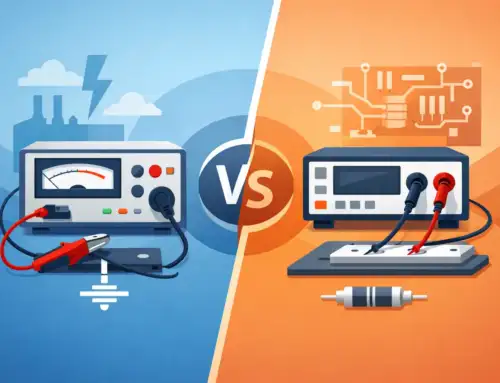
Comparing Battery vs. AC-Powered Solutions
Below is a comparison between the MTI 1510A and traditional AC-powered lab generators, highlighting the key differences in performance, portability, and safety.
| Feature | AC-Powered Lab Generator | Battery-Powered MTI 1510A |
|---|---|---|
| Ground Loop Noise | Present (60 Hz + harmonics) | Eliminated completely |
| Mobility | Limited to power cord reach | Unlimited (6-hour runtime) |
| Setup Time | 5-10 minutes + warm-up | < 1 minute, instant-on |
| Safety (wet/hazardous) | 120V shock risk | Low voltage only (< 10V) |
| Field Weight | 5-15 lbs + power accessories | 2.5 lbs complete |
| Accuracy Specification | Often ±1-2% | 0.05% ± 0.1mV |
| Temperature Range | Lab only (20-25°C) | 0°C to 50°C with compensation |
When AC Power is Preferred
- Extended operation (> 6 hours) without recharge access.
- Use in lab settings where power and grounding are stable.
- High-current output requirements (>10mA continuous).
When Battery Power is Essential
- Any field calibration application where mobility is key.
- Calibration in ground loop-sensitive measurements.
- Hazardous or wet locations where AC-powered tools pose safety risks.
- Remote sites without reliable access to AC power.
Field Use Cases Across Industries
Battery-powered signal generators like the MTI 1510A are indispensable in a variety of industries where precision, mobility, and reliability are paramount. The flexibility and capability of the MTI 1510A make it a go-to solution for demanding calibration tasks in diverse environments, as follows:
Gas Turbine and Power Generation: In industries like gas turbine and power generation, where high reliability is critical, battery-powered signal generators are used for:
- On-wing engine vibration system calibration to ensure turbines are operating within their optimal parameters without bringing engines offline.
- Pre-flight HUMS (Health and Usage Monitoring System) checks for verifying vibration systems on aircraft before takeoff, ensuring the aircraft is safe for flight.
- In-place verification of turbine bearing vibration sensors to confirm the accuracy of these critical components under operational conditions.
Pipeline and Compressor Stations: Remote pipeline and compressor stations often lack centralized calibration labs, making field calibration necessary for ongoing operations. Use cases include:
- Remote compressor vibration monitoring calibration to maintain efficient and safe operations without sending equipment for off-site calibration.
- Pressure transmitter verification in hazardous gas areas where calibrating equipment onsite minimizes downtime and ensures operational continuity.
- Accelerometer installation verification at pump stations to ensure that sensors are properly positioned and functioning as expected.
Aerospace and Defense: In aerospace and defense, battery-powered signal generators provide field calibration solutions for various applications:
- Military aircraft flight line maintenance, ensuring sensors on aircraft and helicopters are properly calibrated without needing to remove systems from the aircraft.
- Helicopter rotor tracking and balancing systems, vital for maintaining safe and stable operations in flight.
- Unmanned Aerial Vehicle (UAV) sensor systems that require constant calibration in the field, particularly when conventional power sources are unavailable or unreliable.
Industrial Manufacturing: Industrial manufacturing often requires ongoing calibration of equipment in operational settings where time and precision are critical:
- Production line balancing equipment verification ensures smooth operations of machinery without interrupting the flow of production.
- CNC machine tool spindle monitoring calibration helps verify that spindles are functioning with the correct tolerance for high-precision tasks.
- Robotic arm accelerometer validation ensures robotic systems are properly calibrated for safety and efficiency in automated manufacturing processes.
Marine and Offshore: In marine and offshore environments, conditions such as corrosive saltwater, extreme temperatures, and hazardous atmospheres require specialized field calibration tools:
- Ship propulsion shaft vibration monitoring to ensure that the vibrations generated by the ship’s propulsion system stay within safe limits.
- Offshore platform rotating equipment sensors require periodic calibration to ensure that they are performing optimally under harsh environmental conditions.
- Subsea pump monitoring system verification ensures that pumps operating in underwater environments maintain accurate operational parameters.
Best Practices for Battery-Powered Field Calibration
For optimal performance in the field, it’s crucial to follow best practices for deploying and maintaining your battery-powered signal generator. Check out the following best practices.
Pre-deployment Preparation:
- Fully charge the battery before field deployment and verify the charge level on the LCD display.
- Carry a spare battery pack for extended work, ensuring 6+ hours of runtime if necessary.
- Download sensor calibration settings to the unit’s 40-memory preset locations for quick access during testing.
Field Operation Tips:
- Allow a 5-minute stabilization period when operating in extreme temperatures (either < 0°C or > 40°C) to ensure accuracy.
- Monitor battery status via the indicator and plan to recharge when the battery reaches 20% to avoid interruptions.
Documentation and Traceability:
- Record the battery voltage at the start of the calibration process to track any potential variations that may affect accuracy.
- Note the ambient temperature to ensure that calibration records are accurate, especially if temperature affects sensor readings.
Maintenance for Long Battery Life:
- Charge batteries every 3 months when not in use to avoid sulfation and extend battery life.
- Replace the battery pack every 3-5 years or after 500 charge cycles to maintain performance.
- Store the unit at 40-60% charge during long-term storage to preserve battery health.
Eliminate Ground Loop Noise and Calibrate Anywhere with Confidence
Take control of your field calibration process with Vitrek’s MTI 1510A battery-powered signal generator, engineered for mobility, accuracy, and reliable performance in real-world conditions.
Download the technical datasheet or contact our applications team to discuss your specific field calibration challenges.