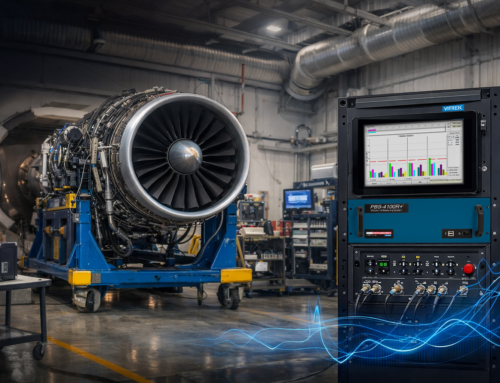
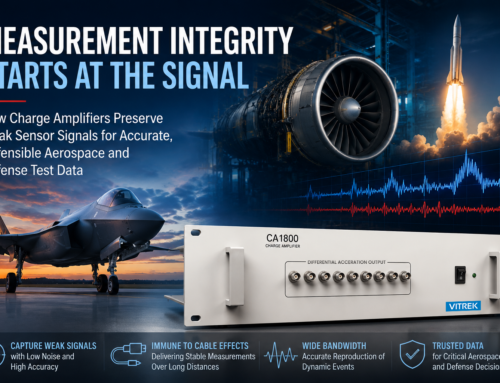
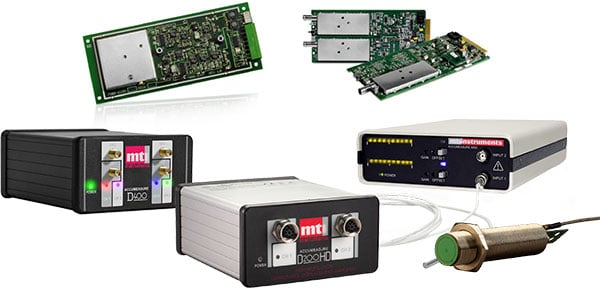
Piezoelectric sensors deliver critical data for turbine balancing, structural health monitoring, and vibration analysis, only when paired with proper signal conditioning. Extracting clean, phase-accurate signals in environments with electromagnetic interference, temperature shifts, and cable effects remains a persistent challenge. Signal conditioning bridges the gap between the sensor and the measurement system. MTI Instruments offers a comprehensive portfolio of charge amplifiers designed to address the challenges of piezoelectric signal conditioning challenges across diverse applications. From the portable 55CA and 41CA units engineered for field turbine balancing to the multi-channel CA1800 rack-mount system for laboratory testing, MTI’s line-up provides scalable solutions for piezoelectric signal conditioning. This post examines the technical fundamentals of piezoelectric signal conditioning, explores MTI’s product architecture, and provides guidance on selecting and implementing the optimal signal conditioning solution for your specific measurement requirements

Why Piezoelectric Signal Conditioning Matters
Piezoelectric transducers, including accelerometers, dynamic pressure sensors, and force transducers, generate an electrical charge proportional to applied mechanical stress. This charge-mode operation provides excellent sensitivity and dynamic range, making piezoelectric sensors ideal for measuring vibration, shock, and transient pressure phenomena. However, the piezoelectric effect produces several challenges:
- High Output Impedance:
The sensor’s charge output exhibits extremely high impedance (typically >1 GΩ), making it highly susceptible to cable capacitance effects and leakage paths. - Cable Capacitance Sensitivity:
The signal amplitude varies inversely with the total capacitance (sensor + cable + input). A change in cable length or configuration directly affects measurement sensitivity, introducing calibration errors. - Leakage Current Effects:
At high temperatures or in humid environments, insulation resistance decreases, allowing charge to leak away and causing baseline drift or low-frequency signal loss. - Environmental Noise Pickup:
The high impedance makes piezoelectric sensors vulnerable to electromagnetic interference, ground loops, and triboelectric noise generated by cable movement.

Principles of Piezoelectric Signal Conditioning Using Charge Amplifiers
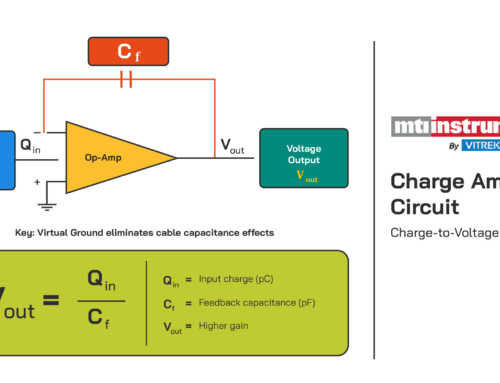
Charge amplifiers are essential in piezoelectric signal conditioning because piezoelectric sensors produce charge, not voltage, and that charge output is highly sensitive to cable capacitance, leakage, and electrical noise. Unlike voltage amplifiers, which amplify existing voltages and suffer from cable-dependent sensitivity, poor low-frequency response, triboelectric noise, and baseline drift, charge amplifiers operate the sensor at virtual ground and integrate charge directly, making measurements independent of cabling.
A charge amplifier operates as an integrator circuit that converts input charge (Q_in, measured in picocoulombs) to output voltage (V_out) using a precision feedback capacitor (C_f): V_out = Q_in / C_f
This fundamental relationship ensures that output voltage depends only on input charge and feedback capacitance, not on cable capacitance or sensor capacitance. The operational amplifier’s high open-loop gain maintains a virtual ground at the inverting input, ensuring that essentially all sensor charge flows into the feedback capacitor regardless of cable characteristics.
The performance of the charge amplifier is governed by several parameters, including low input capacitance, ultra-low bias current, and very high input insulation resistance to preserve low-frequency accuracy, along with precision feedback components that control gain stability and linearity.
MTI’s Approach to Precision Piezoelectric Signal Conditioning
MTI Instruments’ charge amplifiers reflect design priorities shaped by real-world turbine balancing,
vibration testing, and long-duration monitoring environments.
- Sensor Compatibility:
MTI charge amplifiers are engineered to interface with standard piezoelectric accelerometers (charge-mode), dynamic pressure sensors, and force transducers across a wide range of sensitivities and frequency responses. - Thermal Stability:
Careful component selection and circuit topology minimize gain drift and baseline shift across the -10°C to +50°C operating temperature range common in field environments. - Mechanical Robustness:
Portable units feature rugged enclosures and secure connectors designed to withstand vibration, shock, and handling associated with field balancing and maintenance activities. - Low-Noise Design:
Input stages are optimized for low voltage noise (<10 µV RMS typical) and extremely low input bias current to maintain signal fidelity even with low-sensitivity sensors. - Integration with Downstream Systems:
MTI charge amplifiers provide standardized voltage outputs (typically ±5V or ±10V full scale) compatible with data acquisition systems, FFT analyzers, turbine balancing systems, vibration monitoring platforms, and more. - Dual-Mode Output Capability:
Both acceleration and velocity outputs are available on select MTI Charge Amplifier models.- Acceleration Output (Direct):
Provides the charge-to-voltage converted signal directly proportional to acceleration, maintaining the full frequency bandwidth of the sensor and amplifier. - Velocity Output (Integrated):
An electronic integrator stage converts acceleration to velocity, eliminating the need for post-processing. This is particularly valuable for turbine balancing and machinery diagnostics, where velocity spectra are the standard measurement.
- Acceleration Output (Direct):

MTI Charge Amplifier Platforms for Field Balancing and Multi-Channel Testing
MTI’s charge amplifier platforms address the full range of vibration measurement needs, from portable balancing work to permanent laboratory and test-cell installations.
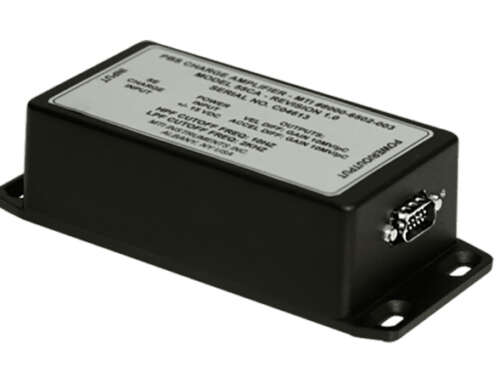
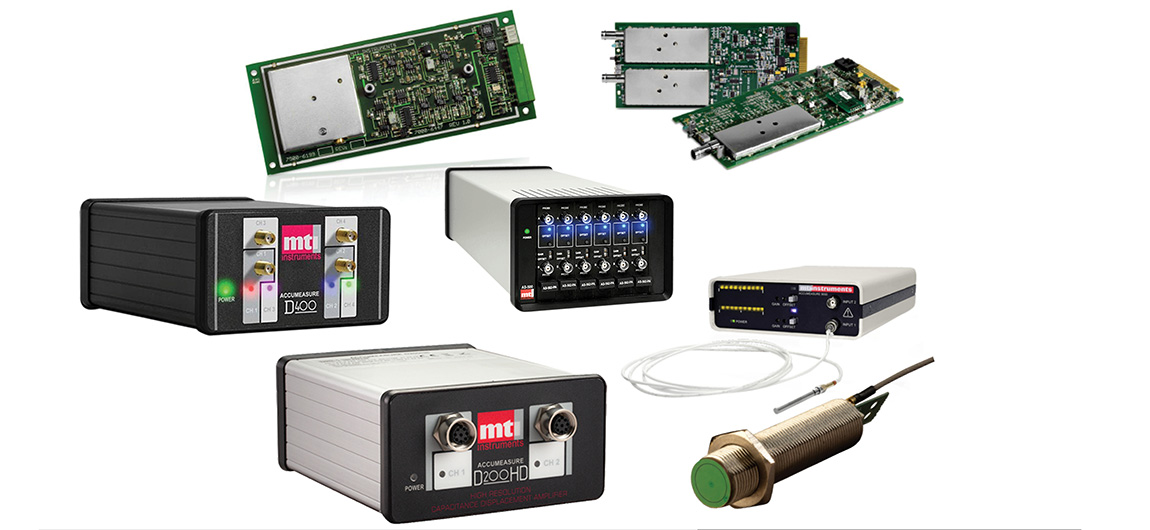
- MTI 55CA and 41CA Models :
These models are suited for applications where engineers need quick setup and battery operation. A single-channel 55CA fits in a toolkit and connects the sensor and analyzer within seconds. The dual-channel 41CA supports differential measurements or simultaneous monitoring of two points. Both models include internal batteries that eliminate ground loop problems inherent in line-powered equipment, an advantage in test cells where multiple instruments share power sources and create ground potential differences. - MTI CA1800 Rack-Mount System:
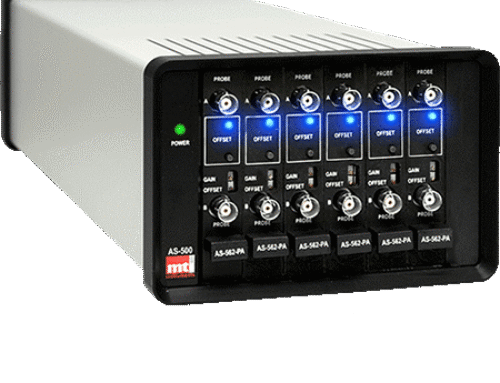
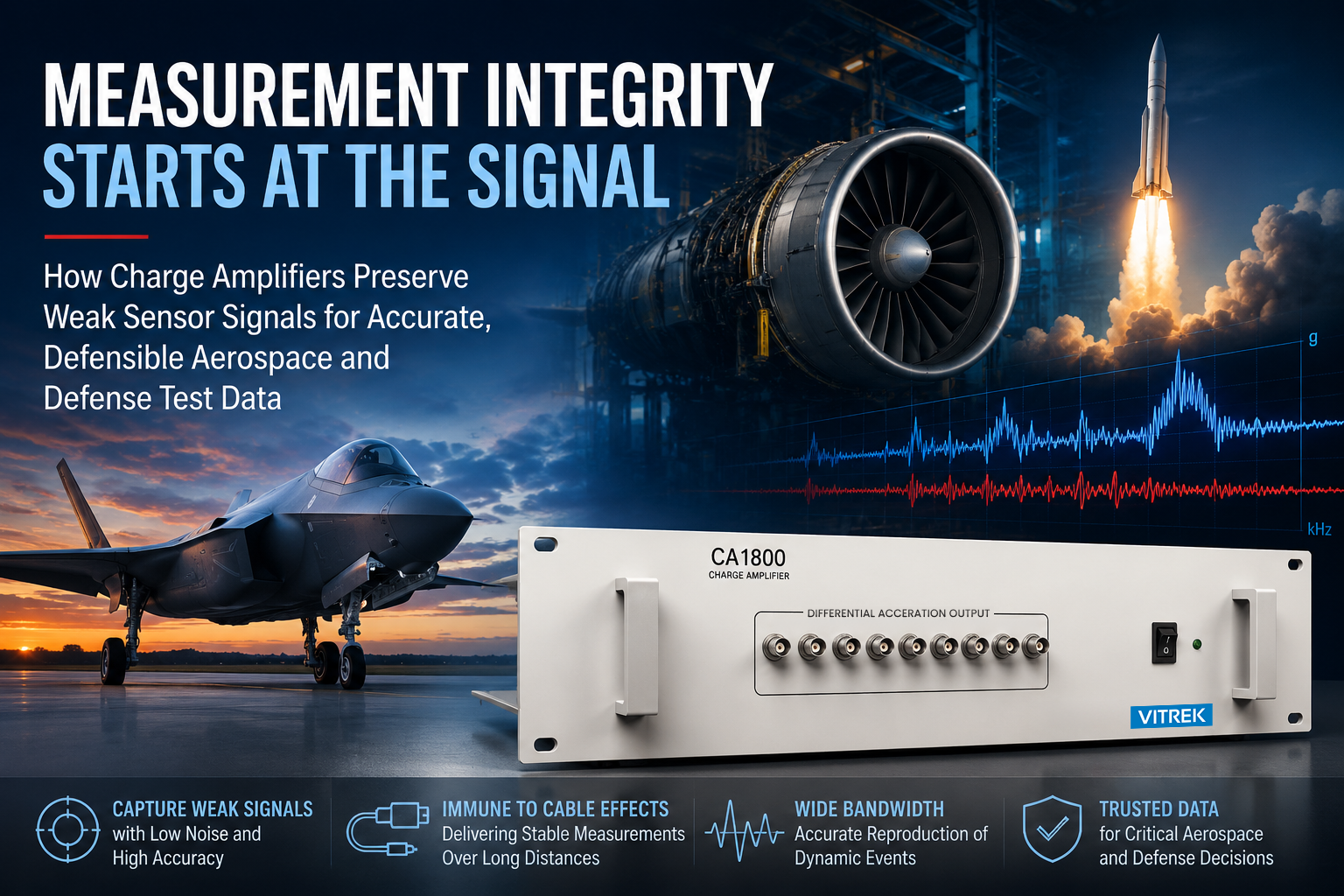
This amplifier system addresses automated multi-channel testing with channel counts of 16 or more. Test laboratories running modal analysis, structural dynamics studies, or production vibration testing benefit from centralized signal conditioning that occupies minimal rack space. Individual channel adjustment becomes impractical at this scale, so factory configuration based on sensor specifications and test plans establishes gain, filtering, and integration parameters before shipment. Remote monitoring capabilities allow operators to verify amplifier status without physical access. This is important in test cells where entry is restricted during operation.
System Example: From Piezoelectric Sensor to Analysis
Understanding signal flow through a complete measurement system illustrates how charge amplifier performance affects end results.
1. Piezoelectric Sensor
A charge-mode accelerometer (e.g., 100 mV/g sensitivity, 1 pC/g charge sensitivity) is mounted on the turbine bearing housing to detect vibration from rotor imbalance, bearing wear, or blade passing frequencies.
2. Low-Noise Coaxial Cable
Triaxial or coaxial cable routes the sensor signal to the charge amplifier, maintaining high insulation resistance and minimizing triboelectric noise during cable movement or vibration.
3. MTI 41CA or CA1800 Charge Amplifier
The charge amplifier converts sensor charge to voltage.
Input: 1 pC/g × 10 g acceleration = 10 pC
Gain setting: 10 mV/pC
Output: 10 pC × 10 mV/pC = 100 mV
The velocity integration output simultaneously provides a velocity signal by electronically integrating the acceleration, eliminating the need for FFT-based integration and avoiding associated phase errors.
4. Data Acquisition System or Balancing Analyzer
Balancing Analyzer
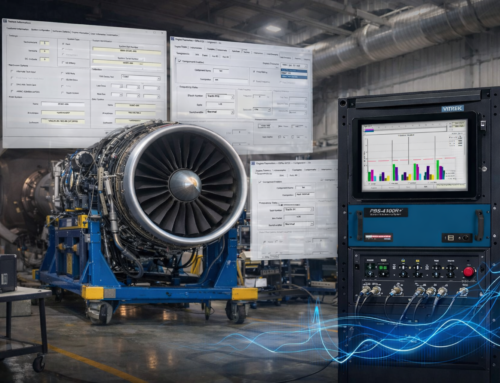
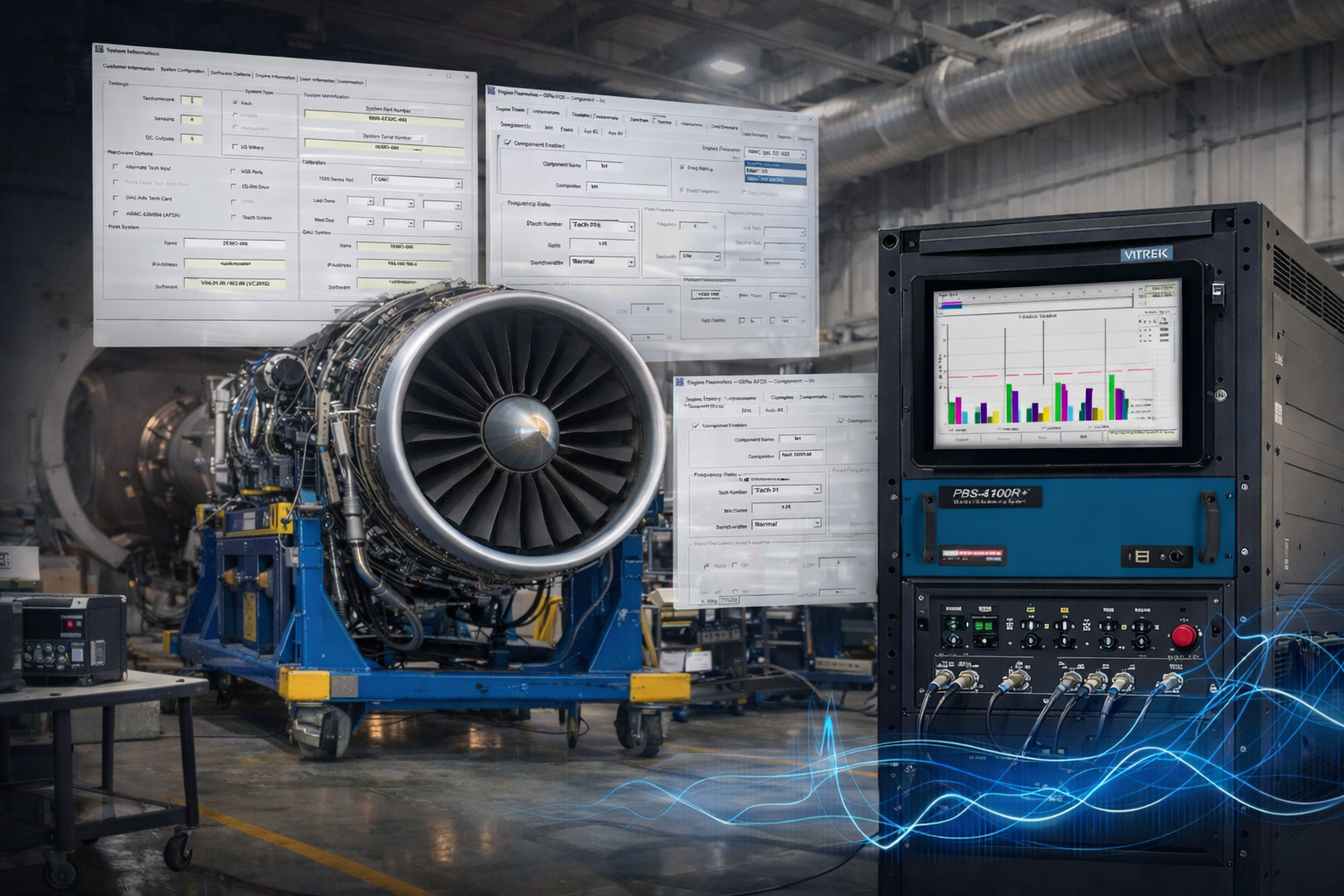
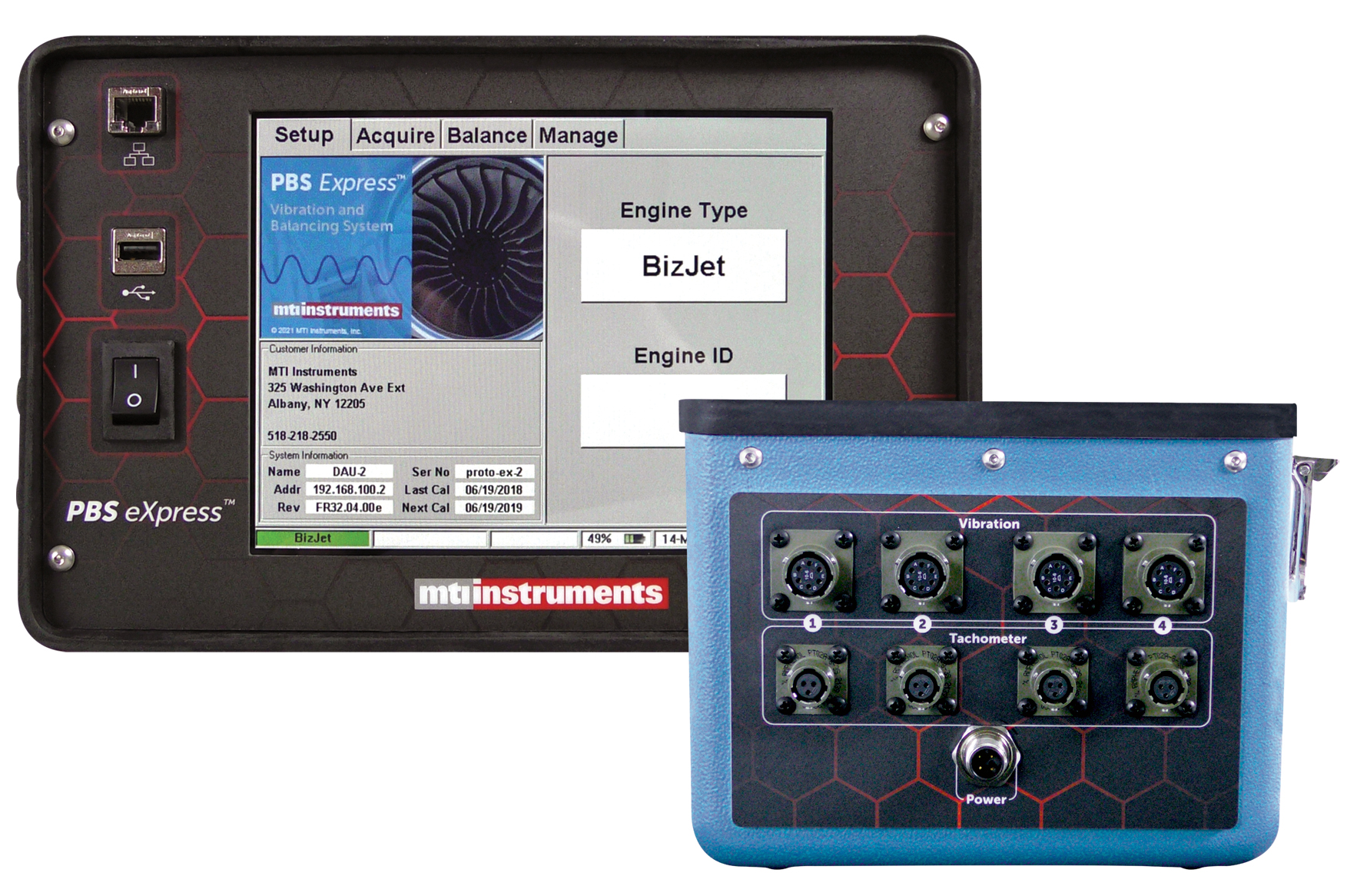
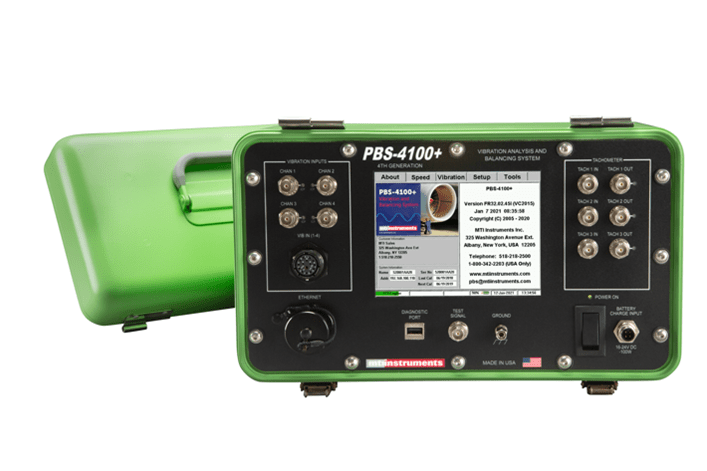
The charge amplifier’s low-impedance voltage output connects to the PBS eXpress Balancing Analyzer, which digitizes acceleration and velocity signals, computes FFT, extracts 1× running speed amplitude and phase, calculates imbalance vectors, and recommends correction weights and angles.
Multi-Channel DAQ
The charge amplifier’s low-impedance voltage output connects to the multi-channel DAQ, which samples all channels for modal analysis, operational deflection shapes, or continuous monitoring.
5. FFT Analyzer
It performs spectral analysis to extract useful vibration diagnostics. The digitized, conditioned signal enables:
- Rotor Balancing:Accurate amplitude (±0.1 g) and phase (±1°) measurements drive precise correction weight calculations
- Order Analysis: Separation of synchronous (rotor-related) and non-synchronous (bearing, blade pass) vibration components.
- Modal Analysis:Frequency response functions and mode shapes for structural dynamics characterization
- Condition Monitoring: Trend analysis detecting incipient failures before catastrophic damage
Selecting the Right Charge Amplifier Configuration
Proper signal conditioning remains the foundation of reliable piezoelectric measurements, and selecting the appropriate amplifier configuration ensures that foundation supports the quality requirements of each application. Application requirements dictate amplifier selection through several key parameters. Here are some factors to consider.
- Channel count: How many simultaneous measurement points does the test require? Portable field balancing may need just one or two channels. Production testing might demand eight to sixteen. Large structural tests occasionally reach 32 or more channels.
- Environmental conditions: Does the amplifier operate in a controlled laboratory or an industrial test cell? Will it experience temperature extremes, vibration, or electromagnetic interference?
- Battery-powered or line powered: Battery-powered portable units eliminate ground loops but limit operating time. Line-powered rack systems provide continuous operation but require careful grounding and shielding.
- Sensor specifications: Consider the gain and sensitivity requirements in your application. An accelerometer with 10 pC/g sensitivity measuring up to 50 g peak generates 500 pC maximum charge. With a 1 nF feedback capacitor, this produces a 0.5V output. If the digitizer accepts ±10V full scale, the measurement uses only 5% of the available range, sacrificing resolution. Adjusting the gain or selecting a smaller feedback capacitor better matches the sensor output to the digitizer input.
- Integration: Applications requiring velocity signals benefit from amplifiers with built-in integration. Those measuring only acceleration can use simpler architectures. Integration time constants should align with the lowest frequency of interest too long, and the integrator drifts; too short, and low-frequency content attenuates.
- Configuration flexibility versus preset convenience: Some applications benefit from field-adjustable gains and filters that adapt to changing test conditions. Others prioritize consistency and repeatability, making factory configuration with sealed settings preferable. Multi-channel testing usually favors preset configurations that ensure identical channel characteristics, while research applications often require adjustment flexibility as sensor types and measurement objectives evolve.
Ready to Improve Your Measurement Accuracy?
MTI’s 55CA, 41CA, and CA1800 charge amplifiers provide the signal conditioning precision your piezoelectric sensors need. Whether you’re balancing turbines in the field or running multi-channel laboratory tests, we have a solution that fits. Visit Vitrek’s MTI Charge Amplifier page for complete specifications. Contact our applications engineers to discuss your specific requirements and get expert guidance on amplifier selection, system integration, and calibration services.