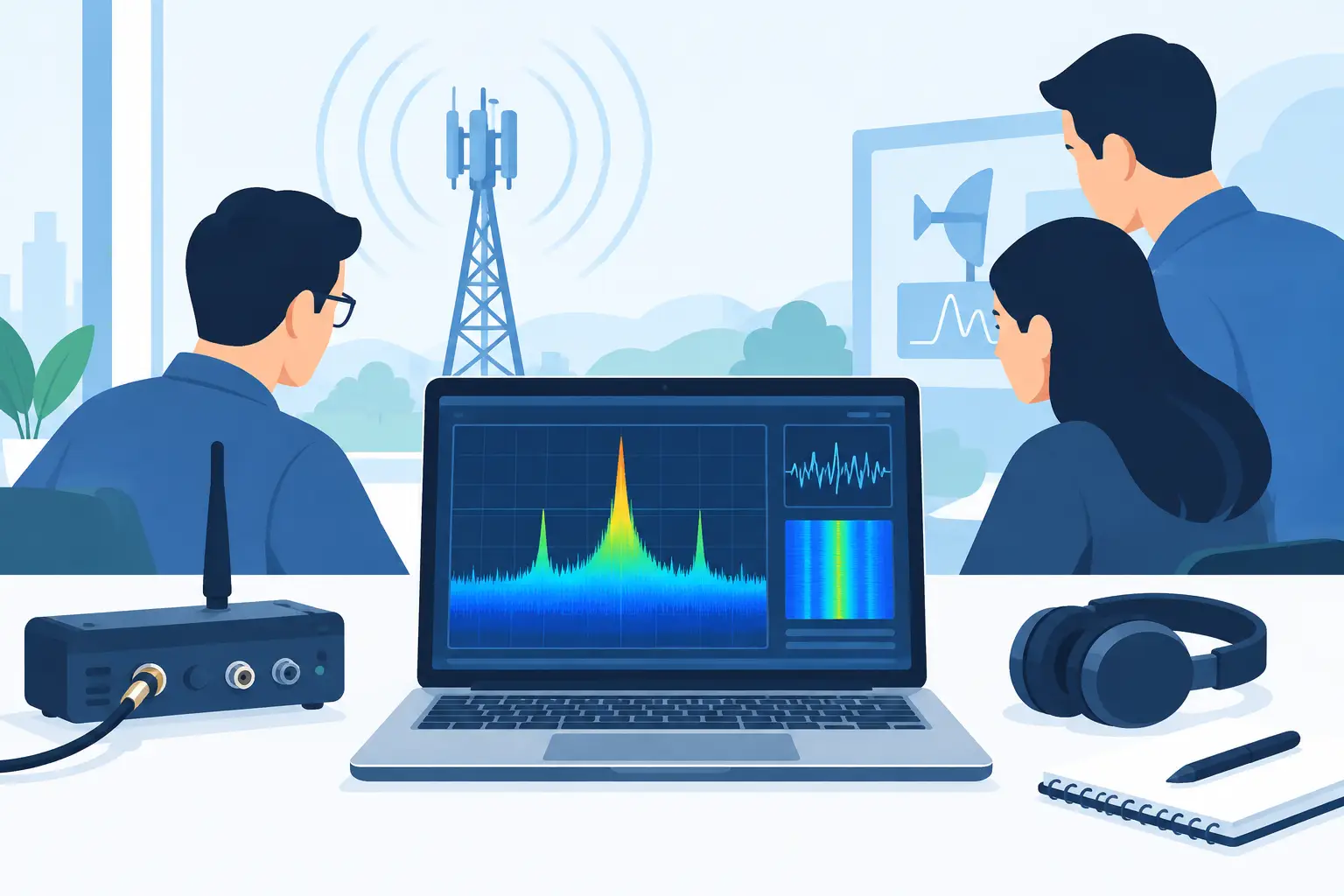
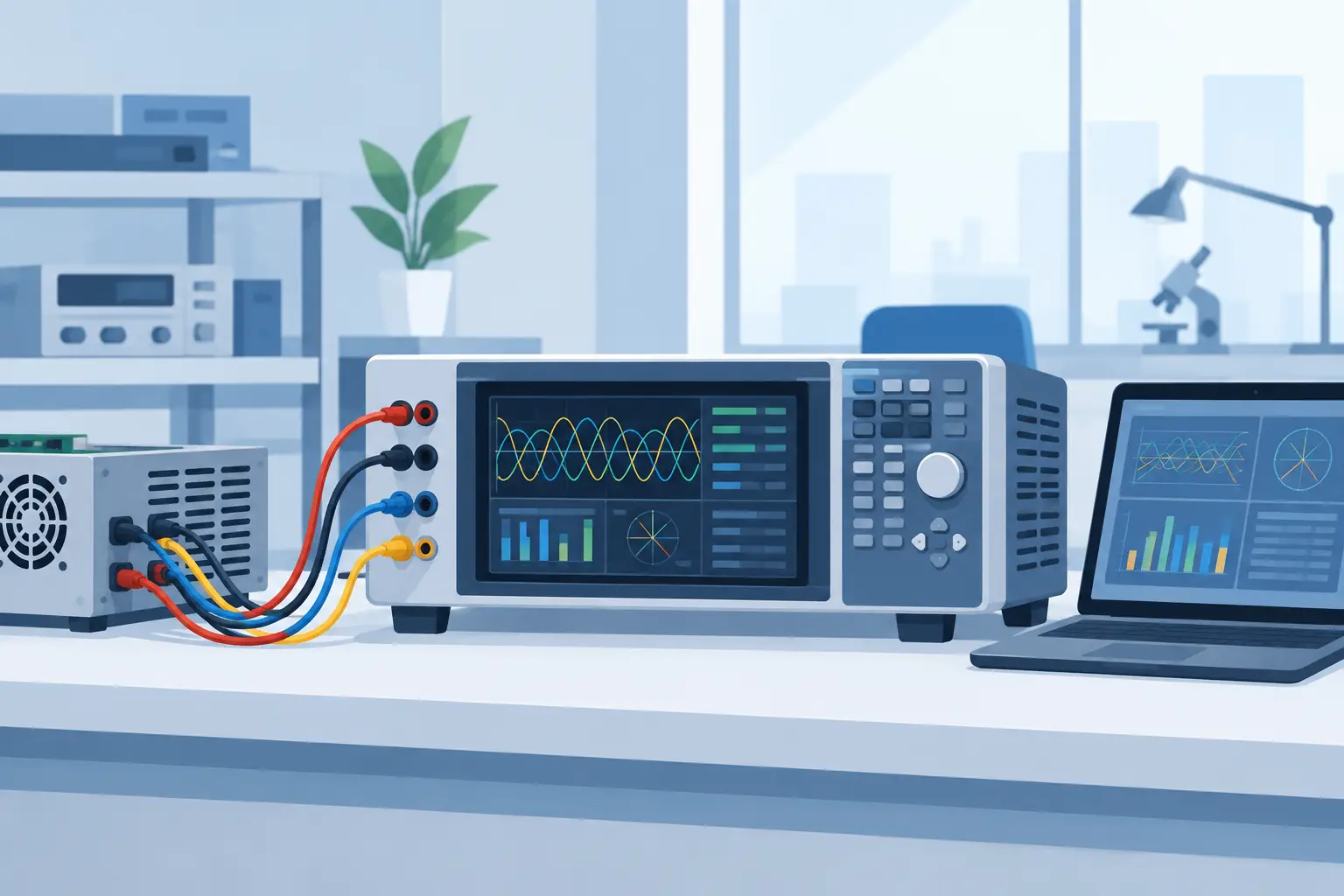
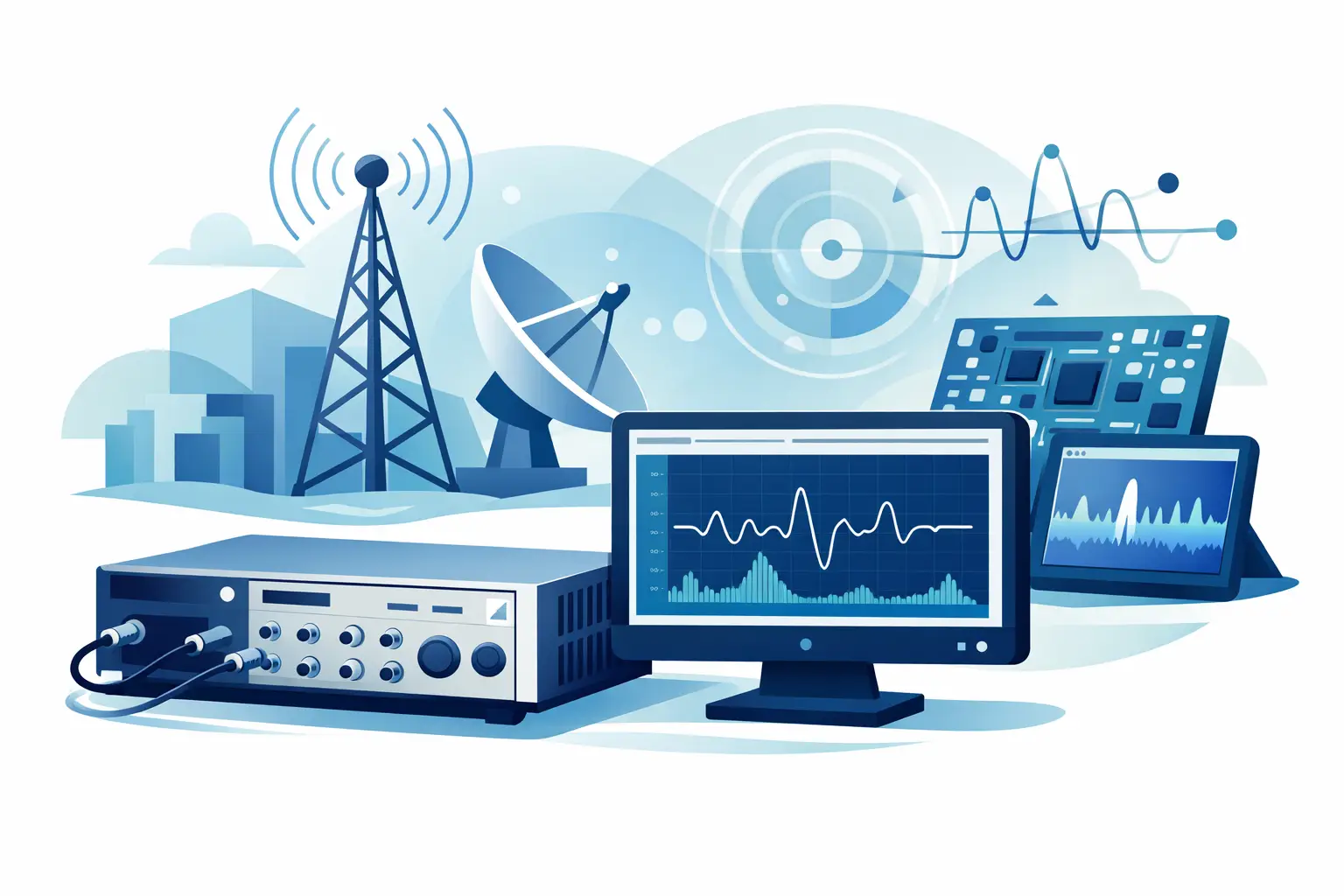
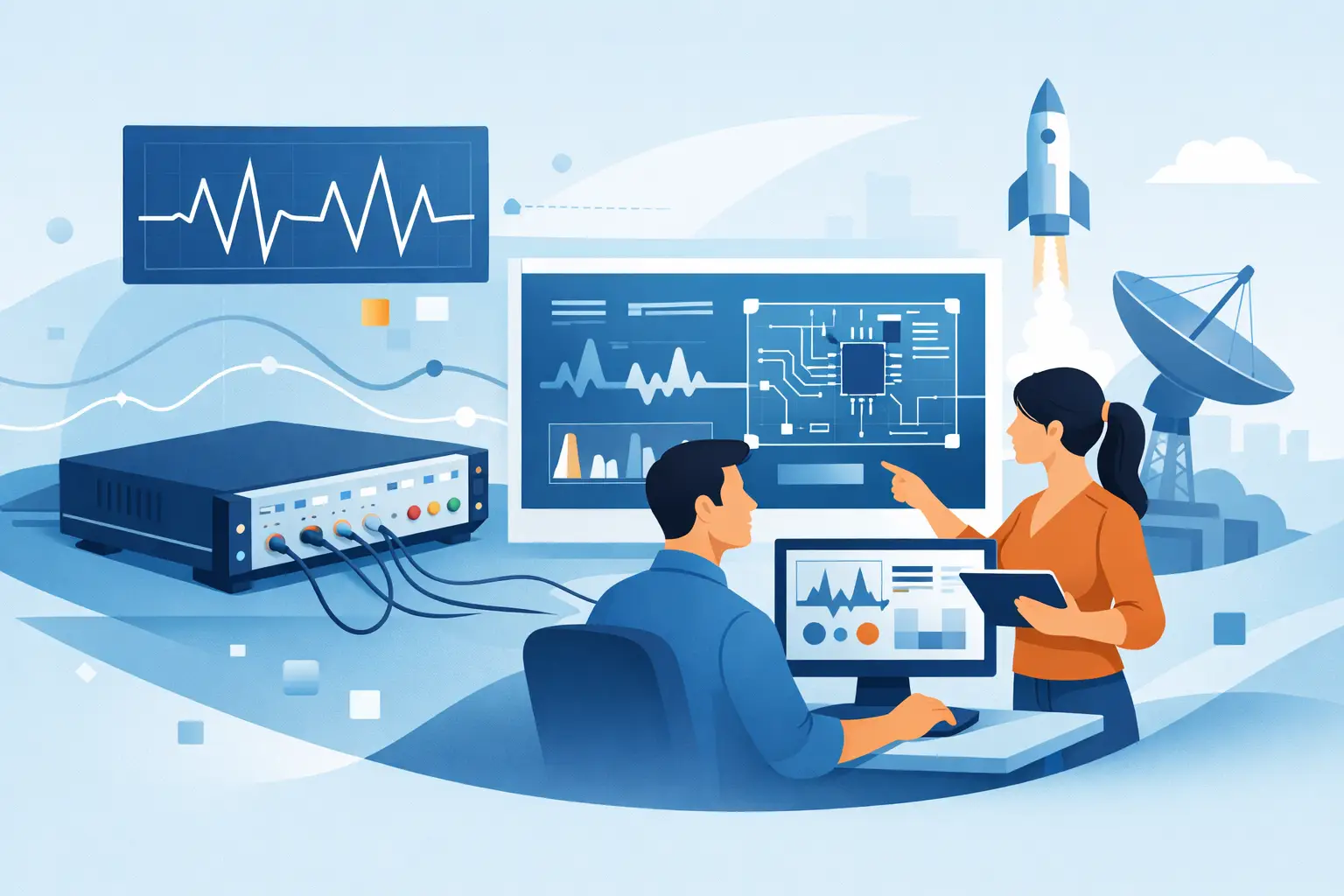
Electronic support missions rarely fail because a signal was present. They fail because the system did not capture enough of it, fast enough, or with enough fidelity to support analysis and response. That is why selecting an rf digitizer for electronic warfare is not a simple bandwidth exercise. In practice, the right platform must preserve weak emitters in the presence of strong interferers, sustain recording across dense spectral activity, and fit into a larger architecture where timing, processing, and data movement matter as much as raw acquisition speed.
For defense integrators, lab teams, and program engineers, the useful question is not which digitizer has the highest headline specification. The better question is which instrument delivers trustworthy signal capture under the specific electromagnetic conditions your system is expected to face.
What an RF digitizer for electronic warfare must do
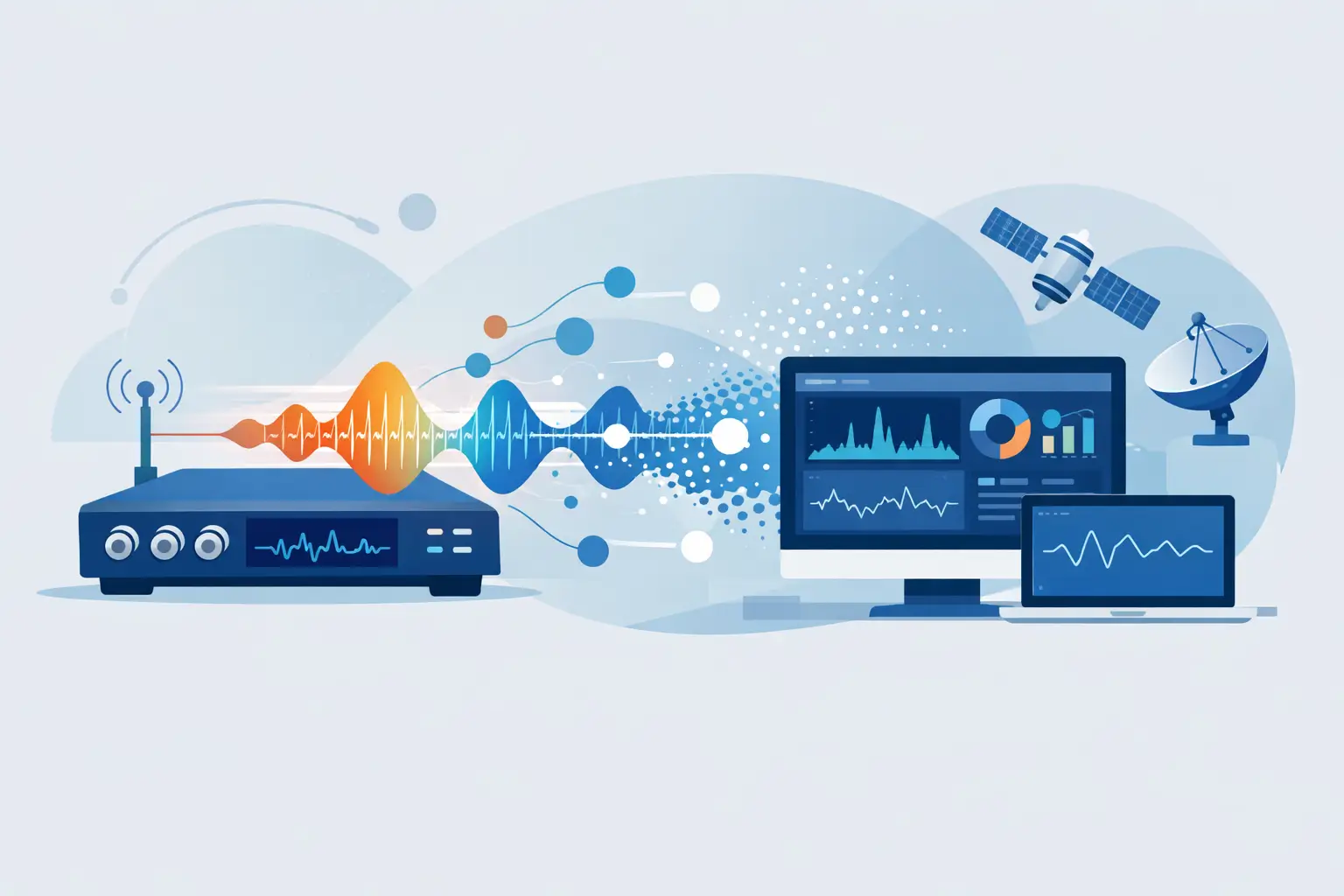
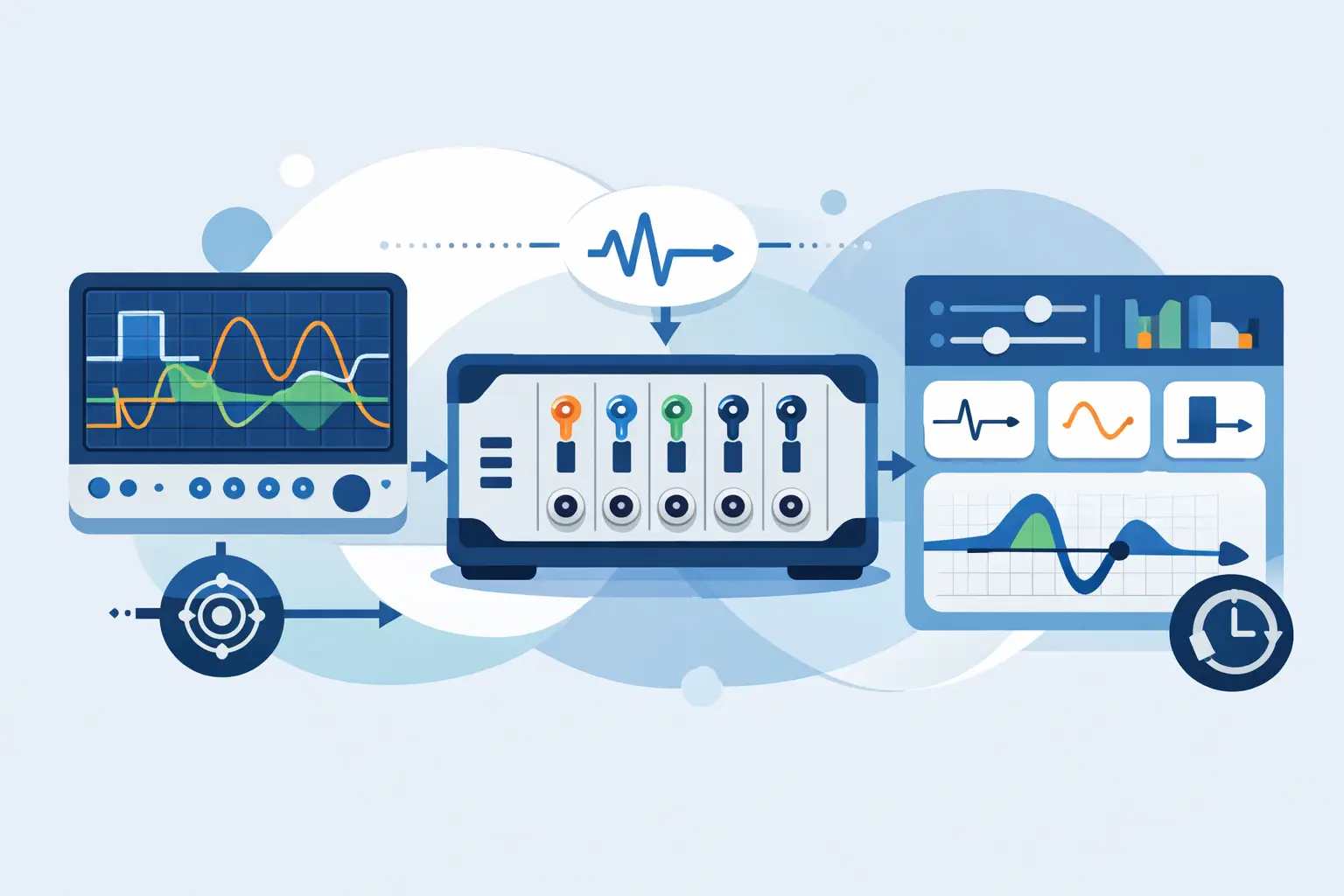
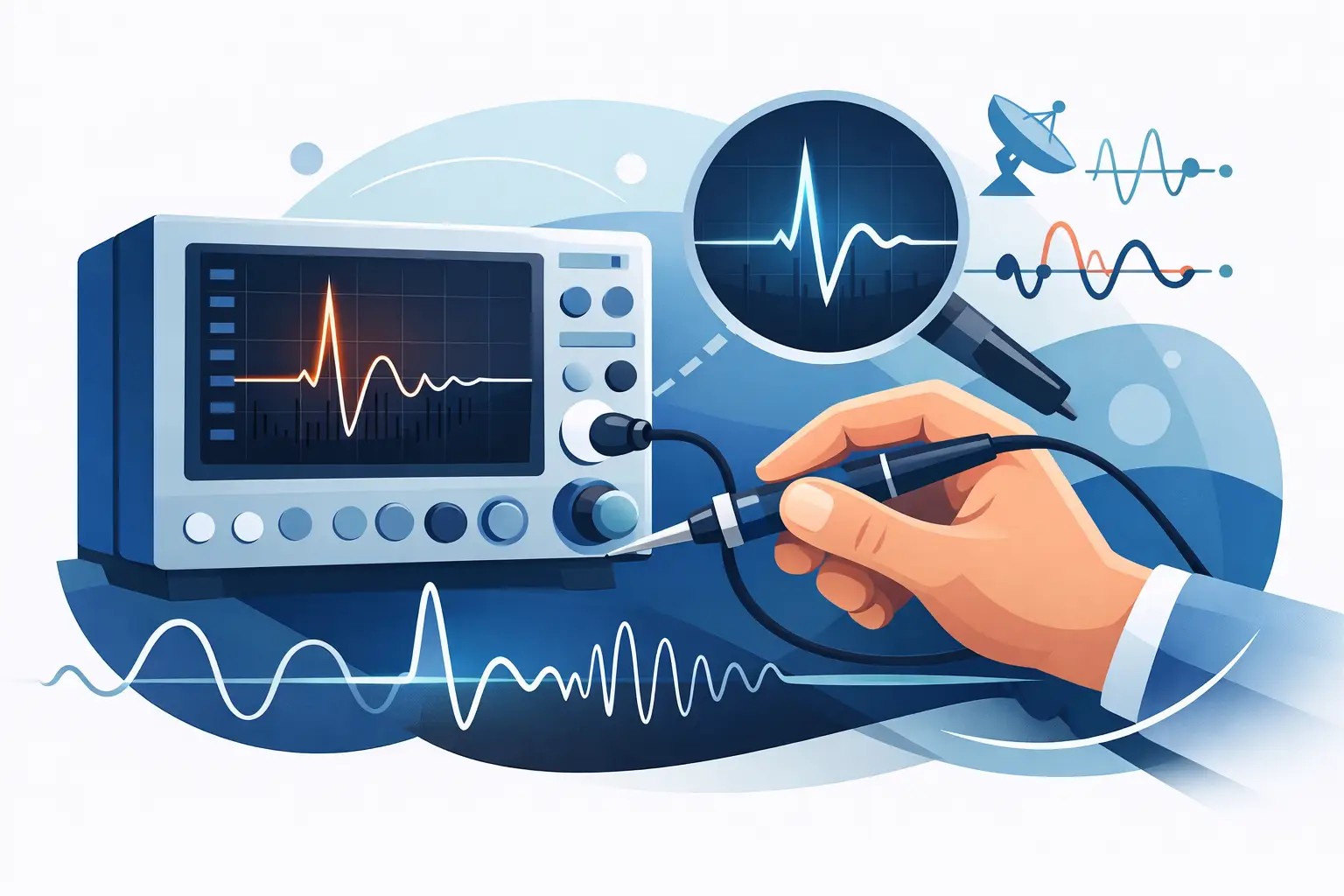
In an electronic warfare environment, digitization sits at a critical boundary between the analog front end and the downstream software chain. If performance is compromised at this stage, later signal processing cannot recover what was never captured correctly. A digitizer must convert wideband RF or IF content into a data stream that preserves spectral detail, transient behavior, modulation characteristics, and timing relationships.
That requirement sounds straightforward until real operating conditions are considered. Signals may be sparse or crowded. Pulse widths may be short, repetition intervals irregular, and amplitudes highly unequal. A system may need to observe continuous activity over a wide span, or it may need to react to intermittent emissions that appear for microseconds and disappear. In both cases, the digitizer has to maintain measurement integrity without introducing clipping, missed events, or timing ambiguity.
This is why electronic warfare applications tend to push past generic data acquisition requirements. They place unusual pressure on instantaneous bandwidth, spurious-free dynamic range, effective number of bits, onboard memory, triggering flexibility, and deterministic transfer behavior.
Key performance criteria for an RF digitizer for electronic warfare
Bandwidth is usually the first specification teams review, and for good reason. Wider instantaneous bandwidth allows more of the spectrum to be observed at once, reducing the need for sweeping and increasing the chance of intercepting short-duration emissions. But bandwidth alone does not determine usefulness. A very wide capture with poor dynamic range can become difficult to exploit in a contested spectrum where low-level signals sit near high-power emitters.
Dynamic range often has more operational value than headline sample rate. In electronic support and signal intelligence workflows, the challenge is frequently distinguishing weak signals without losing visibility when stronger signals enter the same acquisition window. That requires careful attention to ADC performance, front-end gain control, noise floor, and intermodulation behavior. If the digitizer compresses too early or raises the effective noise floor, analysts lose confidence in the data.
Sampling rate also matters, but its value depends on the architecture. A higher rate can support broader direct acquisition or provide margin in IF sampling designs. Still, overspecifying sample rate while underestimating storage and processing load can create a system bottleneck. In many programs, it is smarter to match sample rate to the actual RF chain and analysis objective rather than buying excess capability that the host cannot move or process in real time.
Memory depth is another area where paper comparisons can be misleading. Long recording time is useful, but only if the system can sustain writing, indexing, and retrieval in a way that supports the mission. Some applications require uninterrupted capture for post-mission analysis. Others need segmented acquisition, event-based recording, or circular buffering to retain pre-trigger and post-trigger context. The right memory architecture depends on whether your priority is persistence, responsiveness, or both.
Timing and synchronization deserve equal attention. Electronic warfare systems increasingly rely on multi-channel coherence, sensor fusion, and correlation across platforms or subsystems. If the digitizer cannot maintain precise timing alignment, confidence drops in pulse characterization, angle estimation, and cross-channel event reconstruction. Clock stability, external reference support, trigger determinism, and channel-to-channel skew all need to be evaluated in the context of the intended deployment.
Why architecture matters more than one big spec
A common procurement mistake is selecting a digitizer from a single standout number. In lab discussions, that number is often bandwidth or sample rate. In fielded systems, the better predictor of success is architectural fit.
For example, a direct RF sampling approach can simplify the analog chain and reduce conversion stages, but it may impose different constraints on filtering, spur management, and downstream processing. An IF-based approach may offer greater front-end control and easier integration with legacy systems, but at the cost of added analog complexity. Neither is universally better. The right choice depends on the threat environment, spectral occupancy, SWaP constraints, and how much signal conditioning is acceptable before digitization.
Data interface strategy is part of that architecture. A digitizer that captures excellent data but cannot move it reliably into the recording or processing pipeline becomes a lab instrument, not a mission-ready subsystem. PCIe throughput, onboard FPGA resources, DMA efficiency, driver maturity, and SDK support all affect the practical value of the hardware. Engineering teams should assess not only what the instrument can sample, but what the entire system can ingest, store, and analyze without dropped records or added latency.
Lab use versus deployed use
The same rf digitizer for electronic warfare may be evaluated very differently depending on whether it supports bench characterization, system integration, or deployment.
In the lab, flexibility often matters most. Engineers may need programmable triggering, software accessibility, wide configuration options, and rapid iteration across scenarios. Here, open APIs, analysis tool compatibility, and straightforward calibration workflows can save substantial development time.
In a deployed or embedded context, priorities shift. Mechanical form factor, thermal behavior, shock and vibration tolerance, startup repeatability, and long-term support become more significant. If the instrument will operate in a platform with constrained cooling or intermittent power conditions, benign lab performance is not enough. Stability under environmental stress is part of measurement performance.
This distinction also affects how teams think about calibration and traceability. For development systems, frequent verification may be practical. For deployed assets, calibration intervals, drift behavior, and supportability have a direct lifecycle cost. Buyers in regulated and mission-critical programs tend to value instruments backed by clear service, documentation, and repeatable metrology practices because these factors reduce uncertainty over the life of the program.
Integration questions engineers should ask early
Integration risk usually appears late, when it is most expensive. The safer approach is to challenge the acquisition chain before selecting hardware.
Start with the signal environment. Are you trying to monitor a broad spectrum continuously, capture rare transient events, or characterize known emitters with high fidelity? Those are different jobs, and they can point to different digitizer architectures.
Then look at front-end behavior. What filtering, gain staging, and protection exist ahead of the ADC? Can the chain tolerate strong out-of-band energy without desensitizing the receiver? A high-performance digitizer cannot compensate for poor front-end decisions.
Next, evaluate software and control requirements. Will data be processed in real time, stored for offline exploitation, or both? Does your team need direct access through an SDK, FPGA customization, or support for existing analysis environments? These questions often decide implementation effort more than analog specs do.
Finally, assess support expectations. Defense and high-reliability programs rarely buy instruments as isolated components. They buy availability, technical response, calibration continuity, and the ability to maintain a measurement baseline over years of use. This is where an engineering-focused supplier with experience in high-speed digitizers and signal recording systems can offer more value than a low-friction catalog purchase.
A practical selection mindset
The best selection process is evidence-driven. Define the signal scenarios that matter, reproduce them as closely as possible, and evaluate candidate hardware against mission-relevant criteria rather than brochure highlights. That usually means testing weak-signal visibility next to strong interferers, validating sustained throughput, measuring trigger reliability on real pulse trains, and checking synchronization under the same timing conditions the final system will use.
It also means accepting trade-offs. Wider bandwidth may increase data burden. Higher sensitivity may reduce headroom if front-end management is poor. More onboard processing may simplify the host design but limit flexibility later. Good engineering decisions come from knowing which compromises your application can tolerate.
For organizations building or upgrading electronic warfare capability, the rf digitizer is not just another acquisition card. It is the point where electromagnetic reality becomes usable data. If that conversion is accurate, repeatable, and well integrated, every downstream stage has a stronger foundation. If it is not, the rest of the system spends its time compensating for uncertainty that should never have been introduced in the first place.
A careful evaluation now usually saves far more than procurement cost later, especially when the mission depends on capturing the signal that appears once and does not repeat.