Battery test problems usually show up at the edges – during pulse loads, at cutoff thresholds, or after hundreds of repeat cycles when small measurement errors start to matter. That is why selecting the right dc electronic load for battery testing is less about checking a power rating box and more about matching the instrument to the battery chemistry, operating profile, and compliance requirements behind the test.
In production, R&D, and qualification environments, a DC electronic load is the controlled sink that forces a battery to reveal useful behavior. It can simulate a device drawing steady current, a subsystem demanding bursts of power, or a discharge profile used to estimate runtime and capacity. But the same load that works well for a small lithium-ion pack on a bench may be poorly suited for high-energy modules, low-voltage cells, or battery management system validation.
What a dc electronic load for battery testing actually needs to do
At a basic level, the instrument must absorb energy from the battery while controlling the discharge condition. In practice, that requirement expands quickly. Engineers often need constant current for capacity testing, constant resistance for source behavior studies, and dynamic loading to reproduce real operating conditions. If the load cannot transition cleanly between levels, settle fast enough, or hold the programmed value within tolerance, the battery data becomes harder to trust.
The quality of the result depends on more than load control. Voltage measurement resolution, current accuracy, sampling behavior, and trigger coordination all affect whether a discharge curve is useful for engineering decisions or only adequate for a rough screening test. For regulated industries and performance-critical systems, those distinctions are not minor.
Matching the load to the battery and test objective
The first decision is not the instrument. It is the test objective. Capacity verification, internal resistance characterization, pulse discharge analysis, lifecycle testing, and BMS cutoff validation do not stress the same capabilities.
For capacity testing, stability and accuracy over long discharge intervals matter most. A load that drifts with temperature or introduces timing inconsistency can skew amp-hour and watt-hour calculations. For pulse testing, transient response matters more. If the current step overshoots or settles slowly, the voltage sag you record reflects both the battery and the instrument behavior.
Battery chemistry also changes the requirement. Lithium-ion cells often demand precise cutoff thresholds and repeatable pulsed profiles. Lead-acid testing may involve longer discharges and different current scaling. Supercapacitor and hybrid storage applications can push the need for very fast dynamic behavior. When engineers say they need a dc electronic load for battery testing, the real answer always starts with what is being tested and what decision the data must support.
Current, voltage, and power range
These are the obvious specifications, but they still cause avoidable mismatches. The instrument must cover the full battery voltage range, including the upper limit at full charge and the lower region near cutoff. Current range is equally important, especially if one platform must test both low-current standby devices and higher-current operational profiles.
Power rating deserves a more careful look. A battery may sit within the nominal voltage and current limits of the load but still create thermal stress over long discharge durations. Continuous dissipation, derating behavior, ambient temperature, and cooling method all affect whether the system can run repeatable test schedules without interruption.
Low-voltage performance
Low-voltage, high-current battery testing is one of the more demanding cases. Small errors in cabling, fixture resistance, or instrument sense can consume a meaningful share of the available voltage. In these setups, remote sense capability is not optional. Without it, the instrument may regulate at its own terminals rather than at the battery, which distorts discharge conditions and cutoff behavior.
This is also where resolution matters. A load may advertise broad capability but still lack the fine control needed to characterize a single cell or a low-voltage module with confidence.
Operating modes that matter in battery work
Most battery applications use constant current mode, and for good reason. It is straightforward, aligns with many qualification methods, and supports direct capacity calculations. But battery testing rarely stays in one mode forever.
Constant resistance can be useful when simulating loads that scale with source voltage. Constant power better reflects systems that attempt to maintain a defined power draw as voltage changes. Short or dynamic modes may be needed for transient behavior, protection validation, or stress screening.
The practical question is whether the load supports the profiles your test plan actually requires, not just whether it lists multiple modes on a datasheet. Some instruments include dynamic switching features, programmable sequences, and trigger-based operation that make them more suitable for automated battery validation. Others are better suited for static bench tests.
Why transient response often decides data quality
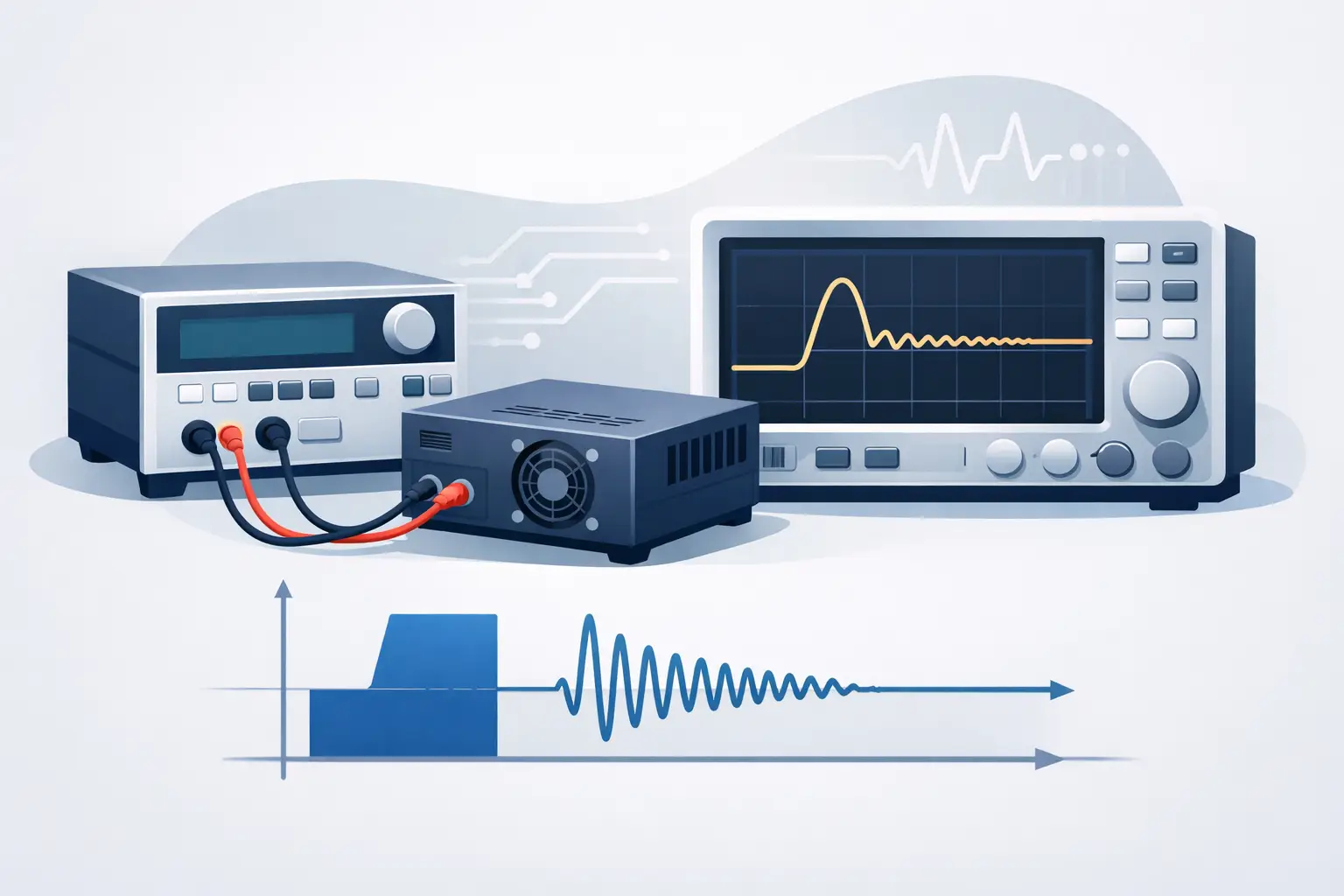
Battery-powered products rarely draw perfectly flat current. Motors start, radios transmit, processors wake, and power converters switch states. If you are validating battery behavior in realistic conditions, the load has to reproduce those transitions with sufficient speed and repeatability.
A slow or poorly damped response can mask the battery’s true voltage droop, recovery, and protection margins. That becomes critical in EV subsystems, medical devices, aerospace electronics, and defense applications where short-duration events can determine whether a system stays within operating limits.
Transient performance is not only about speed. It is also about control. Rise time, fall time, overshoot, recovery, and programmable slew all affect whether the waveform is representative. The best choice depends on the application. Extremely fast transitions are useful in some electronic loads, but if they exceed the real use case, they may create unrealistic stress rather than better data.
Accuracy, repeatability, and traceability
When battery data feeds design release, compliance reports, or production acceptance, repeatability matters as much as absolute performance. Engineers need confidence that a result obtained this week can be compared to a result obtained next quarter on another station.
That is where calibration traceability, measurement architecture, and long-term stability enter the conversation. Accuracy specifications should be read with attention to range, temperature effects, and measurement conditions. A broad percentage number without context tells very little about how the load will perform near the lower end of the range or across long test runs.
In many organizations, the instrument is part of a larger quality system. ISO-certified operations, controlled calibration intervals, and documented measurement uncertainty all support defensible results. A capable load is only part of the solution. The surrounding measurement discipline matters just as much.
Safety and protection are part of the test system
Battery testing carries real energy and real risk. The electronic load should not be evaluated only on performance specifications. Protection features, fault handling, thermal management, and integration with emergency shutdown architecture are essential, particularly for higher-power packs and automated fixtures.
Overvoltage, overcurrent, overpower, and overtemperature protections are baseline expectations. The better question is how the instrument behaves during a fault. Does it fail to a safe state quickly? Can it communicate fault conditions clearly to the operator or control software? Does it support interlocks and coordinated shutdown with the rest of the test stand?
These details matter even more when testing cells or packs with protection circuitry. A load used for BMS validation must interact predictably with cutoff thresholds, recovery behavior, and abnormal conditions. If the test instrument introduces ambiguity, troubleshooting becomes slower and conclusions become less defensible.
Software, automation, and data handling
Battery testing is often repetitive, long-duration, and data-heavy. Manual operation may be adequate for occasional lab work, but production validation, lifecycle studies, and characterization programs usually require software control and integration into broader automated environments.
Programmable sequences, data logging, trigger I/O, and remote interfaces reduce operator burden and improve consistency. If your team needs to correlate load behavior with digitizers, environmental chambers, safety testers, or power analyzers, communication support becomes part of the buying decision.
The right level of software capability depends on workflow. A simple benchtop application may only need basic scripting and export functions. A manufacturing line or validation lab may need API access, deterministic sequencing, and clean data handoff into quality systems. This is one area where a more sophisticated instrument can save time well beyond the test itself.
When a higher-spec load is worth it
Not every battery application needs the most advanced platform. For basic discharge verification, a simpler load may be entirely appropriate. Problems start when a low-cost instrument is asked to support compliance work, dynamic validation, or multi-year test programs where repeatability and uptime carry real cost.
A higher-spec dc electronic load for battery testing tends to earn its place when the battery is safety-critical, the test profile is dynamic, the throughput is high, or the data will be audited and compared over time. In those cases, measurement confidence, thermal stability, protection behavior, and integration support usually outweigh the initial hardware delta.
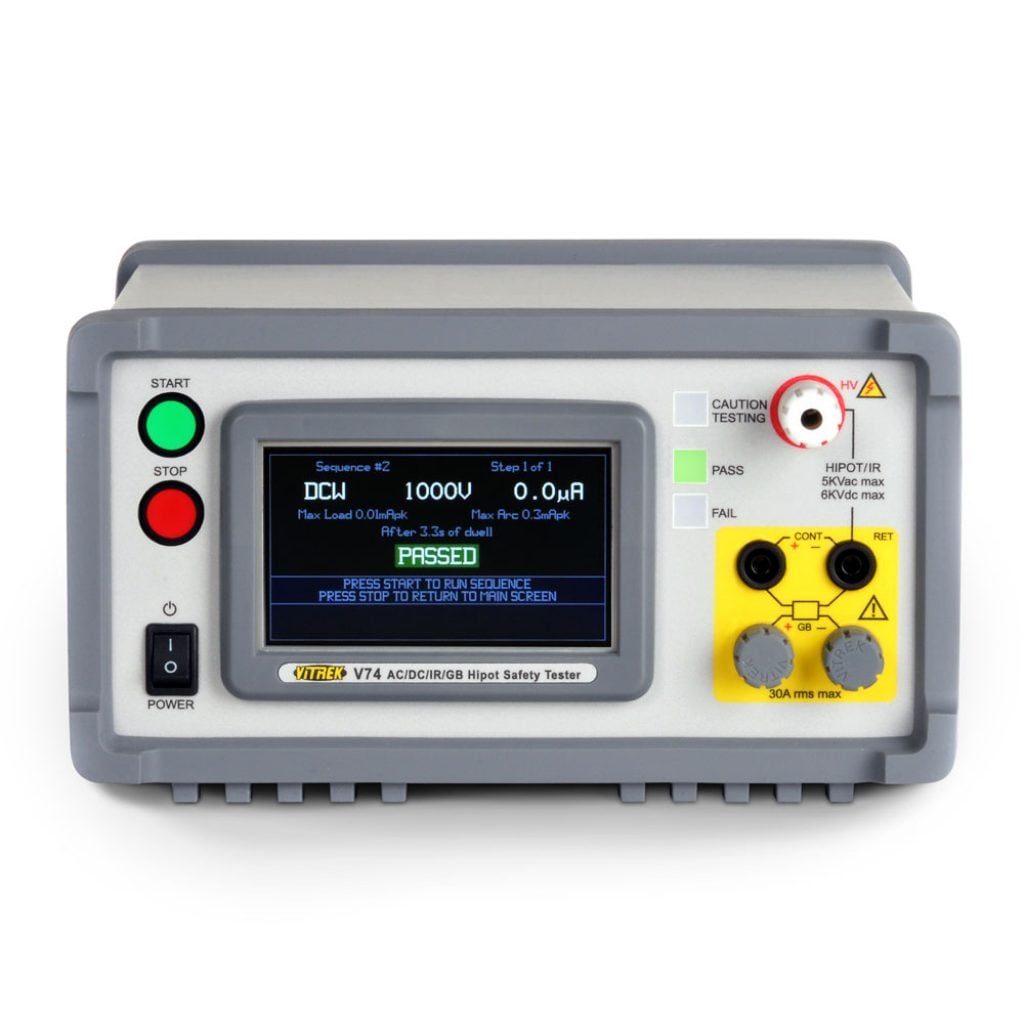
For engineering teams that need dependable performance in regulated or mission-critical environments, suppliers with deep instrumentation experience can reduce risk at both the product and application level. That is often where a manufacturer such as Vitrek adds value – not just through hardware capability, but through the measurement discipline behind it.
The best electronic load is the one that makes your battery data easier to trust before a design review, a compliance audit, or a production release forces the question.