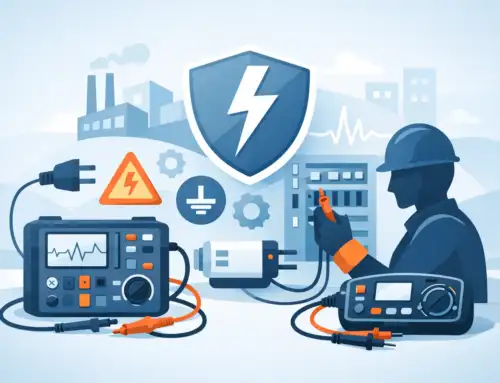
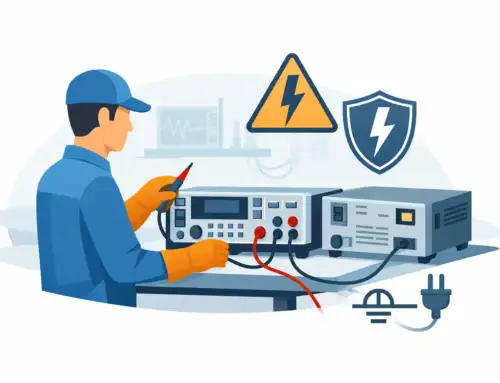
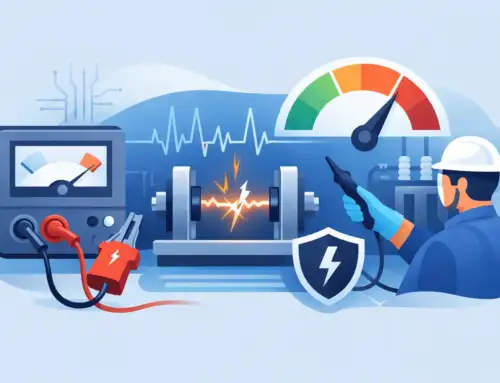
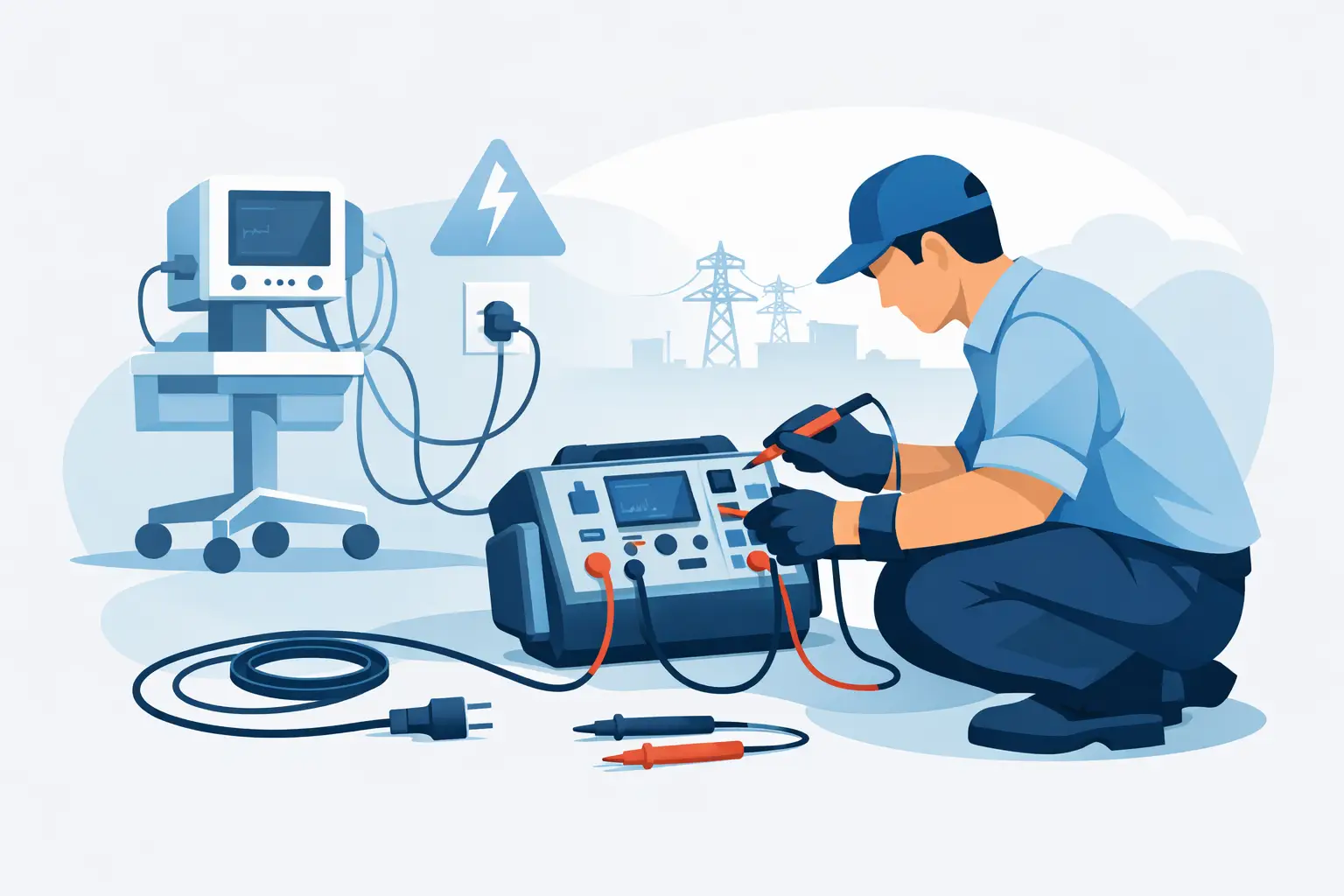
A product can pass functional test, meet performance targets, and still fail the moment hazardous voltage finds a weak insulation path. That is the practical reason engineers ask when is dielectric withstand testing required. The answer is rarely just “at final inspection.” It depends on the product category, the applicable safety standard, the phase of development, and the level of risk tied to insulation failure.
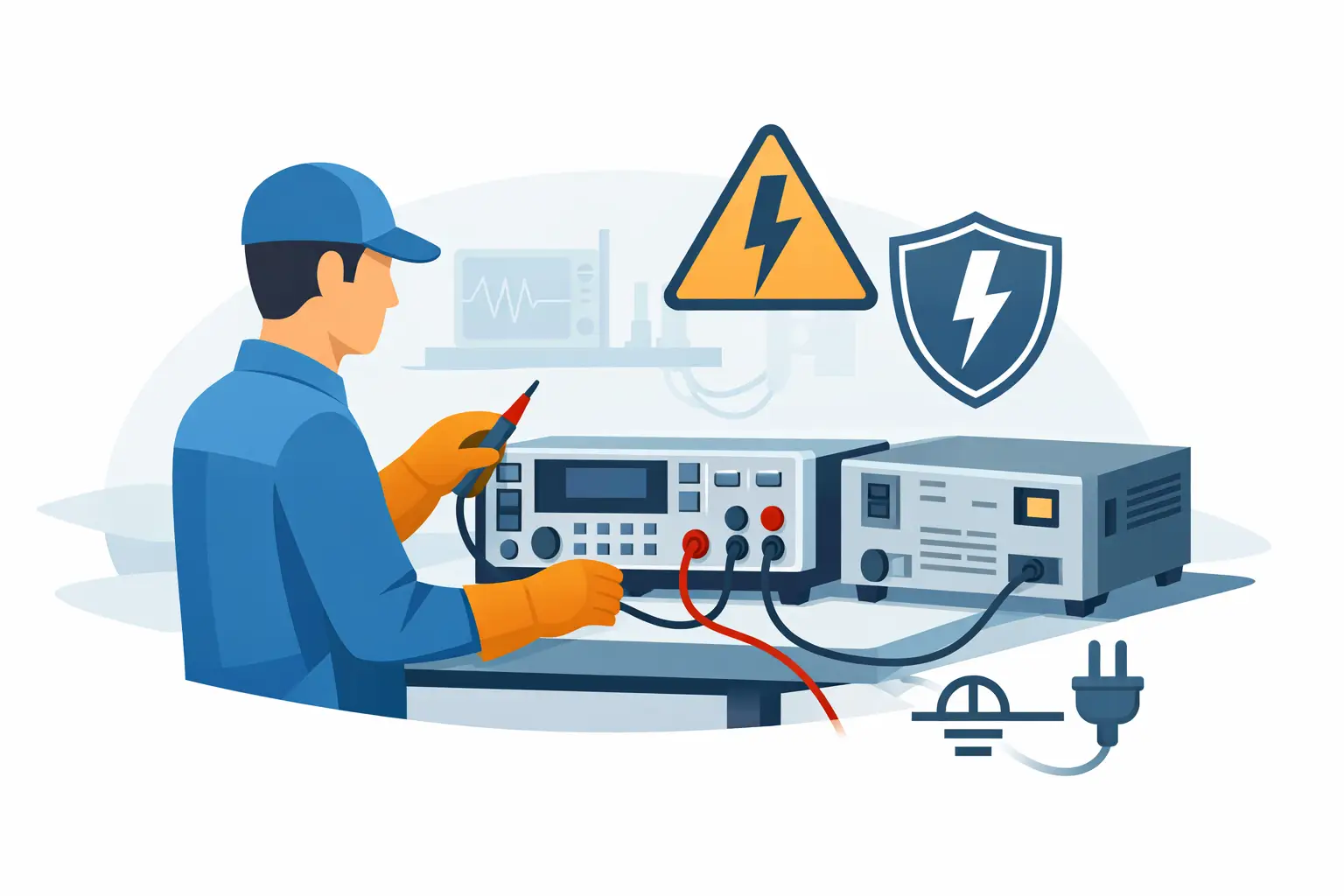
Dielectric withstand testing, often called hipot testing, verifies that insulation and isolation barriers can tolerate a specified overvoltage for a defined time without breakdown. In regulated industries, that requirement is usually not optional. It is written into product safety standards, certification programs, production quality plans, or customer acceptance criteria. In other cases, it is not explicitly mandated by a standard, but it is still the most defensible way to confirm electrical safety margins before a product reaches the field.
When is dielectric withstand testing required by standards?
The clearest case is formal compliance. If your product falls under a standard that calls for dielectric strength or electric strength verification, then dielectric withstand testing is required as part of type testing, routine production testing, or both. That applies across many sectors, including medical electrical equipment, laboratory instruments, industrial controls, appliances, power electronics, EV subsystems, and aerospace hardware.
The exact requirement depends on the standard’s intent. Some standards require a dielectric withstand test during design qualification to prove insulation coordination, creepage, clearance, and barrier construction are adequate. Others also require a routine production hipot test to screen workmanship defects such as damaged wire insulation, improper spacing, solder splash, contamination, or assembly variation.
This distinction matters. A design qualification test demonstrates that the design concept can survive abnormal electrical stress. A production test is used to catch manufacturing escapes on every unit or on a defined sample basis. Engineers sometimes assume that passing certification once removes the need for ongoing hipot testing. In many product categories, that is not the case.
When is dielectric withstand testing required during development?
Even before formal certification, dielectric withstand testing is often required as a design validation tool. If a product includes mains isolation, operator-accessible conductive parts, patient connections, chassis-to-line barriers, or isolated communications and power domains, hipot testing helps verify that the intended insulation system performs as designed.
This is especially relevant when the design includes new materials, higher power density, reduced spacing, encapsulated assemblies, transformers, custom cable harnesses, or compact PCB layouts. Simulation and spacing calculations are necessary, but they do not reveal every real-world defect. Voids in potting, contamination on assemblies, insulation nicking during routing, and marginal transformer construction can all remain hidden until high voltage is applied.
In development, the test level and dwell time may be more aggressive than production settings. Engineering teams may use dielectric withstand testing to characterize failure thresholds, compare insulation systems, or establish process margins. That does not mean a harsher test is always better. Excessive stress can damage otherwise acceptable product, particularly with sensitive solid-state assemblies. The right approach is standards-aligned and application-specific, not arbitrary.
Production hipot testing is often a quality requirement, not just a compliance exercise
On the manufacturing floor, dielectric withstand testing is commonly required when the cost of an insulation failure is high and the defect mechanisms are realistic. Products with mains input, high-voltage output, reinforced insulation, or safety-critical end use are strong candidates for routine testing. Medical systems, industrial power equipment, battery systems, avionics subsystems, and consumer products subject to recognized safety schemes all fall into this category.
Routine production hipot testing helps detect defects introduced after design release. A unit can be fully compliant on paper and still fail because a harness was pinched, a fastener shifted spacing, or a process left conductive residue where it should not be. These are manufacturing problems, not design problems, and production dielectric withstand testing is one of the few direct screens for them.
There is a trade-off, however. Repeated or poorly controlled hipot testing can overstress components and reduce long-term reliability. That is why production test parameters must be selected carefully. Ramp rate, leakage current limits, AC versus DC method, dwell time, and fixturing all affect whether the test acts as an effective screen or an unnecessary stress event.
What situations usually trigger the need for dielectric withstand testing?
If the product has a safety isolation barrier, dielectric withstand testing is usually part of the conversation. The requirement becomes stronger when any of the following are true: the equipment connects to AC mains, the user can touch conductive surfaces, the system includes patient or operator connections, the product is installed in harsh industrial environments, or failure could create shock, fire, or secondary equipment damage.
It is also commonly required after significant design or process changes. A new transformer vendor, different potting compound, revised PCB stack-up, modified enclosure geometry, changed cable routing, or alternate insulation film can all affect dielectric performance. If the change influences electrical spacing or insulation integrity, requalification testing is typically justified and may be mandatory under change-control procedures.
Field service and refurbishment can create another trigger. For repaired assemblies, remanufactured equipment, or systems that have undergone rework affecting insulation barriers, a dielectric withstand test may be required before returning the unit to service. That is particularly true in regulated maintenance environments where service records must show objective evidence of safety verification.
AC or DC dielectric withstand testing – and why the choice matters
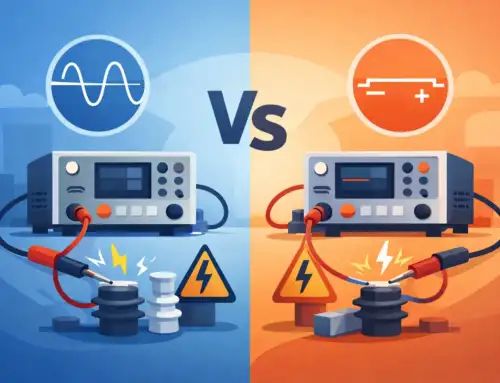
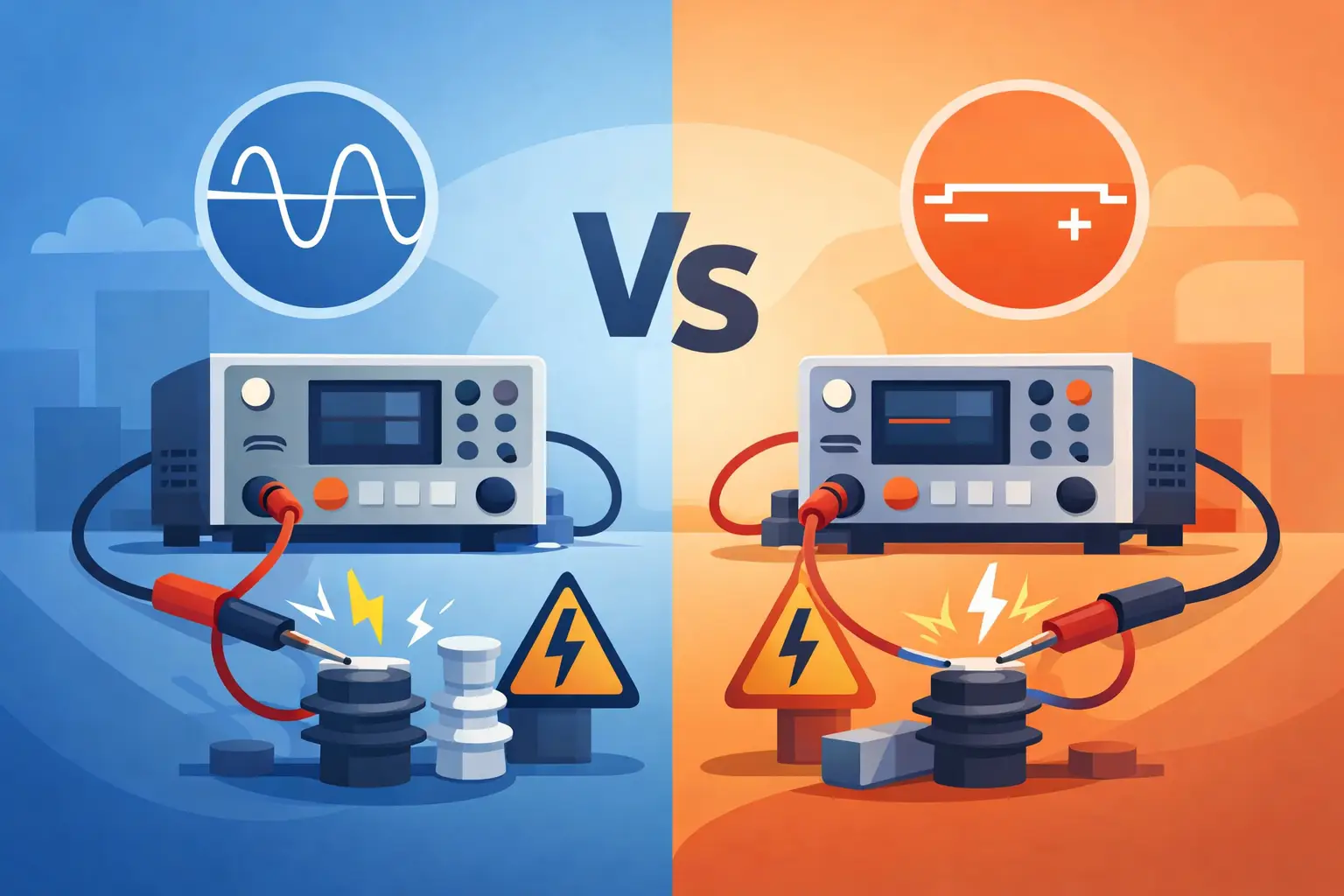
Standards and product architecture influence whether AC hipot, DC hipot, or another method is appropriate. AC testing stresses both capacitive and resistive components of the insulation system and is often preferred when simulating real operating conditions on AC-powered products. DC testing can reduce charging current effects and is sometimes better suited to high-capacitance loads or certain production environments.
The choice is not just a matter of convenience. If the insulation system contains substantial capacitance, AC testing may produce high reactive current that complicates limits and fixturing. DC testing may simplify that, but it requires proper charge and discharge control and may not reveal the same failure modes in the same way. Some standards are explicit about the method. Others permit alternatives if the equivalent stress can be justified.
For engineering and compliance teams, this is where instrumentation quality matters. Test voltage accuracy, current measurement integrity, ramp control, arc detection behavior, and data capture all affect whether the result is meaningful. In tightly regulated programs, repeatability and traceability matter as much as raw voltage capability.
When dielectric withstand testing may not be routine on every unit
Not every product should be subjected to a full routine hipot on every unit forever. Some standards allow reduced testing, sample-based verification, or alternate methods once the manufacturing process is stable and validated. Sensitive electronics may also justify lower-stress screening approaches if engineering analysis and standards permit them.
This is an area where “required” can mean different things. A standard may require dielectric withstand testing for type approval but not for 100 percent end-of-line production. A customer specification may require routine testing regardless of the standard minimum. An internal quality system may impose additional verification because the field risk is unacceptable.
The engineering question is not only whether a standard mentions hipot. It is whether your product’s hazard profile, certification path, and manufacturing realities support routine application. That decision should be documented, justified, and tied to the governing requirements.
Common mistakes in deciding when dielectric withstand testing is required
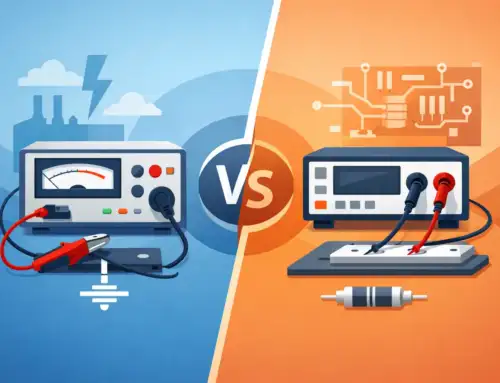
One common mistake is treating dielectric withstand testing as interchangeable with insulation resistance testing. They are related but not equivalent. Insulation resistance testing measures leakage under a DC voltage and is useful for trending and basic insulation checks. Dielectric withstand testing applies a higher stress intended to prove that breakdown does not occur under abnormal but controlled conditions.
Another mistake is assuming the same test program applies across all product revisions and markets. A unit sold into one regulatory framework may need different test levels or acceptance criteria than the same platform configured for another market. The same is true when moving from benchtop equipment to installed industrial systems.
A third mistake is choosing test parameters that are technically possible but not standards-based. Higher voltage and longer dwell can look conservative, but they can also create unnecessary product stress and invalid comparisons. The correct test is the one tied to the applicable requirement and the insulation system being evaluated.
A practical way to determine whether dielectric withstand testing is required
Start with the governing product safety standard, then confirm whether dielectric strength testing is specified for design qualification, routine production, or post-repair verification. From there, map the requirement to the actual insulation barriers in the product – mains to chassis, primary to secondary, accessible parts to hazardous voltage, isolated I/O, and any application-specific patient or operator interfaces.
Next, evaluate whether recent design or process changes affect those barriers. If they do, requalification is usually warranted. Finally, confirm that the test method, voltage level, duration, and leakage limits are appropriate for both the product and the production environment. In many organizations, this review sits at the intersection of design engineering, compliance, quality, and manufacturing engineering. That is exactly where it belongs.
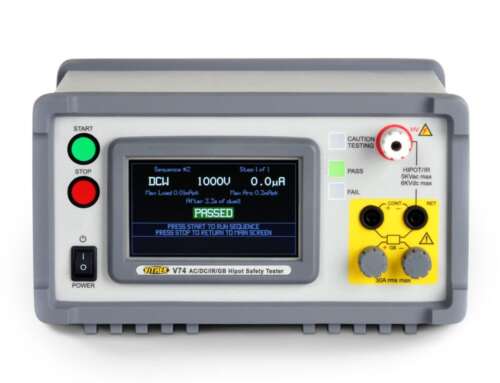
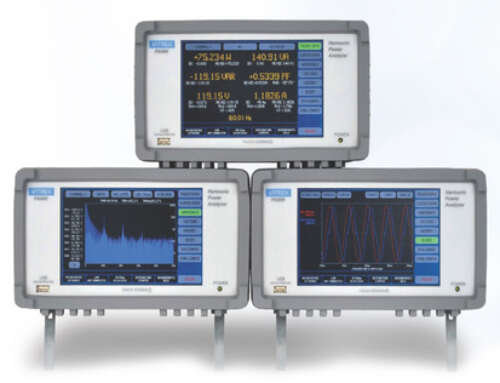
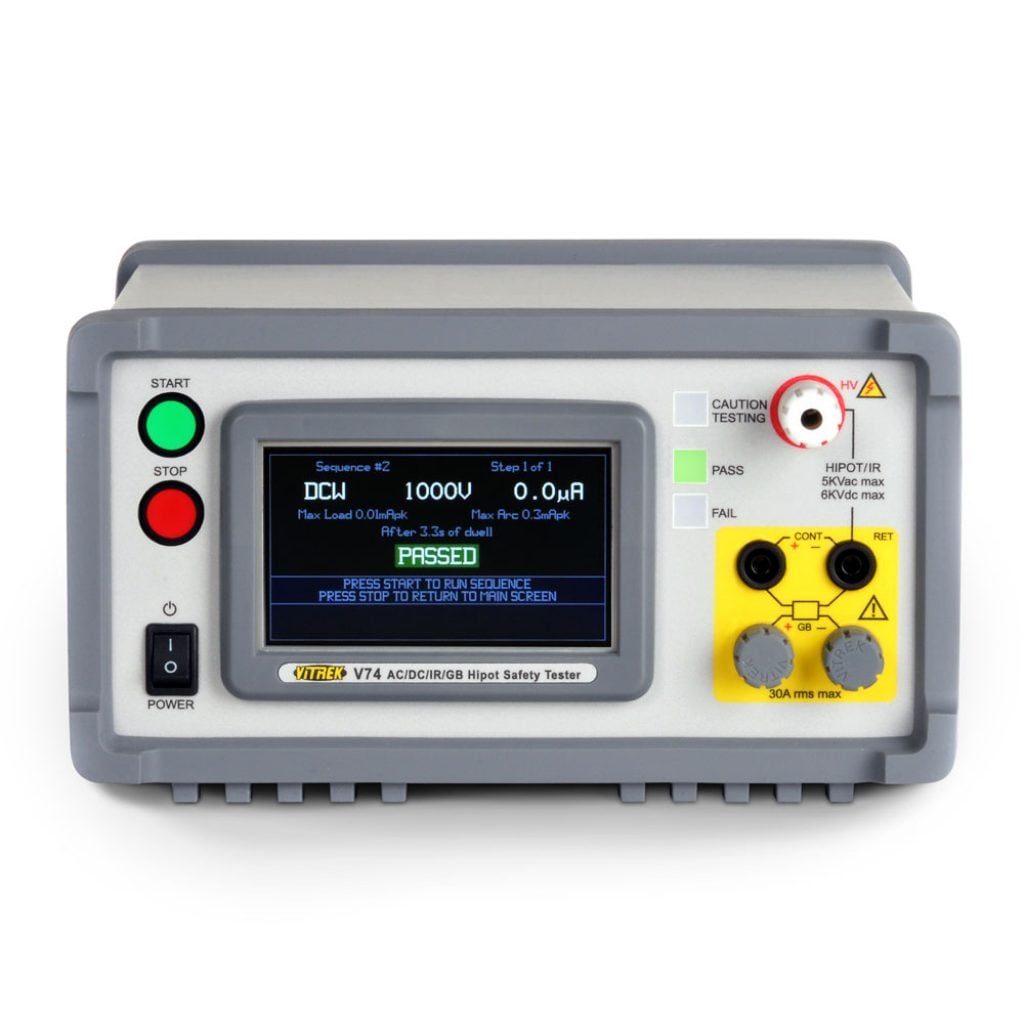
For teams building or validating safety-critical equipment, dielectric withstand testing is not just a box to check. It is objective evidence that an insulation system can tolerate stress before a user, technician, or connected asset has to. Done correctly, it reduces uncertainty where uncertainty is least acceptable. Vitrek supports that work with instrumentation built for accurate, repeatable high-voltage safety test performance in regulated environments.
When the question comes up on a program review or production line, the best answer is not a rule of thumb. It is a documented decision grounded in standards, product risk, and test integrity.