A hipot station that slows the line, throws nuisance failures, or leaves gaps in traceability is not just a test problem. In manufacturing, it becomes a yield problem, a compliance risk, and eventually a cost problem. That is why selecting the best hipot testers for manufacturing requires more than comparing maximum voltage and price. The right choice depends on what you build, which standards apply, how fast your line runs, and how much confidence you need in every pass/fail result.
What makes the best hipot testers for manufacturing
In a production environment, a hipot tester has to do three jobs at once. It must apply the required electrical stress safely and repeatably. It must fit the pace and control architecture of the line. It must also generate results that quality, compliance, and audit teams can trust.
That changes the buying criteria. A bench unit with adequate voltage may work well in a lab but still be a poor fit for manufacturing if it lacks programmable test sequences, remote control, barcode integration, fast discharge, or consistent measurement performance at production volumes. The best systems are not simply high-voltage sources. They are production instruments built for repeatability, operator safety, standards alignment, and data integrity.
For most manufacturers, the decision comes down to five technical factors: required test methods, voltage and current capability, throughput, integration, and traceability. If one of those is mismatched, the system will either become a bottleneck or force compromises in the test plan.
Start with the test method, not the feature list
Hipot requirements differ widely by product type. A medical device assembly, an EV component, a power supply, and a consumer appliance may all require dielectric withstand testing, but not in the same way. Some applications call for AC hipot because it better represents operating stress. Others prefer DC hipot to reduce charging current effects, especially for products with significant capacitance. Many manufacturers also pair hipot with insulation resistance and ground bond testing in one sequence to reduce handling time and operator variation.
This is where product family matters. If your line runs multiple SKUs with different standards or test limits, a tester with flexible memory, multi-step programs, and controlled ramp and dwell parameters is usually more valuable than one with a single headline specification. The best hipot testers for manufacturing support the actual test strategy you need today and the adjacent methods you are likely to add later.
A common mistake is buying only for the current production requirement. That can work if the line is stable and the product is mature. It becomes expensive when engineering adds new variants, regulatory expectations shift, or customers ask for more detailed test records.
AC, DC, and combination capability
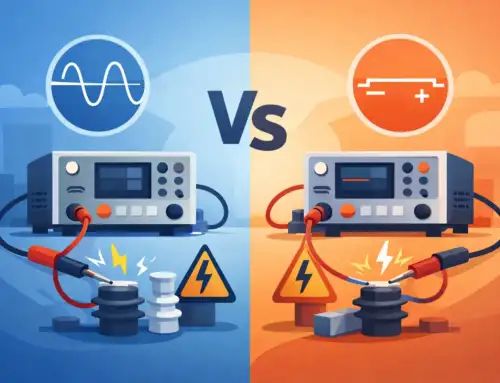
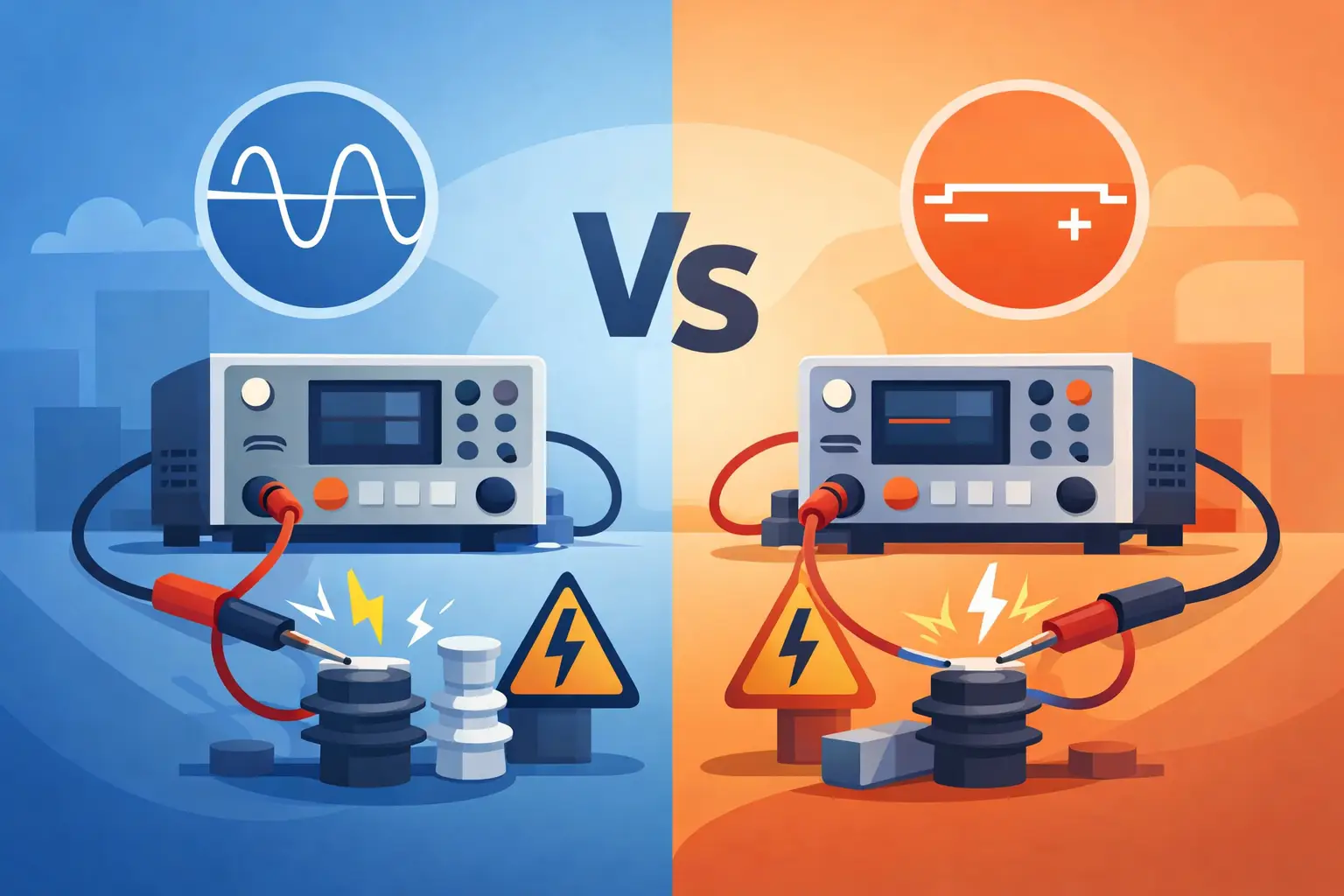
AC and DC hipot are not interchangeable choices in every application. AC testing avoids the need to charge and discharge the device under test in the same way DC does, which can simplify some production flows. DC testing, however, may offer better sensitivity in certain insulation applications and can reduce the apparent current caused by capacitive loading.
Combination instruments often make the most sense for mixed-product operations. They give test engineering more freedom to align the method with the applicable product standard without adding another instrument to the station. That matters in manufacturing cells where space, fixture complexity, and training time are tightly managed.
Throughput is about more than test time
Manufacturers often focus first on dwell time because it is easy to compare. In practice, total cycle time is shaped by several smaller behaviors: ramp-up speed, discharge time, fixture settling, operator prompts, and result handling. A tester that saves one or two seconds per cycle can create a meaningful gain across a high-volume line.
The complication is that faster is not always better. Aggressive ramp settings may increase nuisance failures on sensitive products. Shortcuts in discharge can create safety concerns or delay the operator at unload. The right instrument gives you control over these parameters so the test can be optimized for both throughput and repeatability.
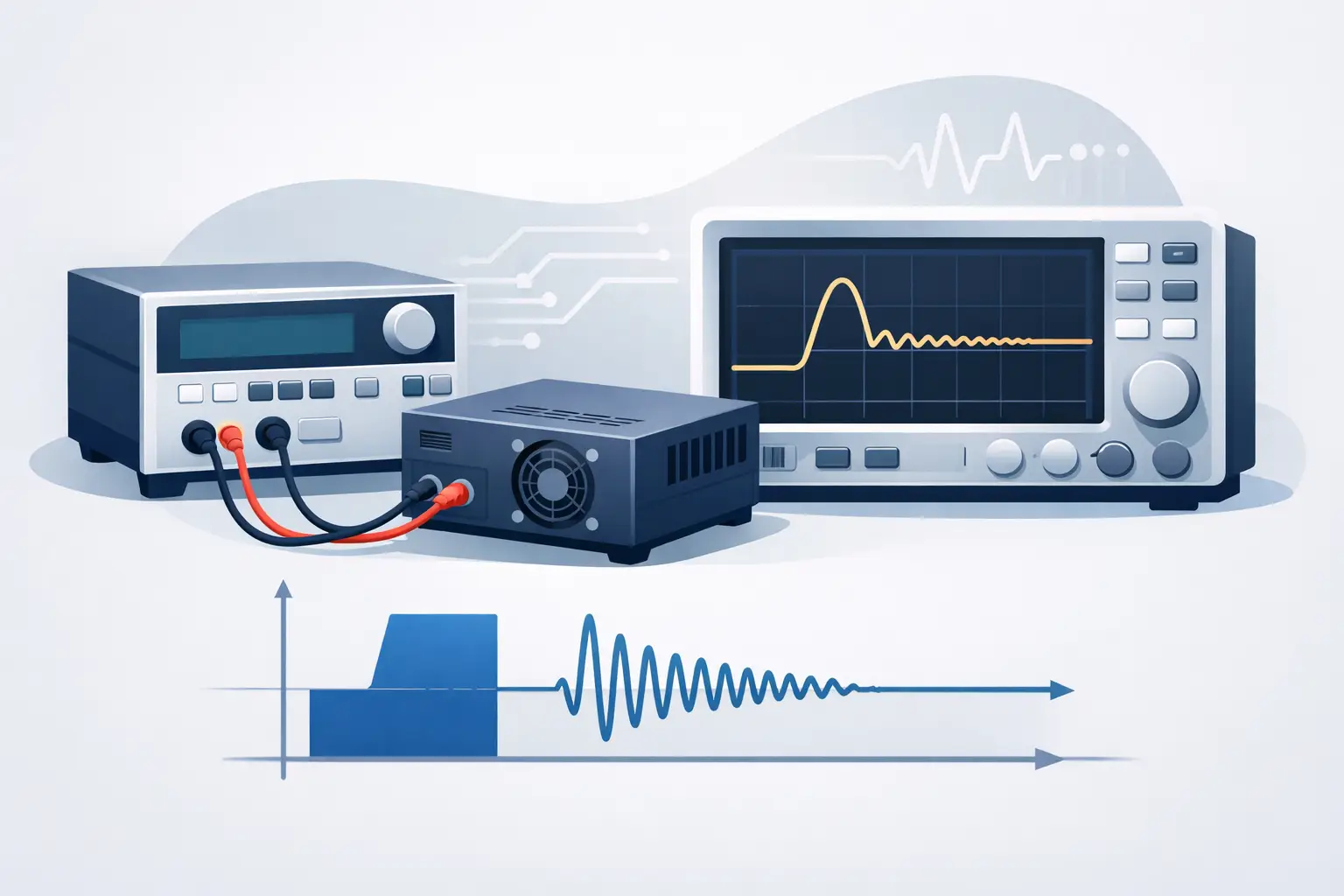
If your manufacturing environment includes highly capacitive products such as filters, cable assemblies, motors, or power electronics, discharge behavior deserves extra attention. A tester that handles these loads predictably will reduce waiting time and improve operator confidence. That is not a minor convenience. It affects line rhythm and the consistency of pass/fail decisions.
Accuracy, resolution, and stability matter in regulated environments
In low-risk, high-volume consumer production, a basic pass/fail outcome may be enough. In aerospace, medical, automotive, defense, and other regulated sectors, measurement quality carries more weight. You may need tighter current limit control, better resolution near the decision threshold, and confidence that the instrument remains stable over time and use.
That is where headline voltage ratings tell only part of the story. The stronger indicator of long-term value is whether the tester provides repeatable measurements, calibration traceability, and performance that holds up under production duty. A unit that drifts, varies by station, or produces hard-to-explain failures costs far more than its purchase price once investigation time and false reject rates are considered.
For technical buyers, this is also a vendor question. The best manufacturing hipot platforms are backed by calibration support, application expertise, and documentation suitable for controlled environments. If your team has to defend test results during audits or customer reviews, those support elements are part of the instrument’s value.
Integration often separates a good instrument from the right one
A standalone hipot tester may be enough for a manual workbench. Manufacturing lines increasingly require more. PLC control, digital I/O, Ethernet or serial communications, barcode-driven recipe selection, MES connectivity, and automated result logging all reduce operator dependency and improve traceability.
If you are building or upgrading an automated cell, integration should be evaluated as early as voltage capability. The tester needs to fit the line architecture, not sit beside it as an isolated device. That means checking command structure, response timing, programmable memories, signal interfaces, and how easily pass/fail data can be captured and associated with a serial number.
This is especially relevant for facilities moving from paper travelers or local spreadsheets to centralized manufacturing records. A hipot result with no product identifier is far less useful than a fully tied record showing limits, operator or station ID, date, time, and outcome. In quality systems that require traceable evidence, the instrument’s data handling features are operational requirements, not optional extras.
Safety features should be evaluated as production controls
Because hipot testing involves hazardous voltage, safety must be designed into the station, not delegated to operator awareness alone. Interlock support, remote start capability, clear status indication, fast abort behavior, and fixture-compatible guarding are basic expectations in serious manufacturing environments.
The most effective implementations treat the hipot tester as one element of a larger protected system. That includes enclosure interlocks, fail-safe access control, and procedures for capacitive discharge verification where applicable. A tester with strong built-in safety features simplifies compliance with internal EHS practices and reduces the chance of ad hoc workarounds on the line.
Matching tester class to manufacturing use case
Not every factory needs the same class of instrument. For low-mix, moderate-volume production with simple dielectric withstand requirements, a dedicated benchtop hipot tester may be entirely appropriate. The priority there is usually ease of setup, reliable basic programming, and a straightforward operator interface.
For higher-mix lines, contract manufacturing, or operations supporting multiple product families, more programmable systems usually provide better long-term value. Recipe storage, multi-step sequencing, and broader interface support reduce changeover time and simplify station standardization.
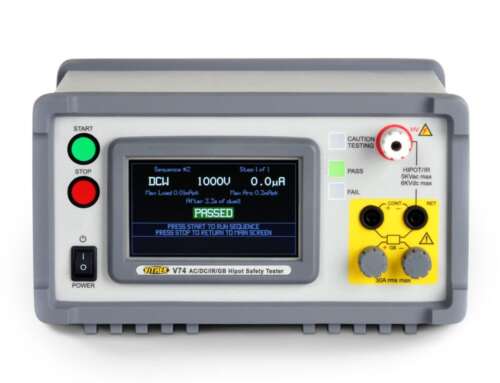
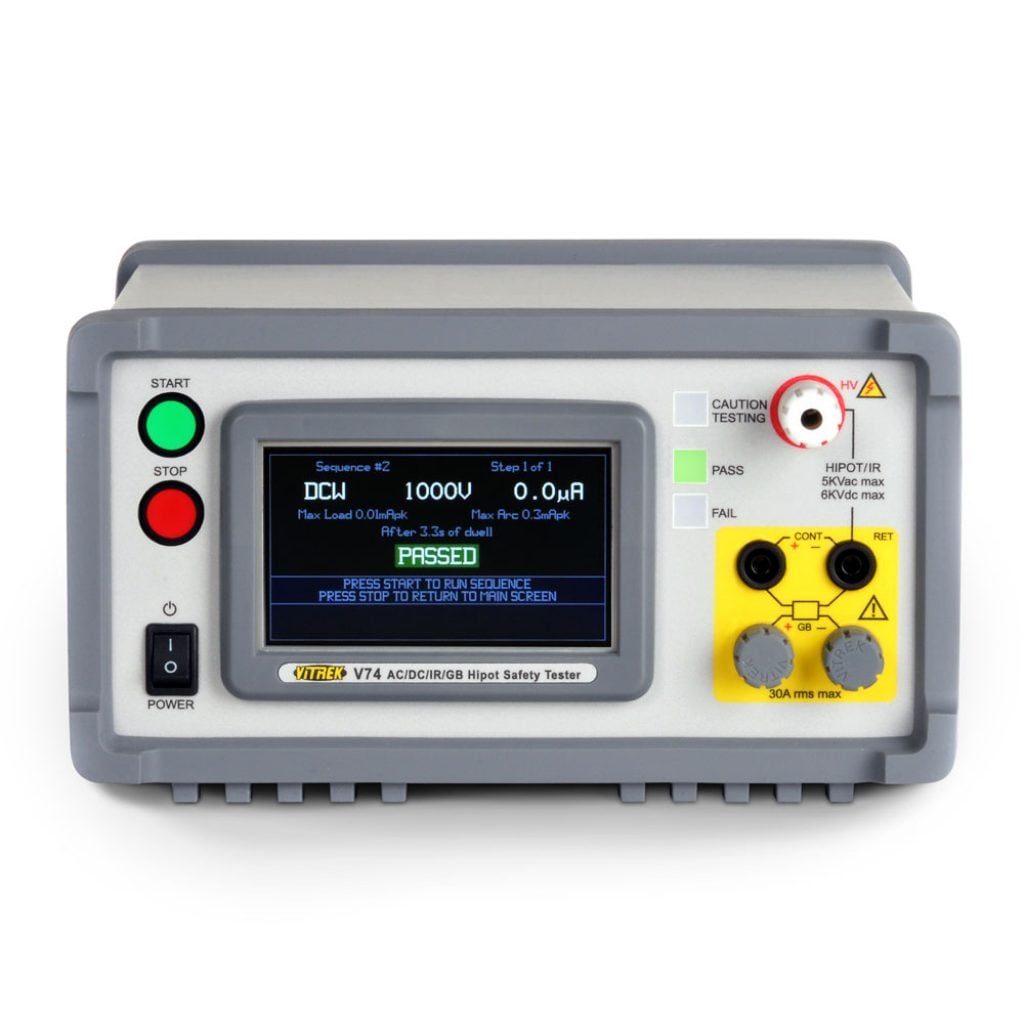
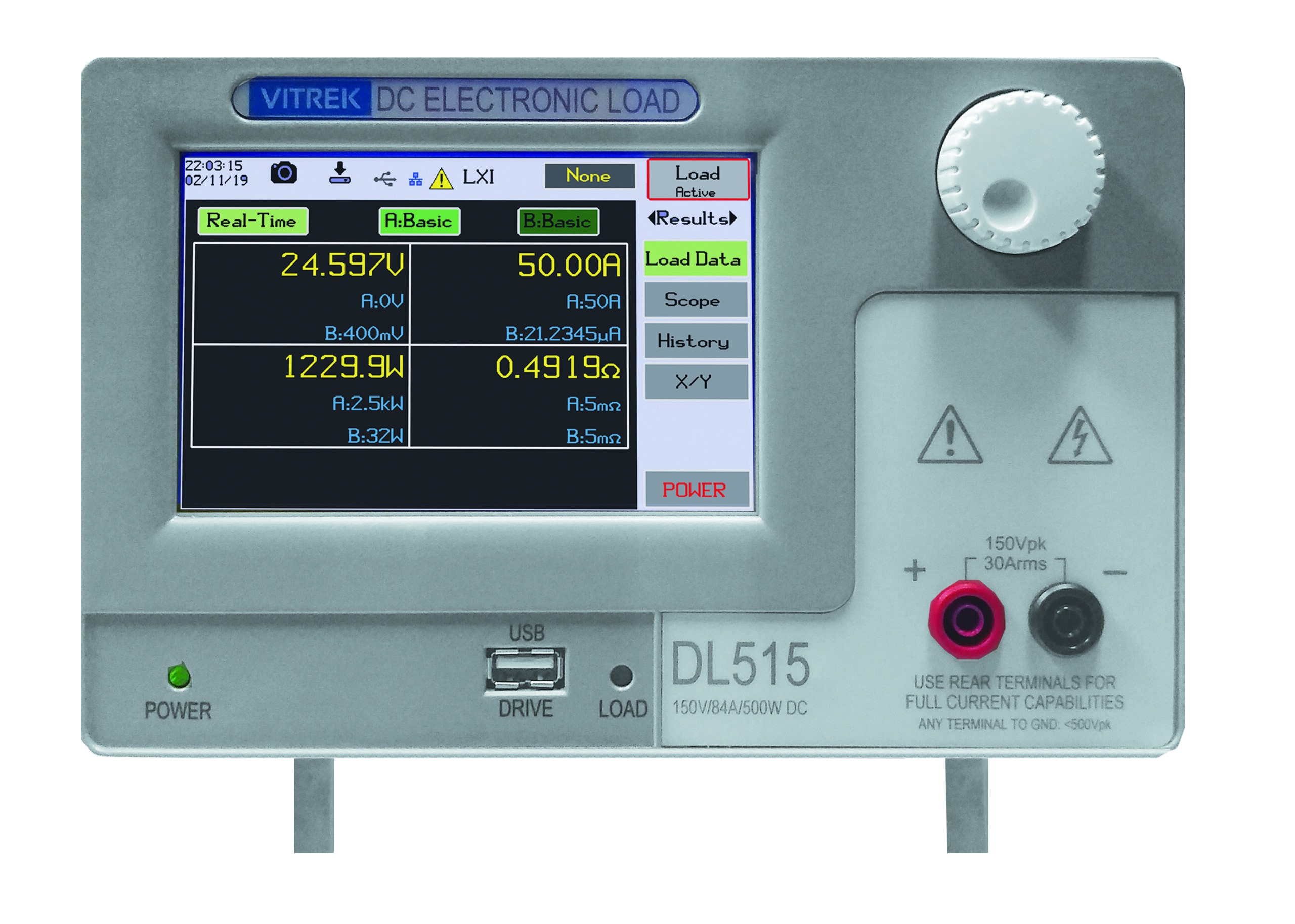
In highly regulated or technically demanding sectors, the priority shifts again. Here, buyers tend to value measurement integrity, configurable limits, integration into automated cells, and support infrastructure around calibration and validation. That is where engineering-focused suppliers tend to stand apart from commodity options. Companies such as Vitrek are often evaluated in these environments because the decision is not just about generating high voltage. It is about dependable performance in standards-driven production.
How to evaluate the best hipot testers for manufacturing before purchase
The most useful comparison is not a general product matrix. It is a test plan based on your own DUTs, fixture approach, standards, and line goals. Ask prospective suppliers to evaluate real application conditions, including capacitance, leakage behavior, required ramp and dwell settings, and data output needs. A tester that looks equivalent on paper can behave differently once connected to an actual production fixture.
It is also worth checking what happens around the edges of normal operation. How does the system respond to marginal failures? How quickly does it recover for the next cycle? How easy is it for engineering to change limits under controlled access? How well does it support calibration and verification routines? Those details tend to determine whether the system remains an asset after the first few months on the floor.
Price still matters, of course. But in manufacturing, the cheaper tester is not the lower-cost option if it adds seconds to every cycle, increases false failures, or creates manual rework in recordkeeping. The better metric is cost per reliable test result over the life of the station.
A well-chosen hipot tester becomes almost invisible in production. It runs repeatably, fits the line, supports the standard, and gives quality teams confidence in every recorded result. That is usually the clearest sign you chose well.