Validation problems often show up only after the load is wrong. A power supply passes at nominal current, then fails in the field when the actual demand profile includes fast edges, low-voltage high-current operation, or long dwell times at elevated temperature. That is why selecting DC load for validation is not a purchasing exercise alone. It is a measurement decision that directly affects whether test results reflect real operating conditions.
A DC electronic load used in validation has to do more than absorb power. It has to present the right electrical behavior, maintain that behavior repeatably over time, and provide data that supports engineering judgment, compliance records, and root-cause analysis. If the load cannot reproduce the stress profile your device under test will actually see, the test may still run, but the result can be misleading.
What selecting DC load for validation really means
In production screening, a basic pass-fail load may be enough. Validation is different. The goal is to characterize margins, expose failure mechanisms, and confirm performance across expected and worst-case conditions. That changes the selection criteria.
For validation work, the first question is not simply maximum wattage. It is whether the load can emulate the electrical conditions that matter to the device under test. For a DC-DC converter, that may mean high slew-rate current steps and stable operation during control loop evaluation. For a battery pack, it may mean long-duration discharge at defined current or power with accurate capacity measurement. For an automotive module, it may mean handling undervoltage conditions, pulse events, and recovery behavior without introducing artifacts.
A load that is oversized but electrically coarse can be less useful than a lower-power load with better dynamic control and measurement accuracy. Engineers often discover this when validation expands from static characterization to transient analysis.
Start with the DUT, not the load catalog
The cleanest path to selecting DC load for validation is to define the device under test in terms of operating envelope, failure risk, and required evidence. Voltage range and current range are only the beginning. You also need to understand startup conditions, normal regulation range, expected overload behavior, protection thresholds, and duty cycle.
Consider a low-voltage, high-current source such as a server rail or EV auxiliary converter. At 1 V to 5 V, cable resistance, connector losses, and remote sense implementation can distort the apparent load condition. In that case, the load’s input lead compensation, current regulation stability, and measurement resolution matter more than nameplate power alone. By contrast, when validating a higher-voltage source, insulation, operator safety, and dissipation margin may become dominant concerns.
The application also determines whether the load must sink current continuously or reproduce a changing profile. A static resistor bank can reveal gross failures. It cannot evaluate dynamic recovery, loop stability, or protection timing with confidence.
Choose the operating mode that matches the test objective
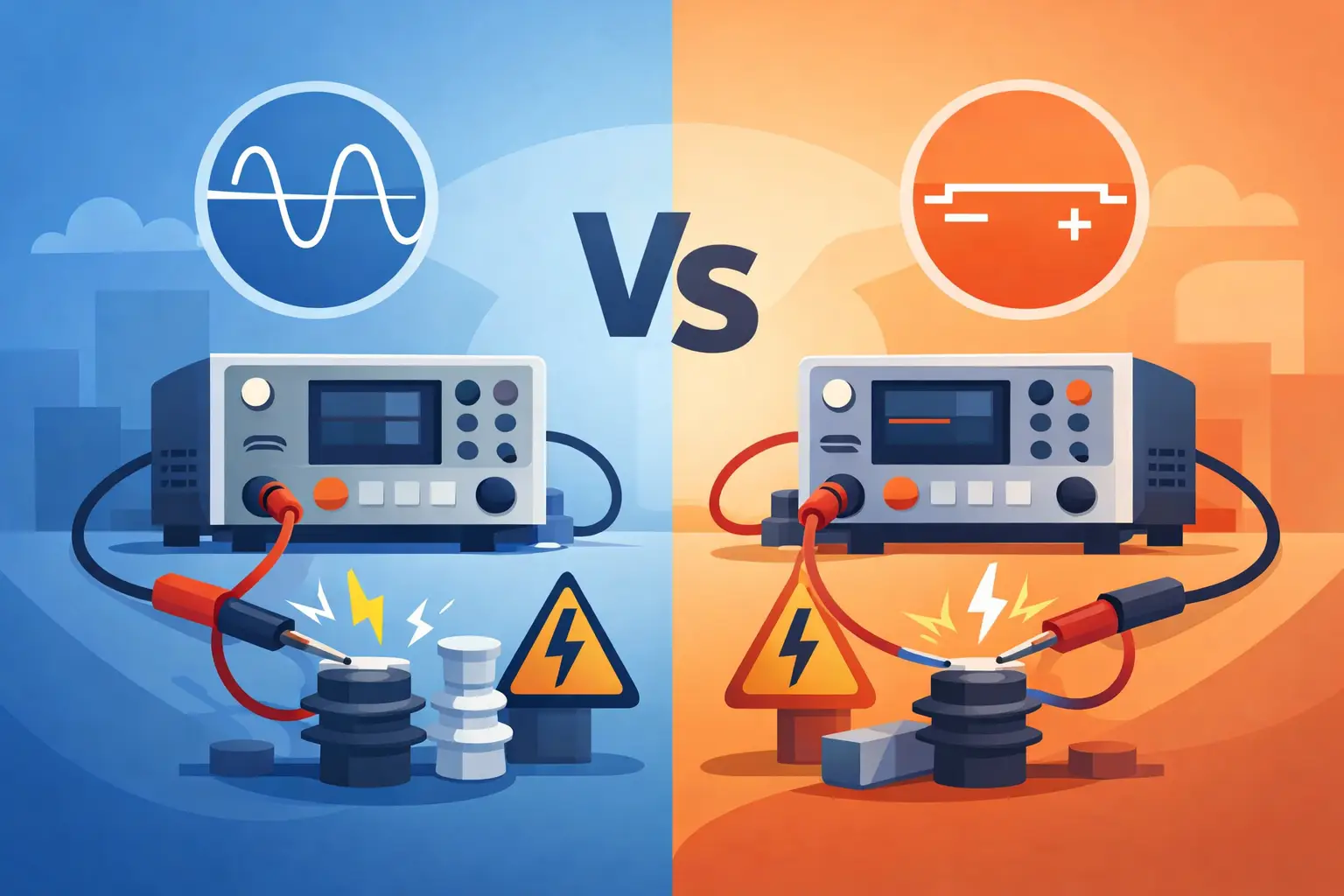
Most validation programs use some combination of constant current, constant voltage, constant resistance, and constant power. The correct mode depends on the behavior you are trying to emulate.
Constant current is common for supply regulation and current limit testing because it provides a controlled demand independent of DUT voltage variation. Constant resistance can better represent some real-world loads where current scales with voltage. Constant power is useful when validating sources that feed downstream converters or systems that attempt to maintain fixed power draw over a voltage range. Constant voltage mode is often applied in battery and charger testing, especially near cutoff or transition points.
The trade-off is that each mode stresses the DUT differently. Constant power, for example, can become aggressive at lower voltage because current rises as voltage falls. If your validation plan does not account for that behavior, you can create a test that is technically valid for the load but unrealistic for the application.
Dynamic performance is often the deciding factor
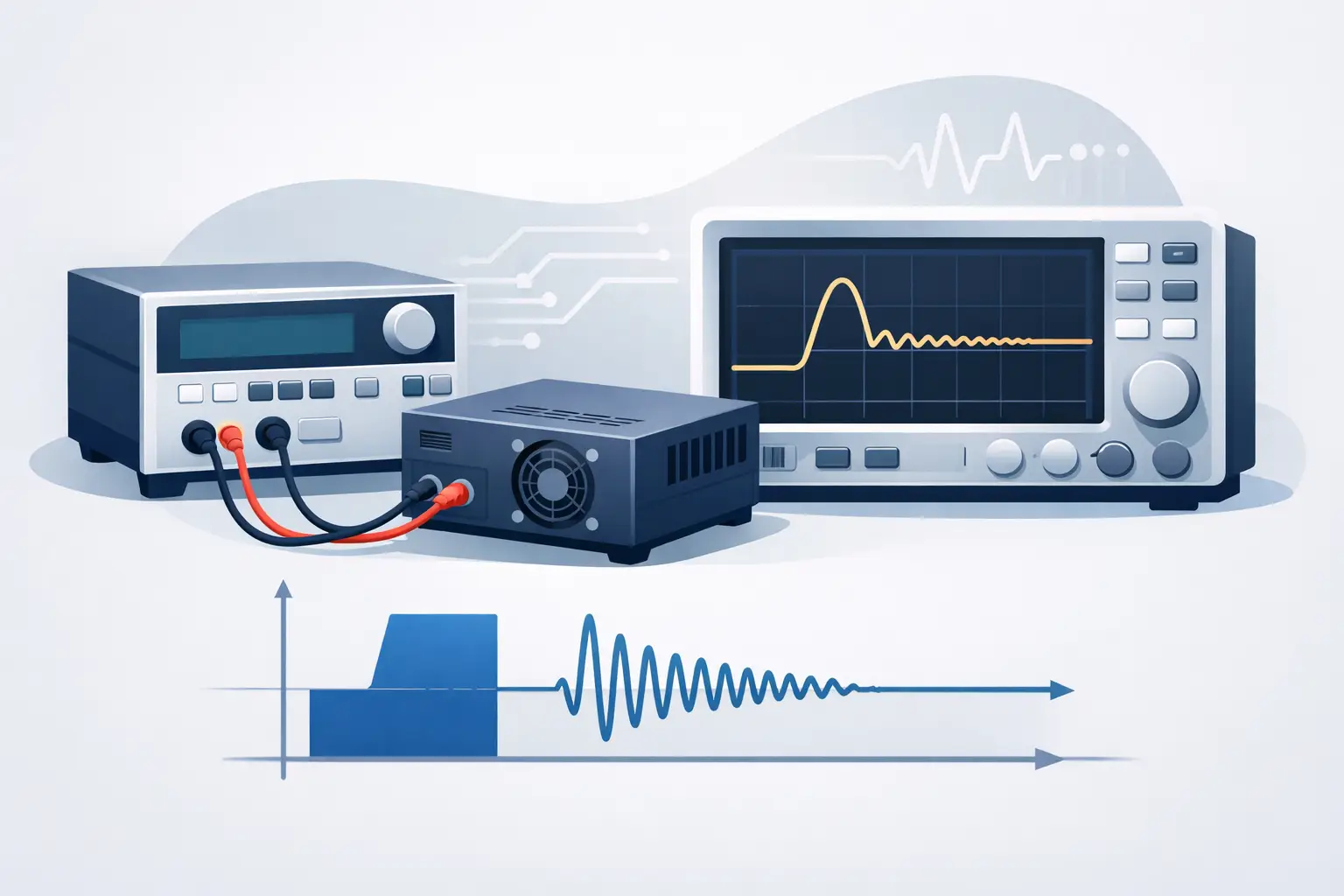
Many validation escapes come from transient behavior, not steady-state operation. Load step amplitude, slew rate, minimum pulse width, recovery time, and overshoot all determine whether the DUT is being tested realistically.
If you are validating a switching supply, the load should support current transitions fast enough to challenge the control loop without adding instability of its own. If the transient response of the load is too slow, the source may appear more stable than it really is. If the load rings or introduces timing uncertainty, you may end up diagnosing the test setup rather than the DUT.
This is where engineering-grade specifications matter. A broad claim of dynamic capability is less useful than defined slew-rate performance across current ranges, documented settling behavior, and clear operating boundaries.
Accuracy, resolution, and repeatability are validation requirements
In early evaluation, a few percentage points of uncertainty may be acceptable. In formal validation, especially where data supports qualification, compliance, or customer reporting, it often is not. The load’s current, voltage, and power measurement accuracy must align with the tolerance bands you are trying to verify.
If the DUT specification is tight, the load cannot consume most of the error budget. Resolution is equally important at low current, standby, or sleep-state testing. A load that performs well at high current may provide limited insight near zero load where leakage, quiescent current, or transition behavior is under review.
Repeatability matters because validation rarely depends on a single run. Engineers compare units, environmental conditions, firmware versions, and design revisions. When the load behaves consistently from run to run, differences in results are more likely to reflect the DUT instead of the test instrument.
Thermal and derating behavior should be evaluated early
A common mistake is selecting a load at the edge of nominal power and assuming it will sustain that level continuously. Validation often includes long dwell periods, elevated ambient conditions, and enclosed racks. That makes thermal design and derating behavior critical.
Check whether the rated power applies at your expected ambient temperature and whether it can be maintained continuously. Fan-cooled systems may perform differently as filters load with dust or as rack temperatures rise. If your test plan includes burn-in or long discharge cycles, thermal headroom is not optional. It protects both the equipment and the validity of the data.
Integration and data capture affect test credibility
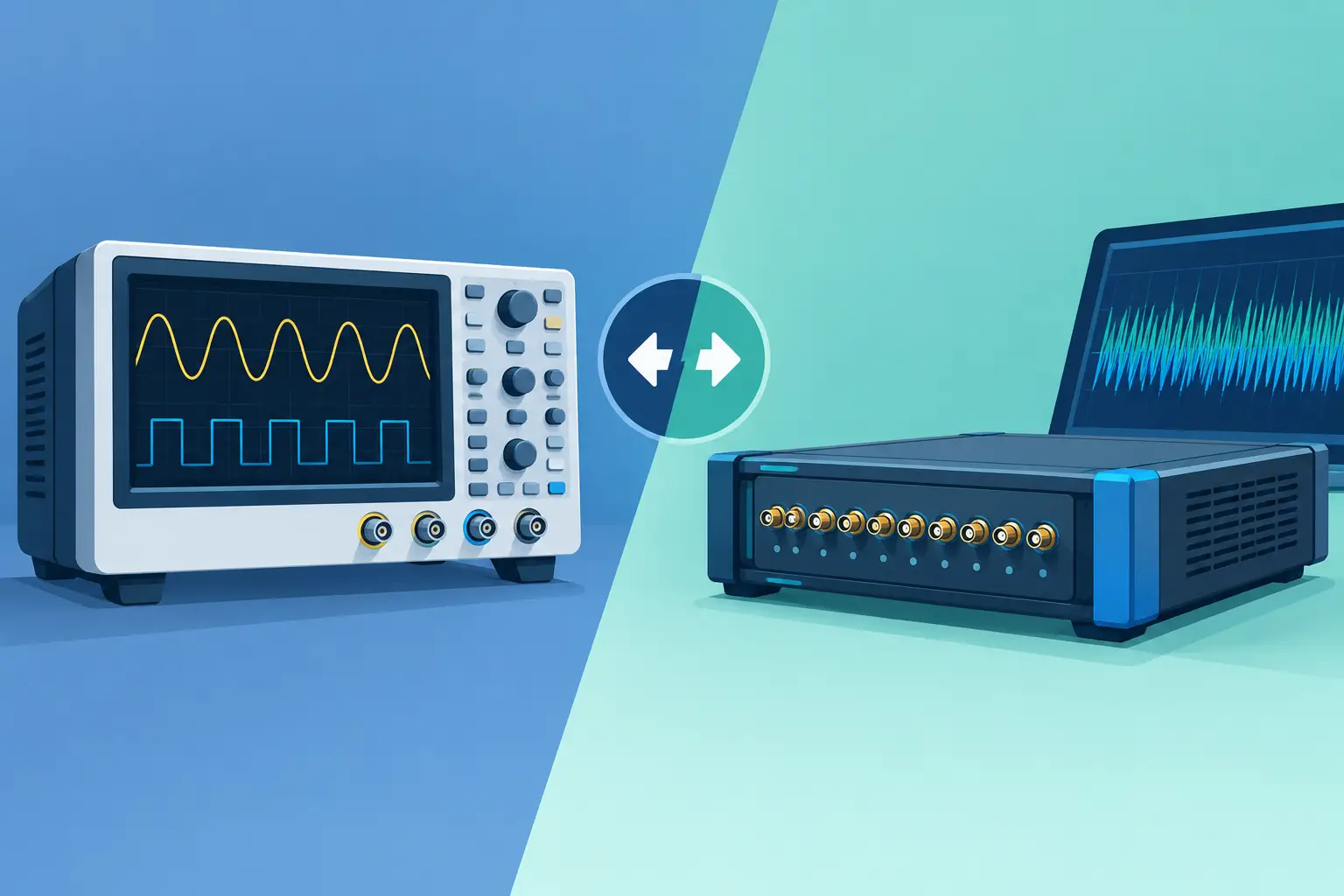
A standalone load can be sufficient for bench characterization. In a validation environment, instrument control, synchronization, and data logging usually become part of the requirement. You may need to coordinate the load with a power analyzer, digitizer, safety tester, or environmental chamber.
That raises practical questions. Does the load support the interfaces your system already uses? Can it execute programmed sequences with deterministic timing? Does it report measured values at a rate and format useful for traceability? Can it be scripted into existing validation frameworks without custom work that becomes a maintenance burden?
For regulated or high-consequence programs, calibration status and documentation quality also matter. A technically capable instrument that is difficult to calibrate, document, or audit can slow qualification and create avoidable gaps in compliance records.
Avoid the two most common selection errors
The first error is underestimating low-voltage, high-current testing. At low voltage, every milliohm in the path matters. Connection strategy, remote sense capability, and current distribution become part of the measurement system. If the load is selected without considering the full path, the DUT may be tested at a condition different from the one reported.
The second error is buying strictly to peak numbers. Maximum current and maximum power are easy to compare, so they often dominate selection. But validation quality is usually determined by secondary parameters – transient fidelity, low-end resolution, stability, programmability, and behavior under sustained operation. Those are the areas where a load either supports engineering decisions or forces workarounds.
A practical framework for selecting DC load for validation
Start by writing the test conditions before reviewing instruments. Define voltage range, current range, mode of operation, transient profile, duty cycle, ambient conditions, and data requirements. Then compare those requirements against continuous ratings, not just headline values.
Next, decide where your uncertainty budget can tolerate instrument error and where it cannot. If you need to characterize small efficiency changes, standby current, or threshold behavior, prioritize accuracy and resolution in those regions. If you need to expose instability or protection timing, prioritize dynamic response and timing control.
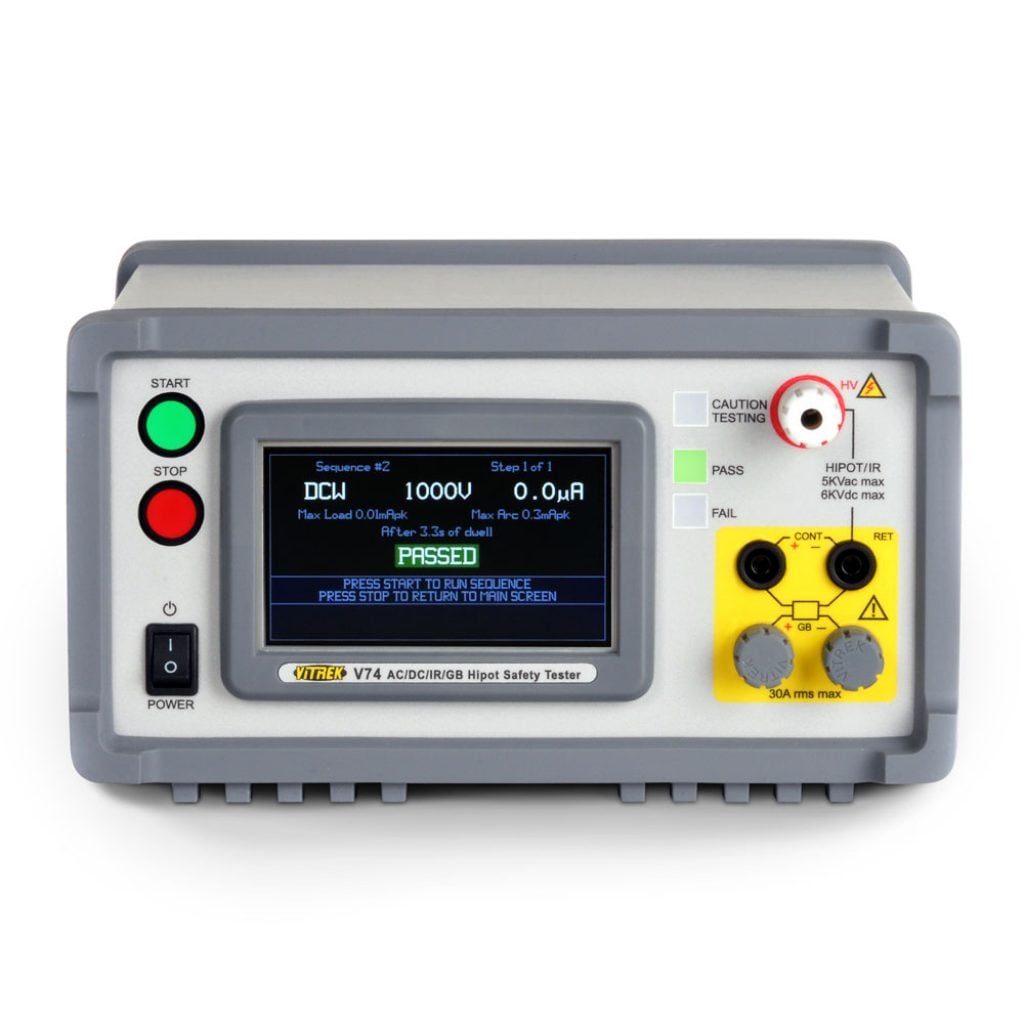
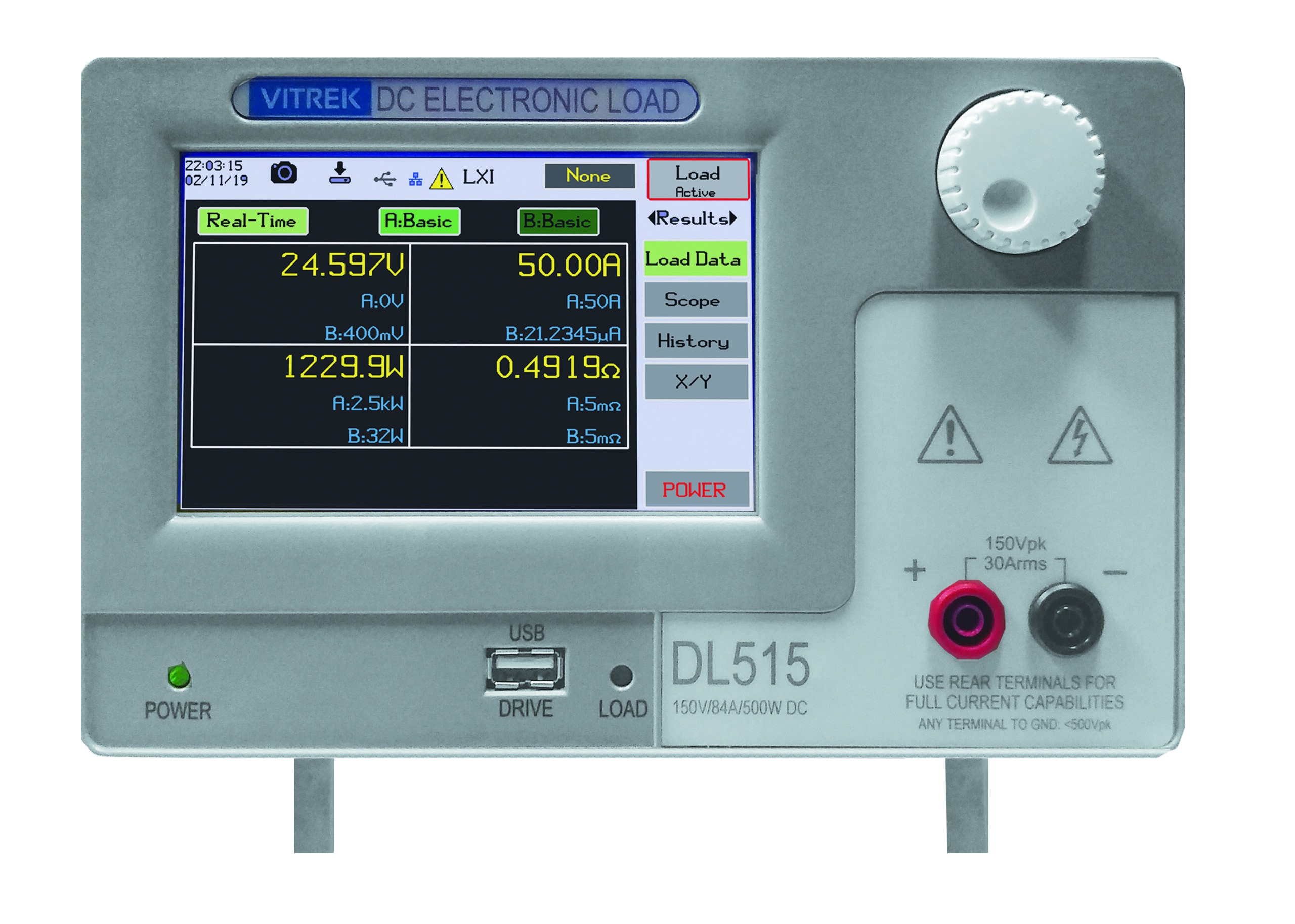
Then review integration and lifecycle factors. A load that fits electrically but cannot be automated cleanly or maintained within your calibration process may add hidden cost. In many labs, the best choice is the one that balances electrical capability with repeatable operation across multiple users and programs. Providers such as Vitrek typically serve this part of the market because the requirement is not commodity loading. It is dependable, traceable validation infrastructure.
The right DC load should disappear into the method. It should let the DUT behavior stand out clearly, under conditions that are realistic, repeatable, and well documented. When that happens, validation data becomes easier to trust, easier to defend, and more useful when design decisions carry real cost.