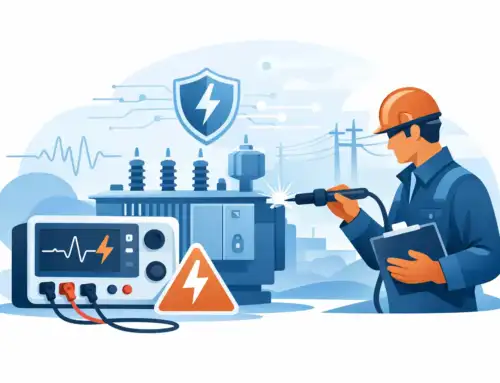
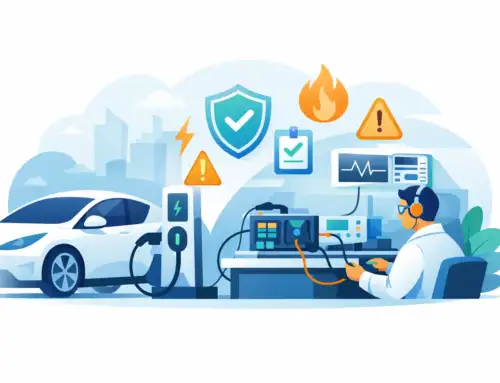
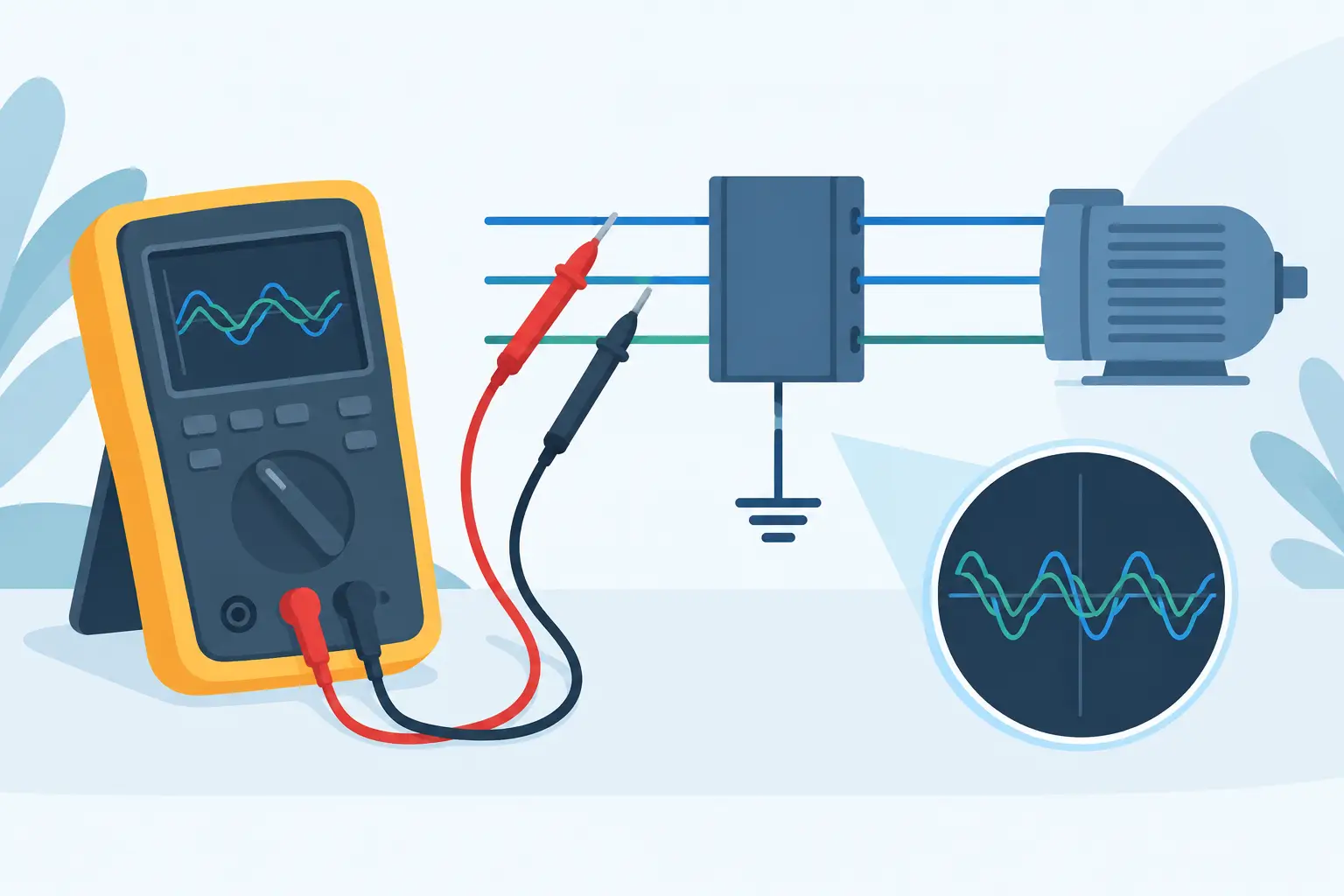
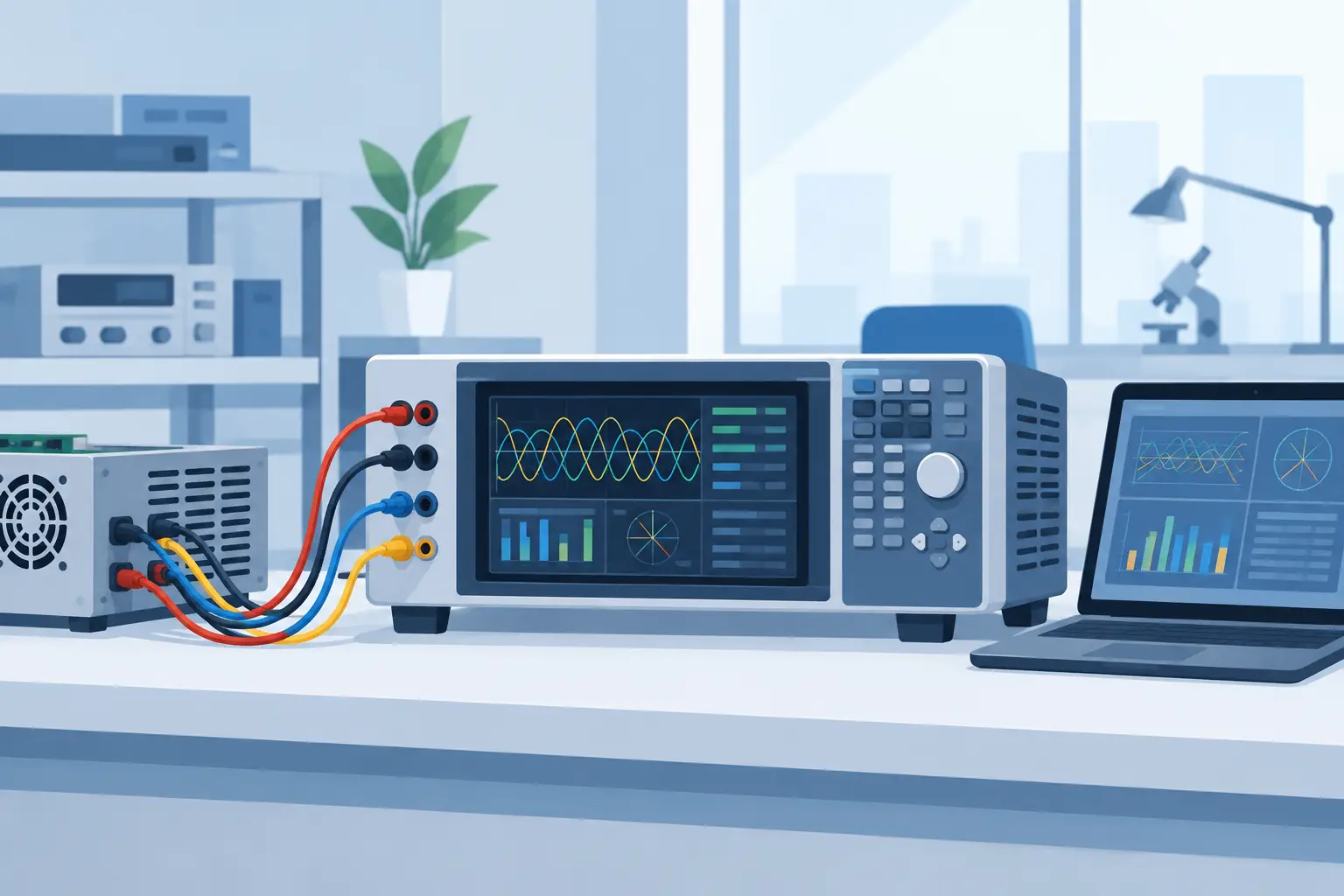
A wiring defect that escapes detection during production can become a costly problem once a vehicle enters service. Whether the issue originates in a wire harness, connector, inverter, battery pack, or charging system, the consequences can include warranty claims, production rework, safety concerns, and damage to brand reputation.
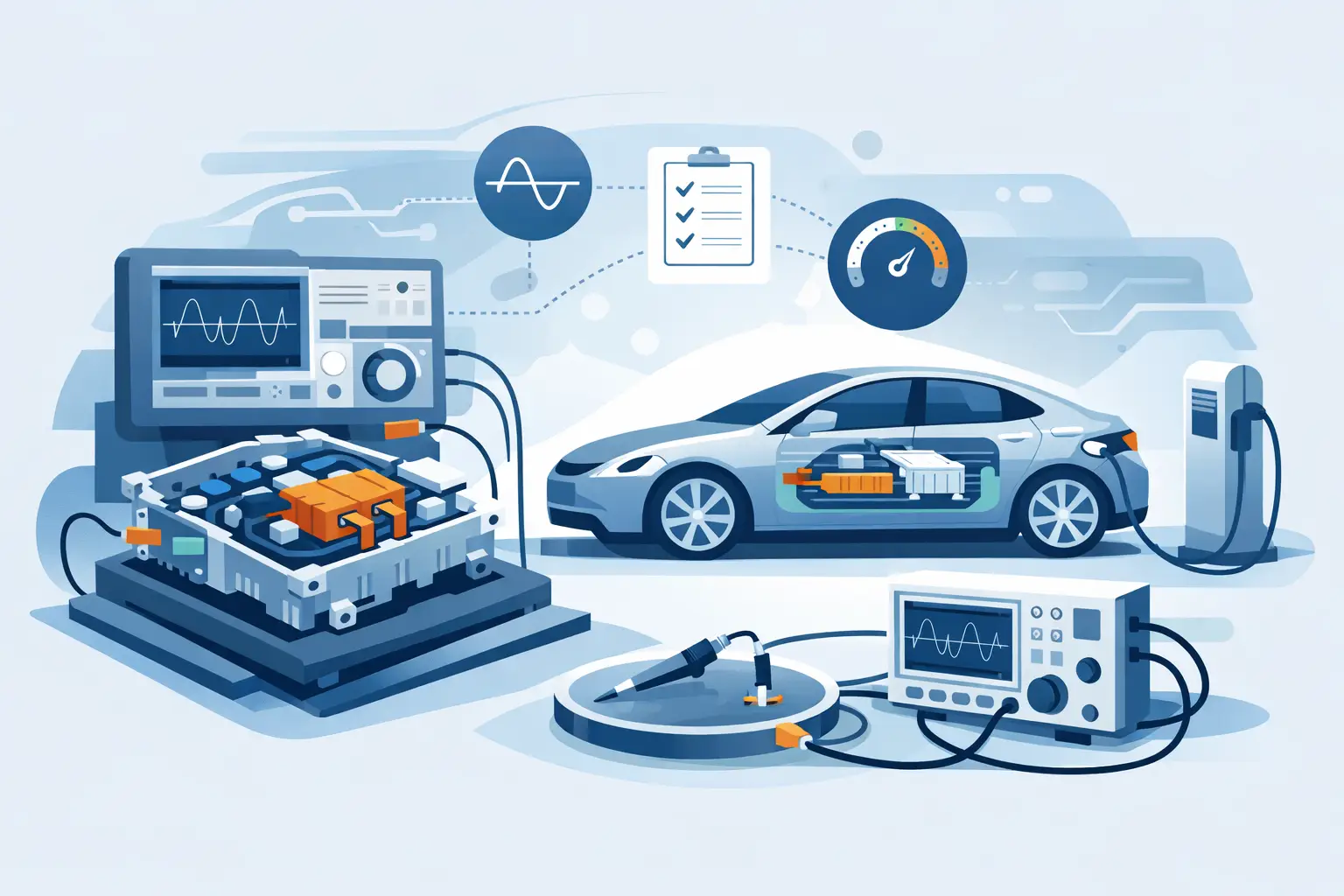
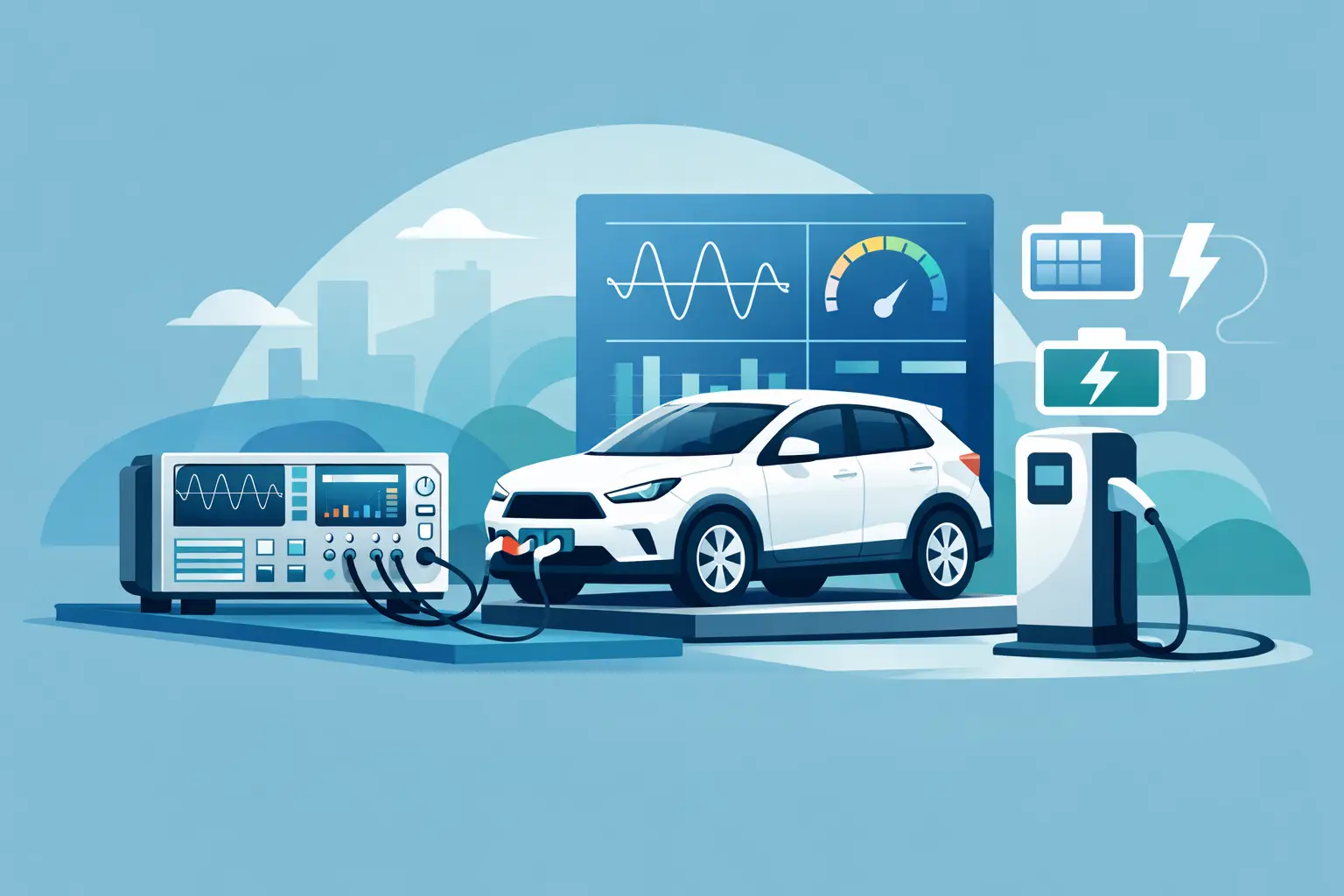
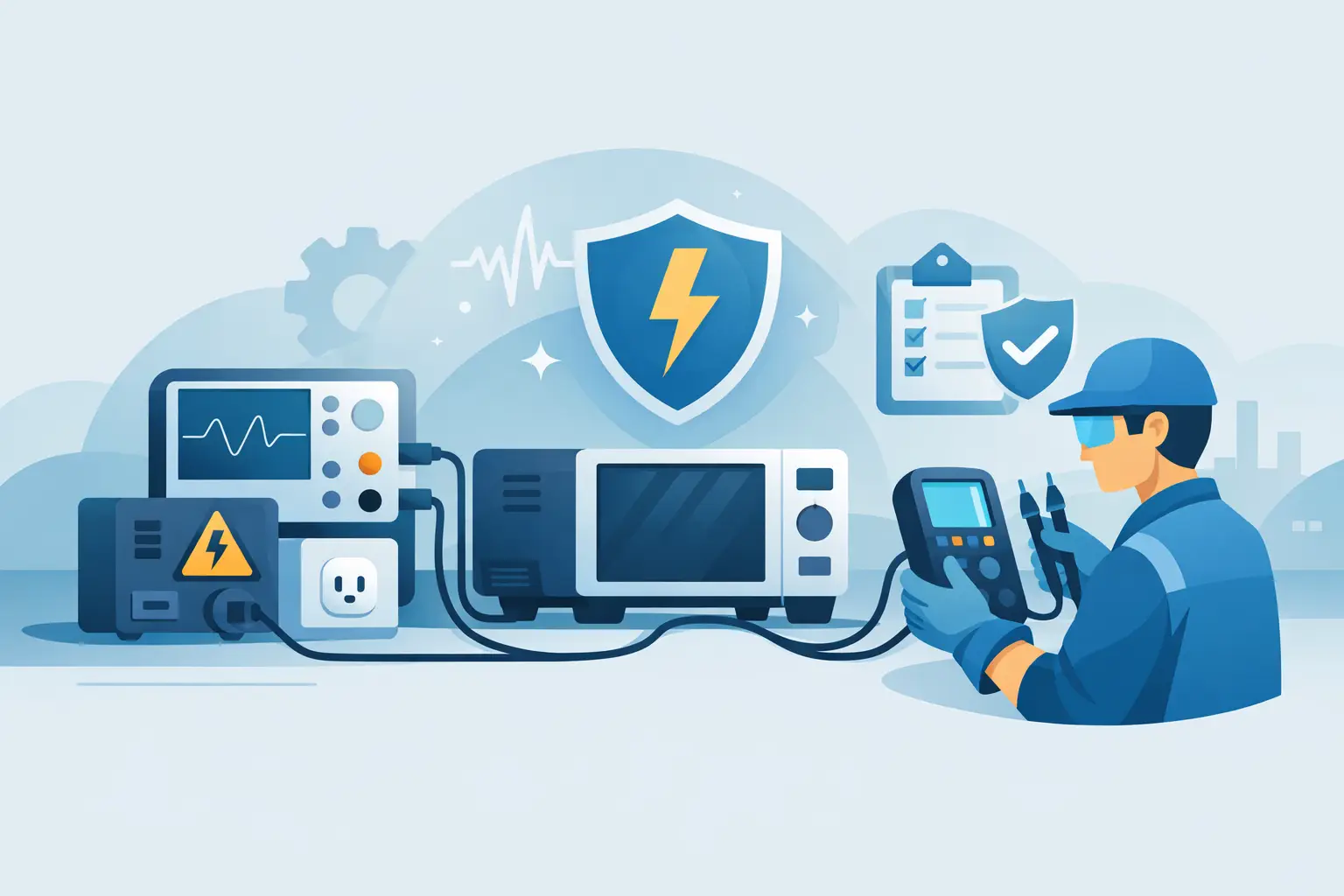
Automotive electrical testing helps manufacturers identify these issues. It is the systematic application of electrical safety and verification tests to vehicle components, assemblies, and systems before they are installed in a vehicle or released to customers. The objective is to confirm that electrical circuits perform as intended, insulation systems remain intact, protective ground paths meet safety requirements, and products comply with applicable industry standards.
This post explains what automotive electrical testing involves, the core tests used throughout production, how testing requirements change for electric vehicles, and the standards and technologies manufacturers use to verify electrical safety before products reach the customer.

What Does Automotive Electrical Testing Cover?
Unlike basic functional testing, which verifies whether a component operates correctly, automotive electrical testing focuses on the electrical integrity and safety of the product. It helps identify defects that may not affect immediate operation but could lead to failures under real-world conditions.
The scope of automotive electrical testing spans nearly every electrically active component found in modern vehicles, including
- Wire Harnesses and Cable Assemblies: Wire harnesses are among the most frequently tested automotive components. Most vehicles contain extensive networks of cables connecting control modules, sensors, lighting systems, infotainment units, and powertrain electronics. Testing verifies conductor continuity, insulation integrity, and resistance to the voltages encountered during operation.
- EV Battery Packs and High-Voltage Interconnects: Electric vehicles operate at significantly higher voltages than conventional internal combustion engine vehicles. Battery packs, high-voltage cables, motor connections, and DC-link assemblies require testing to verify insulation integrity, electrical isolation, and overall system safety under high-voltage operating conditions.
- Power Electronics: Components such as inverters, DC-DC converters, and onboard chargers contain both high-voltage and low-voltage circuits. Testing helps verify electrical isolation between circuits and confirms that insulation systems perform as intended during operation.
- Connectors and Terminal Assemblies: Connectors play a critical role in maintaining reliable electrical connections throughout the vehicle. Testing verifies proper conductor routing, contact integrity, insulation between adjacent terminals, and overall assembly quality.
- Charging System Components: Charging interfaces, charging cables, and onboard charging equipment must meet stringent electrical safety requirements. Testing helps confirm insulation performance, grounding integrity, and compliance with applicable charging system standards before installation.
- Electric Motors and Drive Systems: Traction motors and associated drive systems operate under demanding electrical and environmental conditions. Testing helps verify winding insulation integrity, electrical isolation, and the overall safety of high-voltage motor assemblies.
- Electronic Control Units (ECUs): Advanced vehicles may contain dozens of ECUs responsible for managing powertrain, safety, body control, and infotainment functions. Testing helps verify circuit integrity, insulation performance, and proper isolation between electrical systems.
Four Common Automotive Electrical Safety Tests
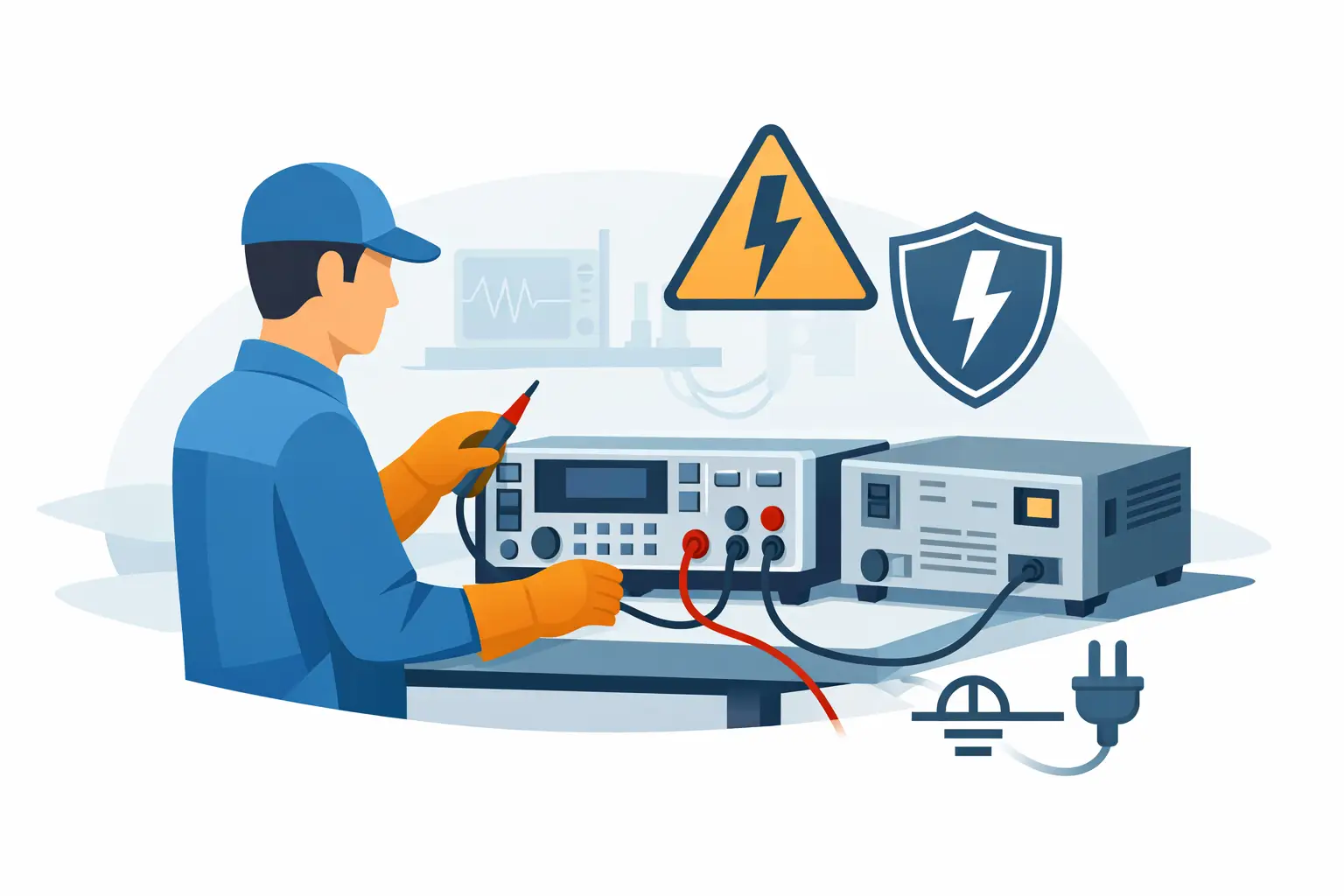
Automotive electrical safety verification commonly relies on four core tests. Each test evaluates a different aspect of electrical integrity, and together they help identify defects that may affect safety, reliability, or compliance.
1.Continuity Testing: Continuity testing helps verify that conductors within an assembly are present, unbroken, and connected to the intended terminals. The test applies a low voltage and measures the resistance of each conductor path against predefined acceptance limits.
This test is commonly used to identify:
- Open circuits
- Missing connections
- High-resistance joints caused by poor crimps or terminations
- Miswiring and incorrect conductor routing
While continuity testing is essential, it cannot detect insulation weaknesses, leakage paths, or voltage-dependent failures. A harness may pass continuity testing and still contain defects that create safety risks under operating conditions. For this reason, continuity testing is often used alongside additional electrical safety tests to provide broader defect coverage.
2.Hipot Testing (Dielectric Withstand Testing): Hipot testing evaluates the ability of insulation systems to withstand a specified electrical stress without excessive leakage current or breakdown. The test applies a high voltage between conductors or between conductors and chassis ground while measuring leakage current through the insulation.
Excessive leakage current may indicate insulation breakdown, contamination, insufficient spacing, or other defects that could affect electrical performance in service.
Hipot testing is effective for identifying:
- Insulation breakdown
- Voltage-dependent defects
- Arc-over conditions between adjacent conductors
- Manufacturing defects that may not be visible during inspection
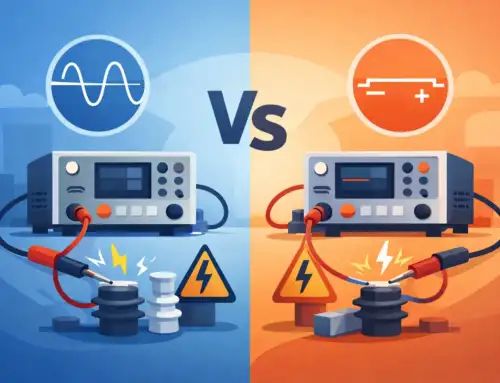
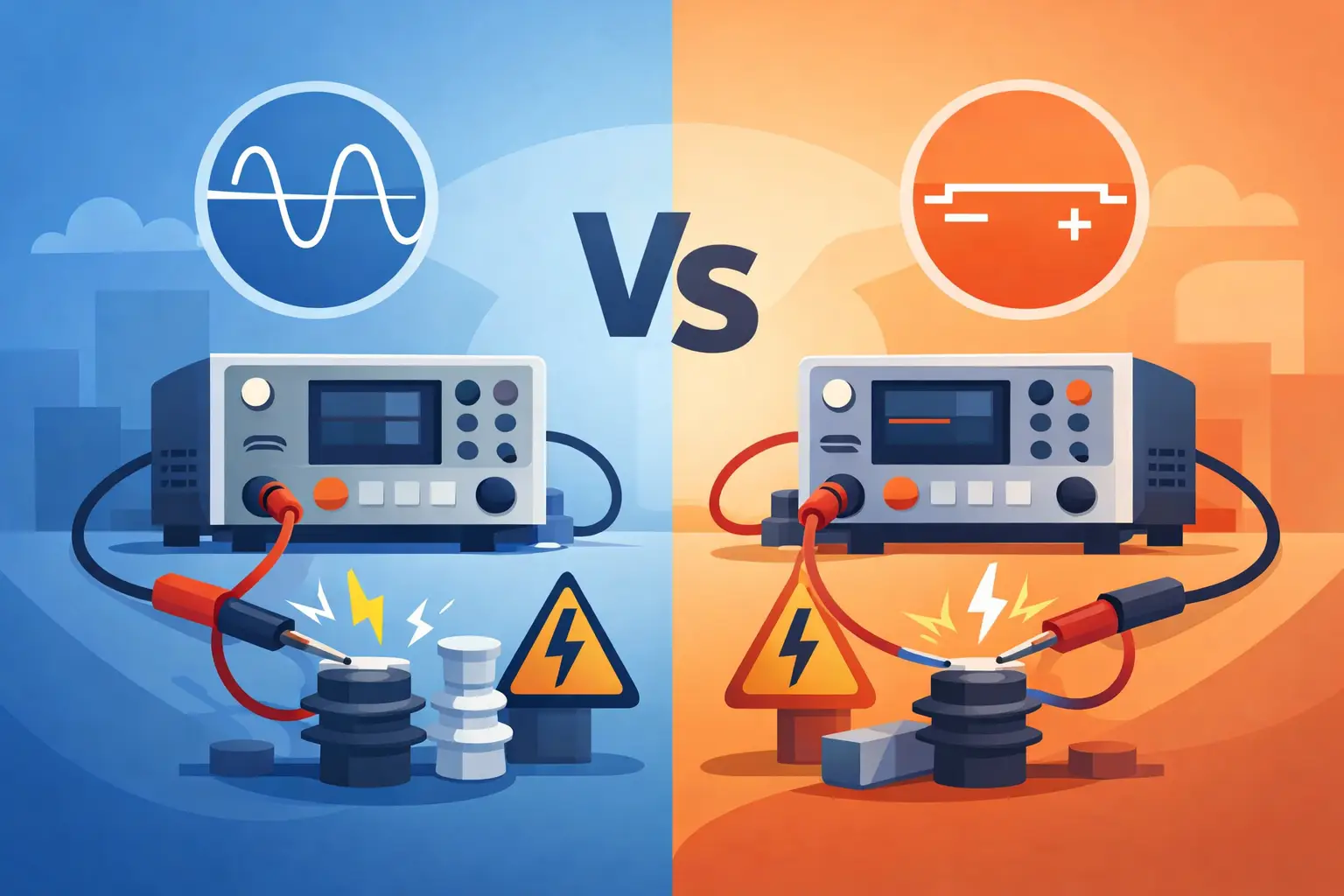
Depending on the application and applicable standard, manufacturers may use either AC or DC hipot testing.
- AC hipot testing applies alternating voltage and is commonly used to evaluate insulation performance under electrical stress.
- DC hipot testing is often used to evaluate resistive leakage paths and potential insulation degradation while minimizing charging current effects in capacitive devices.
Test voltage should be established according to the applicable standard, product specifications, and OEM requirements rather than relying on generalized values.
3.Insulation Resistance Testing: Insulation resistance (IR) testing measures the resistance of insulating materials by applying a DC voltage and evaluating the resulting current flow.
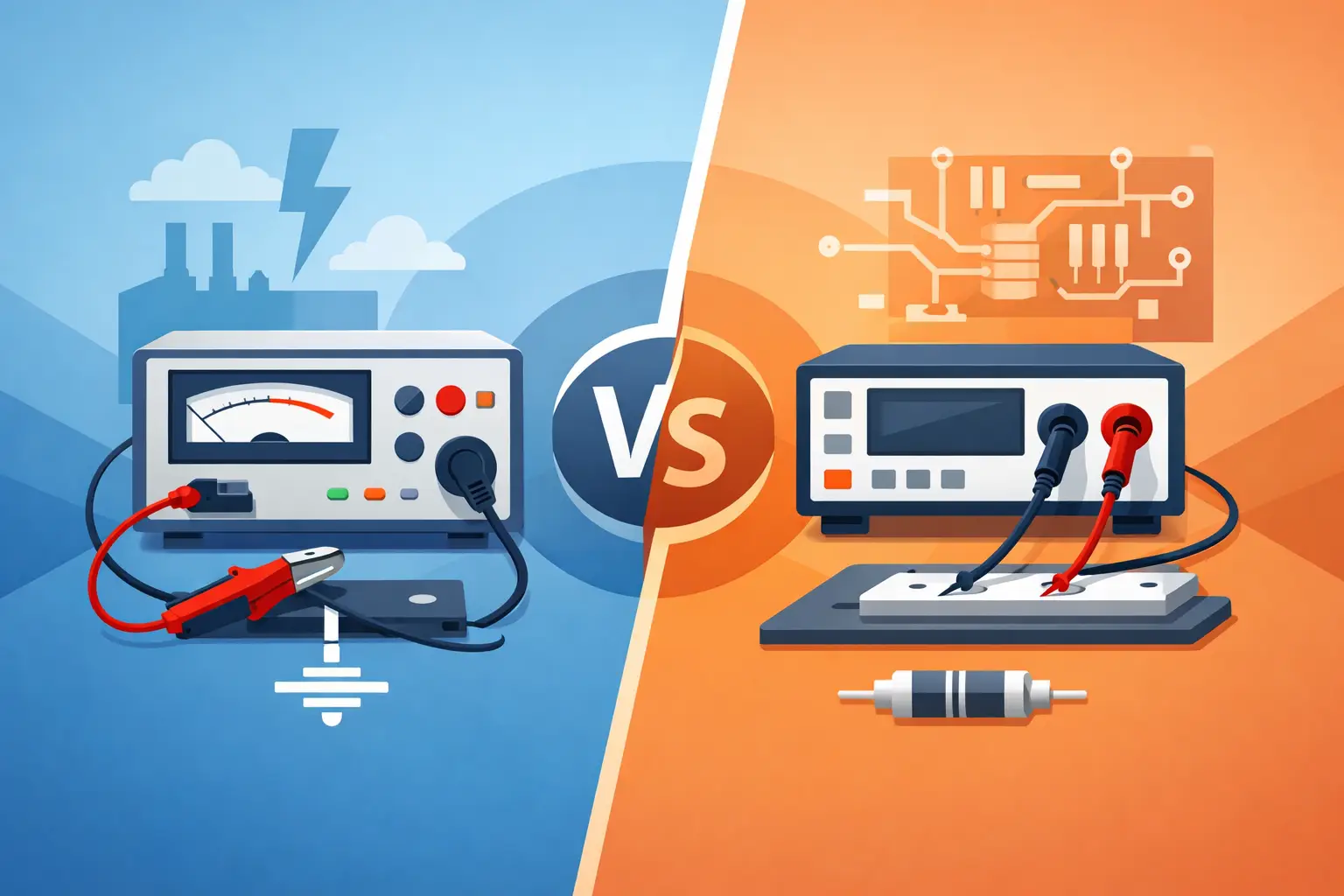
Unlike hipot testing, which focuses on insulation performance under a specified voltage stress, IR testing evaluates the resistance characteristics and overall condition of the insulation system.
Insulation resistance testing is particularly valuable for detecting:
- Moisture contamination
- Surface leakage paths
- Insulation degradation
- Residues from manufacturing processes
In automotive applications, where wiring systems may be exposed to humidity, temperature cycling, vibration, and environmental contaminants, insulation resistance testing can help identify developing insulation issues before they become significant.
A component may successfully pass a hipot test while still exhibiting insulation resistance levels below acceptable limits. As a result, both tests are commonly used together to provide a more complete assessment of insulation integrity.
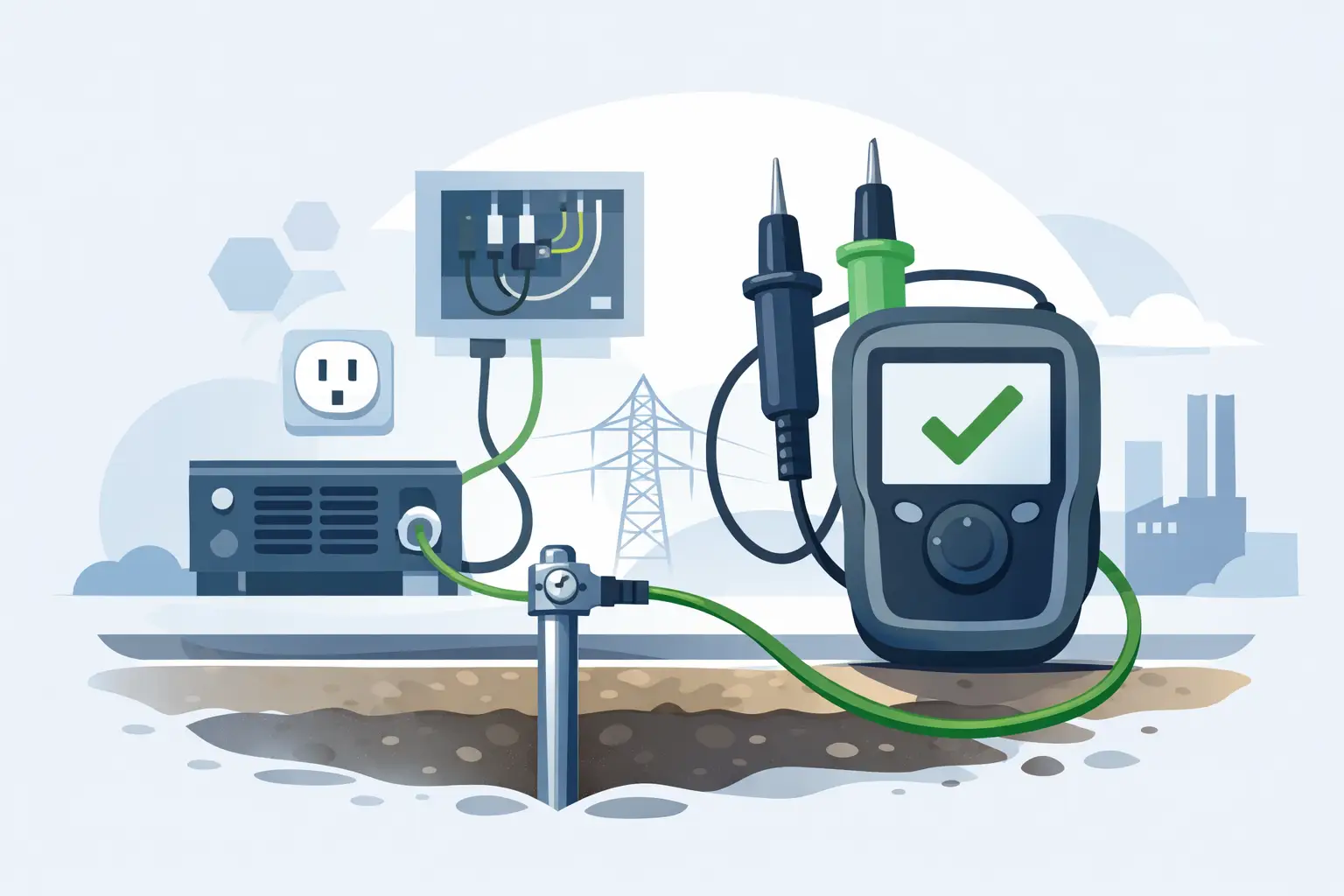
4.Ground Bond Testing: Ground bond testing evaluates the integrity of protective ground connections by applying a specified test current through the ground path and measuring the resulting resistance.
Ground bond testing helps identify:
- Loose ground connections
- Improper terminations
- Damaged ground conductors
- Excessive resistance in protective earth paths
Test current requirements vary depending on the applicable standard. Standards such as IEC 61010, IEC 60335, and OEM-specific specifications define acceptable resistance limits and test current levels. These requirements should be verified before establishing test procedures.
Automotive Electrical Testing at Each Production Stage
Electrical testing is performed throughout the manufacturing process, from incoming material inspection to final vehicle release. Each stage serves a different purpose, helping manufacturers identify defects early, maintain quality standards, and document compliance throughout production. Check out the key stages below:
1.Component Level: Incoming inspection testing verifies that supplier-provided cables, connectors, terminals, and other electrical components meet specified performance requirements before they are incorporated into assemblies. Detecting defects at this stage helps prevent faulty materials from moving further into the manufacturing process, where replacement costs and production disruptions become significantly higher.
Incoming inspection records also support traceability requirements established under quality management systems such as IATF 16949, creating a documented link between supplied materials and finished vehicles.
2.Sub-Assembly Level: Once assemblies are built, electrical testing helps verify that manufacturing processes have produced a properly functioning and electrically safe product. Continuity, hipot, insulation resistance, and ground bond testing methods help identify wiring errors, insulation defects, contamination, and grounding issues that may not be visible during assembly.
Testing becomes more challenging as harness complexity increases. Comprehensive harness verification may require evaluating many conductor combinations and isolation paths within the assembly. For example:
- A 4-conductor harness requires 20 test combinations.
- A 24-conductor harness requires 578 test combinations.
Performing these sequences manually can slow production and increase the risk of missed connections or incomplete coverage.
To address this challenge, the Vitrek 964i High Voltage Switching System automates multi-point test sequencing. The system supports up to 999 sequential switching operations with reconnect speeds as fast as 0.025 seconds, helping manufacturers execute comprehensive harness testing while maintaining production throughput.
3.Vehicle Assembly: End-of-line testing provides the final electrical verification before a vehicle leaves the production facility.
At this stage, manufacturers evaluate installed electrical systems, including wire harnesses, power electronics, charging systems, and high-voltage components in electric vehicles. The objective is to confirm that the completed vehicle meets defined electrical safety and performance requirements before delivery.
Equally important is documenting the results. Test records provide evidence that required inspections were completed and support quality audits, compliance programs, and production traceability.
Vitrek’s QT Insite software supports automated test management through features such as barcode-driven test profile selection, per-unit result logging, and exportable reporting formats including PDF and CSV files. These capabilities help manufacturers maintain consistent documentation and support IATF 16949 traceability requirements.
4.Field and Service Testing: Electrical testing remains important after production. Components that have been repaired, replaced, or serviced should be verified before returning to operation. Post-repair testing helps verify that electrical integrity, insulation performance, and grounding paths continue to meet applicable specifications or service requirements.
EV-Specific Automotive Electrical Testing Requirements
Vehicle electrification has introduced new testing challenges that extend well beyond those found in conventional 12V and 48V vehicle systems. Higher operating voltages, additional safety mechanisms, and evolving regulatory requirements have expanded the scope of automotive electrical testing for EV manufacturers and suppliers.
-
Higher Voltage Requirements: The shift from conventional 12V and 48V vehicle systems to EV architectures operating at 400V and 800V has significantly expanded electrical testing requirements. Battery packs, high-voltage cables, inverters, motor drives, and charging systems require insulation verification at voltage levels substantially higher than those used in traditional automotive applications.
As a result, manufacturers often require hipot and insulation resistance test equipment capable of evaluating insulation performance under the conditions specified by applicable standards and OEM requirements. The Vitrek V10X Series supports DC hipot testing up to 15 kV DC, making it well suited for high-voltage EV component testing where conventional automotive test equipment may not provide sufficient voltage capability.
-
New Testing Requirements: EV platforms introduce additional safety systems that require verification during production and validation testing.
- High-Voltage Interlock Loop (HVIL) Verification: The high-voltage interlock loop is a safety circuit designed to disconnect or disable high-voltage power whenever a connector or enclosure is opened. Testing helps verify that the interlock circuit remains intact and responds correctly when a connector separation or access event occurs. This safety mechanism is commonly used in high-voltage vehicle architectures and has no direct equivalent in most conventional ICE vehicle systems.
- Insulation Monitoring System Verification: Many EVs incorporate insulation monitoring systems that continuously monitor insulation health during operation. Verification testing helps confirm that these systems can detect and report insulation faults before they create a potential safety concern.
- Charging System Testing: EV charging systems introduce additional testing requirements for on-board chargers, charging interfaces, and associated high-voltage connections. These systems must be evaluated for insulation performance, grounding integrity, and compliance with applicable charging standards such as IEC 61851.
-
EV Electrical Testing Standards: EV electrical testing is governed by a combination of vehicle safety, battery, charging, and functional safety standards. Common referenced standards include:
- ISO 6469: Covers safety requirements for electric road vehicles, including protection against electrical hazards associated with high-voltage systems.
- IEC 62660: Defines performance and testing requirements for lithium-ion cells used in electric vehicle propulsion applications.
- UNECE R100: Establishes type-approval requirements for electric powertrain vehicles, including high-voltage electrical safety provisions.
- ISO 26262: Defines functional safety requirements for automotive electrical and electronic systems and may influence the development and validation of safety-related EV functions.
- IEC 61851: Covers conductive charging system requirements for electric vehicles.
One important consideration is that EV hipot test voltages are application-specific rather than universal. Required test voltages vary based on component type, system architecture, operating voltage, and customer specifications. Test parameters should therefore be established according to applicable standards, OEM requirements, and product specifications rather than predetermined assumptions.
Automotive Electrical Testing Standards
While EV-specific standards address high-voltage safety, battery systems, and charging infrastructure, manufacturers must also comply with broader automotive quality and component testing standards that apply across vehicle platforms.
Automotive electrical testing programs are guided by a range of industry standards that define performance, safety, quality, and documentation requirements for vehicle components and assemblies. Some of the most commonly referenced standards include:
- IATF 16949: Defines automotive quality management requirements, including traceability, process control, corrective action procedures, and test documentation.
- LV 112: Establishes performance and testing requirements for high-voltage automotive cables and conductors used in electrified vehicle applications.
- ISO 19642: Specifies performance, construction, and testing requirements for road vehicle cables.
- USCAR-2: Defines performance and validation requirements for automotive electrical connector systems.
- LV 124: Covers electrical, environmental, and durability testing requirements for electrical and electronic components used in 12V and 48V vehicle electrical systems.
These standards help manufacturers establish consistent test procedures, verify product quality, and demonstrate compliance throughout the production process.
Vitrek Automotive Electrical Testing Platform
Vitrek offers an electrical safety testing platform that supports automotive manufacturers across multiple stages of the production process, including component validation, assembly testing, end-of-line verification, and traceability management.
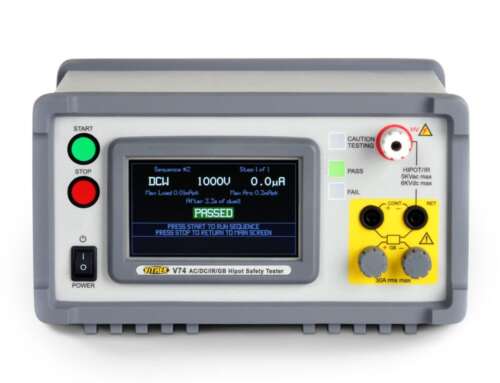
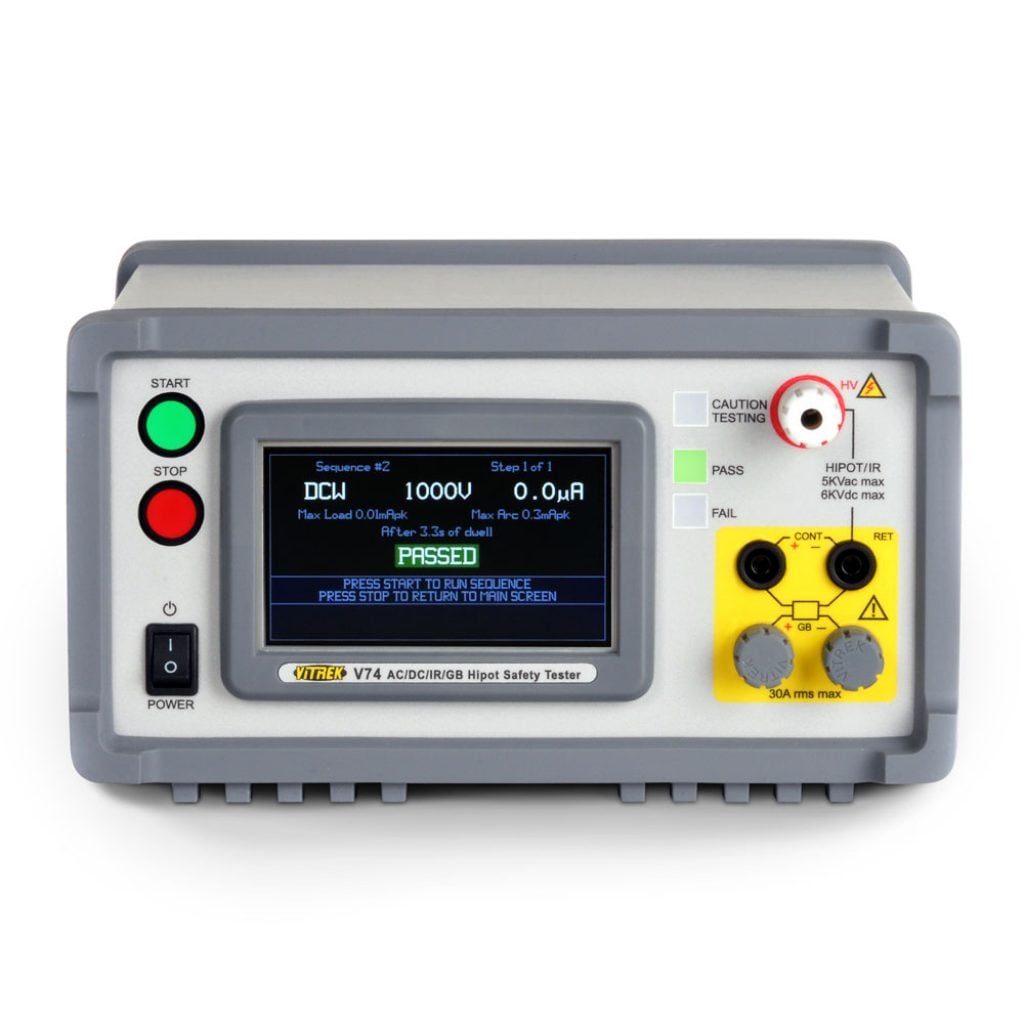
- V7X Series Hipot Testers: The V7X Series provides compact electrical safety testing for automotive components and assemblies. These systems are well suited for testing 12V and 48V vehicle components where production environments require reliable hipot testing in a smaller footprint.
- 95X Series Hipot Testers: High-capacitance automotive wire harnesses can present challenges for conventional hipot testers. The 95X Series addresses this with 500VA output power, helping maintain the specified test voltage when evaluating large harness assemblies and other capacitive loads.
- 964i High Voltage Switching System: As wire harness complexity increases, manufacturers may need to evaluate many conductor combinations and isolation paths. The 964i automates multi-point switching with support for up to 999 sequential test connections and reconnect speeds as fast as 0.025 seconds. Multiple relay card options support a wide range of hipot, insulation resistance, and ground bond testing requirements within a single automated test sequence.
- QT Insite Software: QT Insite provides centralized test automation, data collection, and traceability management. Features such as barcode-driven test sequence selection, per-unit result logging, database storage, and PDF or CSV reporting can help manufacturers maintain consistent documentation and support IATF 16949 traceability and quality management requirements.
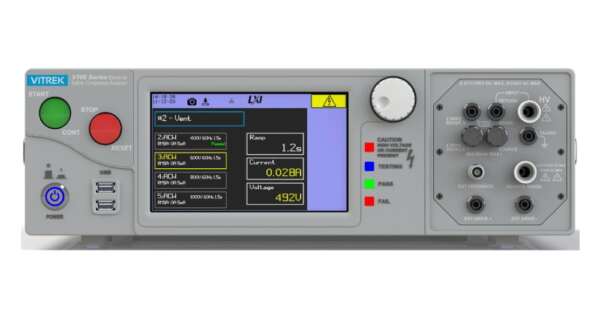
- V10X Series Hipot Testers: For EV battery systems, high-voltage cables, power electronics, and charging components, the V10X Series provides expanded test capability with AC hipot up to 10 kV standard, optional AC testing up to 30 kV, and DC hipot testing up to 15 kV. These capabilities make the system well suited for applications that require higher test voltages to evaluate insulation performance in EV and other high-voltage electrical systems.
Common Mistakes to Avoid in Automotive Electrical Testing
Even well-designed test programs can be affected by avoidable errors that impact product quality, traceability, and overall testing effectiveness.
- Relying on Continuity Testing Alone: Continuity testing verifies conductor routing and connectivity; it does not evaluate insulation quality. A harness may pass continuity testing while still containing insulation defects that only become apparent during hipot or insulation resistance testing.
- Using Insufficient Test Voltage for EV Components: High-voltage EV systems require test voltages appropriate for the component, operating voltage, and applicable standard. If the test voltage is too low, insulation performance may not be adequately evaluated under expected operating conditions.
- Maintaining Paper-Based Test Records: Manual recordkeeping can make traceability, data retrieval, and audit preparation more difficult. Automated electronic documentation can help improve consistency while supporting quality management and compliance requirements.
- Applying Incorrect Test Parameters: Different standards and OEM specifications may require different voltage levels, test currents, and acceptance criteria. Test parameters should be verified against applicable standards, product specifications, and customer requirements before testing begins.
Build a More Reliable Automotive Test Program with Vitrek
Identifying electrical defects during production can help reduce the costs and operational challenges associated with post-production repairs, warranty claims, and field failures. Establishing an effective electrical test program that incorporates continuity, hipot, insulation resistance, ground bond testing, and automated data management can help manufacturers improve product quality, support compliance efforts, and strengthen traceability throughout the production process.
Vitrek offers a range of automotive electrical testing solutions to support these requirements, including high-power hipot testing, automated multi-point switching, EV high-voltage component verification, and traceability-focused test management tools. Explore the 95X Series Hipot Testers, 964i High Voltage Switching System, V10X Series Hipot Testers, and QT Insite Software to learn more about the available testing capabilities. Contact Vitrek to discuss your testing requirements and evaluate solutions that align with your production, quality, and compliance objectives.