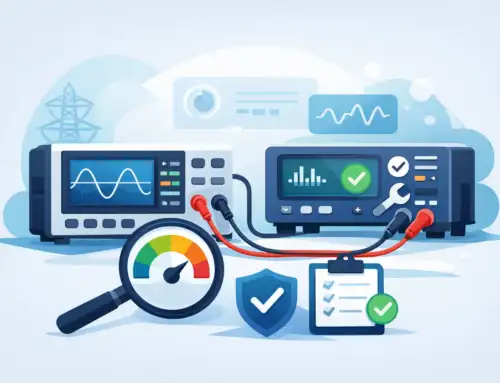
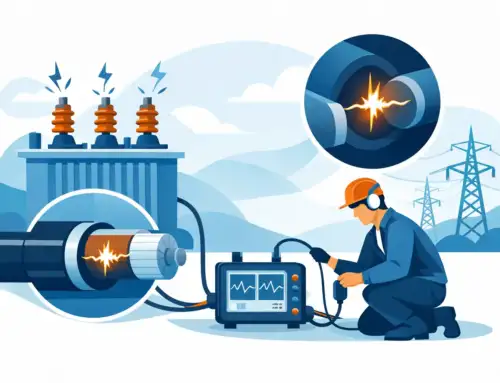
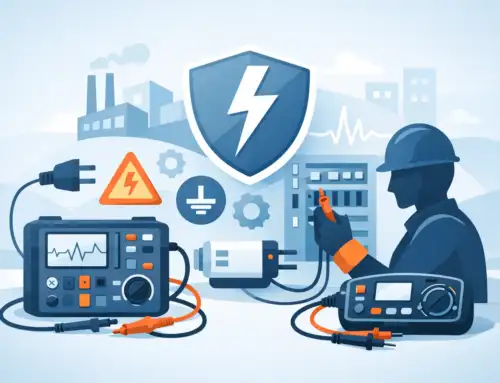
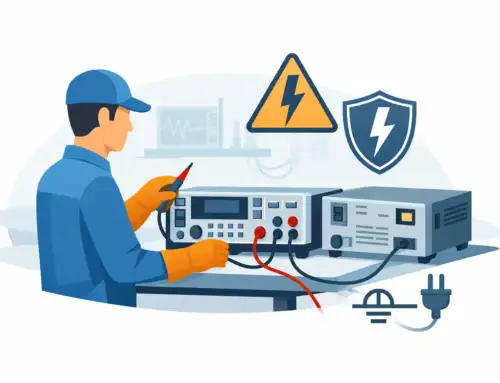
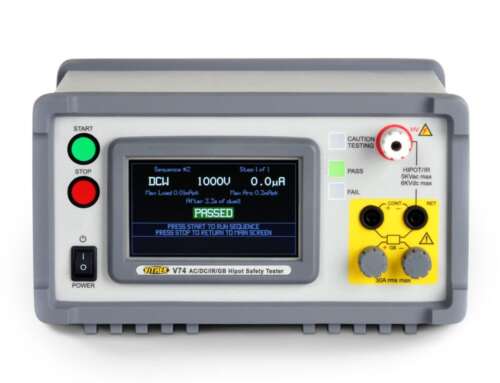
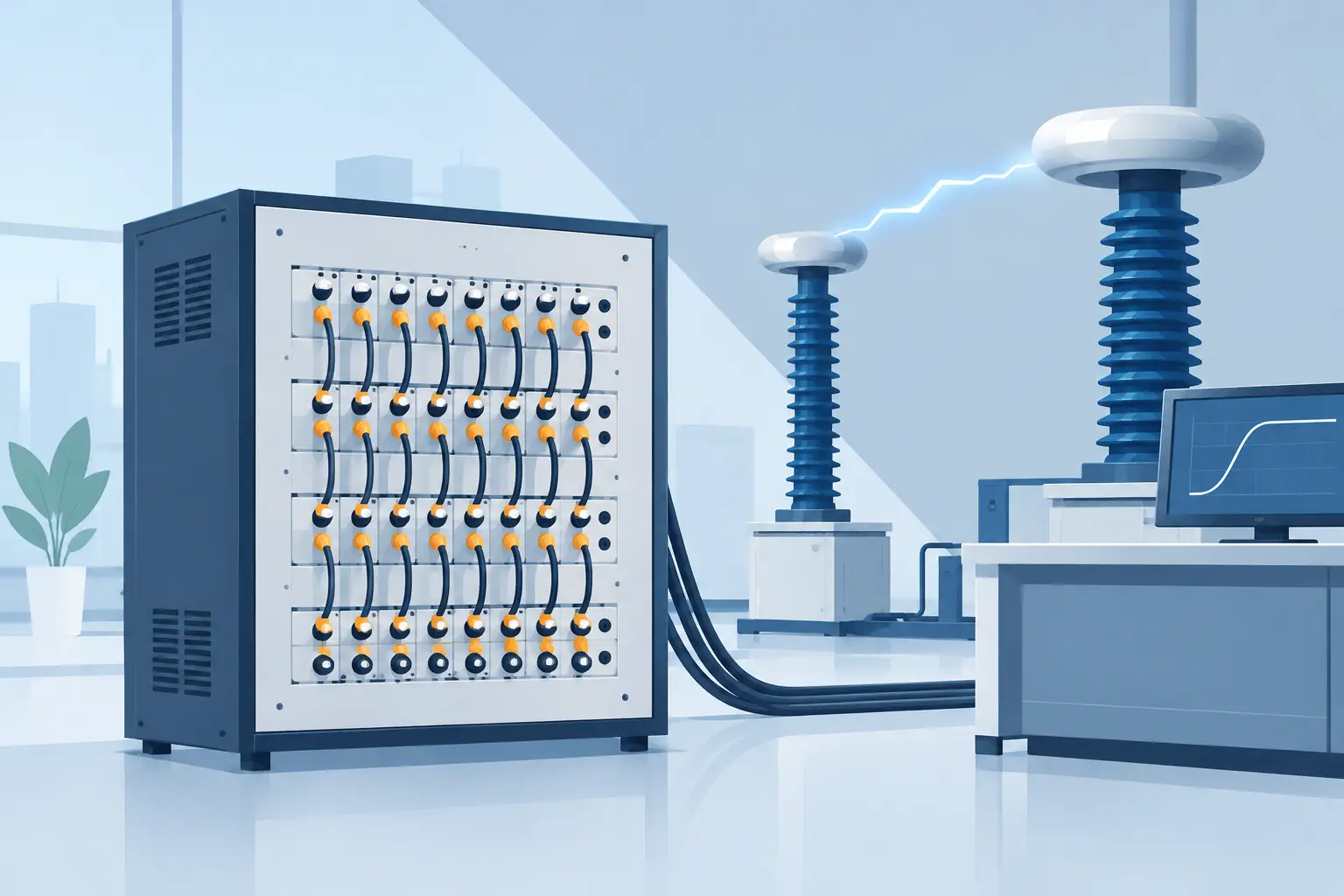
A hipot or electrical safety tester can produce a valid pass or fail result in seconds. The larger engineering challenge is ensuring that result is tied to the correct unit, product revision, operator, test limits, and calibration state. Compliance tester software integration is the work of making that connection dependable enough for production release, audit review, and failure analysis.
For aerospace, medical device, EV, electronics, and appliance manufacturers, the test instrument cannot operate as an isolated endpoint. It must participate in a controlled process. That means transferring results to manufacturing execution systems, quality databases, laboratory information systems, or custom applications without weakening the integrity of the actual measurement.
What Compliance Tester Software Integration Must Preserve
The first requirement is measurement authority. The tester should remain responsible for applying the programmed stimulus, measuring the response, enforcing limits, and reporting its final status. External software can select an approved test program and collect results, but it should not become an uncontrolled substitute for instrument-level safety decisions.
This distinction matters when a network connection drops, a workstation freezes, or an upstream database is unavailable. A properly designed station has a defined response: complete the active test under controlled conditions, prevent product release when traceability cannot be established, and retain locally captured results for later reconciliation. The correct behavior depends on the risk analysis and production process, but ambiguity is not acceptable.
Second, the integration must preserve configuration traceability. A pass result without its associated test limits has limited value. The record should identify the test program name and revision, voltage or current limits, dwell time, ramp settings where applicable, instrument model and serial number, and the calibration status or due date required by the quality system. If a limit changes, the organization must be able to determine precisely when the new revision entered production.
Third, the result needs context. At minimum, that usually includes a unique unit identifier, test station identifier, timestamp, operator or automated cell identity, and pass, fail, or aborted status. More demanding applications may also require environmental conditions, fixture identity, a linked work order, and the reason code used for a retest or override.
Building the Integration Around the Test Station
A useful integration starts with the station workflow rather than an interface specification. Map what occurs from the moment a unit arrives at the fixture through its release, quarantine, rework, or retest. This exposes the points where data must be exchanged and where the physical process needs interlocks.
Define the source of truth
Decide which system owns each data element. The manufacturing system may own the work order and product configuration. The tester owns the raw measurements and final test status. A quality system may own nonconformance records. Problems arise when two applications can independently edit the same critical field, such as a test limit or a serialized unit result.
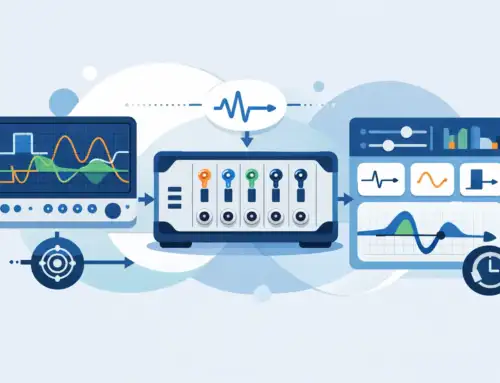
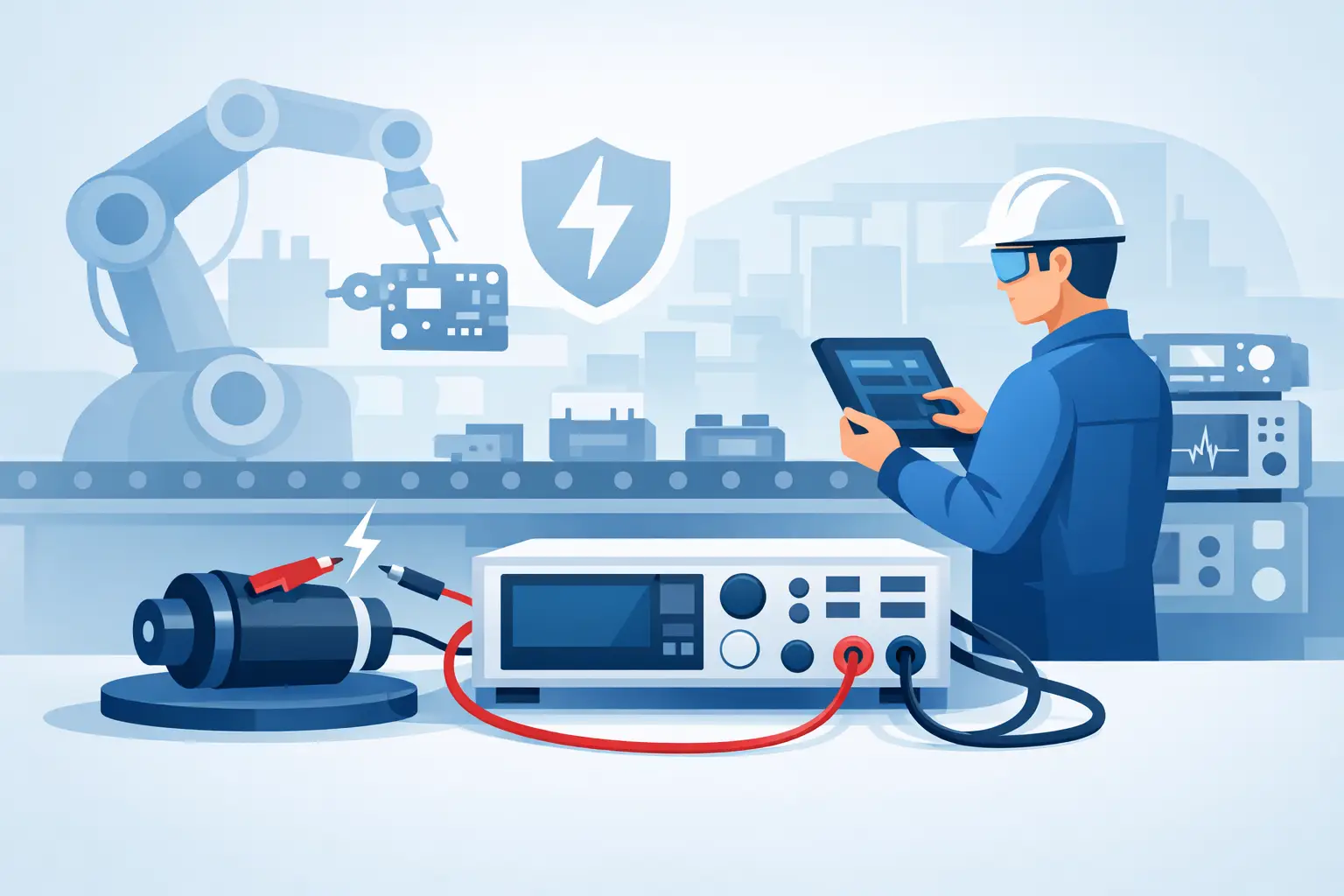
For many production cells, the host application sends a scanned serial number and product variant to the station. The station confirms that the correct approved test program is loaded, executes the test, then returns the detailed result. The host system records the transaction and determines whether the unit can advance. This approach creates a clear chain of custody without requiring the host to recreate electrical safety test logic.
Select an interface that fits the operating environment
The interface should be based on supportability, response time, and plant architecture, not on what is easiest to prototype. Ethernet-based command interfaces are often appropriate for networked stations. USB or serial communications can be suitable for contained benches or legacy equipment. Digital I/O remains valuable when a PLC needs an immediate hardware-level ready, busy, pass, or fail signal.
An SDK can shorten development time when the application needs direct access to instrument control and result retrieval. Command-based protocols may be preferable when a plant has an established software framework and wants long-term independence from a specific development environment. In either case, document the command set, response handling, timeout behavior, and supported firmware versions before deployment.
Do not assume that a pass/fail bit is sufficient. A production database may need measured leakage current, insulation resistance, applied voltage, trip condition, test duration, and program revision. Capturing those values at the time of test provides evidence for investigation when a field return or internal quality trend appears months later.
Treat identification as a controlled input
Barcode scanners, RFID readers, fixtures, and operator screens all introduce the possibility of a mismatch between the unit under test and the record being created. The software should validate the unit identifier before testing begins and reject formats or product combinations that are not authorized for that station.
Fixture presence sensing can provide another layer of control. In a semi-automated cell, the system can require the correct fixture and product family before enabling the test. In higher-volume environments, the station may also verify that a previous operation has been completed. These checks reduce the chance that a technically valid test result is assigned to the wrong configuration.
Design for communication failures
Network reliability should be assumed, not presumed. An integration needs defined behavior for lost connections, duplicate messages, delayed acknowledgments, and database outages. The host should be able to recognize whether a result was received and stored, while the station should avoid unknowingly executing the same transaction twice.
A local result queue is often appropriate when the quality system or manufacturing database is temporarily unavailable. Each queued record needs a unique transaction ID so that the host can safely reconcile it after recovery. If the process requires immediate traceability before release, the physical station should hold the unit rather than allowing it to move forward based on an unconfirmed transaction.
Data Design Determines Audit Value
A flat record containing a serial number and pass/fail status may satisfy basic throughput reporting, but it does not support serious root-cause analysis. Structure results so they can answer practical questions: Did failures increase after a fixture change? Were units tested under a particular program revision? Is a specific station drifting toward a limit? Are repeated failures occurring on one production shift?
Use consistent units and field definitions across stations. For example, avoid storing leakage current as a number without identifying whether it is expressed in microamps or milliamps. Store timestamps with a defined time zone convention. Record aborted tests separately from failed tests. An abort may reflect a safety interlock opening, a fixture issue, an operator action, or a communication fault. Combining those events with electrical failures obscures the process.
Data retention requirements vary by industry, customer contract, and quality system. The integration should support the required retention period while protecting records from casual modification. Access controls, audit trails, and backed-up storage are not administrative extras when test data supports product release.
Validate the Integrated System, Not Just the Instrument
A calibrated tester is necessary, but calibration alone does not validate the complete station. The integrated process must be challenged with known-good units, known-fail conditions, incorrect product selections, interrupted communications, and attempted retests. Confirm that the expected data reaches the correct system and that release decisions follow the documented rules.
Test program governance deserves equal attention. Approved programs should be versioned, access-controlled, and deployable in a repeatable manner. If multiple stations run the same product, compare their programmed parameters and result formats. A station that passes the right unit using an obsolete program can create a quality exposure that is difficult to detect from a dashboard alone.
For organizations operating under formal validation requirements, establish installation, operational, and performance evidence appropriate to the application. The objective is not paperwork for its own sake. It is demonstrable confidence that the station performs consistently when normal and abnormal conditions occur.
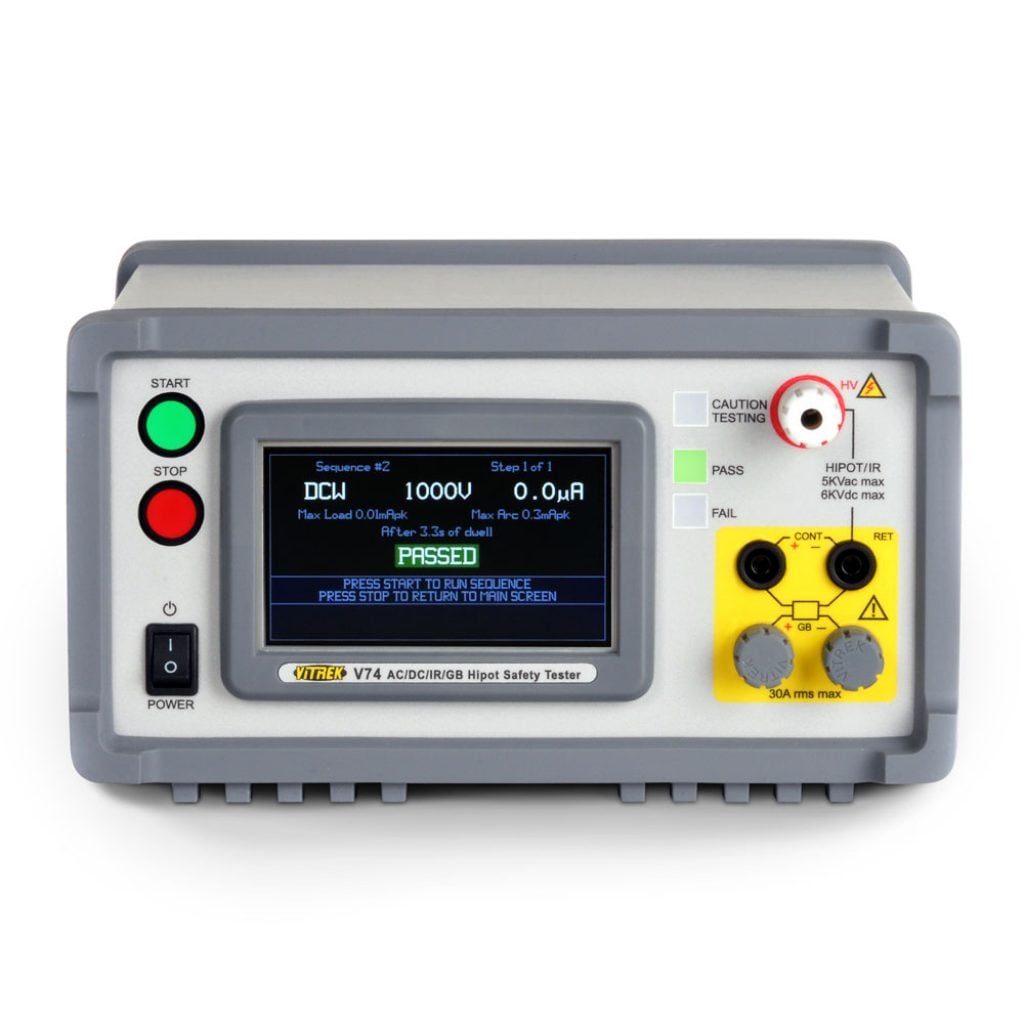
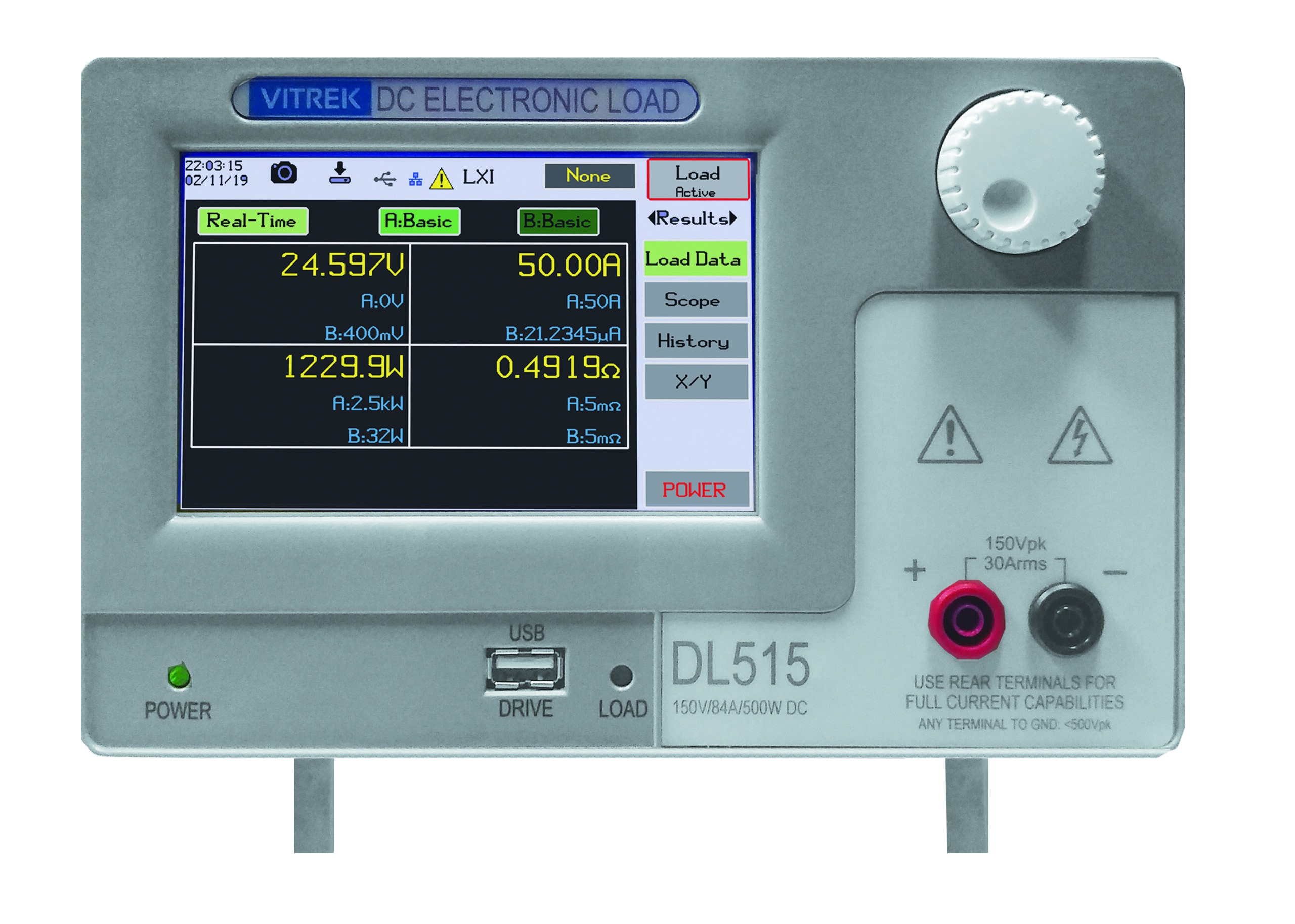
Vitrek test systems can be incorporated into this type of architecture through instrument communications, software support, and application-focused engineering. The right implementation still depends on the product risk, production volume, existing plant systems, and the level of traceability required.
A well-integrated compliance station does more than record a passing result. It makes every release decision easier to defend, every failure easier to investigate, and every process change easier to control.