Exploration Of The Elastic Region For Aluminum Alloys
Description
One of the most crucial properties of metals, including aluminum alloys, is their elastic characteristics, which define the extent to which a material can deform and return to its original shape once the applied load is removed. This behavior is particularly important when working with materials in engineering and industrial applications, where understanding the elastic region of the stress-strain curve is vital.
The stress-strain curve for aluminum visually represents the relationship between stress (force per unit area) and strain (deformation) during a material test. The elastic region of this curve is where the material will return to its original length once the applied stress is removed. If the stress surpasses this elastic region, the material enters the plastic region, which results in permanent deformation.
The illustration below depicts a typical mechanical test and its effects on a specimen. When a uniaxial force, F, is applied, it causes a change in length, denoted as ΔL. The accompanying graph presents the relationship between stress (Y-axis) and strain (X-axis) observed in the specimen.

image courtesy of dg7ybn.de
Understanding the Stress-Strain Curve for Aluminum
When performing a tensile test on aluminum, such as with 6061 T6 aluminum, the material behaves predictably within its elastic zone. This zone is defined by linear deformation, meaning that the material will return to its original state when the applied force is removed, provided the stress stays within the elastic region.
For example, when a uniaxial tensile force is applied to an aluminum specimen, the change in length can be tracked as stress (Y-axis) versus strain (X-axis). The stress-strain graph for aluminum helps engineers identify the modulus of elasticity of aluminum, which is the slope of the linear portion of the stress-strain curve. The modulus of elasticity of aluminum gives an indication of how stiff the material is within the elastic region.
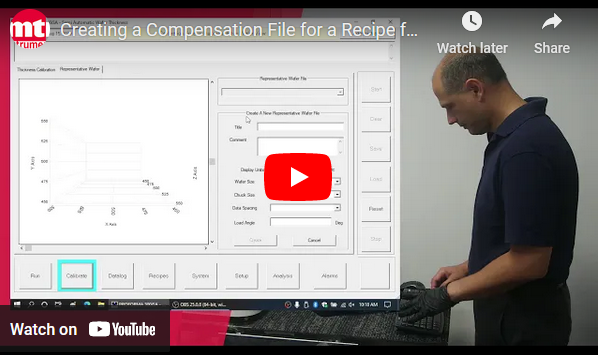
Experimental Verification Using MTI/Fullam SEMTester
To illustrate the elastic behavior of aluminum alloys, let’s consider a simple test conducted with an MTI/Fullam SEMTester 100 Tensile Stage Unit. The specimen used in this experiment is a 6061 T6 aluminum sample with a reduced center section (5 mm wide by 1.6 mm thick). A tensile load is applied gradually, and the specimen is tested to a maximum of 450 N (100 lbf) over 27 mm of travel.

The key here is that if the stress applied remains within the elastic region, the specimen will return to its original length once the load is removed. However, if the load exceeds the elastic limit and enters the plastic region, some permanent deformation will occur, and the specimen will not return to its original position.
Elastic Region vs. Plastic Region: A Closer Look
- Elastic Region: In this zone, deformation is reversible. The stress-strain relationship is linear, and the material can return to its original dimensions once the force is removed. This is the safe operating range for most applications.
- Plastic Region: When the material is stressed beyond its yield strength (such as in aluminum’s yield strength), permanent deformation occurs, and the material cannot recover its original shape.
Understanding where the elastic region on a stress-strain curve ends and the plastic region begins is essential for ensuring that aluminum materials are used safely and efficiently in structural applications.

Conclusion: The Importance of Elasticity in Aluminum
Comprehending the behavior of aluminum in the elastic region and its stress-strain curve is critical for ensuring safe design practices in engineering. By understanding the modulus of elasticity and yield strength of aluminum, engineers can select the appropriate material and loading conditions for their applications, minimizing the risk of failure.
Using tools like the MTI/Fullam SEMTester to measure the stress-strain curve of aluminum allows engineers and laboratories to verify the material’s properties quickly and accurately. With this information, materials can be tested and used effectively, ensuring that aluminum alloys perform within their elastic limits for optimal safety and efficiency.