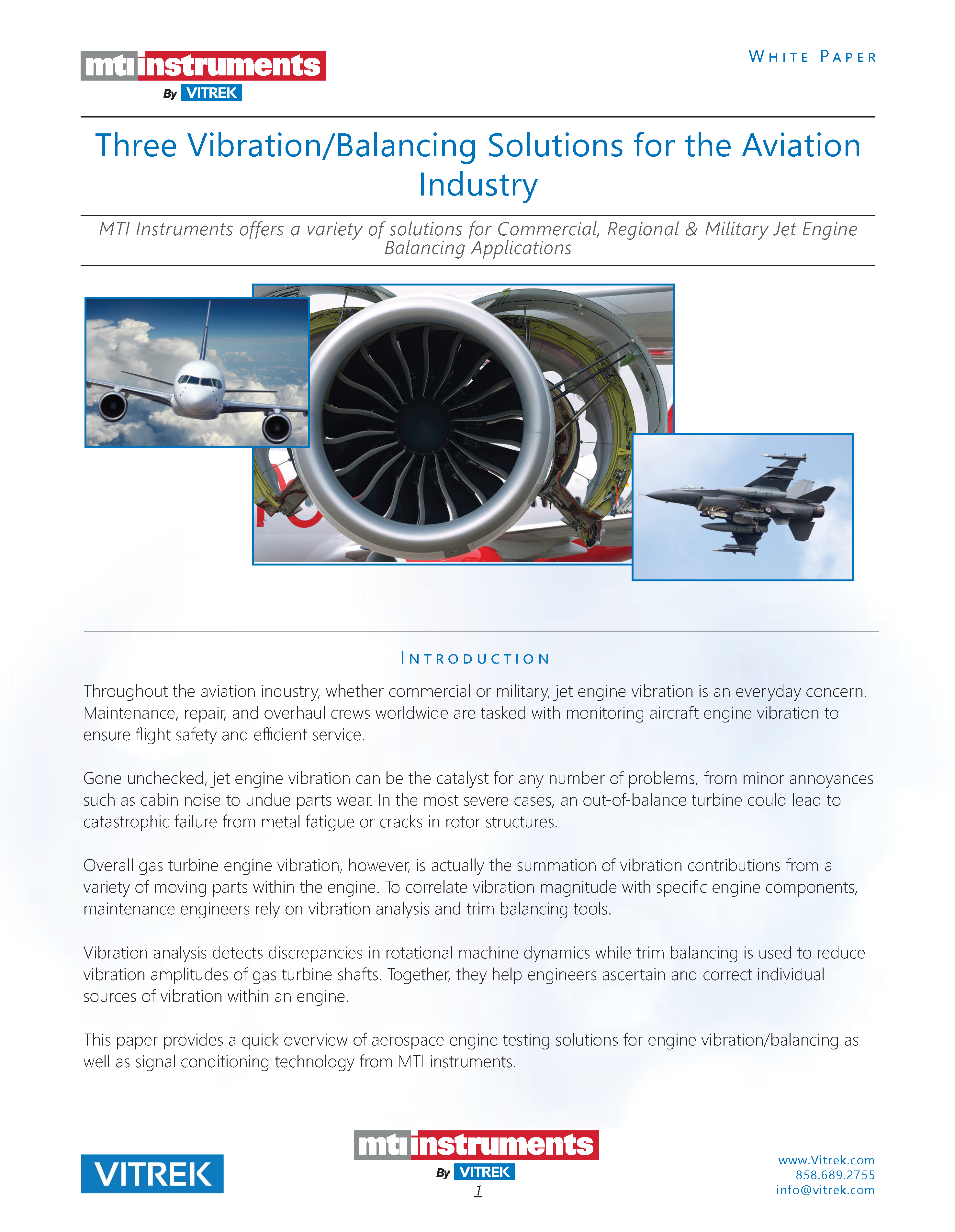
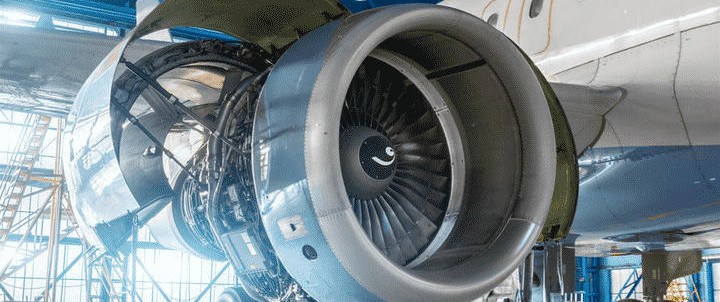
Aircraft engine vibration is a critical indicator of engine health and overall flight safety. While some level of vibration in aircraft is expected during normal operations, excessive or abnormal vibrations often signal underlying mechanical issues that demand immediate attention. With modern jet engines becoming more complex, real-time vibration monitoring and precise balancing tools are essential for both aircraft maintenance teams and aviation diagnostics specialists. Aircraft vibration measurement tools detect and quantify these issues, enabling maintenance teams to take corrective actions before minor imbalances escalate into major faults.
Types of Aircraft Vibrations
There are two main categories of aircraft vibrations:
- Normal Vibration: Occurs naturally during flight, takeoff, or landing due to events like turbulence, gear extension/retraction, or airflow changes. These oscillating or reciprocating motions do not indicate potential defects with the aircraft or its engines and can be explained by routine operations.
- Abnormal Vibration: Indicates a mechanical fault such as an engine imbalance or failing component. These require diagnostics and corrective action to prevent structural fatigue or failure.
Common Causes of Aircraft Engine Vibration
Vibration in aircraft can originate from several sources, particularly within the engine system. Common causes include:
- Engine imbalance or rotor misalignment
- Malfunctioning gearboxes or alternators
- Cracked hoses, loose panels, or failing cylinders
- Worn or misaligned propeller spinners
- Excessive wear on flight control surfaces
- Distorted airflow over damaged or deformed surfaces
Over time, unchecked aircraft engine vibration can reduce performance, weaken mechanical structures, compromise safety, and increase maintenance costs.
Symptoms of Excessive Aircraft Vibrations
While some aircraft vibrations is harmless, severe cases can present serious symptoms such as:
- Inaccurate instrument readings or compass errors
- Fatigue cracks on structural components
- Unusual cockpit noise or airframe resonance
- Pilot discomfort or physical numbness during flight
For maintenance teams and AvMROs (aviation maintenance and repair organizations), even subtle signs of aircraft vibration should trigger a detailed inspection.
How do flight crews and AvMROs detect vibration-related problems?
Flight crews and passengers typically detect vibration-related problems through sight, sound, or feel. When an airplane is in flight, however, noise that can be heard at the back of the aircraft may not be audible in the cabin. In addition, the source of vibration-induced noise that travels through the airframe can be hard to pinpoint. That’s why ground crews use instrumentation rather than relying exclusively on their physical senses. If an engine is out-of-balance, listening for different sounds isn’t the best approach.
MTI Instruments’ PBS Series: Proven Tools for Aviation Vibration Diagnostics
MTI Instruments offers a range of portable and test cell-ready systems designed to support accurate aircraft engine vibration measurement and balancing in both field and laboratory environments.
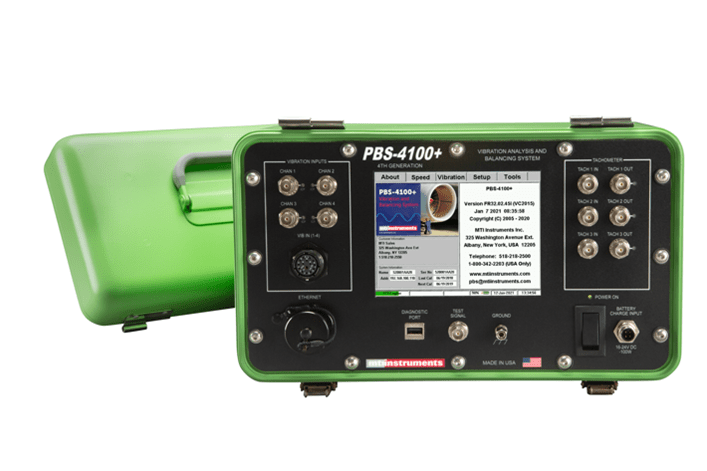
PBS-4100+ Gen4 – Portable Vibration & Balancing System
Built for on-wing diagnostics, the PBS-4100+ Gen4 sets the standard for portable engine vibration analysis. Its key features include:
- Lightweight, battery-powered design with up to 4 input channels
- Up to 3 tachometer channels, ideal for three-spool engines
- Frequency range from 5 Hz to 25 kHz
- Real-time spectrum and phase tracking
- “One-shot” trim balancing to reduce engine runs by up to 80%
- Touchscreen interface with automated diagnostics and report generation
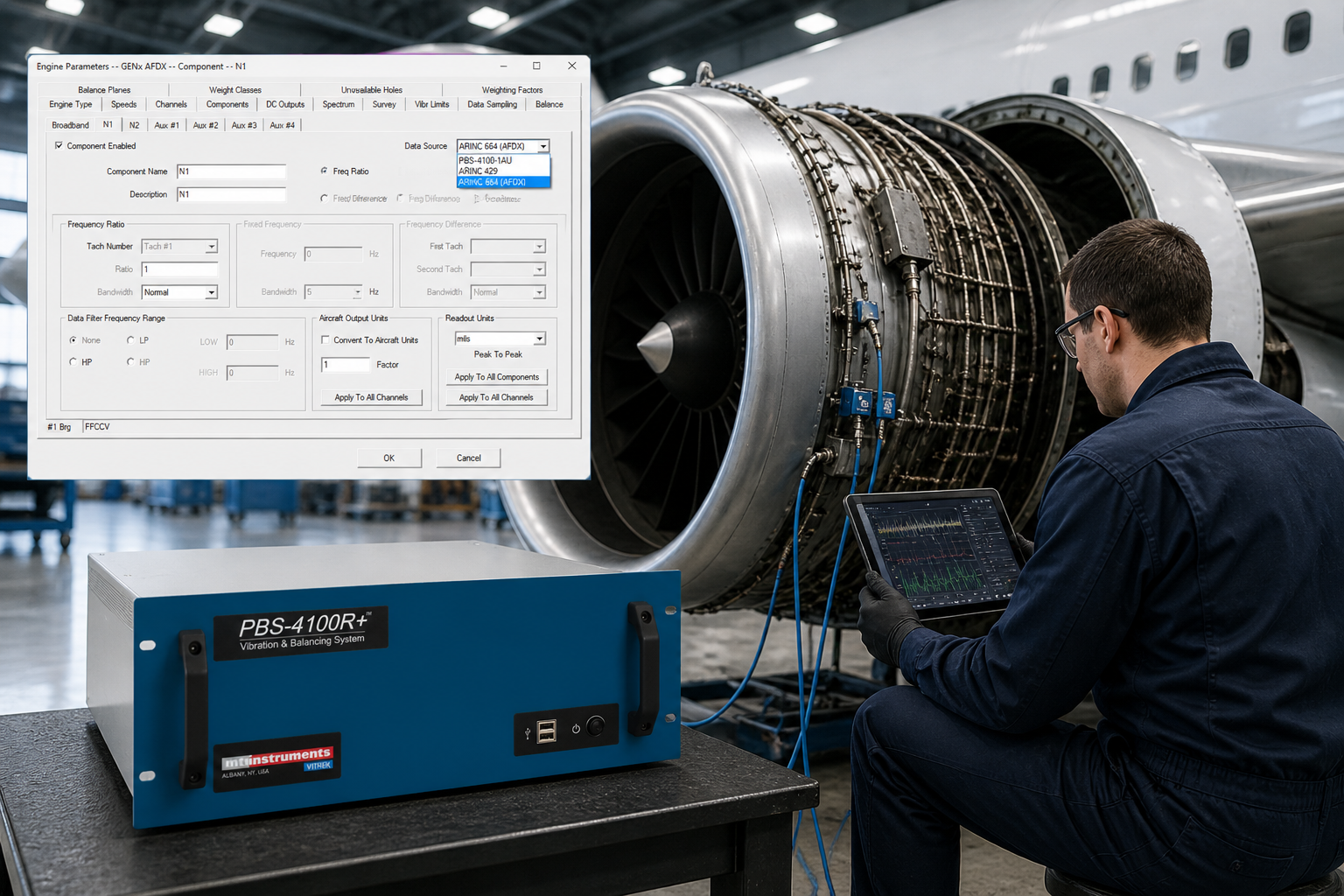
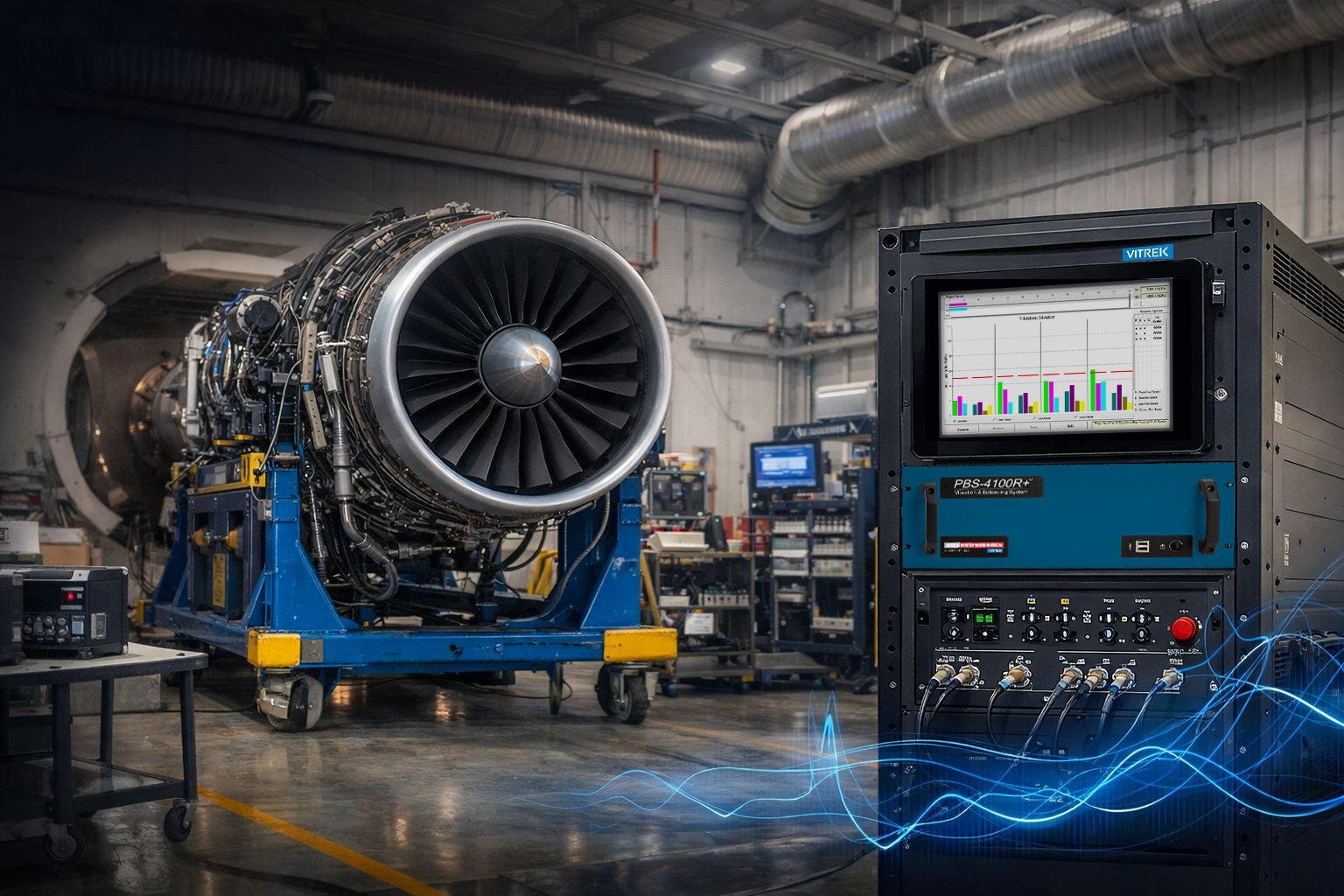
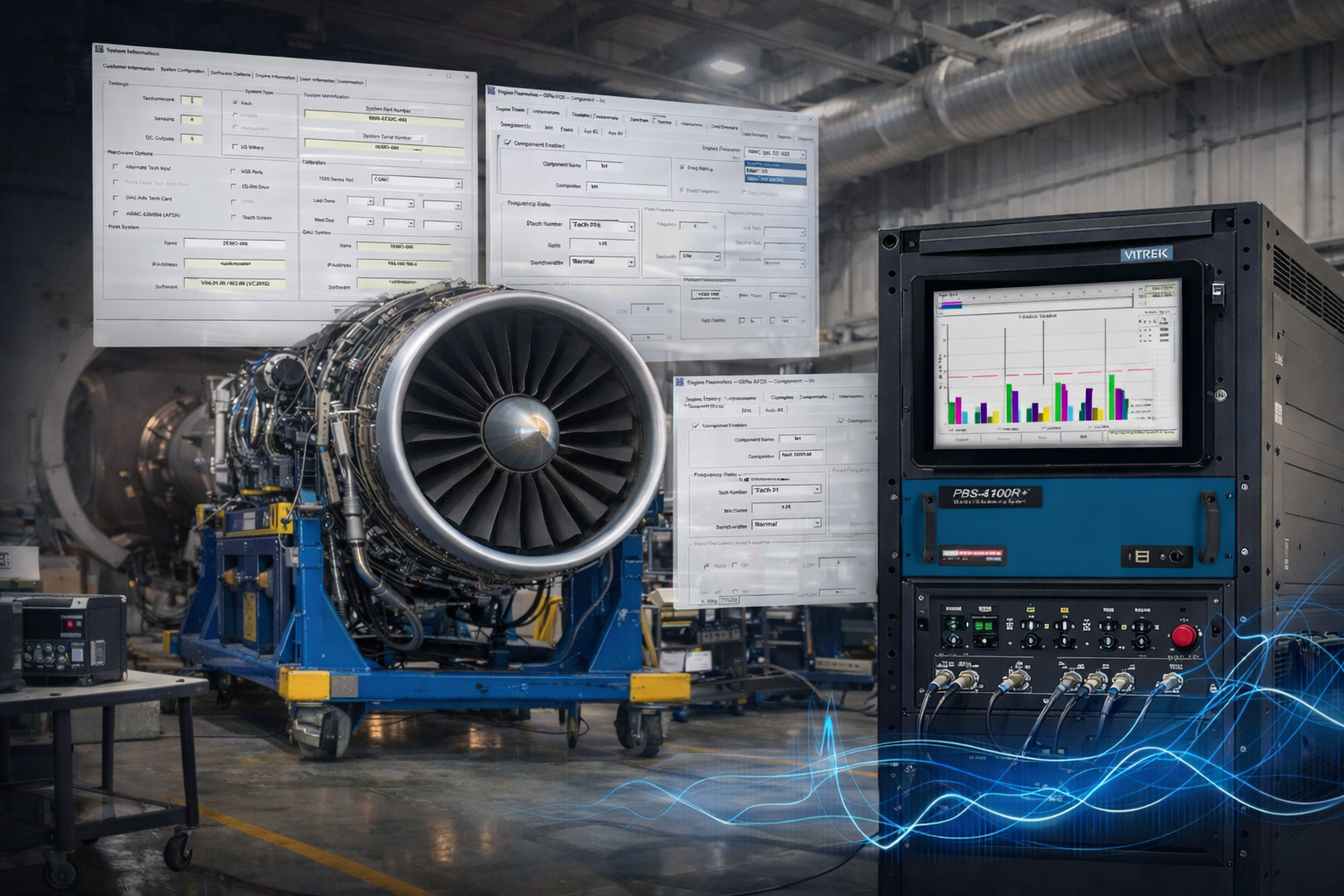
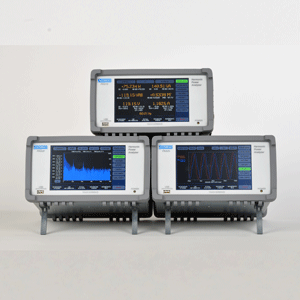
PBS-4100R+ – Test Cell Vibration Monitoring System
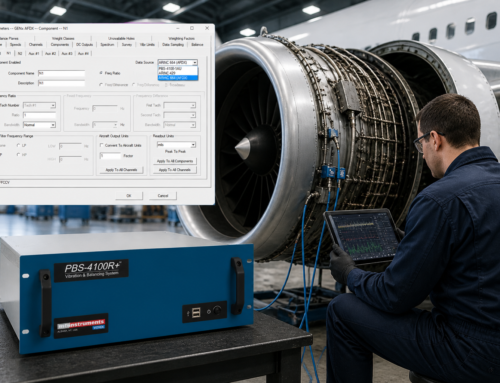
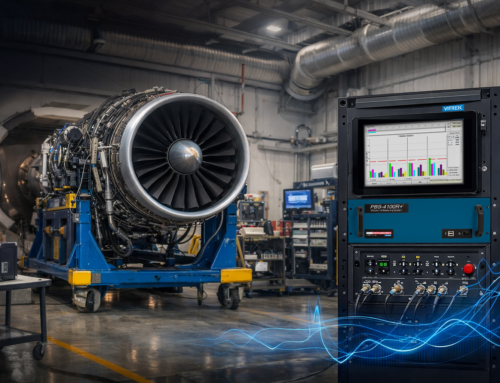
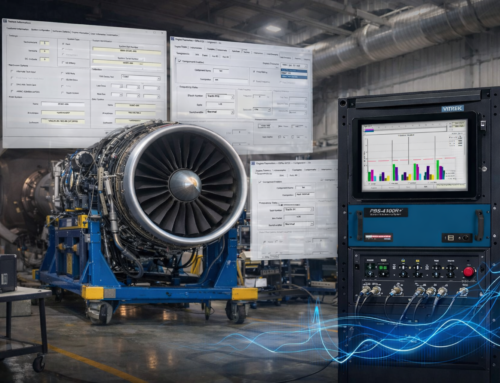
Designed for OEM and MRO test cell environments, the rack-mounted PBS-4100R+ supports:
- Up to 12 vibration input channels and 3-speed inputs
- Data capture across multiple operating conditions and engine speeds
- Waterfall plots, real-time spectral display, and bar graph monitoring
- Over 150 engine types supported, including military and industrial turbines
- Seamless integration with analog outputs and remote control via Ethernet
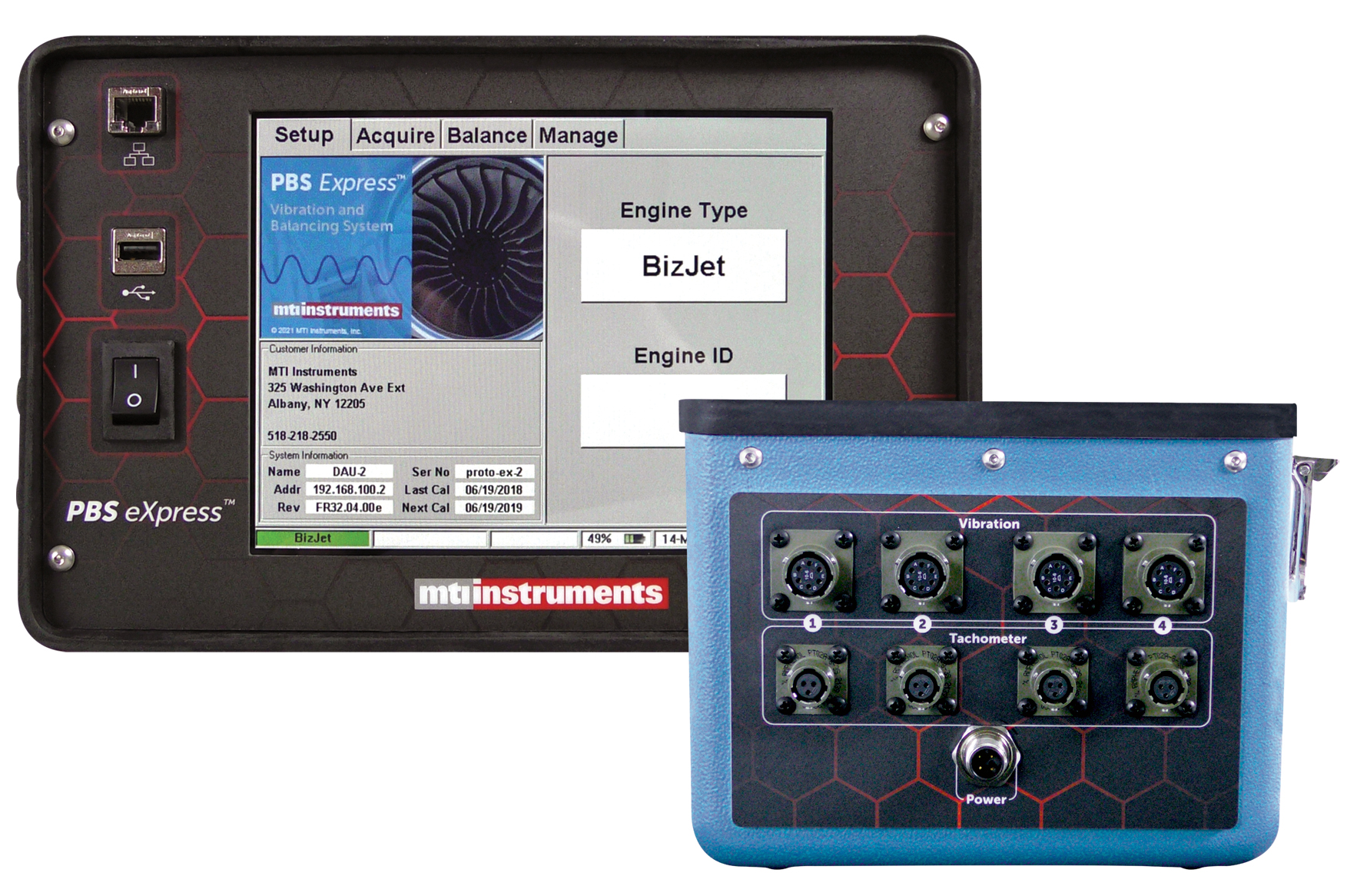
PBS eXpress – Field-Ready Balancing for Small Turboprop and Turbofan Engines
Compact and intuitive, the PBS eXpress is purpose-built for small-frame engines used in business jets and regional aircraft. It offers:
- Quick vibration assessments and automated balancing
- An intuitive trim balance wizard, ideal for first-time users
- Real-time visualization of vibration levels for fast diagnostics
- Lightweight, easy setup with accessories tailored for field service
Proactive Aircraft Vibration Monitoring and Analysis
Whether you’re servicing regional jets, commercial airliners, or military aircraft, proactive vibration monitoring helps reduce maintenance costs, avoid unscheduled removals, and extend engine life. MTI Instruments’ PBS-4100+ Gen4, PBS-4100R+, and PBS eXpress provide the real-time analysis, field portability, and diagnostic precision needed for modern aviation vibration management.
Explore MTI’s Aircraft Vibration Analysis and Balancing Systems →