A test result can be repeatable, traceable, and still be inadequate for the decision it supports. That is the central reason for test uncertainty budgeting: it establishes whether the complete measurement system can distinguish a conforming unit from a nonconforming one with an acceptable level of risk. For engineers working with high voltage, precision power, resistance, dimensional, vibration, or data acquisition measurements, that assessment must extend beyond the instrument data sheet.
A useful uncertainty budget does not exist to create paperwork. It connects product requirements, test limits, instrument capability, fixtures, environmental conditions, operator methods, and calibration evidence into a documented technical basis for pass/fail decisions. When it is done early, it also prevents an expensive failure mode: discovering during qualification, audit, or production ramp that the test system cannot support the required tolerance.
What Test Uncertainty Budgeting Must Answer
At its core, an uncertainty budget estimates the range around a reported measurement result that can reasonably be attributed to the measurand. The budget should answer three practical questions:
- What quantity is actually being measured?
- How large is the expanded uncertainty at the required operating point?
- Is that uncertainty small enough for the tolerance and decision rule?
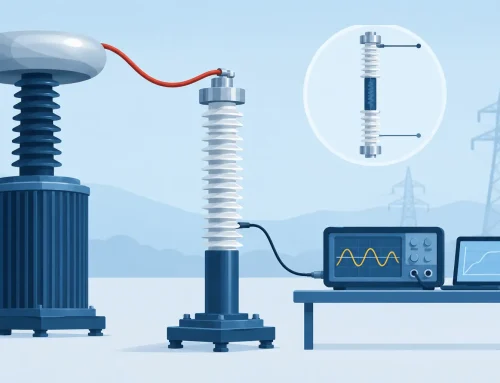
The first question is often underestimated. A hipot tester may report applied voltage, for example, but the relevant measurand could be voltage at the device under test after accounting for cable drop, switching hardware, loading, waveform characteristics, and the programmed test sequence. A power measurement may depend on voltage, current, phase angle, harmonic content, sensor configuration, and acquisition bandwidth. If the measurand is not defined precisely, the budget can be mathematically correct while describing the wrong test.
The second question requires a model of significant uncertainty contributors. The third requires an engineering and quality decision. There is no universal acceptable test uncertainty ratio. A 4:1 ratio between tolerance width and expanded uncertainty may be appropriate for some production tests; a more demanding application may require 10:1 or better. In other cases, especially when physical variation is large or test limits are safety-related, a formal guardband and decision rule are more meaningful than a simple ratio.
Start With the Requirement and Decision Rule
Build the budget from the product requirement backward, not from the available instrument forward. Begin with the specification limit, its units, applicable conditions, and whether the requirement is one-sided or two-sided. Then document the intended decision rule: how measurement uncertainty will be treated when a result lies near a limit.
Consider a leakage-current limit of 5 mA during an electrical safety test. A reading of 4.2 mA may be clearly acceptable. A reading of 4.98 mA is different. If expanded uncertainty is 0.15 mA, reporting only the displayed value hides meaningful consumer risk. The organization must decide whether to accept results up to the specification limit, apply a guardband below the limit, or use another documented rule that controls the probability of false acceptance.
This decision belongs to the test owner, quality organization, and customer or regulatory stakeholders where applicable. The instrument manufacturer supplies performance specifications and calibration capability; the test system owner defines the required confidence and acceptance approach. Standards, contracts, and accreditation requirements may prescribe elements of this process, particularly in calibration and regulated environments.
Define the Measurement Model Before Adding Numbers
A measurement model describes how input quantities produce the reported result. It may be a simple correction equation or a more detailed representation of the test setup. For a DC voltage measurement, a basic model could include the instrument indication, calibration correction, resolution, drift, temperature effect, and fixture loss. For an insulation resistance test, the model may also include test voltage stability, settling time, cable leakage, surface contamination, guarding effectiveness, and the characteristics of the device under test.
The purpose is not to include every imaginable effect. It is to identify contributors large enough to affect the decision or contributors required by the governing method. A practical screening approach is to compare each potential component with the allowable uncertainty. If a contributor is demonstrably negligible, document why and exclude it. Unsupported assumptions are more hazardous than a budget with fewer entries.
For each retained contributor, record its estimated magnitude, probability distribution, divisor used to convert it to standard uncertainty, sensitivity coefficient where needed, and source of evidence. Common evidence includes calibration certificates, manufacturer specifications, controlled environmental data, historical repeatability studies, fixture characterization, and method validation records.
Major Sources in a Test Uncertainty Budget
Instrument accuracy is necessary but rarely sufficient. A credible budget commonly evaluates calibration uncertainty and the instrument’s post-calibration drift; resolution and quantization; repeatability and reproducibility; environmental effects; connection and fixture effects; test-source loading; timing and bandwidth; reference standards; and software calculations or data handling.
Calibration information must be interpreted carefully. A certificate’s expanded uncertainty describes the uncertainty of the calibration result under stated conditions. It does not automatically represent the full in-service uncertainty of the instrument. The relevant budget may need to include calibration correction, residual calibration uncertainty, drift over the selected interval, and specification terms that apply at the actual range, frequency, voltage, current, or temperature.
Environmental effects deserve particular attention in high-accuracy and high-resistance measurements. Temperature coefficients, humidity-driven surface leakage, warm-up behavior, electromagnetic interference, and mechanical vibration can all be consequential. A laboratory controlled at 23 C may support a different uncertainty claim than a production station operating across a wider range. Neither environment is inherently wrong, but the budget must match the conditions under which decisions are made.
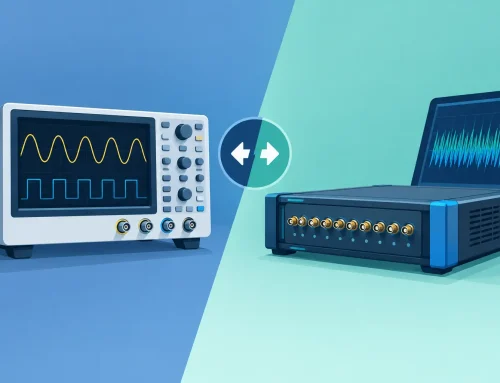
Fixtures and interconnections are equally important. Long high-voltage leads can add capacitance and leakage paths. Current shunts introduce thermal effects and burden voltage. Switch matrices add contact resistance, leakage, and channel-to-channel variability. For high-speed digitizers, probe loading, clock accuracy, trigger timing, analog bandwidth, and signal integrity may dominate the uncertainty more than the converter’s nominal resolution.
Combine Contributors Correctly
Most uncertainty budgets convert individual contributors to standard uncertainty, usually expressed as one standard deviation. Independent components are then combined by the root-sum-square method:
`u_c = sqrt(u_1² + u_2² + … + u_n²)`
The combined standard uncertainty, `u_c`, is multiplied by a coverage factor, often `k = 2`, to obtain expanded uncertainty, `U`. Under appropriate assumptions, `U = k × u_c` corresponds approximately to 95% coverage. The coverage factor should not be applied by habit. It depends on the distribution, effective degrees of freedom, confidence objective, and the applicable method or standard.
Do not simply add all maximum specifications. That approach is often excessively conservative and can lead to unnecessary equipment replacement. Conversely, do not apply root-sum-square to quantities that are correlated. Two contributors driven by the same temperature shift, reference source, or shared calibration standard may move together. Ignoring correlation can understate total uncertainty.
Type A and Type B evaluations help organize the evidence. Type A estimates come from statistical analysis of repeated observations, such as repeatability testing. Type B estimates come from other technical information, including specifications, calibration records, prior data, and physical limits. Type B does not mean less valid. It means the uncertainty estimate was not obtained from the current statistical sample.
Validate the Budget at the Actual Test Point
A spreadsheet is not validation. Once the budget is assembled, challenge it with data from the real test configuration. Run repeatability studies at representative values, including points near critical limits. Evaluate different operators, shifts, fixtures, cable assemblies, and software versions when they can affect results. Verify the system after warm-up and across the permitted environmental range.
The goal is not necessarily to reproduce every line item experimentally. Rather, it is to determine whether observed system behavior is consistent with the model. If repeatability is much worse than expected, investigate before assigning a larger uncertainty value. The cause may be a loose connection, inadequate settling time, grounding issue, unstable source, fixture contamination, or an unrecognized interaction between the test system and DUT.
For automated systems, preserve configuration control. Range selection, filtering, integration time, test sequence timing, correction factors, firmware version, and pass/fail limits can all change the measurement process. A sound uncertainty budget is tied to a defined method, not merely a model number on a purchase order.
Use the Budget to Improve the Test System
The most valuable uncertainty budgets identify the dominant contributors. If instrument uncertainty represents a small fraction of the total, purchasing a more accurate instrument may not improve the decision. Reducing fixture leakage, controlling temperature, extending stabilization time, improving shielding, selecting a better range, or revising the test connection may provide a larger gain.
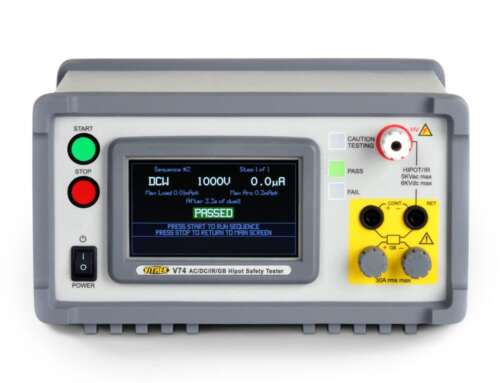
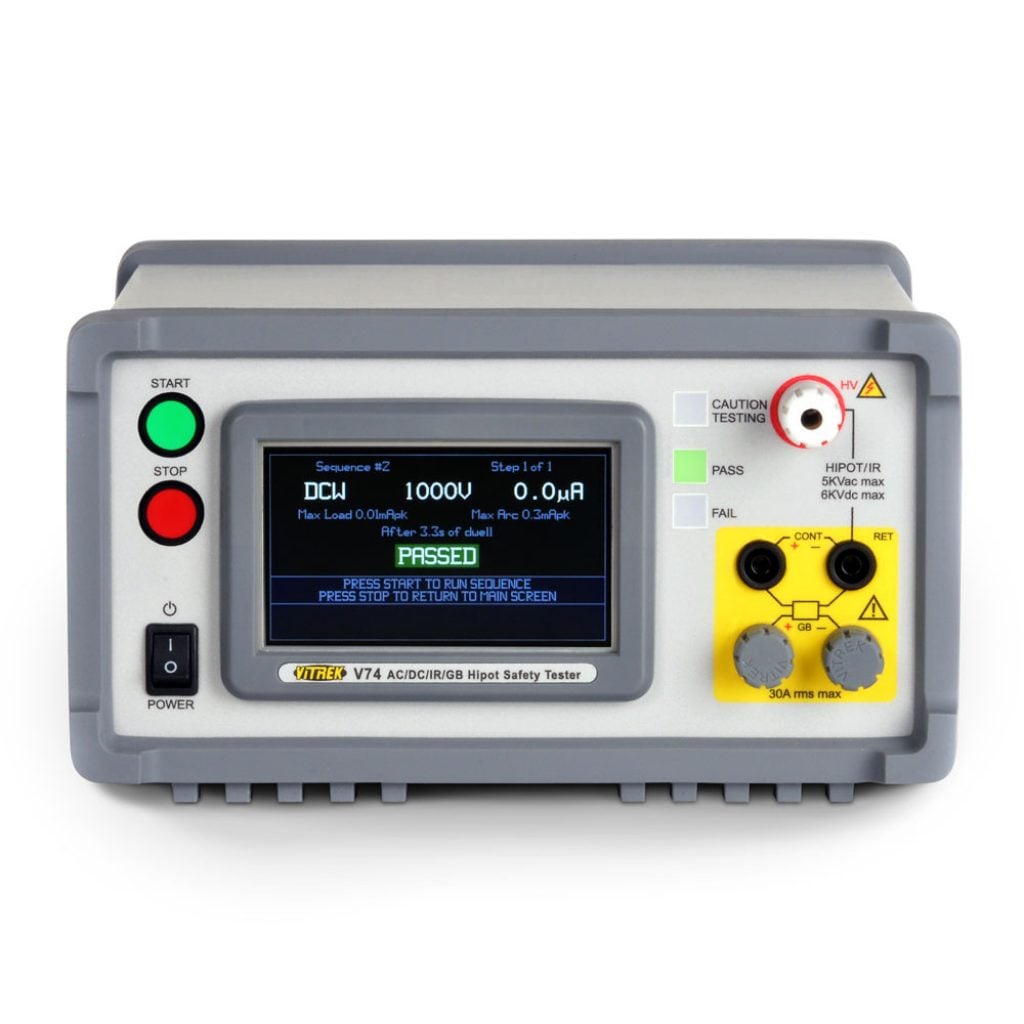
This is especially relevant when specifying integrated systems. A precision instrument can only deliver precision through a measurement chain that preserves it. Vitrek test and measurement platforms are designed for applications where instrument performance, controlled test execution, and traceable results must work together, but final system uncertainty still depends on the DUT, connections, environment, and documented procedure.
Treat the budget as a controlled engineering document that changes when the method changes. Review it after major calibration findings, fixture revisions, software updates, specification changes, or unexpected measurement variation. A current uncertainty budget gives the test team something more useful than a favorable display reading: evidence that the result can support the decision being made.